

TL;DR:
- Mindful fashion is an intentional approach to clothing that emphasizes personal values, sustainability, and quality over quantity. It encourages active awareness, thoughtful choices, and a deep connection with garments rooted in cultural traditions like Japanese streetwear. Implementing practical frameworks and avoiding greenwashing helps build a wardrobe aligned with ethical and environmental principles.
The fashion industry contributes up to 10% of global carbon emissions and generates 92 million tonnes of textile waste each year. That figure alone should give anyone pause the next time they reach for something new. But mindful fashion is not simply a call to buy less. It is a deeper, more considered relationship with clothing, one that weaves together personal values, aesthetic choices, and a genuine understanding of environmental consequence. In this guide, we explore what mindful fashion truly means, how practical frameworks can shape better decisions, and how minimalist streetwear rooted in Japanese aesthetics sits at the heart of this movement.
Table of Contents
- What is mindful fashion?
- Key methods and frameworks for mindful shopping
- Sustainability, minimalism and Japanese streetwear: where do they intersect?
- Nuances, pitfalls and the risk of greenwashing
- How to apply mindful fashion principles to your wardrobe
- The uncomfortable truth most experts won’t tell you about mindful fashion
- Explore mindful fashion with INCIDENT
- Frequently asked questions
Key Takeaways
| Point | Details |
|---|---|
| Intentionality matters | Mindful fashion means making deliberate, value-driven choices about clothing for impact beyond the closet. |
| Use practical frameworks | Employ methods like the Pause Button and wardrobe audits to guide smarter purchases and avoid impulse buys. |
| Watch for greenwashing | Prioritise transparency, certifications, and specific impact over marketing claims to avoid misleading sustainability. |
| Minimalism empowers | Minimalist approaches foster ethical behaviour, eco-conscious identity, and alleviate eco-anxiety for many individuals. |
| Culture shapes sustainability | Japanese streetwear and minimalist styles can embody mindful fashion through quality, subtlety, and timelessness. |
What is mindful fashion?
Before anything else, it helps to clear up what mindful fashion is not. It is not just minimalism, and it is not a synonym for sustainability. Each of those terms carries its own weight, but mindful fashion sits in a space where all of them overlap.
Mindful fashion is an intentional approach to clothing consumption that emphasises sustainability, ethics, quality over quantity, and alignment with personal values. It overlaps with conscious fashion, ethical fashion, and slow fashion, yet it holds its own distinct character: the word mindful signals an active, moment-to-moment awareness rather than a fixed set of rules.
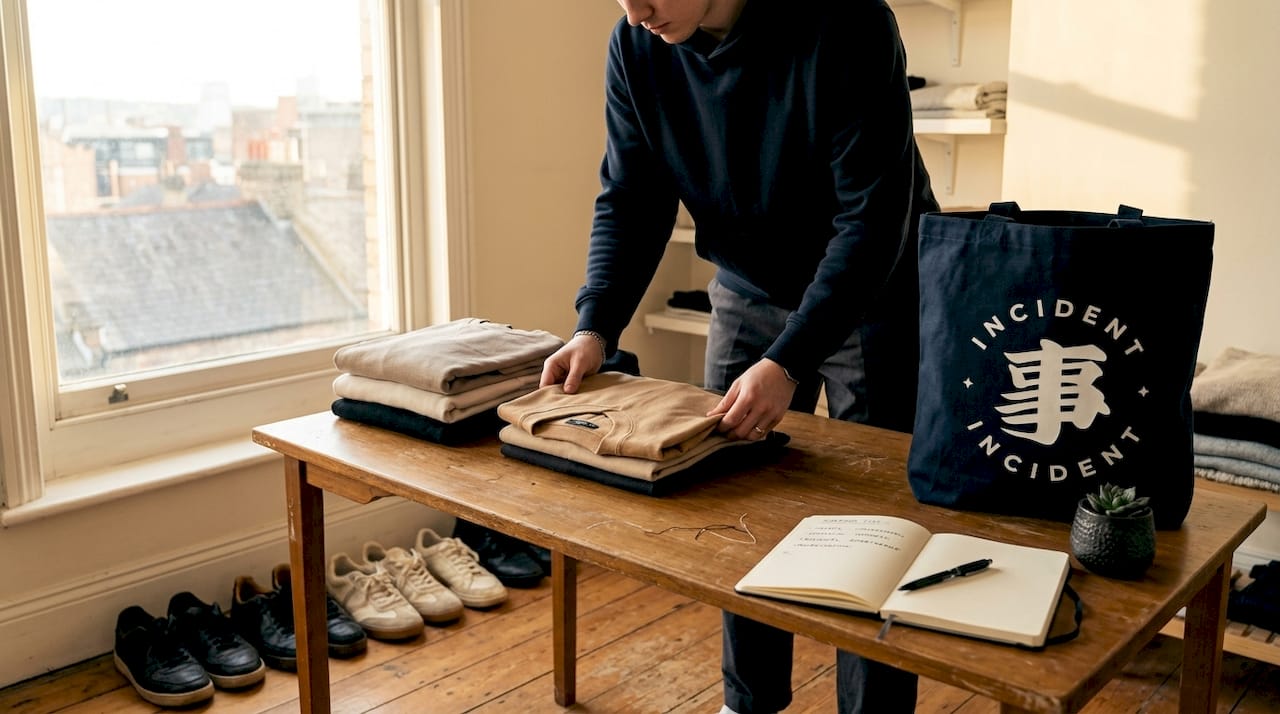
Think of it this way. Sustainable fashion asks, “What is this garment made of and how was it produced?” Ethical fashion asks, “Who made this and under what conditions?” Mindful fashion asks all of those questions, then adds one more: “Why do I actually want this, and does it align with who I am?”
| Concept | Core focus | Relationship to mindful fashion |
|---|---|---|
| Sustainable fashion | Environmental materials and production | Informs mindful choices |
| Ethical fashion | Labour rights and fair trade | Informs mindful choices |
| Slow fashion | Counterpoint to fast fashion; longevity | Closely aligned |
| Minimalism | Fewer, more intentional possessions | A natural expression |
| Mindful fashion | Intentionality, values, awareness | Integrates all of the above |
Japanese streetwear sits within this conversation in a quietly powerful way. Rooted in restraint, craft, and longevity, the Japanese aesthetic tradition offers exactly the kind of framework that mindful fashion calls for. Clean lines, considered proportions, and garments designed to age well are not aesthetic accidents. They reflect a cultural philosophy that values what endures. Exploring sustainable streetwear in this context reveals how deeply the two ideas are connected.
The appeal of minimalist graphic tees reflects a broader shift: when a garment says less, it often means more. A well-considered piece with subtle detail and premium fabric signals something beyond trend. It signals intention.
“Mindful fashion is not a destination. It is an ongoing practice of choosing with awareness, not just impulse.”
Key methods and frameworks for mindful shopping
With the concept defined, let us move into the practical side. How do you actually make mindful choices at the point of purchase? Three frameworks stand out for their clarity and usefulness in everyday decisions.
Key methodologies include the “Pause Button,” which asks you to assess genuine need versus impulse; the “Time Machine,” which invites you to consider your satisfaction with the piece in six months or a year; and the “Ripple Effect Radar,” which prompts you to think about the broader environmental and social consequences of buying.
-
Pause Button: Before adding anything to your basket, stop. Ask yourself whether you genuinely need this item, or whether you are responding to a promotion, a mood, or external pressure. Most impulse purchases fail this test within seconds of honest reflection.
-
Time Machine: Picture yourself a year from now. Will this piece still resonate with your style? Will it still fit within your wardrobe in terms of versatility? Timeless design passes this test far more reliably than trend-driven pieces.
-
Ripple Effect Radar: Consider the full journey of the garment: where it was made, who made it, what happens when you eventually part with it. This is not about guilt; it is about clarity.
Beyond these frameworks, two additional rules prove their worth consistently.
The 48 to 72-hour rule is simple: wait at least two days before completing any non-essential purchase. Most impulse desires fade within that window. What remains is genuine want or need.
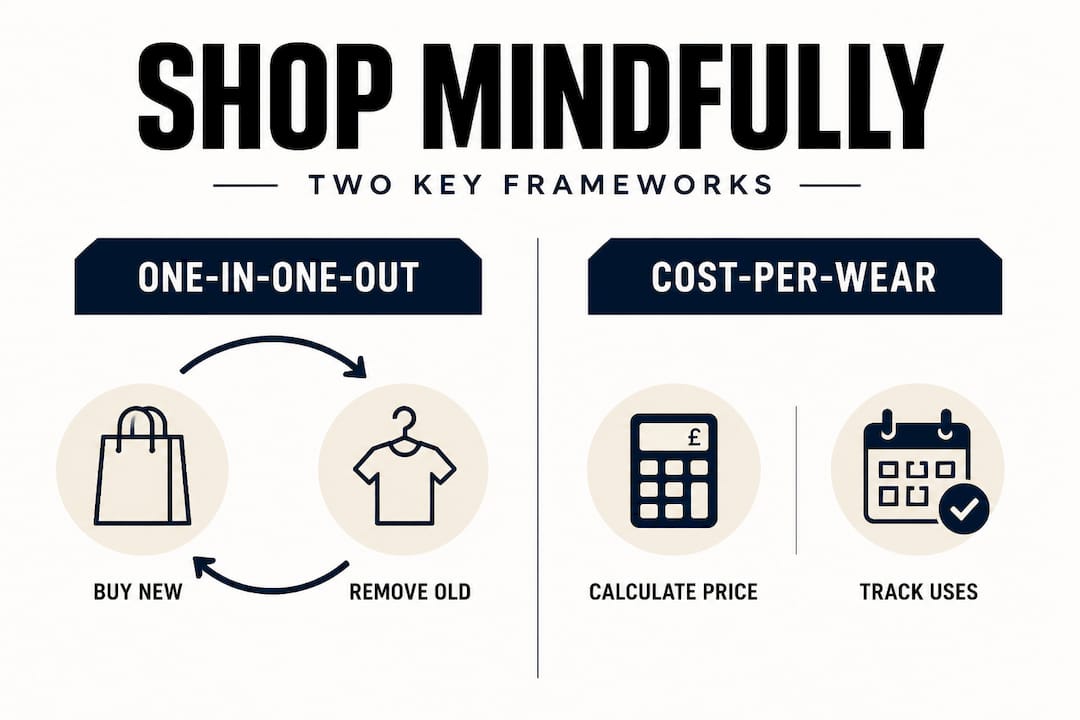
One-in-one-out keeps your wardrobe from quietly expanding into overwhelm. For every new piece you bring in, one leaves. This forces a real assessment of what deserves space.
| Framework or rule | What it addresses | Best applied when |
|---|---|---|
| Pause Button | Impulse versus need | Any moment of consideration |
| Time Machine | Longevity and satisfaction | Trend-driven or novelty items |
| Ripple Effect Radar | Ethical and environmental cost | Brand research stage |
| 48 to 72-hour wait | Emotional purchasing | Sales, limited editions, promotions |
| One-in-one-out | Wardrobe accumulation | Regular shopping habits |
| Cost-per-wear | Value over time | Premium or investment pieces |
Cost-per-wear deserves particular attention because it reframes how you think about price entirely. Divide the cost of a garment by the number of times you realistically expect to wear it. A premium Japanese-inspired streetwear piece at a higher price point, worn hundreds of times over years, often costs less per wear than three cheaper alternatives that fade, shrink, or feel wrong after a month.
Transitioning seasonal streetwear thoughtfully is where these frameworks come together in practice, helping you carry core pieces across seasons rather than chasing every new drop.
Pro Tip: Conduct a brief wardrobe audit every season. Lay out everything, separate what you have not worn in six months, and ask honestly whether those pieces serve your current identity. Use the timeless wardrobe guide to identify the gaps worth filling mindfully.
Sustainability, minimalism and Japanese streetwear: where do they intersect?
Now let us examine how mindful fashion’s values express themselves through specific aesthetics and cultural traditions. The convergence of sustainability, minimalism, and Japanese streetwear is not coincidental. It reflects a shared philosophy about what clothing should do and what it should not.
Minimalism links to ethical behaviour through moral identity and personal norms. Studies show it has a positive impact on pro-environmental choices, though this effect is moderated by levels of eco-anxiety. The person who builds a considered, minimal wardrobe tends to make choices from a different psychological foundation than someone who shops reactively.
Japanese streetwear has always prioritised quality over volume. Where Western fast fashion floods the market with options, the Japanese approach narrows focus: fewer pieces, more careful construction, a deeper investment in fabric and fit. This is not aesthetic restraint for its own sake. It reflects a cultural understanding that longevity has inherent value.
Key features of a mindful wardrobe influenced by Japanese streetwear aesthetics:
- Premium natural fabrics such as organic cotton and Pima cotton that wear beautifully over time
- Neutral and muted palettes that resist the pull of trend cycling
- Considered proportions that flatter across body types and contexts
- Subtle graphic detail rather than loud branding, speaking through craft
- Versatile silhouettes that layer across seasons without requiring new pieces
The concept of wabi-sabi, the Japanese appreciation for the beauty of imperfection and transience, adds a dimension that Western sustainability discourse often misses. It encourages a relationship with clothing that values patina, wear, and the passage of time rather than constantly chasing the pristine and new.
Japanese streetwear innovation is pushing this conversation further, with brands exploring what “quiet luxury” looks like when it is rooted in cultural authenticity rather than branding signals. Similarly, practical habits like minimalist folding techniques and thoughtful storage are part of the same mindset, treating each garment with the respect it was made to receive.
For a broader view of how Japanese minimalism shapes street fashion globally, the cultural roots run deeper than most people realise. This is heritage you can feel in the weight of a well-made tee or the fall of a structured silhouette.
Nuances, pitfalls and the risk of greenwashing
Understanding aesthetic influences is only part of the picture. Mindful fashion also requires a sharp awareness of where the conversation can go wrong, and it often does.
Greenwashing is perhaps the single greatest threat to anyone trying to make genuinely mindful choices. Brands use vague language like “eco-friendly,” “sustainable,” or “conscious collection” without providing any specific data to back those claims up. These terms have no universal standard, and without evidence, they mean nothing.
Mindful fashion risks greenwashing without genuine transparency. The guidance is to prioritise certifications such as GOTS (Global Organic Textile Standard) and OEKO-TEX, look for specific data over vague claims, and understand that scale matters for impact.
Here is what to watch for when evaluating a brand’s sustainability claims:
- Vague environmental language with no supporting data or certifications
- Suspiciously low prices that signal cut costs somewhere in the supply chain
- Trend-chasing collections that contradict a slow fashion ethos
- Runway or capsule launches designed for visual impact rather than long-term wear
- No information about workers or supply chain transparency
The contrasting view is worth acknowledging honestly. Sustainability still uses resources even within supposedly ethical systems, and there is a risk that “sustainable” becomes a form of propaganda that encourages continued consumption under a cleaner banner. Slow fashion, by contrast, preserves the cultural connection between maker and wearer that fast fashion has severed entirely.
This is why authentic streetwear brand identity matters so much. A brand that is genuinely rooted in craft and heritage has nothing to hide and everything to show. Specificity is the antidote to greenwashing: exact materials, named factories, measurable targets, honest timelines.
Low prices almost never tell the truth. If a garment costs very little, someone or something is absorbing that cost elsewhere: the worker, the fabric quality, the environmental standards. This is not a comfortable insight, but it is a necessary one.
How to apply mindful fashion principles to your wardrobe
Having navigated the pitfalls, here is how to translate mindful fashion principles into your actual daily practice. This is where theory meets the wardrobe rail.
Ecodesign methodologies use multi-criteria decision-making frameworks, life cycle assessment, and tools like TRIZ for resolving design contradictions when balancing performance, sustainability, and aesthetics. You do not need to run a full LCA yourself, but you can apply the same spirit of considered evaluation to your purchase decisions.
-
Audit your wardrobe. Every three to four months, spend an hour reviewing what you own. What have you actually worn? What has sat untouched? This honest inventory is the foundation for everything else.
-
Identify your core pieces. Typically, around 20% of your wardrobe accounts for 80% of your wear. Those core pieces deserve investment. The rest deserves scrutiny.
-
Define your aesthetic. For those drawn to Japanese streetwear and minimalist design, this means naming the silhouettes, colours, and fabric weights you return to consistently. A clear aesthetic identity reduces impulse purchases almost immediately.
-
Research before you buy. Look for certifications, read about fabric origins, and check whether the brand communicates openly about its supply chain. The streetwear origins and impact of a garment’s cultural context matters too.
-
Calculate cost-per-wear. Before any significant purchase, run the numbers. Divide the price by a realistic number of wears over two to three years. Premium pieces almost always win this calculation.
-
Repair and maintain. Extend the life of every garment through proper care, timely repairs, and appropriate washing. A garment cared for well can last a decade or more, reducing textile waste substantially over time.
-
Choose resale or swap for variety. When you want something new without adding to consumption, explore second-hand markets or swaps with people who share your aesthetic. This is particularly effective within a well-defined style identity.
Pro Tip: The most powerful wardrobe shift you can make is not about what you buy next. It is about deeply knowing what you already own. Once you have clarity on that, every future decision becomes easier, faster, and far more aligned with your values.
The uncomfortable truth most experts won’t tell you about mindful fashion
Here is where we want to push beyond the standard advice. Most guides on mindful fashion follow a predictable structure: buy less, buy better, look for certifications. All of that is true. None of it is quite enough.
The real challenge is systemic, not individual. Low prices signal unsustainability despite higher purchase intent, timeless design outperforms trend-driven pieces for perceived sustainability, and runway shows frequently contradict the ethics of mindful fashion through sheer excess. Your personal choices matter, but they exist within a system designed to encourage the opposite of mindfulness.
This is why authenticity in design philosophy carries real weight. A brand that genuinely draws on streetwear innovation rooted in Japanese craft is not simply making aesthetic choices. It is taking a structural position against the disposability model. That position, multiplied across a community of people who share it, is where real change accumulates.
The minimalist wardrobe is powerful precisely because it resists the system’s logic. When your identity is not tied to constant newness, the marketing machinery loses its grip. You stop shopping from anxiety and start shopping from genuine need or considered desire.
What most experts also fail to acknowledge is the emotional dimension. Mindful fashion is not a purely rational exercise. The clothes we wear carry memory, identity, and aspiration. The most sustainable choice is also often the most personally meaningful one: a piece crafted with intention, worn with pride, and kept for years because it still resonates. That is not a trade-off between ethics and style. It is what good design has always been.
The contradiction many people sense, but rarely name, is this: even within mindful fashion, the pressure to perform sustainability can become its own form of consumption. The solution is not more rules. It is a deeper relationship with your own values and a wardrobe that honestly reflects them.
Explore mindful fashion with INCIDENT
At INCIDENT, we believe that the most powerful wardrobe is one built with intention. Every piece we design draws on Japanese craftsmanship and minimalist principles, using premium fabrics that are made to last and made to mean something.
Our Pima collection showcases garments crafted from ultra-soft Pima cotton, chosen for its exceptional durability and refined feel: exactly the kind of investment piece that passes the cost-per-wear test with ease. Whether you are building your first mindful wardrobe or refining one that has evolved over years, our range at incident.store is designed to meet you where you are. Explore pieces rooted in tradition, built for the present, and made to stay with you for a long time to come.
Frequently asked questions
How is mindful fashion different from sustainable fashion?
Mindful fashion emphasises intentional choices and personal values alongside sustainability, whereas sustainable fashion focuses primarily on environmental and ethical production standards.
What are the signs of genuine mindful fashion brands?
Look for transparent sourcing, recognised certifications such as GOTS or OEKO-TEX, and specific impact data. Mindful fashion risks greenwashing without this level of transparency.
Do minimalist wardrobes help with eco-anxiety?
Yes. Studies show minimalism positively influences pro-environmental behaviour through moral identity and personal norms, though the effect varies depending on an individual’s level of eco-anxiety.
How can I avoid greenwashing when shopping mindfully?
Scrutinise certifications, transparent sourcing, and specific impact data. Be cautious of vague claims over specific data and be wary of suspiciously low prices or trend-led marketing language.
What practical steps can I take to build a mindful wardrobe?
Start with a wardrobe audit, apply decision frameworks like the Pause Button and Time Machine, and prioritise quality, transparency, and genuine alignment with your personal aesthetic when making new purchases.

Share:
Build a versatile wardrobe with Japanese minimalist streetwear
Streetwear colour palette ideas: minimalist Japanese inspiration