

TL;DR:
- Authentic manga inspired fashion emphasizes narrative logic, silhouette, and material quality over surface decoration.
- It draws from Japanese streetwear systems to create wearable garments that express story and emotion without resembling costumes.
Manga inspired fashion is clothing that draws directly from the visual language, character aesthetics, and narrative worlds of Japanese manga. It is not cosplay, and it is not a graphic tee with a character’s face printed on the front. The best examples, from the Jujutsu Kaisen capsule collection by Subtitle to ADDIXY’s Nana collaboration, treat manga as a design philosophy rather than a licensing opportunity. Japanese streetwear styles provide the structural foundation: layering, silhouette control, and material quality over logos. The result is a category of dress that lets you carry the emotional weight of a story you love without looking like you raided a convention merchandise stand.
1. What defines authentic manga inspired fashion today?
Authentic manga inspired fashion is built on narrative logic, not surface decoration. Designers like Liang Shi approach garments by asking what the anime’s world would actually produce, then building from that logic rather than simply printing a character’s face onto cotton. This distinction separates a considered collection from generic anime-inspired apparel.
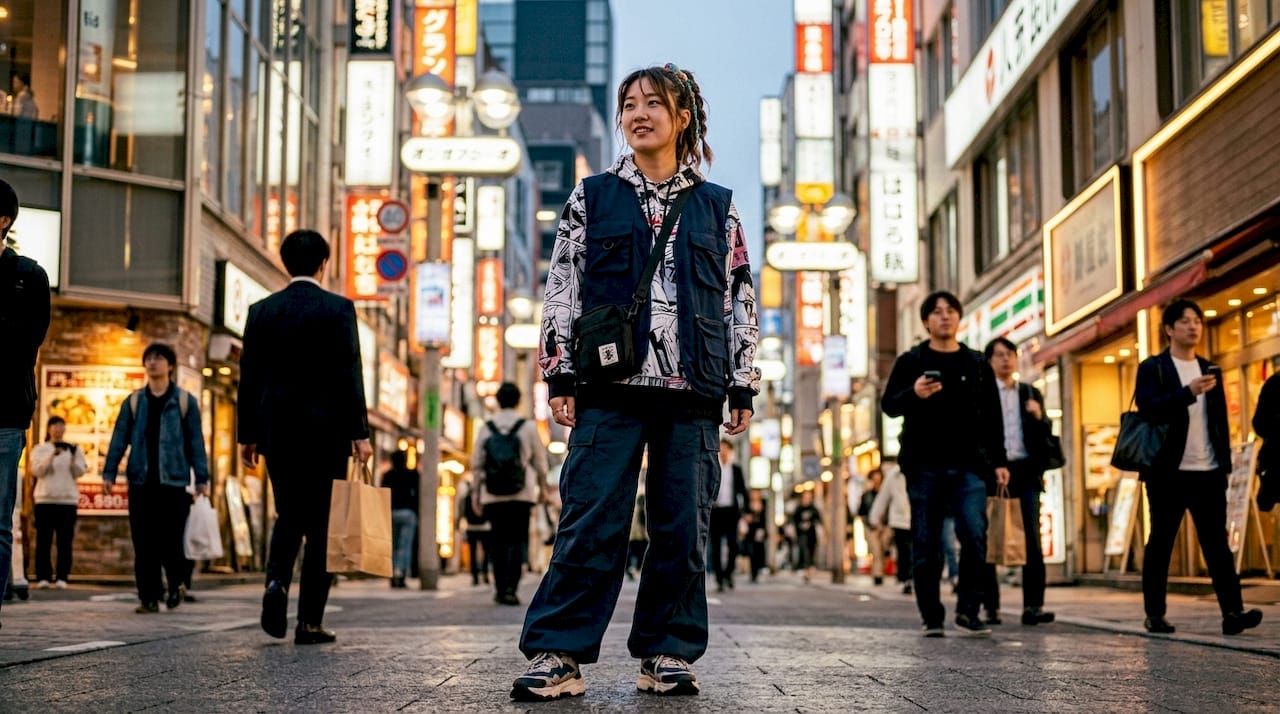
The structural backbone of this aesthetic comes from five Japanese streetwear systems: utility workwear, military reinterpretation, tech-leaning gear, heritage denim, and quiet-street minimalism. Each system prioritises fabric texture, tailoring, and layering over branding. Manga inspired fashion borrows from all five, depending on which character world or narrative mood is being referenced.
Ai Yazawa, the creator of Nana, is one of the clearest examples of fashion as storytelling. Her characters use clothing as semiotic armour, communicating mood, identity, and emotional state through silhouette and layering. Fans who understand this principle dress with far more intention than those simply replicating a costume.
The key stylistic markers of authentic manga inspired fashion are:
- Silhouette over print. Oversized shoulders, dropped hems, and structured collars reference character archetypes without literal reproduction.
- Fabric quality as a signal. Wool blends, heavy cotton, and technical materials communicate craft and durability, matching the seriousness of the source material.
- Colour restraint. Black, indigo, olive, charcoal, and ecru dominate, with accent colour used sparingly to echo a character’s signature palette.
- Narrative details. Subtle embroidery, tonal graphic work, or structural seaming that references a story world without announcing it loudly.
Pro Tip: Before buying any piece marketed as manga character clothing, ask whether it would still make sense as a garment if you removed the IP reference entirely. If the answer is yes, it is worth owning.
2. Top manga inspired fashion collections and collaborations
The collections that define this space in 2026 share one quality: they respect the source material enough to build garments worthy of it.
Jujutsu Kaisen capsule collection by Subtitle
Subtitle and Toho International released an 18-piece Jujutsu Kaisen collection that prices from $65 to $195, using wool blends and constructed tailoring rather than screen printing. The pieces mirror the uniform aesthetic of the series: dark, structured, and deliberately minimal. This is the clearest recent example of narrative-authentic garments built from the story’s logic outward. The collection works as streetwear precisely because it does not try to be a costume.
ADDIXY x Nana by Ai Yazawa
ADDIXY’s collaboration with Ai Yazawa’s Nana offers graphic tees from around $80 to leather jackets at $330, all designed around the punk rock legacy of the manga’s central characters. The collection captures Vivienne Westwood’s spirit through relaxed but edgy silhouettes, blending youthful energy with the kind of wearability that survives beyond a single season. It is one of the few manga collaborations that would read as credible punk streetwear to someone who had never read the source manga.
Loewe x Studio Ghibli
Loewe’s ongoing Studio Ghibli collaborations represent the luxury end of the spectrum. Rather than printing Totoro onto a tote bag, the house translates the visual grammar of Ghibli films into leather goods, knitwear, and ready-to-wear with the same material seriousness it applies to its mainline collections. The result is cultural translation at the highest level of craft.
Here is how the major collections compare across the dimensions that matter most:
| Collection | Price range | Material focus | Design approach |
|---|---|---|---|
| JJK by Subtitle | $65 to $195 | Wool blends, structured tailoring | Narrative-authentic, uniform-inspired |
| ADDIXY x Nana | $80 to $330 | Cotton, leather | Punk-rock mood, wearable streetwear |
| Loewe x Ghibli | £300 and above | Leather, premium knitwear | Luxury cultural translation |
Pro Tip: If you are buying from a capsule collaboration, check the material composition label before the price tag. A $120 piece in a wool blend will outlast and outstyle a $60 piece in 100% polyester every time.
The anime streetwear options available in 2026 span a wider price range than ever before, which means there is a credible entry point regardless of budget.
3. How to style manga inspired fashion for everyday wear
The single biggest mistake in styling otaku fashion ideas is treating them as costume assembly rather than wardrobe building. The goal is to capture a character’s mood and silhouette, not to replicate their exact outfit. Professionals consistently advise capturing mood over costume, and this principle is what separates a compelling look from a fancy dress attempt.
Here is a practical framework for building everyday outfits from manga aesthetics:
-
Start with silhouette. Choose one statement piece that references your chosen character archetype: an oversized structured jacket for a Jujutsu Kaisen aesthetic, a fitted black turtleneck for a Nana-inspired mood. Build everything else around that anchor.
-
Use the Japanese streetwear colour palette. Black, indigo, olive, charcoal, and ecru form the foundation of Japanese urban fashion. These colours layer naturally and allow a single accent colour to carry real weight without overwhelming the look.
-
Layer with intention. Japanese streetwear’s use of negative space and layering creates depth without bulk. A long inner layer beneath a cropped outer, or a technical overshirt worn open above a minimal tee, creates the kind of proportional interest that manga characters carry in every panel.
-
Choose fabric over graphics. A heavyweight cotton tee in indigo communicates more about Japanese aesthetic fashion than a thin tee with a large character print. Texture and weight are the signals that matter to people who understand the reference.
-
Mix capsule pieces with basics. One piece from a genuine manga collaboration, worn with well-chosen basics, reads as considered and intentional. Five collaboration pieces worn together reads as merchandise.
-
Reference the story world, not the character directly. If you love Akira, a red technical jacket and dark cargo trousers reference Kaneda’s world without requiring his exact silhouette. This approach gives you far more flexibility across seasons and occasions.
-
Invest in one quality outerwear piece. Outerwear carries the most visual weight in any layered look. A well-constructed coat or jacket in a narrative-relevant silhouette will anchor the entire outfit and last for years.
Pro Tip: Build a mood board from actual manga panels rather than fan art or merchandise photography. The original artist’s colour and silhouette choices are the most accurate reference you have.
For women looking to apply these principles, the Japanese-inspired streetwear examples at Incident offer a useful starting point for understanding how these ideas translate into real garments.
4. Popular manga characters’ fashion styles and how to wear them
Manga character clothing works as a style reference because the best manga artists are genuinely skilled fashion designers. Each of the following archetypes offers a distinct visual language that translates directly into contemporary streetwear.
-
Nana Osaki (Nana). The definitive punk-rock manga character. Her look centres on fitted black clothing, leather, band tees, and heavy boots. To wear this today, pair a slim black turtleneck with straight-leg black trousers and a structured leather jacket. The key is restraint: Nana’s power comes from precision, not excess. ADDIXY’s collaboration captures this with pieces that work as standalone streetwear without requiring any knowledge of the source material.
-
Kaneda (Akira). Kaneda’s red biker jacket is one of the most referenced garments in streetwear history. Akira’s influence on techwear and cyberpunk fashion is documented across brands globally. To interpret this today, look for a structured red or burgundy technical jacket worn over dark, tapered trousers. The silhouette matters more than the colour: broad shoulders, a defined waist, and a clean hem.
-
Sailor Moon. The stylised school uniform aesthetic blends military structure with a ballet sensibility. Contemporary interpretations work best when they isolate one element: a pleated midi skirt in navy, a structured white blouse, or a colour-blocked knit. Kawaii fashion outfits that reference Sailor Moon tend to work best when they pick one signal rather than assembling the full uniform.
-
Jujutsu Kaisen characters. The uniform aesthetic of the series is minimalist and quality-focused: dark, structured, and deliberately undecorated. This translates directly into Japanese streetwear styles built around tailored dark trousers, a structured dark jacket, and clean footwear. The Subtitle capsule collection is the most direct commercial translation, but the aesthetic is achievable with any well-made dark tailoring.
-
General principle. The most wearable manga character clothing always prioritises mood over literal replication. Ask what emotional register the character operates in, then build an outfit that communicates that register through silhouette, colour, and fabric. This is the approach that Harajuku streetwear has always taken with its most enduring looks.
Key takeaways
Manga inspired fashion works best when it treats manga as a design philosophy rather than a print source, using silhouette, material quality, and narrative logic as its primary tools.
| Point | Details |
|---|---|
| Narrative logic over prints | Build outfits from a character’s story world, not their literal appearance. |
| Japanese streetwear as foundation | Use layering, proportion, and fabric quality as the structural base for any manga-inspired look. |
| Capsule collections worth investing in | JJK by Subtitle and ADDIXY x Nana offer genuine craft at accessible price points. |
| Colour palette discipline | Black, indigo, olive, and ecru create the tonal foundation that makes accent references land. |
| Mood over costume | Capture a character’s emotional register through silhouette and fabric, not exact replication. |
Why manga fashion is the most honest thing happening in streetwear right now
We have watched streetwear cycle through nostalgia, logomania, and quiet luxury in the space of a decade. What strikes us about manga inspired fashion is that it has always had a clear answer to the question that most trends avoid: why does this garment exist?
When Subtitle builds a Jujutsu Kaisen piece from wool blends and constructed tailoring, the answer is obvious. The garment exists because the story demands it. That is a more honest design brief than most luxury houses work from. Fashion-literate manga like Nana and Akira have been making this argument since the 1980s and 1990s, treating clothing as a form of communication with the same seriousness that a novelist treats dialogue.
What we find most compelling about where this category is heading is the convergence with Japanese minimalism. The streetwear trends of 2026 are moving away from maximalism and towards considered restraint. Manga inspired fashion, at its best, has always lived in that space. The Jujutsu Kaisen uniform is not loud. Nana Osaki’s look is precise. Kaneda’s jacket works because of its silhouette, not its decoration.
The risk in this space is the same risk that exists in any fashion category with a passionate community: the temptation to signal belonging through volume rather than quality. Wearing five collaboration pieces at once does not communicate deeper fandom. It communicates that you have not yet learned to edit. The most powerful manga-inspired looks we have seen are built from one or two considered pieces worn with the same restraint the source artists applied to their characters.
Our honest view is that this is one of the few areas of contemporary fashion where the cultural reference genuinely improves the garment, rather than simply justifying its price.
— Incident
Discover authentic Japanese streetwear at Incident
Incident is a premium Japanese streetwear brand based in Switzerland, designing garments that carry the same craft and restraint that the best manga inspired fashion demands.
The Incident collection includes pieces built on clean lines, premium fabrics, and a Japandi-influenced design philosophy that speaks directly to the aesthetic principles covered in this guide. The Pima T-shirt collection offers a foundation piece in ultra-soft Pima cotton, the kind of quality base that anchors any manga-inspired layered look without competing with it. Every garment is designed to be worn with intention, not just owned as a reference. If you are building a wardrobe that respects both Japanese craftsmanship and the narrative depth of manga culture, Incident is where that wardrobe starts.
FAQ
What is manga inspired fashion?
Manga inspired fashion is clothing that draws from the visual language, character aesthetics, and narrative worlds of Japanese manga, using silhouette, fabric quality, and design logic rather than simple character prints.
How is manga fashion different from cosplay?
Manga fashion is designed for everyday wear, prioritising wearable silhouettes and quality materials over costume accuracy. Cosplay replicates a character’s exact appearance; manga fashion captures their mood and aesthetic register.
Which manga characters have the most influence on streetwear?
Nana Osaki, Kaneda from Akira, and the Jujutsu Kaisen characters are among the most referenced in contemporary streetwear, each offering a distinct visual language that translates into real garments.
Are manga inspired collections worth the price?
Collections like the Jujutsu Kaisen capsule by Subtitle, priced from $65 to $195 with wool blend construction, offer genuine material quality and design craft that justifies the cost compared to standard licensed merchandise.
How do I start building a manga inspired wardrobe?
Begin with one statement piece that references your chosen character archetype, build around a Japanese streetwear colour palette of black, indigo, olive, and ecru, and prioritise fabric quality and silhouette over graphic prints.
Share:
Vintage skatewear: the complete style guide for 2026