

TL;DR:
- True versatility in fashion is about selecting fewer, high-quality pieces that adapt across contexts rather than owning more clothes. Japanese minimalist streetwear exemplifies this approach through attention to fit, fabric, and intentional design, making wardrobes more manageable and stylish. Focusing on reliable, well-fitted essentials allows for effortless dressing, confidence, and long-term wardrobe sustainability.
Most people believe that a versatile wardrobe simply means owning more clothes. More options, more combinations, more flexibility. But this is precisely the misconception that keeps wardrobes cluttered and outfits uninspired. True versatility is rooted in something far more disciplined: the deliberate selection of fewer, better pieces that work harder, move between contexts effortlessly, and hold their integrity across seasons. Japanese minimalist streetwear has long understood this. It offers not just a visual aesthetic but a genuine philosophy for how clothing should function in a modern life.
Table of Contents
- What does versatility mean in modern fashion?
- Fit, fabric, and reliability: The foundation of wardrobe versatility
- Building a repeatable, high-use wardrobe rotation
- Versatility in action: Styling for work, leisure, and changeable climates
- The real reason versatility works: Less is more, but nuance matters
- Upgrade your wardrobe with versatile Japanese streetwear
- Frequently asked questions
Key Takeaways
| Point | Details |
|---|---|
| Quality over quantity | A versatile wardrobe is built from fewer, better-crafted pieces rather than many options. |
| Fit is essential | Choosing clothing that fits well makes each piece adaptable for different scenarios. |
| Fabric impacts reliability | Premium materials make garments comfortable and easy to style from day to night. |
| Layering and tailoring | Layering and custom adjustments increase versatility across changing needs and occasions. |
| Minimalism guides choices | Japanese streetwear’s minimalist approach demonstrates how to maximise style with less. |
What does versatility mean in modern fashion?
Versatility in fashion is one of those ideas that sounds simple until you try to apply it. Most of us have stood in front of a wardrobe full of clothes and felt we had nothing to wear. That is not a quantity problem. It is a quality and curation problem.
True versatility, in the way that matters for your 20s and 30s, is about building a small, reliable rotation of high-use pieces that fit well, wear consistently, and layer intelligently. Professional stylists increasingly frame versatility as fit, quality, and a repeatable rotation of high-use pieces rather than a broad selection of loosely related options. This is a meaningful shift in thinking.
When you approach your wardrobe through this lens, every piece you own earns its place. Nothing sits idle for months. Nothing requires a specific occasion that never quite arrives.
Why the minimalist approach works
Japanese streetwear has become a global reference point for exactly this kind of thinking. Rooted in principles borrowed from wabi-sabi (the appreciation of imperfection and simplicity) and the Japandi aesthetic (a blend of Japanese and Scandinavian design sensibilities), it prioritises restraint over excess. The result is clothing that feels considered rather than accidental.
For young professionals navigating both work and social life, this approach is particularly well suited. You need pieces that can carry you from a morning meeting to a weekend market without requiring a full change of identity. Versatile streetwear basics built on clean lines and neutral palettes achieve this naturally, because they do not shout for attention. They integrate.
“Versatility is not about having more options. It is about having the right ones, worn repeatedly with confidence.”
This distinction matters. A timeless streetwear wardrobe is not a capsule wardrobe in the rigid, prescriptive sense. It is a living rotation of pieces you actually love, that actually fit, and that you reach for again and again.
What versatility is not
It is worth naming the myths directly:
- Versatility is not owning one item in every colour. Neutrals and tonal dressing do far more work.
- Versatility is not buying “multi-purpose” items. A piece that does three things adequately is often worse than a piece that does one thing beautifully.
- Versatility is not trend immunity. It is about selecting pieces whose design language remains relevant regardless of what is currently on the runway.
- Versatility is not cheap. Investing in fewer, better items is the most economical long-term strategy, even if the upfront cost is higher.
With this new definition in mind, let us unpack how key features make certain pieces truly adaptable.
Fit, fabric, and reliability: The foundation of wardrobe versatility
You can own the most aesthetically considered wardrobe in the world, but if the clothes do not fit correctly or the fabric behaves poorly after three washes, the versatility is theoretical. Reliability comes from specifics: how a garment drapes, how it responds to movement, and how it holds its shape over time.
Why fit is the first conversation
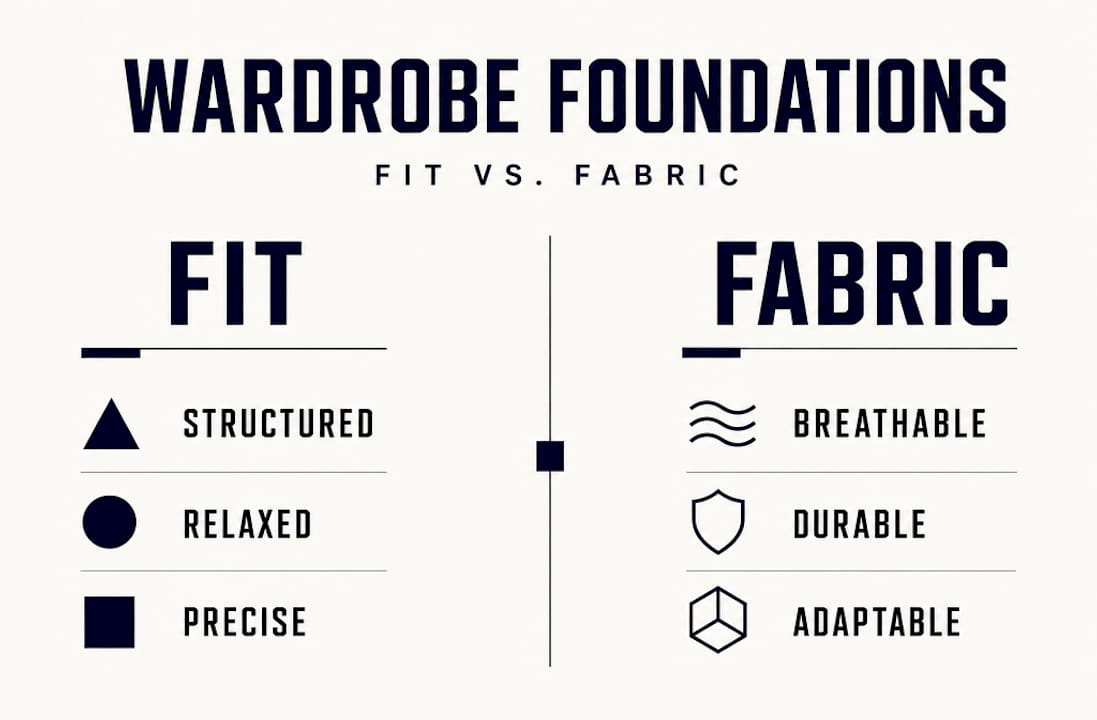
Fit is the single greatest multiplier of versatility. A well-fitted piece in a simple design will always outperform a beautifully printed or heavily detailed item that hangs awkwardly on your body. Reliability comes from fit and fabric behaviour far more than from trend-chasing, and this is especially true for a minimalist wardrobe where each piece is visible in its own right rather than hidden within a busy outfit.
Japanese streetwear, particularly the kind informed by Japandi aesthetics, tends to favour relaxed but structured silhouettes. These are not oversized in a careless way, nor are they slim in a restrictive way. They occupy a considered middle ground that flatters a wide range of body types and allows for confident movement.
Fabric behaviour across contexts
Premium fabric in streetwear is not just a luxury marker. It is a functional requirement. Consider the difference between a t-shirt made from generic cotton and one made from Pima or organic cotton. The latter holds its structure through repeated wearing and washing, softens gracefully over time rather than pilling, and sits against the skin in a way that feels intentional.
Here is a practical guide to how different fabrics perform across contexts:
| Fabric | Breathability | Durability | Day-to-night adaptability | Care requirement |
|---|---|---|---|---|
| Pima cotton | Excellent | High | Strong | Low |
| Organic cotton | Good | Medium-high | Good | Low |
| Linen | Very high | Medium | Moderate | Medium |
| Merino wool | Good | High | Very strong | Medium |
| Recycled polyester | Moderate | High | Moderate | Low |
For a minimalist wardrobe aimed at real versatility, Pima cotton and merino wool stand out. Both adapt well across work and leisure contexts, require minimal care, and age with character rather than deteriorating.
Tailoring as a quiet tool
Many people overlook tailoring when building a versatile wardrobe, assuming it is reserved for formal occasions or luxury budgets. In practice, minor tailoring adjustments, a taken-in waistband, shortened sleeves, or a slightly narrowed hem, can transform a good piece into a great one.
Tailoring for versatility is especially relevant when you are building a minimalist rotation. Because each piece carries more weight in a smaller wardrobe, ensuring that every item fits your specific body is a form of respect for the investment you have made.
Pro Tip: When purchasing a new piece, budget mentally for a potential small tailoring adjustment. Even spending a modest amount on alterations can double the wearable occasions for a given item.
Now that we have pinpointed the importance of fit and quality, let us explore practical ways to create combinations and rotations that make your wardrobe thrive.
Building a repeatable, high-use wardrobe rotation
A repeatable rotation sounds constraining, but in practice it is liberating. When you know that every item you own works with at least three others, getting dressed becomes effortless. Decision fatigue dissolves. Your personal style becomes clear, consistent, and recognisable.
A bottom-up framework
Building a versatile rotation works best when you start from the bottom. Trousers, wide-leg cargo trousers, tailored joggers, and structured wide-fit pieces anchor any outfit. They are harder to find in truly versatile forms, and they tend to be the item that either limits or expands your options.
Pro-stylist advice emphasises building a small rotation of high-quality bottoms and layering pieces that work repeatedly, rather than chasing tops and accessories to compensate for weak foundations.
Follow this sequence when building or editing your wardrobe:
- Start with two to three pairs of versatile trousers. These should span at least two colour families (typically a dark neutral and a lighter tone) and be suitable for both relaxed and semi-professional settings.
- Build upwards with four to six tops. These should include at least two plain, premium tees, one structured long-sleeve, and one layering piece such as an open shirt or light overshirt.
- Add one to two outer layers. A structured coach jacket or minimal bomber bridges seasons and adds depth to simple outfits.
- Select footwear that works across contexts. Minimalist trainers, clean leather shoes, or structured boots should complement rather than compete with your clothing.
- Edit ruthlessly. Anything that only works with one other item in your rotation does not earn its place.
Repeatable versus broad rotation: A comparison
| Approach | Number of pieces | Outfit combinations | Cost per wear | Decision fatigue |
|---|---|---|---|---|
| Broad rotation (many items) | 50+ | High in theory, low in practice | High | High |
| Repeatable rotation (curated) | 15 to 25 | Moderate but reliable | Low | Low |
| Japanese minimalist approach | 12 to 20 | High with intentional curation | Very low | Very low |
The streetwear essentials that define a Japanese-inspired rotation earn their value not through novelty but through consistent, confident use. You wear them repeatedly, and they improve with familiarity.
Layering as a design principle
Japanese streetwear has elevated layering from a practical necessity into an aesthetic statement. Lightweight layers, a tee beneath an open shirt beneath a structured jacket, do not just create warmth. They create visual depth, proportion, and interest without requiring loud patterns or heavy embellishment.
Seasonal streetwear transitions become far simpler when your wardrobe is built for layering from the outset. Adding or removing a layer changes the visual weight of an outfit, its formality, and its function, without requiring a separate wardrobe for each season.
Storing your rotation well also matters more than people realise. Folding heavyweight cotton and knitwear correctly, rather than hanging them where gravity causes distortion, preserves their shape. Efficient wardrobe storage is a small habit that extends the life of every piece significantly.
With rotation strategies covered, let us put versatility into context, considering how it adapts to work, social, and seasonal needs.
Versatility in action: Styling for work, leisure, and changeable climates
Understanding the theory of a versatile wardrobe is one thing. Applying it in real scenarios, on a Monday morning when you are running late or at a Friday evening gathering you did not plan for, is another. Here is how versatile Japanese minimalist pieces perform across the contexts that actually matter.
Outfit scenarios across real life
The professional context: A pair of well-fitted wide-leg trousers in charcoal or deep navy, worn with a clean Pima cotton tee in white or oatmeal, and layered with a minimal structured jacket, reads as effortlessly professional. Add clean minimal trainers and the outfit works in a creative office, a client meeting, or a freelance coworking space with equal confidence.
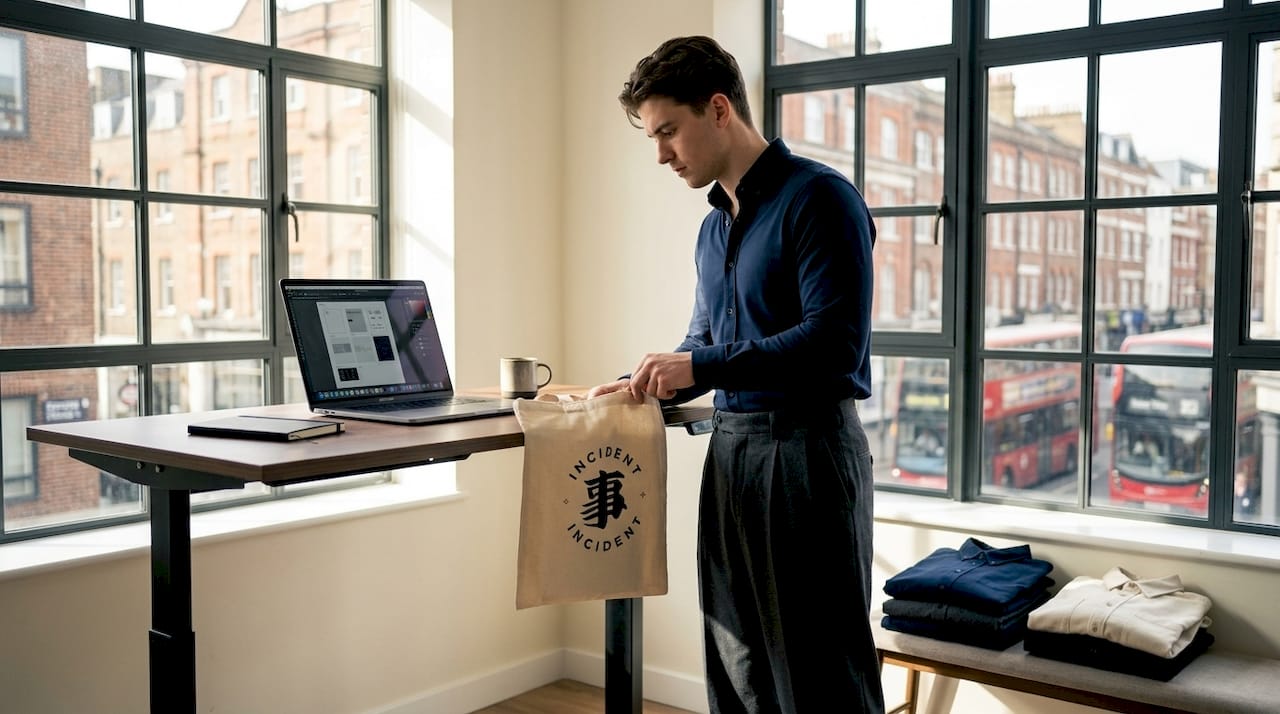
The leisure and social context: The same trousers, worn with a slightly looser tee and a minimal overshirt left open, shifts into weekend energy without losing intentionality. You are not dressed down so much as dressed differently. The palette stays cohesive, the silhouette remains considered.
The changeable climate context: This is where layering shows its full value. A base layer of premium cotton, a structured midlayer, and a minimal outer layer gives you a functional temperature range of around fifteen degrees without requiring a completely different outfit. This is particularly relevant in climates like northern Europe or cities where the weather shifts dramatically between morning and evening.
Professional styling for lifestyle changes in your 30s particularly emphasises reliability and comfort as priorities that do not need to come at the expense of style. The Japanese streetwear approach resolves this tension by design.
Key techniques for maximum adaptability
- Tonal dressing: Wearing similar shades across your outfit (charcoal trouser, slate grey tee, dark olive jacket) creates effortless visual harmony without requiring pattern or print.
- Proportion play: Pairing a relaxed top with a more structured or tapered bottom, or vice versa, maintains visual interest while keeping the overall look cohesive.
- Texture over colour: When working with a neutral palette, introducing varied textures (brushed cotton, woven fabric, smooth leather) adds depth and interest.
- The third layer rule: When in doubt, adding a minimal third layer, even something as simple as an open overshirt, elevates an outfit from casual to considered.
For genuine inspiration in applying these techniques, exploring a minimalist lookbook can clarify how the same pieces function differently across contexts. Seeing the combinations styled visually makes the theory concrete.
Pitfalls to avoid
Understanding what to do is only half the lesson. Knowing what to avoid is equally valuable.
Buying for exceptions, not routines. If you purchase a piece for a specific occasion that arises twice a year, it will not earn its place. Every item should have a clear, recurring role.
Ignoring care labels. A beautifully versatile piece that shrinks, fades, or pills after a few washes has failed you. Read care instructions and factor maintenance into your purchasing decision.
Chasing versatility through colour neutrality alone. A wardrobe of grey, white, and black is not automatically versatile. Fit, fabric, and silhouette matter just as much as palette.
Over-accessorising to compensate. When clothes do not do the work independently, people often reach for accessories to fill the gap. A well-curated minimalist wardrobe should not require heavy accessorising to feel complete.
Expressing your individuality through minimalist clothing is not about disappearing into uniformity. It is about allowing the quality and intelligence of your choices to speak for themselves. The different types of street fashion show that minimalism is one approach among many, but its practical benefits make it the most adaptable across contexts.
Pro Tip: Once a season, lay every item in your current rotation on a flat surface. If you cannot immediately picture at least three outfits for a piece, consider whether it truly earns its space.
With practical styling strategies covered, let us turn the lens to a perspective that often gets overlooked in mainstream fashion advice.
The real reason versatility works: Less is more, but nuance matters
Most guides on versatile dressing focus on the practical mechanics: pair this with that, choose these colours, buy these “staples.” And those mechanics are genuinely useful. But they miss the deeper reason that a genuinely versatile wardrobe changes how you carry yourself.
When you stop managing a wardrobe and start wearing one, something shifts. Getting dressed stops being a small act of anxiety and becomes a small act of confidence. You know what you own. You trust how it fits. You are not hoping an outfit works. You know it does.
Japanese minimalism in fashion understands this at an almost philosophical level. The discipline of owning fewer, better things is not asceticism for its own sake. It is a practice of attention. You pay attention to what you are buying, why you are buying it, and how it actually functions in your life. That attention is what distinguishes a curated wardrobe from a collected one.
We believe strongly that the most powerful fashion choices are the ones rooted in self-knowledge rather than trend-following. Knowing your own proportions, your colour preferences, the contexts your life actually requires, and the quality threshold you genuinely value is what makes minimalism in urban style work for you specifically rather than as a generic template.
The nuance that most versatility guides miss is this: fit, fabric, and tailoring are not just technical considerations. They are expressions of how seriously you take your own comfort and presentation. A well-fitted piece in a premium fabric, worn confidently, communicates something that no amount of trend-following can replicate. It communicates intention.
Our perspective is that the most versatile thing you can do for your wardrobe is to slow down. Resist the next purchase until you are certain it earns its place. Invest in quality over novelty. Wear things repeatedly and with confidence. That is where true style lives, and Japanese minimalist streetwear gives you the clearest framework for getting there.
Upgrade your wardrobe with versatile Japanese streetwear
The principles in this guide only become real when they are applied with actual pieces you can trust. Building a minimalist, versatile wardrobe starts with a foundation of quality, and that foundation deserves honest investment.
At INCIDENT Clothing, we design garments that embody everything discussed here: precise fit, premium fabrics, and a Japandi-inspired design language that moves effortlessly between work, leisure, and seasons. Our Pima T-shirt Collection is a strong starting point, crafted from ultra-soft Pima cotton with clean lines and a considered silhouette that anchors any minimalist rotation. Explore the full range of Japanese streetwear at incident.store to discover pieces built for real versatility, backed by craftsmanship you can genuinely feel. Each piece is chosen to work hard, wear well, and belong in a wardrobe you love.
Frequently asked questions
Is versatility important for a minimalist wardrobe?
Yes, versatility allows minimalist wardrobes to deliver maximum value and style from a limited number of items. Expert guidance highlights versatility as essential for efficient, stylish dressing with fewer pieces.
What makes Japanese streetwear especially versatile?
Japanese streetwear emphasises quality fabrics, precise fit, and flexible styling, all crucial for adaptability. Fabric and fit sit at the heart of reliability, making Japanese-inspired pieces naturally suited to varied contexts.
How do I choose versatile clothing pieces?
Focus on fit, premium fabrics, and items that transition easily between work, leisure, and different weather conditions. A repeatable set of high-use pieces will always outperform a larger, unfocused selection.
Can tailoring help with versatility?
Yes, tailored adjustments make clothes more adaptable for various occasions and improve overall fit significantly. Tailoring adjustments expand versatility across both work and leisure contexts without requiring new purchases.
What is the main pitfall when pursuing versatility?
Avoid buying excess options; instead, invest in quality, fit, and a thoughtful rotation of high-use pieces. Prioritising quantity over reliability is the most common and most costly mistake in building a genuinely versatile wardrobe.
Recommended
- Versatile streetwear: minimalism meets Japanese urban style – INCIDENT
- Build a timeless streetwear wardrobe: Japanese minimalist guide – INCIDENT
- Men’s streetwear essentials: refined Japanese-inspired style – INCIDENT
- Express individuality through minimalist Japanese streetwear – INCIDENT
- How to Build Eco-Friendly Outfits With Sustainable Style – The Cork Store


Share:
The power of subtle details in Japanese streetwear
Mindful fashion explained: minimalism, sustainability and streetwear