


TL;DR:
- Streetwear is a multicultural movement rooted in subcultures like hip-hop, skate, punk, and Japanese fashion.
- Its influence is driven by scarcity, hype, and community, with limited drops creating demand.
- Japanese streetwear emphasizes minimalism, quality, and heritage, shaping its modern, sustainable chapter.
Streetwear is far more than baggy T-shirts and trainers. Beneath the surface lies a movement shaped by counterculture, scarcity economics, and decades of cross-cultural exchange. Many dismiss it as casual dressing, yet it has quietly dictated the direction of global fashion for over four decades. From New York’s underground hip-hop scene to Tokyo’s minimalist ateliers, streetwear carries a heritage you can feel in every carefully chosen silhouette. This article traces its origins, unpacks the mechanics that keep it relevant, and explores why Japanese minimalism and sustainability now define its most exciting new chapter.
Table of Contents
- Defining streetwear: Origins and evolution
- Core mechanics: Scarcity, hype, and community culture
- Japanese streetwear: Minimalism, premium quality, and global reinterpretation
- Streetwear’s impact: Blurring luxury, market trends, and sustainability
- Streetwear’s modern meaning: Subcultures, authenticity, and future directions
- Why authenticity, minimalism, and community are the future of streetwear
- Discover premium Japanese streetwear and elevate your style
- Frequently asked questions
Key Takeaways
| Point | Details |
|---|---|
| Streetwear’s diverse origins | Streetwear is rooted in New York hip-hop, Californian skate, punk, and Japanese fashion cultures. |
| Scarcity fuels desirability | Limited drops and community hype create exclusivity and drive the streetwear economy. |
| Japanese minimalist influence | Japanese brands champion workwear, architectural silhouettes, and premium materials for lasting style. |
| Luxury and sustainability shifts | The movement now blends with luxury, prioritises sustainability, and appeals strongly to Gen Z and Millennials. |
| Authenticity over hype | True streetwear champions subcultural roots, craftsmanship, and authenticity ahead of reselling or fleeting trends. |
Defining streetwear: Origins and evolution
Streetwear is not a single aesthetic. It is a living, breathing cultural document written by skaters, musicians, punks, and designers across multiple continents. Understanding it properly means going back to its roots.
Streetwear originated in the late 1970s and 1980s, drawing simultaneously from New York hip-hop, California surf and skate culture, punk subcultures, and Japanese street fashion before gaining genuine global momentum through the 1990s. That multicultural DNA is precisely what makes it so difficult to pin down, and so endlessly renewable.
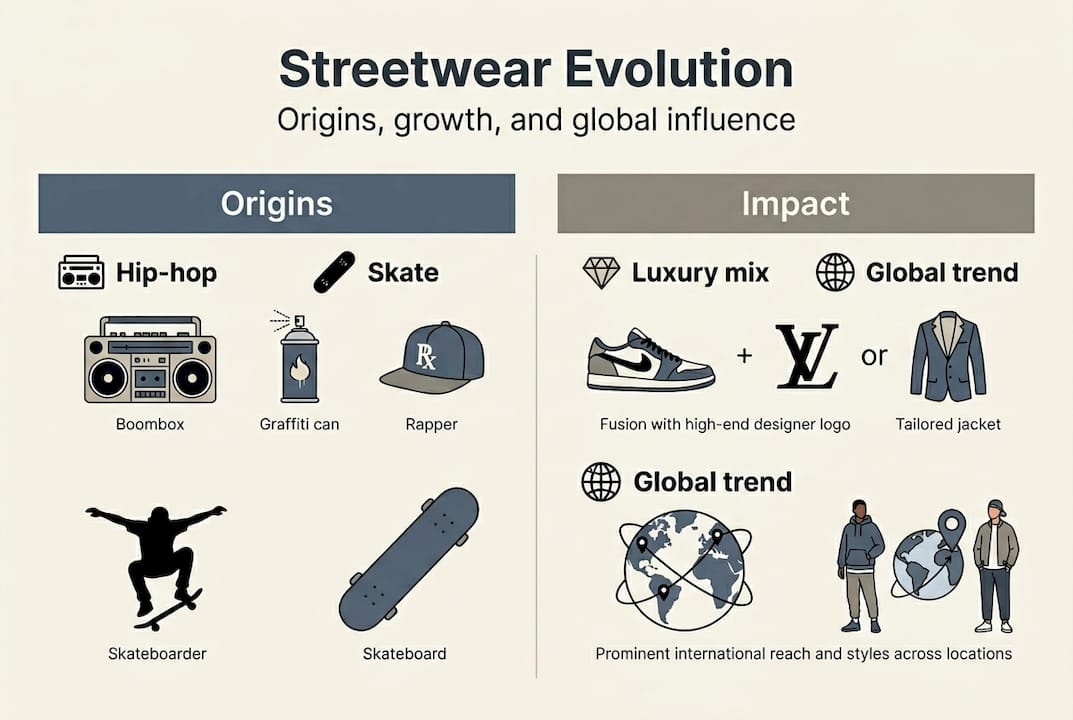
The early scene was driven by necessity as much as creativity. Skaters needed durable, functional clothing. Hip-hop artists used fashion as a form of identity and resistance. Punk communities weaponised clothing as protest. These were not fashion movements in the traditional sense. They were cultural statements stitched into fabric.
The 1990s changed everything. As hip-hop crossed into mainstream radio and television, the aesthetic it carried crossed with it. Brands that had been local legends became international names. Japanese designers, already quietly reinterpreting American workwear and sportswear through a lens of precision and restraint, began exporting a distinctly elevated version of the genre to a global audience hungry for something more considered.
The classic streetwear roots that define the movement today can be traced to several distinct cultural tributaries:
- New York hip-hop: Bold graphics, oversized silhouettes, and brand logos as cultural currency
- California skate and surf: Functional cuts, graphic tees, and an anti-establishment spirit
- Punk subculture: DIY customisation, irreverence, and a rejection of mainstream fashion norms
- Japanese street fashion: Precision craftsmanship, minimalist silhouettes, and a reverence for material quality
“Streetwear sits at the crossroads of subculture and commerce, youth rebellion and high design. Its power lies in refusing to belong entirely to any one world.”
This cross-cultural foundation is what separates streetwear from other fashion movements. It was never owned by a single community, which is exactly why it has outlasted every trend that tried to replace it.
Core mechanics: Scarcity, hype, and community culture
With roots established, let us explore what powers the movement’s ongoing influence. Streetwear does not simply survive on aesthetics alone. It runs on a set of economic and social mechanics that are as carefully engineered as any luxury house strategy.
The limited drop model is the engine at the centre of it all. By releasing small quantities of product at unpredictable intervals, brands manufacture desire. When supply is deliberately constrained, demand intensifies. Owning a piece becomes a statement of access, timing, and cultural fluency.
Here is how the core mechanics typically operate:
- Limited production drops create artificial scarcity, driving immediate sell-outs and long queues
- Social media amplification turns a single release into a cultural moment within hours
- Resale markets extend the lifecycle of each drop, with up to 25% of purchases potentially finding their way onto secondary platforms
- Direct-to-consumer sales bypass traditional retail entirely, keeping brand narrative tight and margins healthier
- Community identity transforms buyers into advocates, building loyalty that no advertising budget can replicate
Pro Tip: If you want to understand a streetwear brand’s authenticity, look at how it handles its drops. Brands that prioritise community access over resale speculation tend to build far more lasting cultural credibility.
Understanding streetwear hype mechanics is genuinely useful for any fashion-conscious buyer. It helps you distinguish between labels chasing short-term noise and those building something with real longevity. The resale economy, while lucrative, can hollow out a brand’s community if left unchecked. The most respected names in the space manage this tension carefully, and their brand identity reflects that deliberate restraint.
Japanese streetwear: Minimalism, premium quality, and global reinterpretation
Now, let us see how Japanese streetwear offers more than hype. It reshapes the movement entirely.
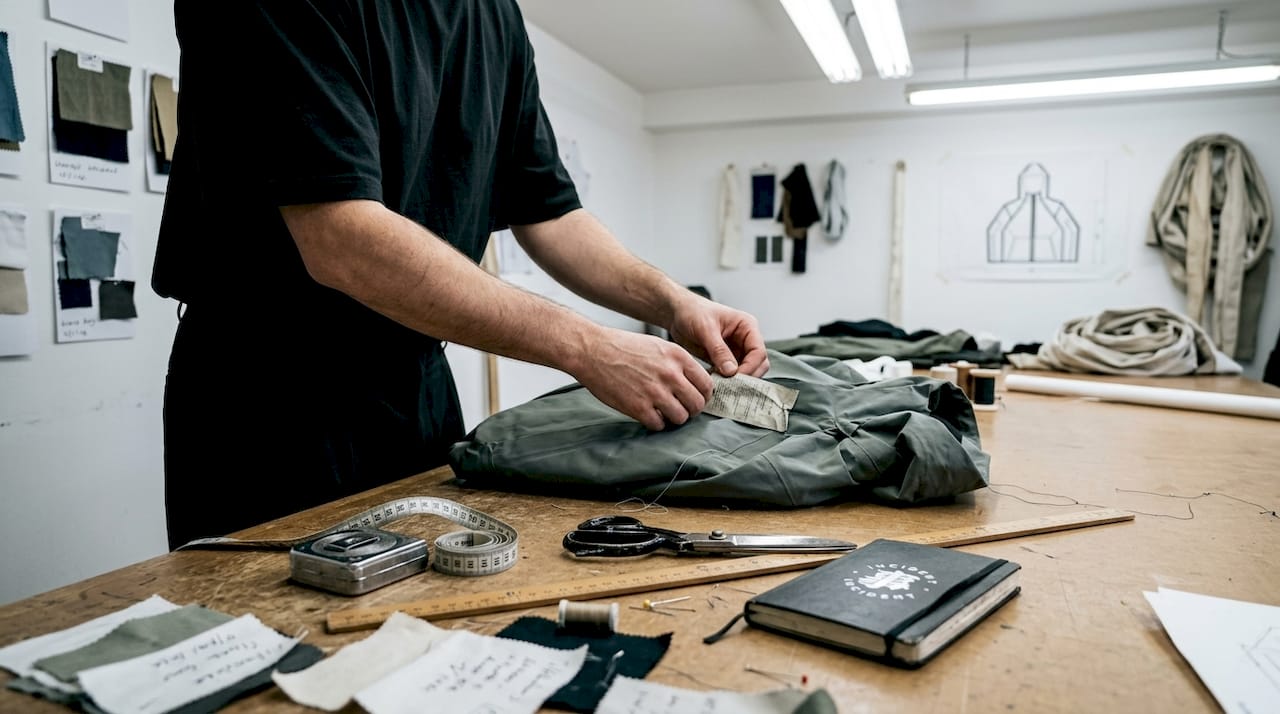
Japan’s relationship with streetwear began after the Second World War, when American military presence introduced denim, varsity jackets, and sportswear to a generation of Japanese youth. Rather than simply adopting these garments, Japanese designers studied them obsessively, then rebuilt them with extraordinary attention to material and construction. The result was something entirely new: American silhouettes elevated by Japanese craft.
Japanese streetwear is defined by architectural silhouettes, volume control, considered layering, and technical fabrics that reward close inspection. Brands like BAPE brought playful graphic energy rooted in Tokyo subculture, while Human Made channelled nostalgia and heritage into premium everyday pieces. Both approaches share a commitment to quality that Western streetwear rarely matches.
The Harajuku fashion wave exported this sensibility globally, influencing everyone from Kanye West to Virgil Abloh. Today, the principles it established remain the benchmark for serious streetwear design.
| Feature | Western streetwear | Japanese streetwear |
|---|---|---|
| Design focus | Bold graphics, logos, cultural references | Minimalist silhouettes, architectural form |
| Material priority | Accessible, trend-driven fabrics | Premium Japanese materials, technical textiles |
| Cultural tone | Loud, expressive, subcultural | Restrained, considered, heritage-driven |
| Longevity approach | Seasonal, trend-responsive | Timeless, investment-led |
Pro Tip: When building a wardrobe rooted in Japanese streetwear principles, start with fabric. A garment’s quality is felt before it is seen. Explore the Japanese fabrics guide to understand what separates lasting pieces from disposable ones.
The Japanese approach teaches something the wider market is only now beginning to absorb: that restraint is not a limitation. It is a form of confidence.
Streetwear’s impact: Blurring luxury, market trends, and sustainability
With Japanese innovation in mind, let us see how the movement affects both the market and wider culture today.
The most visible sign of streetwear’s cultural power is its absorption into luxury fashion. Collaborations like Louis Vuitton x Supreme did not simply merge two brands. They collapsed the boundary between high fashion and street culture, forcing the entire industry to reconsider what luxury actually means to a younger generation.
Yet as streetwear meets luxury design, some critics warn of what they call fashion purgatory: a state where brands chase hype so aggressively that they lose the subcultural authenticity that made them compelling in the first place.
The numbers behind the movement are striking:
| Market metric | Figure |
|---|---|
| Global market size 2023 | ~$187 to $218 billion |
| Projected global size by 2031 | ~$265 billion (CAGR 3.94%) |
| Asia-Pacific market share | 38% |
| UK market 2024 | ~$23 billion, growing to $44 billion by 2033 |
| Consumers under 25 | 70% of buyers |
| Gen Z and Millennial spend share | 80% |
The sustainability shift is equally significant. Brands like A-COLD-WALL* and Patta are demonstrating that eco-conscious streetwear can carry genuine subcultural weight. Minimalist design and responsible production are no longer niche concerns. They are becoming the primary language of the most forward-thinking labels.
- Younger buyers increasingly prioritise transparency in production
- Longevity and versatility now rival novelty as purchase drivers
- Sustainable materials are being embraced without sacrificing aesthetic quality
“The brands that will define the next decade are not those that shout the loudest. They are those that build with intention and stand behind every stitch.”
Streetwear’s modern meaning: Subcultures, authenticity, and future directions
Having discussed the market, let us reflect on the movement’s deeper meaning and future.
One of the most honest tensions in streetwear today is the debate around authenticity. Some pioneers resent the very label, feeling that commodification has stripped the movement of its DIY spirit and subcultural honesty. When a garment that once represented community resistance becomes a speculative asset, something essential is lost.
Yet the movement is not finished. It is recalibrating. A new generation of designers and buyers is returning to the values that made streetwear meaningful in the first place: originality, craft, and genuine community.
For fashion-conscious individuals navigating this landscape, here are the markers of a brand worth your attention:
- Subcultural narrative: Does the brand have a genuine story rooted in a specific community or aesthetic tradition?
- Material integrity: Are fabrics chosen for quality and longevity, or simply for cost efficiency?
- Community over hype: Does the brand foster real dialogue with its audience, or simply manufacture scarcity?
- Transparent production: Is the brand open about how and where its garments are made?
- Design restraint: Does each piece feel considered, or is it chasing a seasonal trend?
Pro Tip: Before buying into a brand’s narrative, look at its archive. Labels with genuine streetwear styling elements tend to show consistency across seasons rather than lurching from one trend to the next.
The true DNA of streetwear lives in subcultures, whether skate communities in New York, underground scenes in Tokyo, or independent labels in European cities. That DNA is resilient. It simply needs the right conditions to express itself clearly again.
Why authenticity, minimalism, and community are the future of streetwear
Here is what we genuinely believe, having observed the movement closely: the next meaningful phase of streetwear will not be defined by the loudest collaborations or the most aggressive drops. It will be defined by the quietest ones.
Mainstream hype has a ceiling. When every brand is manufacturing scarcity and every release is positioned as a cultural event, the noise becomes indistinguishable. What cuts through is restraint. A garment that earns your attention through its construction, its fabric, its considered proportion, rather than its logo, carries a different kind of weight entirely.
The brands that will matter in five years are those building community around shared values rather than shared queues. Transparency in production, respect for craft, and a design philosophy rooted in genuine aesthetic conviction: these are not marketing positions. They are the foundations of something lasting.
We believe the minimalist design philosophy at the heart of Japanese streetwear offers the clearest path forward. Not because minimalism is fashionable, but because it demands honesty. Every detail must earn its place. That is a discipline most brands are not yet willing to embrace, which is exactly why those that do will stand apart.
Discover premium Japanese streetwear and elevate your style
If this exploration of streetwear’s origins and values resonates with you, the next step is finding pieces that actually embody those principles. At INCIDENT, we design garments rooted in Japanese minimalism and Swiss precision, built for those who understand that true style is felt as much as seen.

Our premium cotton T-shirts are crafted from exceptional Pima cotton, offering a softness and structure that rewards daily wear. Each piece in our INCIDENT collection is designed with clean lines, subtle detail, and a commitment to longevity over trend. Explore the collection and discover what it means to wear something made with genuine intention.
Frequently asked questions
What are the main origins of streetwear?
Streetwear emerged from New York hip-hop, California skate and surf culture, punk, and Japanese fashion during the late 1970s and 1980s, with each community contributing a distinct aesthetic and set of values.
Why is scarcity important in streetwear?
Limited drops and scarcity fuel demand, boost resale value, and foster a dedicated community around brands, turning each release into a cultural moment rather than a simple transaction.
How does Japanese streetwear differ from Western styles?
Japanese streetwear emphasises minimalism, high-quality fabrics, and innovative architectural design, whereas Western streetwear often centres on bold graphics, subcultural references, and logo-driven identity.
What makes streetwear authentic?
Authentic streetwear draws from genuine subculture roots and self-expression, prioritising originality and community connection over luxury branding or resale speculation.
What is the future of streetwear?
The future centres on sustainable materials and minimalism, with the most enduring brands being those that combine workwear heritage, transparent production, and a genuine commitment to community over hype.



Share:
Build a timeless streetwear wardrobe: Japanese minimalist guide
Artisanal streetwear: unique craft, style & meaning