


Streetwear and sustainability were once considered opposites. One was loud, trend-driven, and disposable. The other was quiet, principled, and long-term. That divide is closing fast. A new generation of designers and consumers is proving that urban style can carry real ethical weight, and that the most forward-thinking pieces on the street today are built on ethical production, eco-materials, and lifecycle responsibility. This guide breaks down what sustainable streetwear actually means, how it’s made, and how you can build a wardrobe that reflects both your style and your values.
Table of Contents
- What is sustainable streetwear? Core definitions and roots
- From materials to manufacturing: How sustainable streetwear works
- Culture, aesthetics, and the Japanese minimalist influence
- Challenges, greenwashing, and spotting authenticity
- Practical guide: Building your sustainable streetwear wardrobe
- Explore sustainable Japanese streetwear with INCIDENT
- Frequently asked questions
Key Takeaways
| Point | Details |
|---|---|
| Holistic ethics | Sustainable streetwear puts ethics, eco-materials, and lifecycle thinking at the core. |
| Japanese influence | Minimalist, wabi-sabi aesthetics boost quality and sustainability in streetwear. |
| Detecting greenwashing | Vetting certifications and supply chain transparency protects you from misleading brands. |
| Smart shopping | Choosing well-made, certified, and locally produced pieces helps build a sustainable wardrobe. |
| Market growth | Demand for authentic, eco-conscious streetwear is shaping markets globally, especially among young adults. |
What is sustainable streetwear? Core definitions and roots
Sustainable streetwear is urban-inspired clothing designed with a conscience. It draws from the same cultural roots as classic streetwear, but it layers in a commitment to fair labor, low-impact materials, and designs built to last. The goal isn’t just to look good. It’s to ensure that every step of the garment’s life, from raw fiber to final wear, causes as little harm as possible.
The contrast with conventional streetwear is sharp. Mainstream drops often rely on synthetic-heavy fabrics, offshore labor with little oversight, and trend cycles that push consumers to buy and discard within months. Sustainable streetwear flips that model entirely, prioritizing ethical labor, eco-materials, and full lifecycle responsibility.
Here’s a side-by-side look at the core differences:
| Feature | Sustainable streetwear | Conventional streetwear |
|---|---|---|
| Materials | Organic cotton, hemp, recycled fibers | Virgin polyester, conventional cotton |
| Labor | Fair wages, safe conditions | Often unverified, low-cost offshore |
| Design intent | Durability, timelessness | Trend-driven, seasonal |
| End of life | Recyclable, upcyclable | Landfill-bound |
| Production volume | Small-batch, intentional | Mass production |
Younger consumers are driving this shift. They want brand identity in streetwear to mean something beyond a logo. They want to know who made their clothes, what those clothes are made of, and whether the brand behind them actually stands for something real.
“Sustainable streetwear is not a trend. It is a recalibration of what urban fashion owes to the people and planet behind every garment.”
From materials to manufacturing: How sustainable streetwear works
With core ideas in place, let’s see how sustainable streetwear is actually made, from sourcing superior fabrics to minimizing waste at each stage.
Organic cotton uses 91% less water than conventional cotton, and young shoppers are increasingly rewarding brands that make this choice. Beyond cotton, the material palette for sustainable streetwear includes recycled polyester, hemp, Tencel, and emerging fiber innovations like lab-grown leather and algae-based textiles. Each option carries a different environmental profile, but all represent a meaningful step away from virgin synthetics.

The manufacturing process matters just as much as the fabric. Sustainable brands use digital and waterless dyeing techniques to cut chemical runoff. Zero-waste pattern cutting reduces fabric scraps. Upcycling programs give deadstock materials a second life. Circular economy principles, upcycling, and low-waste production are now emerging pillars of the movement, not just bonus features.
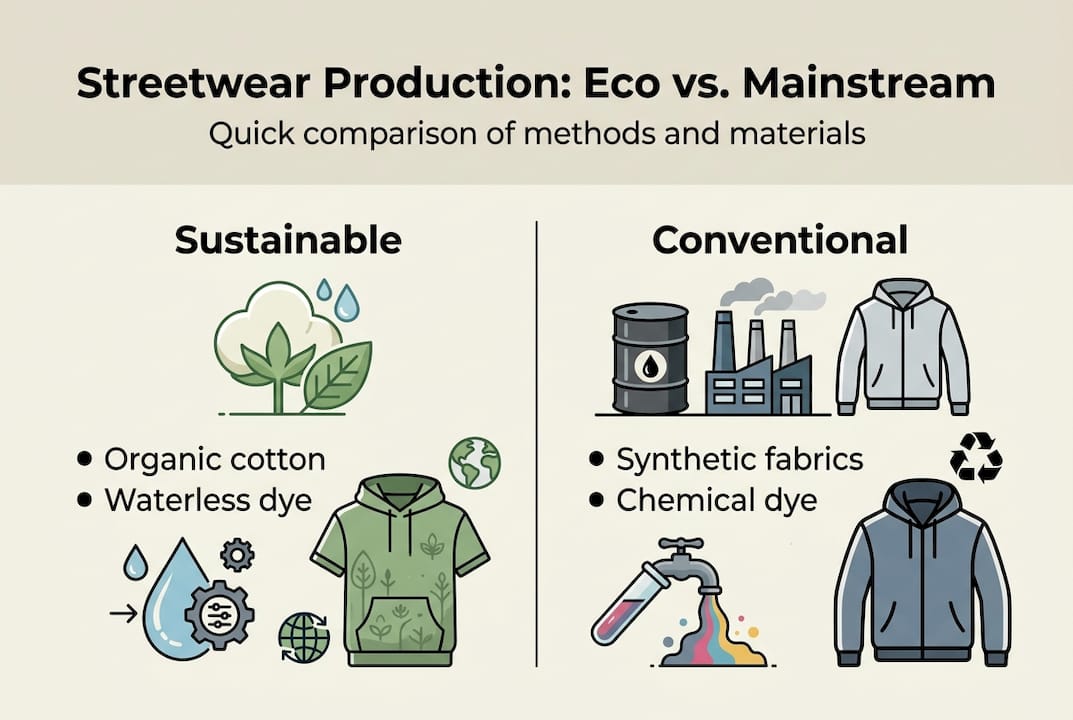
Here’s how the impact compares:
| Method | Sustainable approach | Conventional approach |
|---|---|---|
| Dyeing | Waterless or low-chemical | Chemical-heavy, high water use |
| Pattern cutting | Zero-waste design | Standard cutting with high waste |
| Fabric sourcing | Certified organic or recycled | Virgin synthetic or conventional |
| End-of-life plan | Designed for circularity | No plan |
When you’re shopping for high-quality Japanese garments or exploring Japanese fabrics in streetwear, these production details are worth asking about. Craftsmanship and sustainability are deeply connected.
Pro Tip: Look for GOTS (Global Organic Textile Standard) or Fair Trade certification on any brand claiming sustainable production. These third-party labels verify what marketing copy cannot.
Culture, aesthetics, and the Japanese minimalist influence
The production story leads right into the aesthetics. Japan’s approach to fashion enhances the sustainable streetwear movement in ways that feel almost inevitable.
Japan’s sustainable fashion market is growing rapidly, driven by minimalist design values, a deep respect for natural materials, and the wabi-sabi philosophy that finds beauty in imperfection and impermanence. These aren’t just aesthetic preferences. They are a direct counter to fast fashion’s obsession with newness and volume.
Japanese minimalist streetwear aligns naturally with slow fashion and high-quality standards. A well-constructed Japanese garment is designed to age gracefully, to be worn for years, and to carry meaning beyond its season. That philosophy is the opposite of a trend drop that loses relevance in six weeks.
Traits that define Japanese minimalist sustainable streetwear:
- Clean silhouettes with no unnecessary detail
- Natural and organic fabric choices, often undyed or subtly toned
- Small-batch production that values quality over quantity
- Repair and care culture built into the garment’s story
- Designs that transcend seasonal trends
Exploring Japanese streetwear styles through this lens reveals something powerful. The most enduring pieces aren’t the loudest ones. They’re the ones built with intention, worn with care, and kept for years.
“Wabi-sabi teaches us that a garment’s value deepens with time, not diminishes. That is the soul of sustainable design.”
Pro Tip: When shopping for sustainable Japanese-inspired pieces, prioritize small-batch collections over mass releases. Fewer units usually means more attention to material quality and construction.
Understanding luxury Japanese minimalist design helps you recognize the difference between a brand that borrows Japanese aesthetics for marketing and one that genuinely builds from that tradition.
Challenges, greenwashing, and spotting authenticity
While ideals are inspiring, it’s easy to be misled. Recognizing authentic brands versus hollow gestures is crucial.
Greenwashing is the practice of making a brand appear more sustainable than it actually is. It’s widespread in fashion, and streetwear is not immune. Greenwashing tactics include vague eco claims and small capsule collections that mask large-scale unsustainable production. A brand might release one organic cotton hoodie while manufacturing thousands of synthetic pieces with no ethical oversight.
Another common myth: recycled polyester is always clean. In reality, recycled polyester still releases microplastics with every wash, and accurate verification of any sustainability claim requires third-party certification, not just a brand’s own marketing language.
Here’s how to vet a brand’s authenticity:
- Check for third-party certifications like GOTS, Fair Trade, or B Corp status
- Look for transparent supply chain information on the brand’s website
- Assess whether sustainability is core to the brand or limited to one product line
- Review the fashion scorecard for major brand ratings
- Ask whether the brand publishes factory names, wages, or environmental audits
Strong brand identity in streetwear is built on consistency, not campaigns. A brand that is genuinely sustainable will show it across every collection, not just the ones designed to generate press.
Practical guide: Building your sustainable streetwear wardrobe
Armed with critical eyes, let’s turn knowledge into action. Here’s how you can curate your own sustainable wardrobe with confidence.
Start with the principle of buying less and choosing well. A single well-made organic cotton tee will outlast three fast-fashion alternatives and carry far less environmental cost over its lifetime. Top sustainable brands lead with recycled materials and living wages, and Japan’s rental and resale market is surging as consumers embrace circular models.
Your shopping checklist:
- Verify material content: look for organic, recycled, or certified natural fibers
- Check certifications: GOTS, Fair Trade, or equivalent third-party labels
- Research the brand’s production origins and labor practices
- Prioritize timeless silhouettes over trend-specific pieces
- Choose brands that offer repair services or take-back programs
Practical choices like certified organic fabrics, ethical sourcing, and minimalist design create lasting impact, both for the environment and for your personal style. When you curate unique Japanese streetwear with these principles in mind, you build a wardrobe that feels intentional rather than impulsive.
Care matters too. Washing garments in cold water, air drying, and learning basic repairs extends the life of every piece significantly. Participating in resale platforms or clothing swaps keeps garments in circulation and out of landfills. Explore sustainable clothing brands that align with these values to find pieces worth investing in.
Pro Tip: Invest in three to five standout pieces that genuinely reflect your aesthetic and values rather than filling your wardrobe with mediocre options. Quality always outlasts quantity.
Explore sustainable Japanese streetwear with INCIDENT
If you’re ready to bring these principles home, INCIDENT is where conscious design meets Japanese-inspired craftsmanship. We build every collection around the values explored in this guide: premium materials, minimalist silhouettes, and a deep respect for the tradition of quality.

At INCIDENT, we source with intention and design for longevity. Our pieces are made for those who understand that true style doesn’t expire with the season. From our pima cotton collection, crafted from one of the world’s finest natural fibers, to our broader range of Japanese-inspired essentials, every garment is a considered choice. Explore what it means to wear something built to last, and discover the quiet confidence that comes with dressing sustainably.
Frequently asked questions
How is sustainable streetwear different from mainstream streetwear?
Sustainable streetwear features ethical labor, eco-friendly materials, and designs built for longevity, unlike fast-paced, trend-driven mainstream streetwear that prioritizes volume and low cost. Sustainable streetwear balances trend with full lifecycle responsibility.
What materials are most common in sustainable streetwear?
Organic cotton, recycled polyester, hemp, and innovative bio-based fabrics are most widely used for their lower environmental footprint. Organic cotton reduces water use dramatically compared to conventional cotton.
How can you spot greenwashing in streetwear brands?
Look for third-party certifications, transparent supply chains, and be cautious of vague marketing claims or limited eco capsule lines that don’t reflect the brand’s overall practices. Greenwashing occurs when brands exaggerate sustainability without third-party proof.
Why are Japanese aesthetics important in sustainable streetwear?
Japanese streetwear values minimalism, longevity, and premium natural fabrics, making it a strong cultural match for sustainability principles. Japanese minimalist and wabi-sabi philosophies align naturally with sustainable design thinking.



Share:
How to use streetwear elements: Japanese styling made simple
Street fashion types: Japanese minimalism & modern styles