


TL;DR:
- European youth have embraced Japanese minimalism and streetwear, blending influences into their fashion.
- They value quality, craftsmanship, and understated elegance over logo-heavy trends.
- Limited releases and cultural storytelling make Japanese brands highly sought after by European collectors.
Something quietly remarkable has happened in European cities over the past decade. Walk through Berlin’s Mitte district, Paris’s Marais, or Zurich’s creative quarters, and you will notice a distinct visual language emerging: clean silhouettes, muted palettes, and understated garments that carry a sense of considered intention. This is not coincidence. Minimalist Japanese aesthetics, quiet luxury, and high-quality simple items resonate globally, and European youth, aged 18 to 35, have embraced this philosophy with particular enthusiasm. Far from being a niche obsession, Japanese fashion has become a defining cultural force for a generation seeking authenticity, craft, and meaning in what they wear.
Table of Contents
- Cultural fusion: How Japanese and European youth shape fashion
- Minimalism and craftsmanship: The signature of Japanese style
- Streetwear exclusivity: The collector’s appeal of Japanese brands
- Bringing Japanese fashion into European closets
- What most guides miss about European-Japanese fashion fusion
- Explore high-quality Japanese streetwear in Europe
- Frequently asked questions
Key Takeaways
| Point | Details |
|---|---|
| Cultural connection | Japanese fashion appeals to young Europeans thanks to shared subcultures and anime influences. |
| Minimalist quality | The focus on simple, high-quality garments matches modern European tastes and values. |
| Exclusive streetwear | Limited releases and collector-driven brands create excitement and foster unique identities. |
| Accessible fusion | European youth use resale markets and fusion brands to blend Japanese style with local fashion. |
| Authenticity matters | True cross-cultural fashion success relies on appreciating craftsmanship and avoiding imitation. |
Cultural fusion: How Japanese and European youth shape fashion
Having set the stage for Japanese fashion’s appeal, let us uncover the cultural foundations driving this trend among European youth.
The relationship between Japanese and European youth fashion did not emerge overnight. It has been built gradually through shared subcultures, digital communities, and a profound mutual curiosity. One of the most significant drivers is anime and manga. These Japanese storytelling forms have cultivated dedicated communities across Europe for decades, and their visual language, which includes bold character design, layered costuming, and striking colour contrasts, has directly influenced how European youth think about personal style.
The statistics here are genuinely telling. Research suggests that 56.7% of French students watch anime on a regular basis, revealing how deeply Japanese cultural content has embedded itself in everyday European life. When a young person spends hours immersed in worlds built on specific visual codes, those codes inevitably find their way into their wardrobe choices.
Beyond anime, Tokyo’s Harajuku district has long functioned as a global laboratory for fashion experimentation. The Harajuku streetwear revolution did not stay confined to Takeshita Street. It spread through fashion magazines, social media platforms, and dedicated streetwear blogs, reaching European teenagers who were hungry for something more imaginative than what their local high streets offered.
“Japanese street fashion is not simply clothing. It is a conversation between generations, subcultures, and entire philosophical traditions made visible through fabric and form.”
What makes this cross-cultural exchange particularly interesting is the role of shared subcultures. Punk, hip-hop, and skateboarding all originated in the West, but Japanese designers and communities absorbed these influences, reinterpreted them through a Japanese lens, and sent them back into the world transformed. European youth, already rooted in these subcultures, found something familiar yet elevated when they encountered Japanese streetwear. This sense of recognition combined with discovery is a powerful emotional hook.
The result has been a genuine creative dialogue. European youth are not simply consuming Japanese fashion passively. They are remixing it, combining Japanese minimalism with Scandinavian colour sensibilities, or pairing Ura-Harajuku silhouettes with British heritage outerwear. Understanding streetwear hype explained helps clarify why this fusion feels so natural to a generation raised on global digital culture.
The key cultural factors driving this exchange include:
- Anime and manga as primary gateways to Japanese visual culture and style
- Harajuku and Ura-Harajuku aesthetics offering radical alternatives to mainstream European fashion
- Shared subcultures such as skateboarding, hip-hop, and streetwear creating common ground
- Social media and global streaming accelerating the speed at which Japanese trends reach European audiences
- Youth identity politics favouring individuality and cultural exploration over mass-market conformity
What emerges from this cultural fusion is something greater than imitation. It is a new visual language that young Europeans can genuinely call their own, even while honouring its Japanese origins.
Minimalism and craftsmanship: The signature of Japanese style
With cultural influences clear, let us look at the aesthetic qualities and standards that set Japanese fashion apart.

If one principle defines Japanese fashion more than any other, it is the pursuit of quality over quantity. Where mainstream European fashion, particularly fast fashion, has often prioritised trend cycles and volume, Japanese design tradition operates on a different set of values entirely. Garments are conceived as objects of quiet permanence rather than seasonal disposables.
Minimalist Japanese aesthetics and quiet luxury resonate globally precisely because they offer something most contemporary fashion has abandoned: the idea that less can be profoundly more. A perfectly cut, unbranded crewneck in a considered shade of slate or indigo can communicate more sophistication than a logo-heavy piece from a recognisable European house.
For young Europeans, this resonates on multiple levels. Many within this demographic have grown up watching fast fashion’s environmental consequences unfold in real time. Choosing fewer, better pieces aligns with both their aesthetic preferences and their ethical commitments. Japanese fashion offers a way to look considered without participating in the culture of excess.
The minimalist design principles that characterise Japanese style can be broken down into several key elements:
- Colour: Muted, earthy palettes, deep indigos, warm off-whites, charcoal greys, and occasional bold accents used with restraint
- Silhouette: Relaxed, oversized, or precisely tailored shapes that prioritise comfort and visual calm over body-conscious construction
- Material: Premium natural fibres including cotton, linen, and wool selected for tactile quality and longevity
- Detail: Subtle stitching, interior finishes, and construction choices that reveal themselves gradually rather than announcing themselves immediately
Understanding quality garments in Japanese streetwear requires shifting your eye from surface spectacle to structural honesty. A garment that looks simple often requires the most skill to produce well.
| Feature | Japanese minimalist fashion | Mainstream fast fashion |
|---|---|---|
| Design focus | Timeless silhouette and craft | Trend-driven, seasonal |
| Branding | Subtle or entirely absent | Prominent logos |
| Materials | Premium natural fibres | Mixed synthetics |
| Price point | Mid to premium | Low to mid |
| Longevity | Designed for years of wear | Often lasts one season |
| Values | Craftsmanship and heritage | Volume and accessibility |
Exploring Japanese minimalism in street fashion further reveals how this philosophy extends beyond aesthetics into an entire lifestyle orientation. It is about buying with intention and wearing with confidence.
The concept of quiet luxury, which describes refined, understated elegance without visible status signals, has become one of the most discussed ideas in contemporary fashion. Japanese designers pioneered this approach long before it became a trending topic on social media. Brands like Issey Miyake, Yohji Yamamoto, and Comme des Garçons built international reputations on exactly this foundation decades ago.
Pro Tip: When evaluating a Japanese-inspired garment for genuine quality, turn it inside out. The interior finishing, seam quality, and fabric weight will tell you far more about craftsmanship than the exterior ever will. Genuine quality reveals itself in what most people never see.
The appeal of streetwear luxury Japanese design is ultimately an appeal to intelligence. It rewards the person who looks carefully and appreciates restraint, and young Europeans, increasingly sophisticated in their consumption, are responding to exactly that invitation.
Streetwear exclusivity: The collector’s appeal of Japanese brands
Beyond aesthetics, the exclusivity and narrative-driven releases of Japanese brands add another layer of appeal.
There is a particular thrill that comes with owning something rare. Japanese streetwear has understood this truth for decades and has built an entire culture around it. Limited drops, collaborative releases, and carefully managed scarcity have transformed Japanese streetwear into a collector’s pursuit that rivals fine art or vintage vinyl in its intensity.
Japanese streetwear’s history of remixing Western subcultures such as punk, hip-hop, and skate into refined, narrative-driven designs with limited releases creates a powerful combination of cultural authenticity and genuine scarcity. When a brand releases only three hundred units of a particular jacket, each one carries a weight that mass-produced items simply cannot achieve.
“In Japanese streetwear culture, the limited release is not a marketing trick. It is a statement of values: that thoughtful things should exist in thoughtful quantities.”
This scarcity culture has found an enthusiastic audience among European youth, particularly those already familiar with the sneaker drop model pioneered by brands like Nike and Adidas. The mechanics are familiar, but the Japanese streetwear world offers something those mainstream brands rarely do: genuine narrative depth behind each release.
Japanese brands frequently ground their collections in specific cultural references, historical moments, or craft traditions. A capsule collection might draw on the dyeing techniques of a particular region, or reference a specific decade of Osaka underground music. This storytelling dimension gives collectors a sense of participation in something meaningful, not merely commercial.
Here is a practical guide to engaging with the Japanese streetwear collector scene as a European enthusiast:
- Follow Japanese-language social media accounts directly from brands and designers, not just translated content
- Use trusted resale platforms such as Grailed, Depop, and Yahoo Japan Auctions, with appropriate proxy services for Japanese sites
- Identify authentic vintage markets in major European cities, particularly in Berlin, Amsterdam, and London
- Join community forums and Discord servers dedicated to specific Japanese brands or aesthetics
- Understand sizing conventions because Japanese streetwear sizing frequently differs from European standards, and authentic pieces should be tried or carefully measured before purchase
| Access method | Availability | Authenticity risk | Price premium |
|---|---|---|---|
| Brand direct (Japan) | Limited to drops | Very low | None |
| Global resale platforms | High | Medium | 20 to 150% |
| European vintage markets | Variable | Low to medium | Variable |
| Cross-cultural fusion brands | High | Very low | Low |
| Dedicated streetwear boutiques | Moderate | Low | Low to medium |
Learning how scoring Japanese streetwear drops works requires patience and genuine community engagement. There are no reliable shortcuts, but the rewards for those who invest the time are genuinely remarkable.
The collector appeal also extends meaningfully across gender. Japanese-inspired women’s streetwear has developed its own distinct collector communities in Europe, with women equally passionate about limited releases and brand narratives. This is a genuinely democratic culture in that respect: access depends on knowledge and dedication, not demographic categories.
The resale and vintage markets that fuel European access to Japanese streetwear have themselves become cultural institutions. A single afternoon spent in a Berlin vintage market can yield extraordinary finds, pieces that carry decades of wearable history and connect their new owner to an unbroken thread of craft and culture.
Bringing Japanese fashion into European closets
To make Japanese style more personal and accessible, here is how you can bring its essence into your own European wardrobe.
Understanding and admiring Japanese fashion is one thing. Successfully integrating it into a European wardrobe is another challenge entirely, and it is one where enthusiasm without knowledge can lead to frustrating results. The good news is that with the right approach, the transition is both achievable and deeply rewarding.
EDWIN Spring/Summer 2025 demonstrates exactly how global interest in Japanese-inspired apparel continues to broaden, with brands like EDWIN fusing Japanese streetwear with European tailoring to create pieces that feel genuinely at home on both continents. Their approach validates what many European fashion enthusiasts have discovered independently: the principles of Japanese design translate beautifully into European contexts when applied with understanding rather than imitation.
There are several reliable access points for European shoppers seeking authentic Japanese-inspired pieces:
- Dedicated streetwear boutiques in major cities, increasingly stocking Japanese or Japanese-influenced brands
- Online platforms offering authentic vintage Japanese garments with international shipping
- European brands with genuine Japanese design philosophy at their core, not merely aesthetic borrowing
- Resale communities where enthusiasts trade and share knowledge alongside pieces
For daily wear, the most successful approach involves treating Japanese pieces as anchors within an otherwise neutral wardrobe. A beautifully constructed Japanese-inspired T-shirt in natural cotton pairs effortlessly with tailored European trousers. An indigo-dyed work jacket adds depth and texture to a simple outfit without demanding attention. The garments do the work quietly, which is precisely the point.
When it comes to buying Japanese streetwear in Europe, knowing what to avoid is as important as knowing what to seek. Common mistakes include:
- Purchasing logo-heavy imitations that use Japanese characters decoratively without genuine design intent
- Buying pieces purely for their rarity rather than for how they will actually be worn and cared for
- Mixing too many aesthetic references in a single outfit, undermining the quiet coherence that Japanese style depends on
- Ignoring sizing and proportions, because Japanese minimalism relies heavily on correct fit and silhouette
The Japanese minimalism lookbook offers clear visual guidance on how these principles translate into actual outfits, which can be an invaluable reference when building your wardrobe.
Pro Tip: Start with foundational pieces rather than statement items. A perfectly weighted T-shirt in natural cotton, an oversized shirt in washed linen, or well-constructed trousers with a clean drape will carry a Japanese sensibility without requiring any visible reference to Japan. Build from these anchors outward.
One of the most compelling aspects of Japanese fashion for European wardrobes is its inherent versatility. Minimalist pieces resist obsolescence because they are not tied to specific trend cycles. A garment designed around proportion, material, and craft rather than seasonal novelty continues to feel relevant year after year. This is an especially attractive quality for a generation that increasingly values sustainability alongside style.
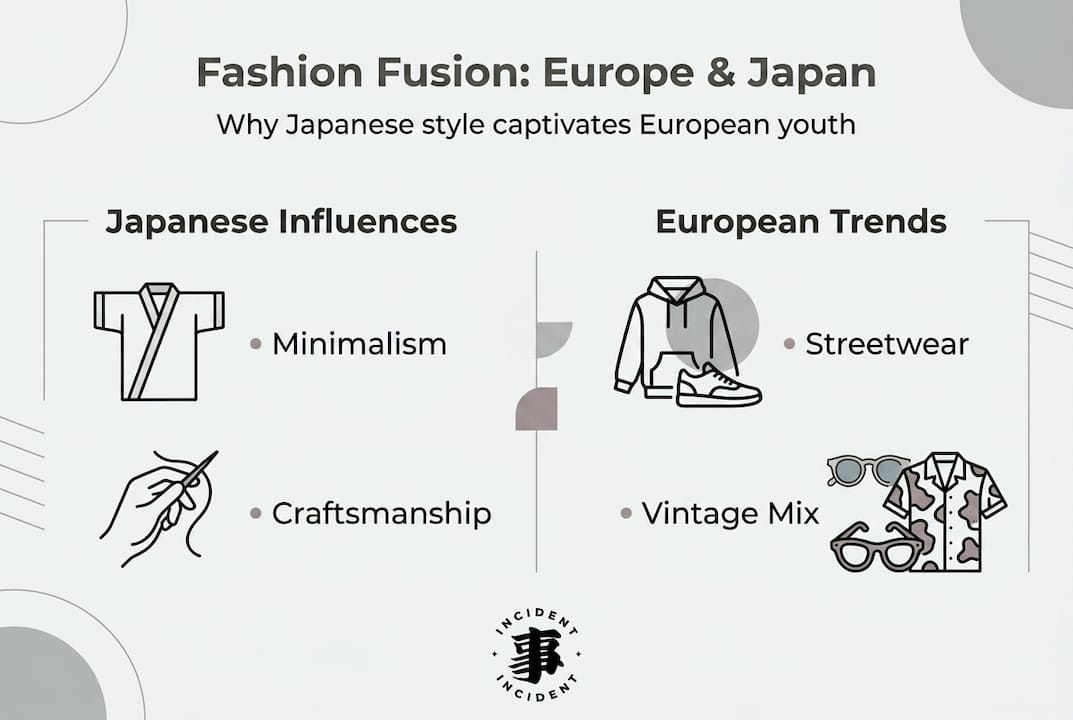
Exploring unisex Japanese streetwear also reveals how Japanese design philosophy naturally transcends traditional gender categories, offering European shoppers a liberating alternative to the often rigidly gendered structures of mainstream Western fashion. This openness is part of what makes Japanese aesthetics feel genuinely progressive to contemporary European audiences.
What most guides miss about European-Japanese fashion fusion
Most articles about Japanese fashion in Europe focus on what to buy and where to find it. That is useful, but it misses the most interesting question: what does it actually mean to wear another culture’s aesthetic language, and how do you do it with integrity?
True fusion requires something deeper than purchasing the right items. It demands a genuine engagement with the values and traditions that produced those items in the first place. European youth who are drawn to Japanese fashion for purely visual reasons often find that the more they learn about the culture behind the aesthetic, the more their relationship with it deepens and becomes genuinely their own.
There is also an honest conversation to be had about quality and access. European shoppers face specific challenges that Japanese consumers do not: import costs, size variations, and the difficulty of assessing authenticity from a distance. Japanese youth often prioritise domestic quality because imports are expensive and the domestic market is exceptional. Europeans typically navigate global resale, vintage markets, and cross-cultural brands like EDWIN to access this world, blending what they find with local tailoring and sensibility.
This is not a limitation. It is an opportunity. The European position, slightly outside the source culture and therefore free to recombine its elements with local influences, produces some of the most interesting fashion hybrids anywhere in the world. The goal should not be perfect replication of a Japanese wardrobe but rather a genuine creative conversation between traditions.
Pro Tip: Focus on understanding the philosophy behind a piece rather than just its visual appearance. When you buy with that understanding, you wear with genuine confidence.
Authenticity in fashion fusion is not about origin certificates or brand names. It is about intentionality, care, and honest engagement with the ideas that make a particular aesthetic meaningful. That approach will always produce something more compelling than trend-chasing ever could.
Explore high-quality Japanese streetwear in Europe
For those ready to take action, here are trusted ways to find authentic Japanese fashion pieces in Europe.
At INCIDENT Clothing, we have built our entire brand around the values this article describes: precision craftsmanship, considered minimalism, and the quiet confidence that comes from wearing something made with genuine intention. Based in Switzerland, we design garments that honour Japanese aesthetic traditions while speaking directly to European sensibilities.

Our Pima T-shirt collection exemplifies the philosophy we believe in: premium Pima cotton selected for its extraordinary softness and durability, cut with clean lines that transcend seasonal trends, and finished with the kind of interior attention that genuine quality always demands. These are pieces built to last, to wear well, and to carry meaning. Explore the full world of Japanese streetwear in Switzerland at our online store, where every item reflects a commitment to the craft and heritage that makes this aesthetic so enduring. We are always here to help you find pieces that truly belong in your wardrobe.
Frequently asked questions
What are the most popular Japanese fashion styles among young Europeans?
Minimalist streetwear, Harajuku-inspired looks, and understated luxury brands are most popular, with sustained global interest in minimalist silhouettes and streetwear broadening across European demographics.
How do young Europeans access limited Japanese streetwear releases?
Most rely on global resale platforms, vintage markets, and cross-cultural brands to acquire limited pieces, with European resale and vintage access routes being the most common pathways.
Why is quality important in Japanese-inspired fashion?
Japanese fashion prioritises minimalist design and craftsmanship, favouring subtlety and durability over flashy trends, which means quality is built into the philosophy rather than being an optional extra.
What are common mistakes when buying Japanese-inspired clothing?
Buyers often mistake surface-level imitation for genuine quality, overlooking the subtle craftsmanship that defines authentic Japanese aesthetics and instead prioritising visible logos or trend-driven details that contradict the entire design philosophy.


Share:
How premium fabrics shape fashion quality and streetwear
How influencer marketing shapes streetwear brands today