


Streetwear hype often gets dismissed as fleeting trend cycles, yet Japanese brands are proving this assumption wrong with explosive, sustained growth that defies conventional market wisdom. While Western streetwear saturates and stagnates, Japan’s market accelerates with brands like yutori achieving 92% year-over-year revenue jumps and Human Made successfully going public. You’ll discover how Japanese streetwear creates hype through community-driven SNS strategies, cultural authenticity, and craftsmanship that builds lasting value rather than temporary buzz. This guide reveals the economic forces, cultural depth, and innovative tactics powering Japan’s streetwear revolution in 2026.
Table of Contents
- The Evolving Global Streetwear Market Landscape
- How Japanese Streetwear Brands Create And Sustain Hype
- The Cultural And Design Depth Behind Japanese Streetwear Hype
- Niche Brands And Product Innovation Fueling Japanese Streetwear Hype
- Explore Authentic Japanese Streetwear Styles With INCIDENT
- What Is Streetwear Hype And Why Does It Matter?
Key takeaways
| Point | Details |
|---|---|
| Market dynamics differ | Japan’s streetwear market shows rapid expansion while Western markets mature with slower growth rates. |
| SNS drives community hype | Japanese brands like yutori use social media feedback loops to shape products, hiring, and marketing strategies. |
| Cultural roots sustain value | Brands grounded in authentic reinterpretation of cultural narratives maintain hype beyond simple scarcity tactics. |
| Explosive growth metrics | yutori reached IPO in five years with revenue hitting 8.3 billion yen, demonstrating new hype economics. |
| Innovation fuels niche success | Creative product design and international appeal help smaller brands capture significant market share globally. |
The evolving global streetwear market landscape
The streetwear landscape reveals a striking divergence between established Western markets and Japan’s accelerating influence. Western streetwear hype, once the dominant force shaping global trends, now faces market maturation with brands struggling to maintain momentum. Meanwhile, Japan emerges as the next powerhouse, with market projections showing nearly triple growth by 2033 compared to the global CAGR of just 3.6%. This shift isn’t random but reflects fundamental differences in how Japanese brands approach design, community, and cultural storytelling.
Japanese streetwear’s foundation rests on pioneering figures who shaped its unique identity decades ago. Hiroshi Fujiwara, often called the godfather of Japanese streetwear, introduced Western subcultures to Japan while adding distinctly local interpretations. Nigo built BAPE into a global phenomenon by blending American hip-hop aesthetics with Japanese kawaii culture and meticulous attention to detail. These innovators established a template where cultural synthesis matters more than mere imitation, creating depth that sustains hype across generations rather than seasons.
The numbers tell a compelling story about market momentum. Japan’s streetwear sector demonstrates vitality that contrasts sharply with Western slowdowns, attracting investors and brands seeking growth opportunities. This expansion connects directly to the Japanese streetwear revolution that transformed Harajuku from a local phenomenon into a global cultural export. Understanding these market dynamics helps explain why Japanese brands command premium prices and loyal followings despite abundant competition.
| Market Segment | Growth Rate | Key Characteristics | | — | — | | | Japan Streetwear | ~3x by 2033 | Community-driven, cultural depth, SNS integration | | Global Streetwear | 3.6% CAGR | Mature markets, saturation, slower innovation | | Western Legacy Brands | Declining | Hype fatigue, commodification, reduced exclusivity |
Several factors drive Japan’s outsized influence:
- Deep cultural narratives that give products meaning beyond aesthetics
- Integration of traditional craftsmanship with contemporary streetwear design
- Community-first brand building through social media engagement
- Willingness to experiment with niche concepts and unconventional materials
- Strong domestic market providing stable foundation for global expansion
The Asian streetwear market report highlights how Japan’s approach creates sustainable competitive advantages. Rather than chasing viral moments, Japanese brands build ecosystems where customers become collaborators and advocates. This strategy generates organic hype that compounds over time, creating exponential rather than linear growth patterns. The market landscape thus favors brands with authentic cultural connections and patient community cultivation over those relying solely on celebrity endorsements or artificial scarcity.
How Japanese streetwear brands create and sustain hype
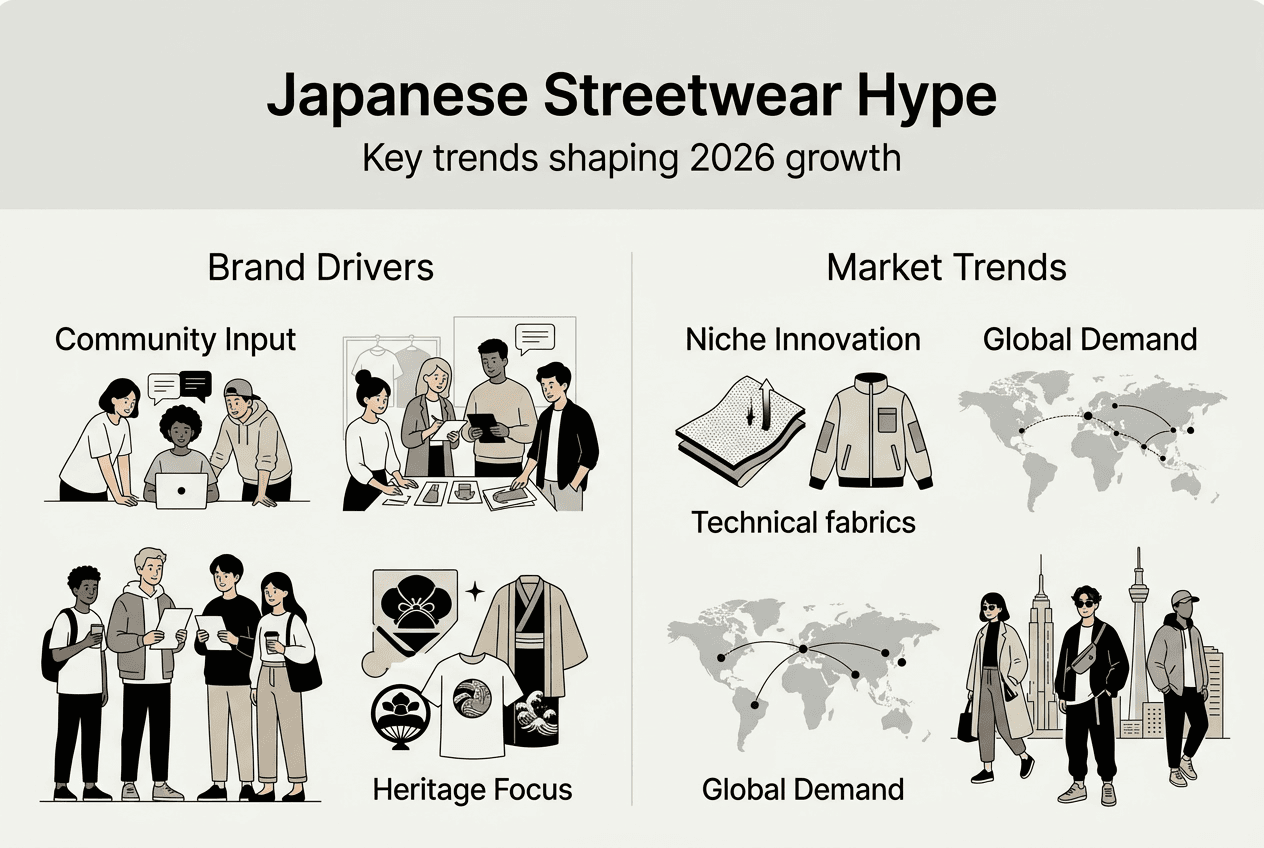
Japanese brands revolutionize hype creation by treating social media as a two-way conversation rather than a broadcast channel. yutori exemplifies this approach, growing from a single Instagram account to Japan’s fastest apparel IPO in just five years and eight months. The brand’s revenue reached 8.3 billion yen in fiscal year 2025, representing 92% year-over-year growth that defies typical retail economics. This success stems from pioneering SNS-driven feedback loops that influence every business decision from hiring to product development to marketing strategy.
The yutori model transforms traditional brand-customer dynamics by making community input central to operations. Brand social media accounts function as influencers themselves, building personality and trust that traditional corporate accounts rarely achieve. TikTok comments become sales funnels where customer questions and reactions directly shape product iterations and marketing messages. This creates a virtuous cycle where engaged customers feel ownership over brand evolution, deepening their commitment and willingness to advocate for products.
Offline events serve as UGC factories designed to generate shareable content that extends hype beyond physical attendees. Pop-up shops, limited releases, and brand experiences prioritize Instagram-worthy moments and TikTok-friendly interactions. Customers become content creators, spreading brand messages through authentic personal narratives rather than paid advertising. This strategy builds credibility that paid campaigns struggle to match, as peer recommendations carry far more weight than corporate messaging among target demographics.
The community-first approach contrasts sharply with product-first models dominating Western streetwear. Traditional brands develop products, then seek customers to buy them. Japanese innovators like yutori reverse this sequence, building communities first and letting customer input guide product creation. This reduces risk, increases relevance, and creates pre-launch demand that fuels hype cycles. The functional streetwear guide explores how this philosophy extends to design choices that prioritize wearer needs over pure aesthetics.
Key tactics Japanese brands use to sustain hype:
- Transform brand accounts into relatable personalities with consistent voice and values
- Monitor and respond to social media comments to gather product feedback and customer insights
- Design offline experiences specifically to generate user-generated content and social sharing
- Create transparent development processes where customers see their input implemented
- Build micro-communities around specific product lines or brand values
- Use data from social engagement to inform inventory, pricing, and release strategies
Pro Tip: Engage authentically with your target demographics on SNS platforms by responding to comments, sharing customer content, and showing behind-the-scenes processes to build hype that sustains beyond initial launches.
The yutori brand strategy demonstrates how consistent community engagement compounds over time. Early followers become brand ambassadors who recruit new customers through genuine enthusiasm rather than incentivized referrals. This organic growth proves more cost-effective and sustainable than traditional marketing funnels, as customer acquisition costs decrease while lifetime value increases. The model works because it aligns brand success with customer satisfaction, creating mutual incentives that traditional retail relationships often lack.
The cultural and design depth behind Japanese streetwear hype
Authenticity and cultural roots separate sustainable hype from temporary buzz in Japanese streetwear. Human Made’s successful IPO exemplifies this principle, with shares rising approximately 30% as investors recognized the value of brands with genuine cultural credibility. Founder Nigo built the label on deep knowledge of vintage Americana, Japanese craftsmanship traditions, and decades of streetwear experience. This foundation creates products with stories that resonate beyond surface-level aesthetics, giving customers reasons to invest emotionally and financially.
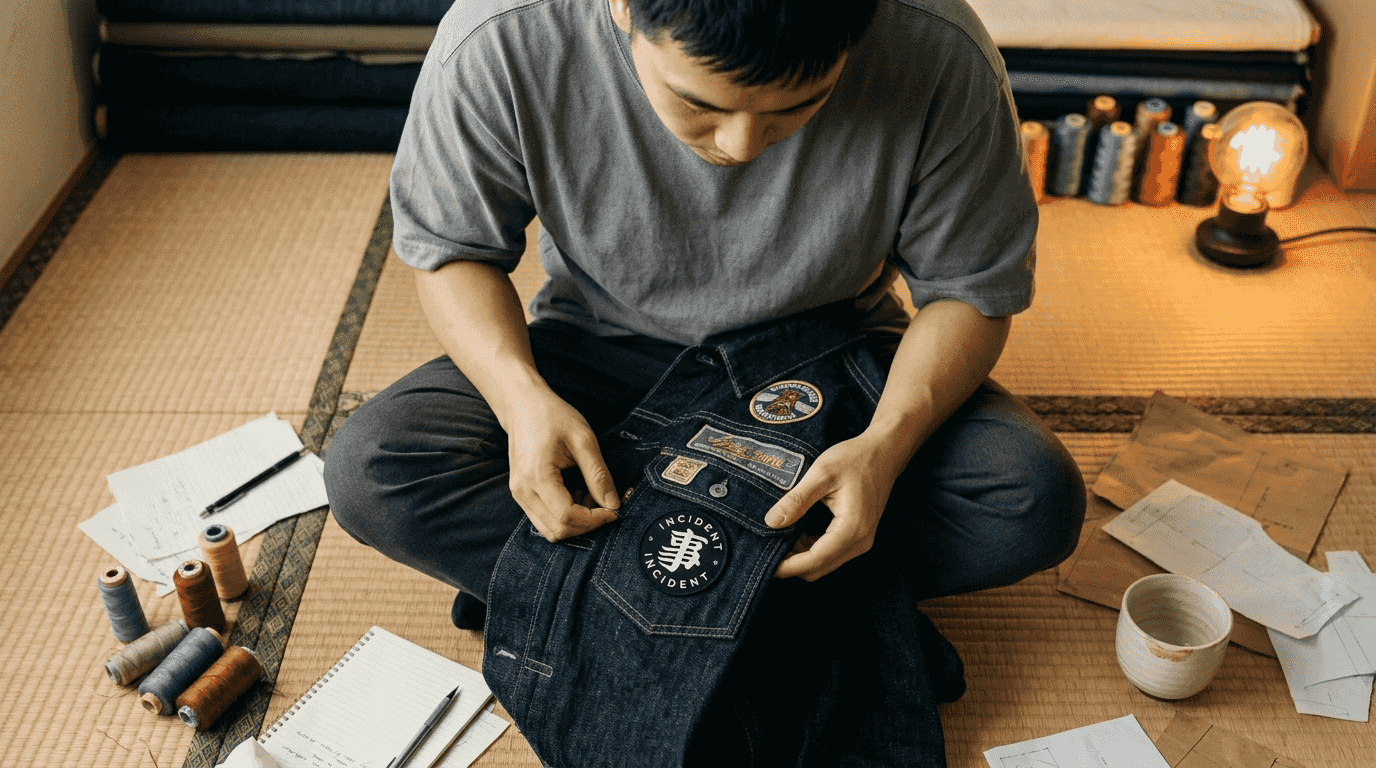
A.PRESSE demonstrates another approach to cultural depth through reinterpretation rather than replication. The brand translates American archetypes through Japanese craftsmanship, reworking classic workwear and military designs with premium materials and construction techniques. This differs fundamentally from brands that mythologize Americana without understanding its context or those that simply remix vintage pieces without adding new perspectives. A.PRESSE’s approach respects source material while creating something distinctly contemporary and Japanese, appealing to customers who value both heritage and innovation.
The comparison reveals three distinct strategies brands use when engaging with cultural references:
| Approach | Method | Example | Hype Sustainability |
|---|---|---|---|
| Mythologizing | Romanticize without deep understanding | Surface-level vintage aesthetics | Low, trend-dependent |
| Reinterpretation | Understand deeply, translate thoughtfully | A.PRESSE’s crafted Americana | High, culture-rooted |
| Deconstruction | Break down and rebuild with new meaning | Avant-garde experimental pieces | Medium, niche appeal |
Cultural credibility sustains hype beyond drop frequency or artificial scarcity because it gives products enduring meaning. Customers buying Human Made or A.PRESSE aren’t just acquiring clothing but connecting with cultural narratives they find personally significant. This emotional investment creates loyalty that survives trend cycles, as the cultural stories remain relevant even when specific styles evolve. The unique Japanese styles guide explores how these cultural foundations inform aesthetic choices across different brand segments.
Japanese brands excel at balancing reverence for tradition with contemporary innovation. They study historical garments, construction techniques, and cultural contexts with scholarly rigor, then apply this knowledge to create products that feel both timeless and modern. This contrasts with fast fashion’s superficial trend-chasing or luxury fashion’s often disconnected heritage claims. The depth shows in details: historically accurate stitching patterns, period-appropriate fabric weights, culturally significant color combinations that casual observers might miss but enthusiasts immediately recognize.
Pro Tip: Seek brands with deep cultural narratives and transparent design philosophies for more meaningful investment in streetwear, as cultural credibility sustains value and hype far longer than artificial scarcity or celebrity endorsements.
The intersection of craftsmanship and cultural knowledge creates products that improve with understanding. As customers learn more about the references, techniques, and stories behind pieces, their appreciation deepens rather than fading. This educational dimension transforms consumption into cultural participation, where buying and wearing become ways of engaging with traditions and ideas. Japanese streetwear’s IPO success validates this approach, proving that markets reward brands building cultural capital alongside financial returns.
Niche brands and product innovation fueling Japanese streetwear hype
Product innovation at the niche level demonstrates how creativity and quality drive hype independent of massive marketing budgets. SOCKSSS exemplifies this dynamic, achieving 5-7% of turnover in Japan and 20% globally through distinctive sock designs that blend Japanese aesthetics with European manufacturing. The brand’s success proves that focused product excellence can carve significant market share even in categories dominated by established players. Customers gravitate toward made-in-Portugal styles that offer premium quality and creative designs unavailable from mass-market competitors.
The SOCKSSS case reveals how niche brands build hype through product differentiation rather than marketing volume. Creative sock designs featuring unexpected patterns, premium materials, and thoughtful construction details attract customers seeking alternatives to generic options. Social media amplifies this appeal, as visually distinctive products photograph well and spark conversations. The brand’s international success, with global sales quadruple its domestic percentage, shows how product innovation transcends cultural boundaries when execution meets genuine customer needs.
Several key factors drive niche brand hype in Japanese streetwear:
- Originality in product concepts that address unmet needs or create new categories
- Quality execution using premium materials and manufacturing techniques
- International appeal through universal design principles applied with local perspective
- Strong SNS presence that showcases products and builds community engagement
- Focused brand identity that clearly communicates values and aesthetic vision
- Collaborative spirit that partners with complementary brands and creators
Minimalist aesthetics and meticulous craftsmanship intersect powerfully in Japanese streetwear’s approach to hype. Rather than relying on loud branding or excessive decoration, many Japanese brands embrace restraint that lets material quality and construction details speak. This appeals to customers fatigued by logo-heavy streetwear, offering sophistication without sacrificing the casual comfort and cultural relevance that define the category. The Japanese streetwear availability guide highlights how this aesthetic philosophy influences both product design and retail presentation.
Niche brands often pioneer innovations that larger companies later adopt, making them crucial to streetwear’s evolution. Small-scale operations can experiment with unconventional materials, construction methods, or design concepts without the risk aversion that constrains bigger players. When these experiments succeed, they validate new directions and create hype among early adopters who value being ahead of trends. This innovation pipeline keeps Japanese streetwear dynamic and prevents the stagnation affecting more mature markets.
Pro Tip: Focus on product uniqueness and quality to attract a loyal hype community, as distinctive offerings create organic word-of-mouth marketing that proves more effective and sustainable than paid advertising campaigns.
The SOCKSSS brand study illustrates how niche players leverage their agility to respond quickly to customer feedback and market shifts. Without bureaucratic approval processes or entrenched product lines to protect, small brands can iterate rapidly and take creative risks. This responsiveness builds customer trust and engagement, as buyers see their input genuinely shaping product evolution. The resulting hype feels earned rather than manufactured, creating sustainable growth trajectories that compound over time through authentic community building.
Explore authentic Japanese streetwear styles with INCIDENT
Experiencing Japanese streetwear’s cultural depth and craftsmanship becomes accessible through carefully curated collections that honor the traditions explored throughout this guide. INCIDENT brings Japanese-inspired minimalist aesthetics to Europe, offering pieces that embody the intersection of craftsmanship, cultural authenticity, and contemporary streetwear values. Our Switzerland-based brand designs garments using premium fabrics and clean lines that reflect Japandi philosophy, creating wardrobes that transcend temporary trends.

Our clothing collection features carefully crafted pieces that demonstrate how quality construction and thoughtful design create lasting value. Each garment reflects the principles discussed in this guide: cultural depth, material excellence, and design restraint that prioritizes wearer experience. From our signature PIMA cotton T-shirts to structured outerwear, every piece invites you to engage with Japanese streetwear’s sophisticated approach to casual style.
What is streetwear hype and why does it matter?
What defines streetwear hype in 2026?
Streetwear hype represents the cultural energy, market demand, and community engagement surrounding brands and products that blend street culture with fashion innovation. In 2026, authentic hype stems from cultural credibility, community building, and product quality rather than artificial scarcity alone. It matters because hype signals which brands successfully connect with cultural movements and customer values, creating economic and social impact that extends beyond individual transactions.
How does Japanese streetwear hype differ from Western approaches?
Japanese streetwear builds hype through community-first strategies, cultural depth, and SNS-driven feedback loops that make customers collaborators in brand evolution. Western approaches historically relied more on celebrity endorsements, limited drops, and marketing volume to create buzz. Japanese brands sustain hype longer by grounding products in authentic cultural narratives and craftsmanship that provide enduring value beyond initial excitement.
What role does social media play in Japanese streetwear hype?
Social media functions as the primary engine for Japanese streetwear hype, enabling direct brand-customer dialogue that shapes products, marketing, and community culture. Platforms like Instagram and TikTok serve as feedback channels where customer comments influence business decisions, not just promotional spaces. This two-way engagement creates organic advocacy as customers feel genuine ownership over brand direction, generating sustainable hype through authentic participation rather than passive consumption.
Why do cultural roots strengthen streetwear hype?
Cultural authenticity gives products meaning beyond aesthetics, creating emotional connections that sustain customer loyalty through trend cycles. Brands with genuine cultural knowledge can tell compelling stories, reference meaningful traditions, and create designs that resonate on deeper levels than surface-level trend-chasing. This depth attracts customers seeking personal expression and cultural engagement, not just fashionable clothing, building communities that amplify hype through shared values.
How can you identify genuinely hyped brands versus fleeting trends?
Genuinely hyped brands demonstrate consistent community engagement, transparent design philosophies, and growth metrics that reflect sustainable business models rather than temporary spikes. Look for brands with clear cultural narratives, quality construction, active social media dialogue with customers, and products that improve with understanding. Fleeting trends rely on artificial scarcity, celebrity associations without cultural depth, or marketing volume that exceeds product substance, creating buzz that fades quickly once novelty wears off.
Recommended
- Harajuku Streetwear: The Japanese Fashion Revolution | Incident Store - INCIDENT
- Curate unique Japanese streetwear styles in 2026 – INCIDENT
- Where to buy Japanse Streetwear in Switzerland? - INCIDENT
- What is functional streetwear? A 2026 guide – INCIDENT
- Why fast delivery matters for stylish eyewear in 2026 – 4 VISION
- Hottest Dog Fashion Trends For 2026: Stylish Looks For Pups


Share:
Master streetwear trends in 2026: Your complete guide
What is classic streetwear? A 2026 style guide