

TL;DR:
- Fabric quality, especially natural fibers, is key to durable, comfortable, and valuable garments.
- Technical factors like GSM, weave, and stitch density determine a garment’s longevity and resilience.
- Most consumers overlook fabric importance, focusing instead on visual branding and hype.
When most people assess a piece of clothing, the eye goes first to the logo, the colourway, or the graphic print. Brand recognition, silhouette, and visual identity dominate the conversation in contemporary streetwear. But there is a deeper truth that separates truly exceptional garments from those that merely look the part: fabric. The material beneath your fingertips, the weight of a sleeve, the way a collar holds its shape after fifty washes — these qualities are determined long before a designer sketches a single line. Understanding how fabric quality shapes what you wear is the clearest path to building a wardrobe that lasts, feels extraordinary, and carries genuine value.
Table of Contents
- Why fabric quality matters in fashion
- The science behind durability: What makes fabrics last?
- Construction counts: The hidden art of seams and stitch density
- Choosing fabrics for modern streetwear: Style, comfort, and performance
- Why most people overlook fabrics — and what changes everything
- Discover premium quality fabrics with INCIDENT
- Frequently asked questions
Key Takeaways
| Point | Details |
|---|---|
| Fabric quality defines value | Premium materials directly influence the feel, durability, and long-term appeal of fashion garments. |
| Durability comes from details | Factors like GSM, yarn twist, and tight seams make clothing last and resist everyday wear. |
| Smart choices elevate style | Choosing the right fabrics enhances both streetwear aesthetics and comfort. |
| Construction matters too | How a garment is stitched and assembled is just as vital as the fabric itself. |
Why fabric quality matters in fashion
To understand why fabrics are at the heart of quality, we must unpack which factors set materials apart.
Fashion has always carried a social language, and nowhere is this more visible than in the fabrics chosen by the world’s most admired houses and labels. Natural fibres — cotton, silk, cashmere, wool, and the extraordinarily rare vicuña — represent the pinnacle of what garment-making can achieve. They breathe against the skin, drape beautifully over the body, and carry with them a provenance rooted in geography and tradition. A Mongolian cashmere sweater or a Peruvian Pima cotton tee is not simply a commodity. It is a material story.
Synthetic fabrics have advanced enormously over the past two decades. Polyester microfibre, elastane blends, and recycled nylon all serve important performance functions. Yet the sensory experience of wearing a synthetic garment rarely matches that of a natural one. Breathability — the fabric’s ability to allow air to circulate and moisture to escape — is substantially better in natural fibres. Cashmere warms without trapping heat. Silk regulates temperature across seasons. Cotton absorbs perspiration without becoming heavy or stiff.
These are not merely aesthetic preferences. They are the qualities that determine whether you reach for a garment again and again, or leave it untouched at the back of a drawer. Understanding defining high-quality garments in the context of Japanese streetwear reveals just how deliberately premium labels approach material selection.
The concept of drape is particularly telling. A fabric with good drape falls naturally over the body, creating elegant, effortless movement. Cheap synthetic blends resist this, appearing rigid or boxy in ways that no amount of expert tailoring can fully resolve. Linen, silk, and high-grade modal all drape beautifully. This is why they are favoured in minimalist design traditions, where the fabric itself must carry visual weight rather than relying on embellishment.
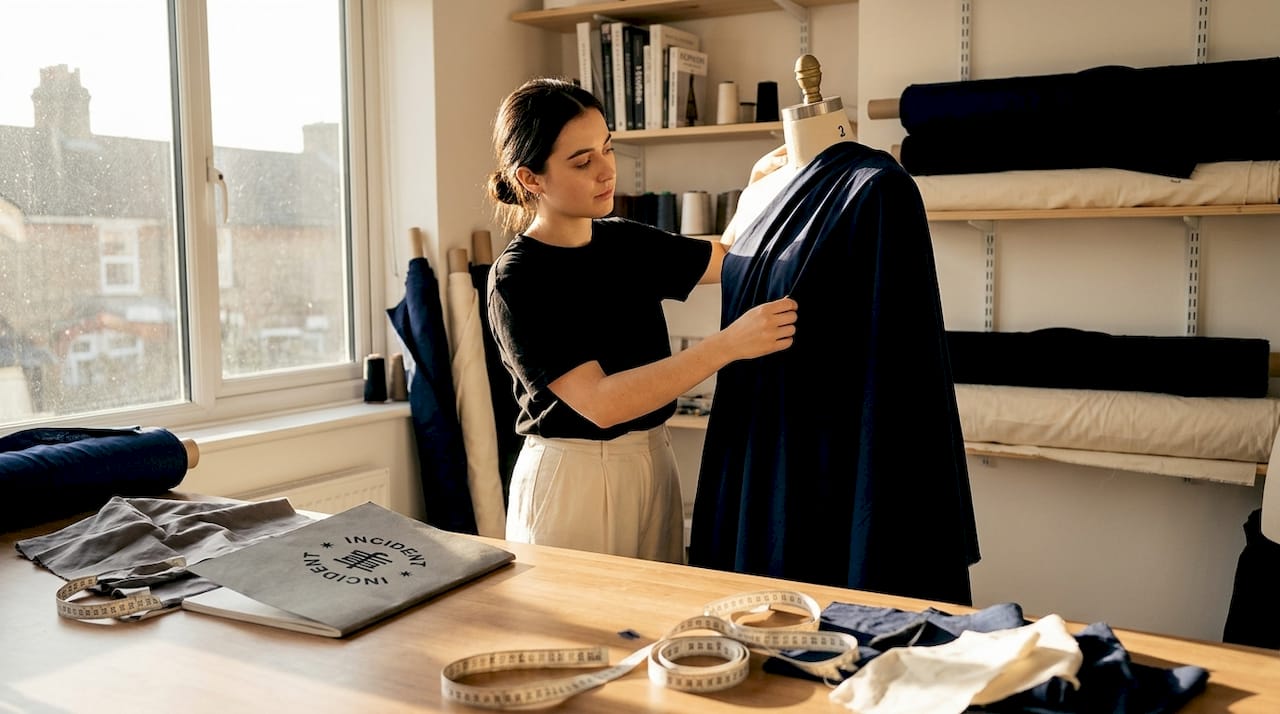
Rarity adds another dimension. Vicuña fibres cost over $3,000 per yard because the animals can only be shorn every three years and live exclusively in the high Andes. This scarcity creates genuine value, not manufactured perception. Similarly, the luxury fabric importance attached to silk stems from its labour-intensive production, requiring thousands of silkworm cocoons per garment. Rarity and effort translate directly into feel, durability, and cachet.
Here is a concise comparison of the most relevant fabric categories:
| Fabric | Origin | Key quality | Best use in fashion |
|---|---|---|---|
| Pima cotton | Peru / USA | Long-staple softness, durability | T-shirts, casual essentials |
| Cashmere | Mongolia / China | Exceptional warmth, ultra-soft | Knitwear, layering pieces |
| Silk | Asia | Temperature regulation, lustre | Shirts, liners, luxury basics |
| Modal | Beechwood fibres | Drape, moisture-wicking | Everyday wear, streetwear basics |
| Vicuña | Andes, South America | Extreme rarity, softness | Ultra-luxury garments |
| Standard polyester | Synthetic | Durability, low cost | Activewear, budget fashion |
The qualities worth prioritising when selecting a premium garment include:
- Softness against bare skin, especially for basics worn daily
- Breathability to regulate body temperature across seasons
- Drape for elegant, effortless movement and silhouette
- Colourfast properties that maintain richness through repeated washing
- Pilling resistance, which separates long-staple fibres from lower-grade alternatives
Exploring luxury in Japanese streetwear makes clear why the most considered labels invest so heavily in sourcing. When the fabric is right, every other design decision benefits from it. When it is not, even the strongest concept falls short.
The science behind durability: What makes fabrics last?
Knowing fabric matters, next, let’s uncover what makes a garment stand the test of time.
Durability is rarely dramatic. It reveals itself slowly, in the way a hem holds after repeated machine washing, or the way a waistband retains its elasticity through seasons of wear. The technical properties underpinning this kind of resilience are specific, measurable, and worth understanding before you invest in any premium piece.
GSM, or grams per square metre, is the most foundational metric. It measures the weight of fabric per unit area, giving a reliable indication of density and thickness. A lightweight summer tee might sit at 140 GSM, while a robust streetwear essential could range from 200 to 280 GSM. Generally, a higher GSM signals more yarn content and greater resistance to wear and distortion over time. Thin, low-GSM fabrics may feel light and soft initially, but they are significantly more prone to pilling, tearing, and loss of shape.
Cotton durability is affected by GSM, yarn twist, and construction method; fabrics made from low-twist yarns will pill faster than those with tight, high-twist construction. Twist refers to how many times the yarn fibres are wound around each other per inch. More twist creates a denser, more resilient thread. Combine this with a tighter weave and you have a fabric that resists abrasion, maintains its shape, and ages gracefully rather than deteriorating with use.
Weave tightness matters enormously in woven fabrics. A tight plain weave, as found in good Oxford cloth or canvas, locks yarns together so tightly that the structure itself becomes resistant to distortion. Looser weaves sacrifice this resilience for texture or drape. Knitted fabrics follow similar logic: fine-gauge knits with high stitch density will outlast loose, open-knit alternatives across multiple seasons.
Here is a quick reference for GSM ranges and their typical applications:
| GSM range | Fabric feel | Typical application |
|---|---|---|
| 100 to 150 | Lightweight, delicate | Summer shirts, layering |
| 150 to 200 | Medium weight, versatile | Everyday T-shirts, casual basics |
| 200 to 250 | Substantial, structured | Premium streetwear tees, sweatshirts |
| 250 to 320 | Heavy, durable | Outerwear, high-performance pieces |
To genuinely evaluate a garment’s durability before purchase, follow this process:
- Check the fabric composition label. Look for long-staple cotton varieties (Pima, Supima, Egyptian), which signal higher-quality raw material.
- Feel the weight. Hold the fabric up and assess its density. Heavier, fuller fabric at the same size typically means higher GSM.
- Examine the weave or knit. Hold the fabric to light. A tight, even pattern indicates quality construction. Gaps or loose loops signal inferior manufacturing.
- Test the stretch recovery. Gently stretch a small section of the fabric and release it. Quality fabrics spring back immediately and evenly.
- Check for pilling. Run a thumb firmly across the fabric’s surface. Low-quality yarns will begin to form tiny pills almost immediately under friction.
Our Japanese fabrics guide explores how heritage textile traditions in Japan approach these technical properties with extraordinary discipline, producing fabrics that are both technically excellent and aesthetically refined.
Pro Tip: When evaluating premium cotton T-shirts, specifically seek out Pima or Supima cotton. These long-staple varieties produce significantly fewer pills, retain their colour better through washing, and feel noticeably softer against the skin than standard cotton alternatives, making them outstanding value over a long wearing life.
Construction counts: The hidden art of seams and stitch density
Quality materials are improved further by top-tier construction — here is why seams deserve your attention.
There is a temptation to stop at fabric choice when assessing garment quality. Many buyers develop a good eye for materials but overlook the architecture of how those materials are assembled. This is a significant gap in most consumers’ knowledge, because even the finest fabric can be rendered mediocre by poor construction. Conversely, attentive construction transforms a good fabric into something that feels truly exceptional.
Stitch density is the number of stitches per unit of length along a seam. This is not a cosmetic detail. Increased stitch density raises seam strength by 20 to 38% in cotton fabrics, preventing yarn slippage and significantly extending the functional life of the garment. In practical terms, this means the difference between a shoulder seam that holds firm after two years of regular wear and one that begins to unravel or distort after six months.
“The quality of a seam is perhaps the most honest indicator of a brand’s commitment to craft. It is hidden from casual view, adds cost to produce, and delivers its value slowly, across years of wear — yet it is precisely where great makers distinguish themselves.”
Premium garments typically use between 10 and 14 stitches per centimetre, while budget alternatives often fall between 6 and 8. The difference in tension, evenness, and resistance to stress is immediately apparent when you know where to look. Understanding artisanal garment construction reveals the full depth of this craft tradition and why it remains relevant in contemporary streetwear.
Beyond stitch density, seam type matters considerably. Flatlock seams, often found in premium sportswear and quality streetwear, lie flat against the skin and distribute stress evenly across a wider surface area. French seams enclose raw edges entirely, preventing fraying and adding a refined finish. Overlocked or serged seams are standard for durability but vary widely in quality depending on the machinery used and the care taken in execution.
Use these checks to assess seam and stitch quality when evaluating any garment:
- Run a fingernail along the seam line. Quality stitching resists this without puckering or thread slipping.
- Examine the interior seam finishing. Premium garments hide raw edges or finish them neatly. Exposed, fraying edges indicate cost-cutting.
- Check the stitch evenness. Consistent spacing and tension across the entire seam length indicates controlled, attentive manufacturing.
- Look at bar tacks and reinforcement points. High-stress areas such as pocket corners and belt loops should show reinforced stitching or bar tacks in quality garments.
- Pull gently at the seam from both sides. There should be minimal give and no thread movement through the fabric.
Pro Tip: Turn a garment inside out before purchasing and spend thirty seconds examining the interior construction. More than almost any other indicator, the inside of a garment reveals the true standard of manufacturing. Neat, well-finished interiors almost always correspond to quality fabric and long-wearing construction outside.
Choosing fabrics for modern streetwear: Style, comfort, and performance
Understanding construction, let’s move to practical advice for choosing fabrics that match today’s style and comfort demands.
Contemporary streetwear has matured significantly over the past decade. What began as a movement built on limited-run graphics and logo-driven hype has evolved into a space that increasingly values material integrity, understated design, and garments that function as well as they look. This shift mirrors larger movements in fashion toward considered consumption and quality-first purchasing decisions.
Fabric preferences in modern streetwear reflect several converging trends. Sustainability has become a genuine priority rather than a marketing footnote. Consumers are choosing organic cotton, Tencel, Modal, and recycled fibres with increasing confidence. At the same time, the Japanese design tradition has exerted a quiet but significant influence, emphasising the inherent beauty of excellent materials over surface-level decoration. In this context, the fabric is not supporting the design — it is the design.
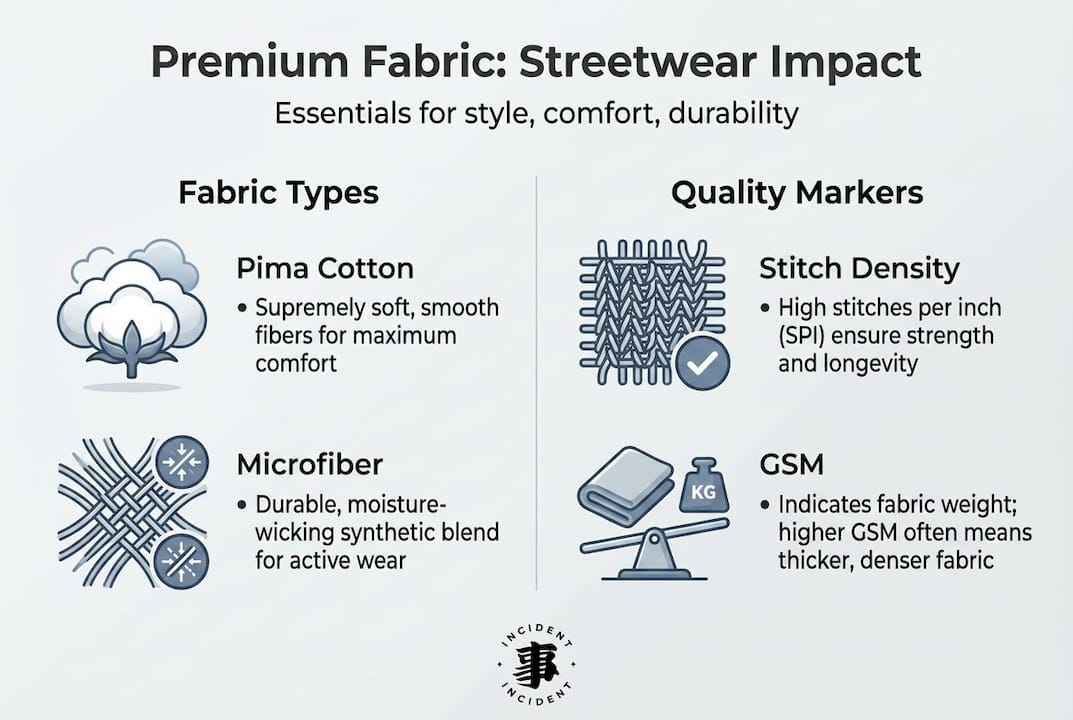
When selecting fabrics for streetwear, the feel of the material against skin takes precedence. You are likely wearing these pieces daily, often without layers between the garment and your body. Scratchy, rough, or unstable fabrics quickly become unwearable regardless of how they appeared in product imagery. Structure matters too: a tee that holds its shape through washing is an expression of self-respect as much as it is a testament to manufacturing quality.
The case for Pima and Modal fabrics in streetwear is particularly strong. Pima cotton’s long-staple fibres create a surface that resists pilling and softens further with each wash, rather than deteriorating. Lenzing Modal, derived from sustainably harvested beechwood, offers a silk-like drape with outstanding moisture-wicking properties and remarkable colour retention. Both are exceptional choices for anyone who wants streetwear basics that remain looking and feeling excellent through genuine daily use.
Follow this process to make more informed fabric selections for your wardrobe:
- Define your wearing context. Active urban movement demands breathable, stretch-friendly materials. Layered, editorial looks benefit from fabrics with good structure and drape.
- Prioritise natural fibres for next-to-skin pieces. T-shirts, basics, and undergarments perform best in high-quality cotton or Modal, where breathability and softness are non-negotiable.
- Consider the season and climate. Linen and lightweight cotton work beautifully in warm conditions. Heavier cotton, wool blends, and fleece-backed fabrics offer genuine warmth without excessive bulk in cooler months.
- Evaluate sustainability credentials. Look for GOTS-certified organic cotton, FSC-certified Modal, or recycled content. These certifications indicate rigorous standards in both material sourcing and manufacturing practice.
- Think long-term value. A premium fabric at a higher price per wear over five years is far better value than a cheaper alternative replaced annually.
Premium natural fibres like silk, cashmere, and vicuña represent the upper tier of this hierarchy, combining rarity with exceptional sensory quality. Integrating even one or two such pieces into a streetwear wardrobe elevates everything around them.
The best fabrics for comfort and performance in streetwear include:
- Pima cotton for everyday tees and essentials with outstanding softness and durability
- Lenzing Modal for fluid, drape-rich pieces that feel luxurious without the price of silk
- French terry cotton for sweatshirts and mid-layer pieces that balance warmth and breathability
- Merino wool for transitional-season layering with excellent temperature regulation
- Organic cotton canvas for structured outerwear with sustainability credentials
Exploring the full range of Japanese-inspired streetwear essentials offers a clear view of how these fabric choices translate into a complete, cohesive wardrobe built to last.
Why most people overlook fabrics — and what changes everything
Shifting from technical know-how, it is time for a fresh perspective on why fabric deserves your excitement.
There is an uncomfortable truth in fashion culture: most people, even devoted enthusiasts, choose garments based on visual signals rather than material merit. The logo, the collab, the drop date, the influencer association. These are the factors that drive purchasing decisions for the majority of consumers, even those who pride themselves on their taste. Fabric rarely enters the conversation.
This is not purely superficiality. Visual cues are the most immediate and accessible way to interpret garment value. But it creates a systemic blind spot. People invest in pieces that look extraordinary and feel mediocre, then wonder why their excitement fades after the first few wears. They chase newness because quality has not delivered the satisfaction it should.
The shift happens when you train your attention on material feel as seriously as visual appeal. A plain, logo-free tee cut from exceptional Pima cotton and finished to the standard of genuine craft will outlast and outperform five hype-driven alternatives. This is not a modest claim — it is a straightforward consequence of how textiles work. Understanding brand identity and fabric stories reveals how the most enduring labels weave material integrity into everything they do.
The unexpected edge in building a style identity you are genuinely proud of is knowing what you cannot see. When you develop that knowledge, your purchasing decisions become more confident, your wardrobe more cohesive, and your satisfaction with each piece more durable. This is the true luxury of understanding fabric.
Discover premium quality fabrics with INCIDENT
After seeing why smart fabric choices matter, take the next step and discover options curated with these principles in mind.
At INCIDENT, fabric selection is never an afterthought. Every piece in our collections reflects a deliberate commitment to the materials that make minimalist Japanese-inspired streetwear feel as refined as it looks. We source with intention, choosing fibres that reward long-term wear and age beautifully rather than declining with use.

Our Pima T-shirt collection brings together the heritage softness of long-staple Peruvian cotton with clean, considered silhouettes designed to hold their shape through years of wear. Whether you are building your first quality wardrobe or adding to a collection you have curated for years, each piece is crafted to deliver lasting satisfaction. Explore the full range of Japanese-inspired streetwear at incident.store and experience what it feels like when fabric becomes the quiet foundation of every confident, well-dressed moment.
Frequently asked questions
How can you tell if a fabric is high quality?
Check for softness, density, and a smooth or consistent weave, then examine the garment label for materials such as Pima cotton, silk, or cashmere. Premium natural fibres offer rarity, softness, and heritage value that are immediately distinguishable to an attentive hand.
What is GSM and why does it matter in fashion?
GSM stands for grams per square metre and measures fabric weight and density. A higher GSM typically indicates a thicker, more durable fabric. Cotton durability is shaped by GSM, yarn twist, and construction, meaning a heavier GSM garment will generally resist wear and maintain its shape far longer than a lighter alternative.
Are premium fabrics worth the investment in streetwear?
Premium fabrics provide superior comfort, longevity, and aesthetic appeal that justifies a higher price for discerning streetwear enthusiasts. When vicuña commands over $3,000 per yard due to rarity and quality, it illustrates a broader principle: materials of genuine excellence deliver lasting value that cheaper alternatives simply cannot replicate.
What role does stitch density play in garment quality?
Increased stitch density strengthens seams, preventing fabric slippage and significantly extending garment lifespan. Research confirms that stitch density raises seam strength by 20 to 38% in cotton fabrics, making it one of the most impactful and least visible indicators of garment quality.


Share:
The real impact of Japanese calligraphy in streetwear
Why young Europeans embrace Japanese fashion aesthetics