

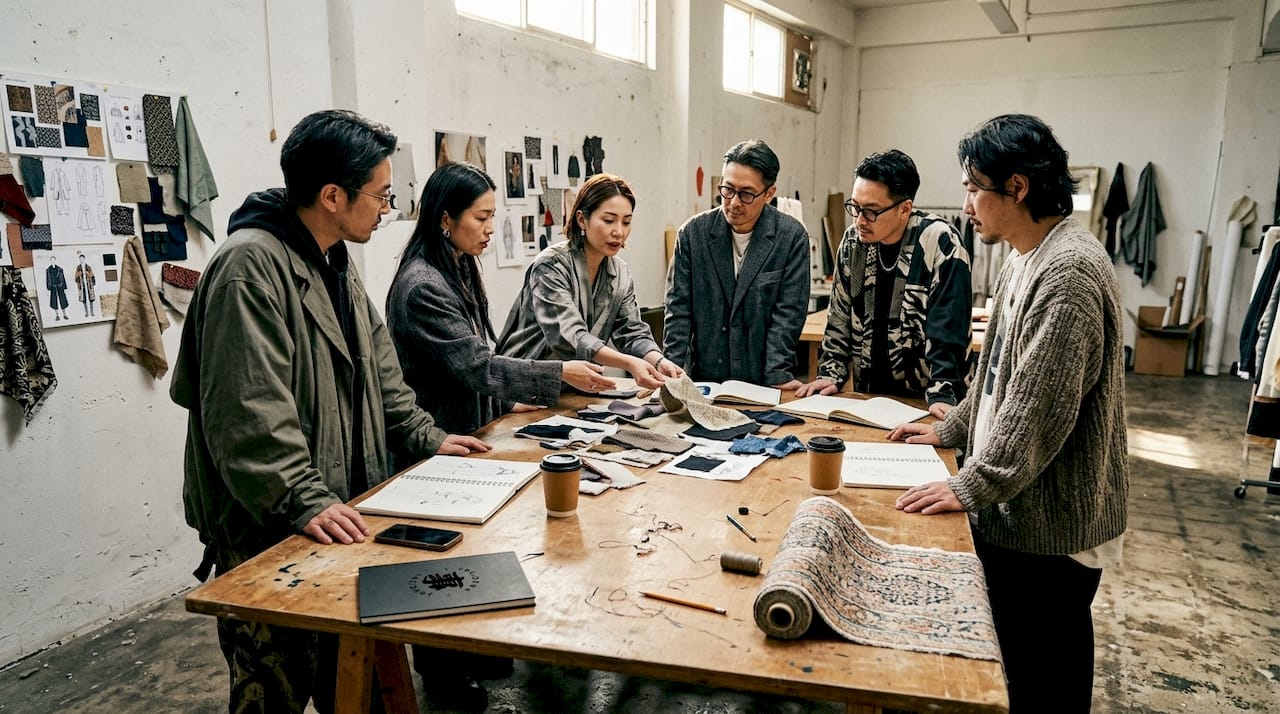
Every season, a new wave of brands claims to be inspired by Japan. But real influence doesn’t come from aesthetics alone. It comes from people who rewired how the world thinks about clothes, identity, and culture. These six Japanese fashion icons didn’t just dress people differently. They changed what fashion is allowed to be.
Table of Contents
- What makes a Japanese fashion icon?
- Hiroshi Fujiwara: The godfather of streetwear
- Jun Takahashi: The alchemist of Undercover
- Sk8thing: The silent architect of graphics
- Shoichi Aoki: Capturing Harajuku street style
- Avant-garde icons: Rei Kawakubo, Yohji Yamamoto, Issey Miyake
- Kansai Yamamoto: Where glam rock meets kimono
- Comparison: How these icons shape global youth style
- How to channel Japanese icons in your style
- Discover and wear your Japanese style
- Frequently asked questions
Key Takeaways
| Point | Details |
|---|---|
| Icons influence beyond trends | Japanese fashion giants like Fujiwara and Kawakubo sparked global shifts in both style and values. |
| Streetwear and high fashion merge | Designers blend street credibility with luxury innovation, creating new hybrids in world fashion. |
| Visuals and individuality matter | From Sk8thing’s graphics to Aoki’s documentation, self-expression and memorable looks drive influence. |
| Cultural fusion is key | Sampling techniques, traditional roots, and Western inspiration set Japanese icons apart. |
What makes a Japanese fashion icon?
Not every designer with a cult following qualifies. A true icon shifts values, not just visuals. In Japanese fashion, that means fusing tradition with rebellion, craftsmanship with counterculture, and local roots with global reach.
What separates these figures from trend-chasers:
- Cultural depth: They draw from Japanese heritage, punk, hip-hop, and Western subcultures simultaneously
- Lasting systems: They build brands, movements, and visual languages that outlive any single collection
- Cross-genre reach: Their influence spans streetwear, luxury, graphic design, and documentation
- Wabi-sabi thinking: Embracing imperfection and asymmetry as design values, not flaws
As one deep look at Hiroshi Fujiwara’s legacy notes, Japanese icons prioritize cultural fusion over trends, sampling design techniques the way hip-hop samples music. That mindset is what separates icons from influencers.
“Fashion is not something that exists in dresses only. Fashion is in the sky, in the street.” The Japanese icons on this list understood that instinctively.
Pro Tip: When building your own style, ask which values a designer represents, not just which pieces they make. That’s how you dress with intention, not just aesthetics. The Harajuku streetwear revolution is a perfect case study in values-driven fashion.
Hiroshi Fujiwara: The godfather of streetwear
With our criteria set, let’s meet the icons shaping Japanese style worldwide, beginning with the godfather himself.
Hiroshi Fujiwara is the reason Japanese streetwear exists as a global force. In the late 1980s and early 1990s, he brought hip-hop and punk culture back from New York and London to Tokyo, planting seeds in the Ura-Harajuku underground that would grow into a worldwide movement.
His key contributions:
- Fragment Design: His brand became a blueprint for minimalist, collaborative streetwear
- Nike collaborations: His Nike Lightning Bolt Dunk is one of the most coveted sneakers ever made
- Limited drops: He pioneered scarcity as a design strategy long before hype culture had a name
- Cultural curation: He introduced Japanese youth to hip-hop, punk, and skate culture as a unified aesthetic
Fujiwara is the godfather of Ura-Harajuku streetwear, founding Fragment Design and building collaborations with Nike that redefined what a streetwear brand could be. His approach, limited drops and hip-hop influences contrasting high-fashion avant-garde, created the template every hype brand since has followed.
“Fujiwara didn’t just wear culture. He translated it.”
Understanding his legacy helps explain why brand identity in streetwear matters so much, and why Japanese streetwear hype still dominates global conversation decades later.
Jun Takahashi: The alchemist of Undercover
Just as Fujiwara set the blueprint, Jun Takahashi elevated subversive attitude into high fashion through Undercover.
Takahashi started Undercover as a student at Bunka Fashion College in Tokyo. What began as a punk-influenced project became one of the most respected labels in the world. He founded Undercover in 1993, blending punk, streetwear, and high fashion, and has been showing in Paris since 2002.
What defines Undercover’s DNA:
- Narrative collections: Each season tells a story, often referencing literature, horror, or surrealism
- Graphic intensity: Bold, sometimes disturbing imagery that challenges comfort zones
- Luxury construction: Premium fabrics and tailoring applied to rebellious concepts
- Punk roots: Safety pins, distressed materials, and anti-establishment messaging baked into the design
Pro Tip: Takahashi’s approach proves that streetwear and high fashion aren’t opposites. They’re a spectrum. If you want to understand how Undercover’s impact on identity works, study how each collection builds a world, not just a wardrobe. For context on where Undercover sits historically, the classic streetwear guide breaks down the full lineage.
Sk8thing: The silent architect of graphics
Moving from brand founders to visual storytellers, Sk8thing’s graphics have defined how Japanese streetwear looks and feels.
Most people can name BAPE. Far fewer can name the person who designed its most iconic visuals. Sk8thing, real name Shinichiro Nakamura, is that person. He worked behind the scenes for years, shaping the visual identity of some of the most recognizable brands in streetwear history.
His graphic fingerprints appear across:
- BAPE (A Bathing Ape): Camouflage patterns, ape logos, and bold pop-art motifs
- GOODENOUGH: Early Ura-Harajuku visual language
- WTAPS: Military-influenced graphics with subcultural depth
- Cav Empt: Co-founded with Toby Feltwell, blending tech anxiety with streetwear aesthetics
Sk8thing designed visuals for BAPE, GOODENOUGH, WTAPS, and co-founded Cav Empt, making him foundational to Japanese streetwear’s graphic identity. His work proves that unique Japanese graphics are as important as silhouette when it comes to building a lasting aesthetic. That visual precision also connects directly to streetwear garment quality, where every detail carries meaning.
“The best graphic design in streetwear doesn’t shout. It signals.”
Shoichi Aoki: Capturing Harajuku street style
As graphics and brands grew, so did Japan’s vibrant street scenes. Shoichi Aoki made sure the world took notice.
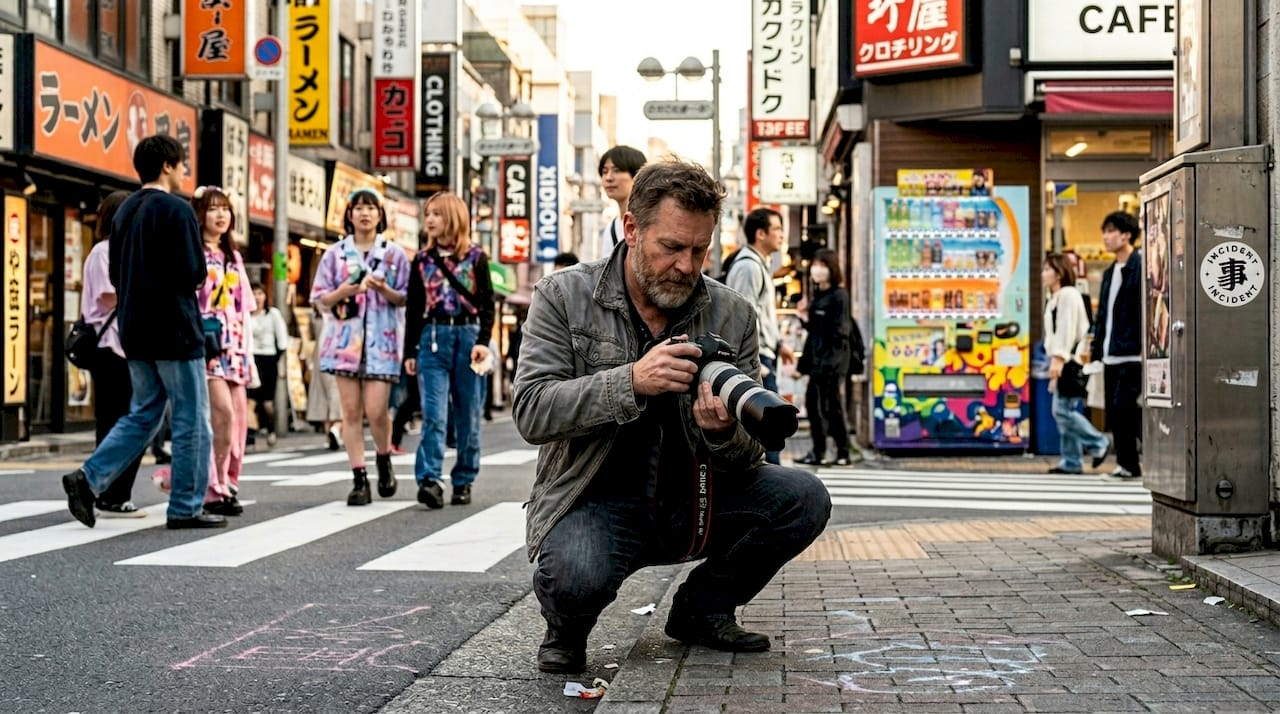
Aoki wasn’t a designer. He was a photographer and publisher who understood that the most interesting fashion wasn’t on runways. It was on the streets of Harajuku. His magazine FRUiTS became the definitive archive of Tokyo youth creativity.
What FRUiTS gave the world:
- Real documentation: Actual people, not models, wearing their own self-made looks
- Global reach: International editors and designers discovered Harajuku through its pages
- DIY validation: It proved that fashion didn’t need a brand name to be powerful
- Cultural record: A decade-long archive of one of fashion’s most creative street scenes
Aoki created FRUiTS magazine in 1997, documenting Harajuku street fashion and popularizing it internationally. The Harajuku and Ura-Harajuku scenes birthed DIY, punk-infused aesthetics blending traditional Japanese elements with Western subcultures, inspiring global youth fashion movements that are still active today.
Pro Tip: Follow photographers and documentarians, not just designers. The people capturing street culture often see trends before anyone else does. Aoki’s work directly influenced how Japanese-inspired prints spread globally, and his legacy is central to understanding the full Harajuku streetwear impact.
Avant-garde icons: Rei Kawakubo, Yohji Yamamoto, Issey Miyake
The icons of the street weren’t alone. Those pioneering on runways sparked a global rethink in how fashion could look and feel.
In the early 1980s, three Japanese designers arrived in Paris and shocked the fashion establishment. Their work wasn’t just different. It was a direct challenge to Western beauty standards, conventional silhouettes, and the idea that clothes should flatter the body.
Their shared principles:
- Deconstruction: Unfinished seams, asymmetric cuts, and exposed construction as intentional design
- Wabi-sabi aesthetics: Imperfection, irregularity, and transience as beauty
- Fabric innovation: Pleating, wrapping, and material experimentation as core practice
- Anti-glamour: Rejecting the idea that fashion must be pretty or conventional
Rei Kawakubo of Comme des Garçons, alongside Yohji Yamamoto and Issey Miyake, revolutionized global fashion in the 1980s with avant-garde designs that redefined what clothes could communicate.
| Designer | Brand | Core philosophy | Key innovation |
|---|---|---|---|
| Rei Kawakubo | Comme des Garçons | Deconstruction and anti-fashion | Asymmetry as beauty |
| Yohji Yamamoto | Y-3, Yohji Yamamoto | Dark romanticism and volume | Oversized, gender-fluid silhouettes |
| Issey Miyake | Pleats Please, A-POC | Technology meets craft | Pleating and material innovation |
Their influence on minimalist design in streetwear is impossible to overstate. Every clean-lined, oversized, or deconstructed piece you see today carries their DNA.
Kansai Yamamoto: Where glam rock meets kimono
As avant-garde flourished, Kansai Yamamoto made global headlines, blending spectacle with Japanese roots.
Kansai Yamamoto is the most theatrical figure on this list. Where others worked in minimalism or subculture, he worked in spectacle. His designs fused kabuki theater, kimono tradition, and glam rock into something the world had never seen.
His defining moments:
- David Bowie’s Ziggy Stardust costumes: Jumpsuits and bodysuits that became some of rock’s most iconic images
- London debut: The first Japanese designer to show in London in 1971, opening Western doors for Japanese fashion
- Gender fluidity: Bold, theatrical looks that rejected conventional masculinity decades before it was mainstream
- East-West synthesis: Traditional Japanese motifs rendered in pop-art color and scale
Pro Tip: Kansai Yamamoto’s work is a masterclass in using fashion as performance. If your style feels too safe, look at his archive. It’s a reminder that clothes can be a statement, a costume, and a cultural bridge all at once. His approach to mixing tradition and pop is still one of the most radical in fashion history.
Comparison: How these icons shape global youth style
Now, let’s bring their legacies together in a head-to-head summary for clearer inspiration.
Each icon operates in a different lane, but all of them connect to the same source: a distinctly Japanese approach to creativity that values depth over trend.
| Icon | Primary lane | Core influence | Best for |
|---|---|---|---|
| Hiroshi Fujiwara | Streetwear | Hip-hop, punk, limited drops | Hype culture, collaborations |
| Jun Takahashi | Street meets runway | Punk, surrealism, narrative | Expressive, story-driven dressing |
| Sk8thing | Visual/graphic design | Pop art, subculture motifs | Graphic-heavy, bold aesthetics |
| Shoichi Aoki | Documentation | DIY, Harajuku youth culture | Expressive, self-made style |
| Kawakubo, Yamamoto, Miyake | High fashion | Deconstruction, avant-garde | Minimalist, conceptual dressing |
| Kansai Yamamoto | Theatrical fashion | Glam rock, kabuki, tradition | Bold, performance-driven style |
Understanding Japanese streetwear influences means knowing which of these lanes resonates with you. Your style doesn’t have to pick just one.
How to channel Japanese icons in your style
With the icons compared, here’s how you can bring their inspiration into your closet or creative journey.
- Mix genres deliberately. Fujiwara and Takahashi both blend punk, hip-hop, and high fashion. Pick two aesthetics that shouldn’t work together and find the overlap.
- Study the graphics. Sk8thing’s work proves that a great graphic is a great idea. Before buying a graphic tee, ask what it’s actually saying.
- Document your own style. Aoki’s FRUiTS showed that real people in real clothes are the most interesting fashion story. Photograph your outfits. Build your own archive.
- Embrace imperfection. Kawakubo and Yamamoto built careers on asymmetry and the unfinished. A perfect outfit is often a boring one.
- Go theatrical when it counts. Kansai Yamamoto didn’t dress for every occasion. He dressed for moments. Save your boldest pieces for when they’ll land hardest.
Pro Tip: The best way to channel these icons isn’t to copy their looks. It’s to adopt their attitude toward dressing. If you’re looking for pieces that carry that philosophy, exploring Japanese streetwear in Switzerland is a solid starting point for European shoppers.
Discover and wear your Japanese style
Ready to make these inspirations real? Start your journey into Japanese street fashion here.
At INCIDENT Clothing, we build garments that carry the same values these icons represent: precision, cultural depth, and a refusal to follow trends for their own sake. Our pieces are designed for people who understand that what you wear is a statement about what you value.

Our Japanese streetwear collection is built on premium fabrics, clean silhouettes, and a Japandi design philosophy that connects Tokyo aesthetics with modern European streetwear. If you want to feel the difference quality makes, our PIMA cotton collection is the place to start. Soft, structured, and made to last, it’s the kind of piece Fujiwara or Miyake would respect.
Frequently asked questions
Who is the most influential Japanese streetwear icon?
Hiroshi Fujiwara is widely considered the godfather of Japanese streetwear for launching Ura-Harajuku, founding Fragment Design, and his wide-ranging collaborations with Nike and beyond.
What is the difference between Harajuku and Ura-Harajuku fashion?
Harajuku style is known for colorful, expressive DIY looks, while Ura-Harajuku emphasizes underground, subcultural fashion with punk and Western influences and a more restrained, insider aesthetic.
How did FRUiTS magazine impact global fashion?
FRUiTS made Harajuku youth fashion internationally visible by documenting real street creativity from 1997 onward, influencing editors, designers, and youth culture worldwide.
Who designed costumes for David Bowie’s Ziggy Stardust?
Kansai Yamamoto designed those iconic Ziggy Stardust costumes, becoming the first Japanese designer to show in London in 1971 and bridging Japanese tradition with Western pop culture.
Which Japanese designers changed high fashion?
Rei Kawakubo, Yohji Yamamoto, and Issey Miyake revolutionized global fashion in the 1980s with avant-garde, deconstructed designs that permanently shifted what fashion could express.


Share:
Master key streetwear terminology for Japanese fashion
Top 8 advoutdoortech.com Alternatives 2026