


Many fashion-conscious men struggle to distinguish truly high-quality garments from cleverly marketed imitations in the minimalist Japanese streetwear market. Price tags and brand names often mislead rather than inform. Real quality lies in specific fabric choices, precise construction methods, and thoughtful design philosophy that prioritize longevity over trends. Understanding these markers transforms how you build your wardrobe, ensuring every piece delivers lasting value and refined style. This guide reveals the exact indicators that separate premium Japanese streetwear from ordinary clothing.
Table of Contents
- Key takeaways
- Understanding fabric quality in Japanese minimalist streetwear
- Workmanship and construction standards for lasting quality
- Comparing retailers: how focus on quality shapes Japanese streetwear offerings
- How to select and maintain high-quality minimalist streetwear garments
- Explore high-quality Japanese streetwear collections
- Frequently asked questions
Key Takeaways
| Point | Details |
|---|---|
| Fabric quality matters | High quality garments rely on fabrics with softness, durability, breathability, and good drape. |
| PIMA and Modal standard | PIMA cotton and Lenzing Modal are recognized as premium fabrics for minimalist streetwear. |
| Check fabric weight | Weight helps signal quality with tees around 160 to 180 GSM and heavier weights for outerwear. |
| Single needle stitching | Precise single needle stitching creates cleaner seams with less bulk in minimalist designs. |
| Generous seam allowances | Seam allowances of at least half an inch indicate durability and room for alterations. |
Understanding fabric quality in Japanese minimalist streetwear
Fabric forms the foundation of garment quality, yet many buyers overlook this critical element. High-quality fabrics deliver four essential attributes: exceptional softness against skin, remarkable durability through repeated wear, natural breathability for comfort, and elegant drape that enhances fit. These characteristics separate premium garments from mass-market alternatives that deteriorate after a few washes.
PIMA cotton and Lenzing Modal represent the gold standard for minimalist streetwear fabrics. PIMA cotton features extra-long staple fibers that create smoother, stronger yarn compared to standard cotton varieties. This results in garments that resist pilling, maintain shape, and feel luxuriously soft wash after wash. Lenzing Modal, derived from sustainably harvested beech trees, offers silk-like smoothness with exceptional color retention and moisture-wicking properties that keep you comfortable throughout the day.
| Fabric Type | Fiber Length | Durability Rating | Softness Level | Breathability |
|---|---|---|---|---|
| Standard Cotton | Short staple | Moderate | Good | High |
| PIMA Cotton | Extra-long staple | Excellent | Superior | Very High |
| Lenzing Modal | Processed cellulose | Outstanding | Exceptional | Excellent |
When evaluating minimalist streetwear, seek these fabric qualities:
- Weight consistency throughout the garment indicating quality manufacturing
- Smooth texture without rough patches or irregular weave patterns
- Natural luster that suggests premium fiber content
- Substantial hand feel that drapes well without excessive stiffness
- Color depth and richness reflecting superior dye absorption
Pro Tip: Rub fabric between your fingers to assess quality. Premium materials feel smooth and substantial, while lower-quality fabrics often feel thin, rough, or papery. Trust your tactile sense as much as visual inspection.
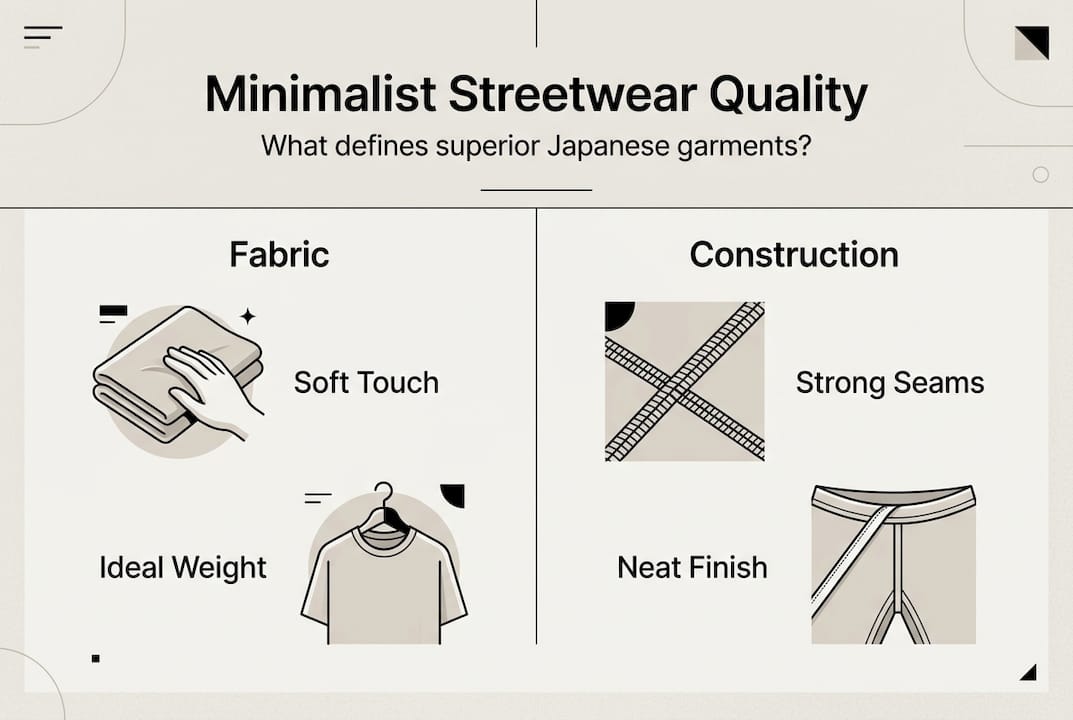
The fabric weight matters significantly in minimalist designs. Lightweight fabrics around 160-180 GSM (grams per square meter) work beautifully for t-shirts, providing structure without bulk. Heavier weights suit outerwear and layering pieces. Japanese streetwear brands typically specify fabric weight, transparency that signals quality focus and manufacturing confidence.
Workmanship and construction standards for lasting quality
Exceptional fabrics mean nothing without precise construction techniques that honor the material. Superior streetwear garments demonstrate meticulous attention to every seam, stitch, and finish. Single-needle stitching, though slower and more expensive than standard methods, creates cleaner seams with less bulk. This technique particularly benefits minimalist designs where every detail shows.
Reinforced collars represent another hallmark of quality construction. Premium garments feature interfacing or double-layer fabric at stress points, preventing the collar from warping or losing shape over time. Shoulder seams should align perfectly without puckering, indicating careful pattern cutting and skilled assembly. Examine armhole construction closely, as this area reveals manufacturing shortcuts in lower-quality pieces.
Seam allowances tell an important story about garment quality. Generous allowances of at least half an inch indicate the manufacturer expects the garment to last, providing material for potential alterations or repairs. Finished seam edges, either serged or bound, prevent fraying and extend garment life significantly. Raw or skimpy seam allowances suggest cost-cutting that compromises durability.
When evaluating workmanship, check these construction elements:
- Consistent stitch length throughout the garment without skipped stitches
- Pattern matching at seams, especially on striped or patterned fabrics
- Flat, smooth seams that lie flush against the body
- Secure bartack stitching at stress points like pocket corners
- Clean hem finishes without visible glue or irregular stitching
- Properly aligned buttons with reinforced attachment points
Minimalist designs amplify the importance of flawless craftsmanship because they offer nowhere to hide imperfections. Without busy graphics, heavy branding, or decorative elements drawing the eye away, every construction detail becomes visible and significant. A simple t-shirt in premium fabric with perfect stitching creates more visual impact than an over-designed piece with mediocre execution.
Pro Tip: Turn garments inside out before purchasing to inspect seam quality, finishing techniques, and overall construction integrity. The interior reveals manufacturing standards that external appearance might conceal.

Thread quality matters as much as stitching technique. Premium garments use high-quality polyester or cotton-wrapped polyester thread that matches or complements the fabric color perfectly. Thread should feel smooth and strong, not fuzzy or weak. Check stress points like underarms and side seams for any thread weakness or poor tension that might cause premature failure.
Comparing retailers: how focus on quality shapes Japanese streetwear offerings
Retailer philosophy directly impacts garment quality, with quality-focused brands consistently outperforming hype-driven competitors in durability and style longevity. Understanding how different retailers approach fabric selection, manufacturing, and design helps you identify sources for genuinely premium pieces rather than cleverly marketed mediocrity.
| Retailer Approach | Fabric Priority | Construction Focus | Design Philosophy | Price Range | Quality Consistency |
|---|---|---|---|---|---|
| Premium Quality-First | PIMA cotton, Lenzing Modal, specialty blends | Single-needle, reinforced seams | Timeless minimalism | Higher | Excellent |
| Balanced Mid-Range | Good cotton, some premium options | Standard with quality control | Contemporary basics | Moderate | Good |
| Fast Fashion Volume | Standard cotton, synthetic blends | Mass production methods | Trend-driven designs | Lower | Variable |
| Hype-Driven Limited | Mixed quality fabrics | Varies by production run | Logo-heavy branding | Premium pricing | Inconsistent |
Quality-focused retailers distinguish themselves through several key practices:
- Transparent fabric specifications and sourcing information
- Detailed construction descriptions highlighting craftsmanship
- Consistent sizing and fit across collections
- Responsive customer service addressing quality concerns
- Willingness to stand behind products with fair return policies
- Limited but carefully curated product ranges
- Focus on versatile, seasonless designs over fast trends
Retailers prioritizing quality over quantity typically maintain smaller, more focused collections. This approach allows greater attention to each garment’s development, from initial design through final production. They invest in long-term supplier relationships, ensuring consistent fabric quality and manufacturing standards across seasons. Customer feedback directly influences product refinement rather than being ignored in pursuit of volume sales.
The pricing structure reveals retailer priorities. Quality-first brands price garments to reflect true production costs, including premium materials and ethical manufacturing. While initially more expensive, these pieces deliver superior cost-per-wear value through extended lifespan. Hype-driven brands often charge premium prices for average quality, banking on brand cachet rather than garment merit. Understanding this distinction protects you from overpaying for underperforming products.
How to select and maintain high-quality minimalist streetwear garments
Building a curated wardrobe of high-quality Japanese streetwear requires systematic evaluation and thoughtful care practices. Following these steps ensures you invest wisely and maximize each garment’s lifespan and appearance.
-
Research brand reputation and manufacturing philosophy before shopping. Look for transparency about fabric sources, production locations, and quality standards.
-
Examine fabric composition labels carefully, prioritizing natural fibers or premium blends over synthetic materials. Feel the fabric weight and texture to verify quality claims.
-
Inspect stitching quality by checking seam straightness, stitch consistency, and reinforcement at stress points. Turn garments inside out to evaluate finishing techniques.
-
Assess garment fit in person when possible, as proper fit enhances both appearance and longevity. Quality pieces should feel comfortable immediately without extensive breaking in.
-
Verify care requirements match your lifestyle and maintenance capabilities. Premium fabrics often require gentler care than standard materials.
-
Compare prices across similar quality levels to identify fair value. Extremely low prices typically indicate compromised quality somewhere in the production chain.
-
Start with versatile basics in neutral colors that integrate easily into your existing wardrobe. Quality fundamentals provide better value than trendy statement pieces.
-
Build gradually, adding pieces as you identify gaps rather than purchasing complete outfits at once. This approach allows budget flexibility for higher quality items.
Pro Tip: Create a minimalist capsule wardrobe with 15-20 high-quality pieces that mix and match effortlessly. This strategy reduces decision fatigue while ensuring you always look polished and intentional.
Proper garment care extends quality streetwear lifespan significantly. Wash items inside out in cold water using gentle, color-safe detergent. Avoid fabric softeners that coat fibers and reduce breathability. Air drying preserves fabric integrity better than machine drying, which causes shrinkage and fiber breakdown over time. For PIMA cotton and modal garments, gentle machine washing works well, but skip the dryer to maintain shape and softness.
Store garments properly by folding knits rather than hanging them, which prevents shoulder bumps and stretching. Use wooden or padded hangers for woven items, ensuring adequate spacing to allow air circulation. Address minor damages immediately, repairing loose buttons or small tears before they worsen. Many quality retailers offer repair services or guidance for maintaining their products.
Rotate your wardrobe regularly to distribute wear evenly across pieces. Wearing the same garment repeatedly without rest periods accelerates deterioration. Allow at least 24 hours between wears for fabrics to recover their shape and release moisture. This simple practice dramatically extends garment life while maintaining optimal appearance.
Explore high-quality Japanese streetwear collections
Now that you understand what defines truly high-quality garments, you can confidently explore collections that embody these standards. INCIDENT Clothing specializes in premium Japanese-inspired streetwear that exemplifies the quality markers discussed throughout this guide. Every piece features carefully selected fabrics and meticulous construction that honors minimalist design principles.

Our clothing collections showcase the intersection of Japanese aesthetics and contemporary streetwear culture, with each garment crafted to deliver lasting value. The PIMA cotton range demonstrates our commitment to superior materials, offering exceptional softness and durability that improves with wear. Discover how quality-focused design transforms your wardrobe at the INCIDENT store, where every piece reflects the craftsmanship standards that separate premium streetwear from ordinary clothing.
Frequently asked questions
What fabrics best indicate high-quality minimalist streetwear?
PIMA cotton and Lenzing Modal represent the premium standard for minimalist Japanese streetwear, offering superior softness, exceptional durability, and excellent breathability. These fibers feature longer staples or specialized processing that creates smoother, stronger fabrics compared to standard materials. When you see these fabrics listed, expect garments that maintain their appearance and comfort through years of regular wear.
How can I spot quality workmanship in streetwear garments?
Examine the interior construction by turning garments inside out to check for single-needle stitching, generous seam allowances, and clean finishing techniques. Quality workmanship shows in reinforced stress points, consistent stitch length, and perfectly aligned seams without puckering. Inspect collars, hems, and armholes closely, as these areas reveal manufacturing standards and attention to detail that separate premium pieces from mass-market alternatives.
Why is minimalist design important in defining garment quality?
Minimalist design eliminates distractions, forcing manufacturers to rely entirely on superior materials and precise craftsmanship to create visual impact. Without heavy branding, busy graphics, or decorative elements hiding imperfections, every fabric choice and construction detail becomes visible and significant. This design philosophy demands higher quality standards because flaws have nowhere to hide, ensuring you receive genuinely well-made garments rather than cleverly styled mediocrity.
How should I care for high-quality streetwear to preserve it?
Wash garments inside out in cold water with gentle detergent, avoiding fabric softeners that coat fibers and reduce breathability. Air dry whenever possible to prevent shrinkage and fiber breakdown caused by machine drying heat. Store knits folded rather than hung to prevent stretching, and address minor repairs immediately before small issues become major problems. Following these practices extends garment life significantly while maintaining optimal appearance and comfort.


Share:
Master brand identity in streetwear: a 2026 guide
Japanese symbolism in clothing: 7 iconic patterns explained