


Finding lookbook inspiration that feels genuinely yours is harder than it sounds. Trends shift fast, feeds blur together, and the pressure to look polished while staying authentic can feel overwhelming. Japanese streetwear aesthetics offer something different: a design philosophy rooted in restraint, quality, and intention. Rather than chasing volume, the approach favours clean silhouettes, functional fabrics, and subtle details that carry real weight. This guide walks you through how to build a standout lookbook, which outfit ideas to try first, how Japanese influences compare to European and global styles, and how to dress for every occasion without losing your personal voice.
Table of Contents
- How to build a streetwear lookbook: Key criteria
- Iconic outfit ideas for a modern streetwear lookbook
- Comparing streetwear influences: Japan, Europe, and beyond
- Situational picks: What to wear and when
- Our take: Why minimalist lookbooks truly stand out
- Discover your next streetwear piece
- Frequently asked questions
Key Takeaways
| Point | Details |
|---|---|
| Criteria for standout looks | Prioritise functional fabrics, balance, and unique details when building your streetwear lookbook. |
| Japanese minimalism edge | Minimalist Japanese aesthetics blend subtle styles with bold graphics for versatile outfit inspiration. |
| Situational outfit success | Choose looks based on your activity, pairing neutral basics with one distinctive feature. |
| Practical layering | Layer reconfigurable jackets and multi-functional garments for adaptable styling throughout the year. |
How to build a streetwear lookbook: Key criteria
With your goals in mind, let us outline how to choose looks that make an impact. A lookbook is not simply a collection of outfits. It is a visual statement of who you are and what you stand for. Before you start selecting pieces, it helps to define what your lookbook is actually for.
Are you building a personal brand? Showcasing versatility? Tracking how your style evolves? Each purpose shapes which garments deserve a place. A versatility-focused lookbook, for instance, rewards adaptable pieces over one-season novelties. A trend-forward lookbook may lean into statement outerwear or graphic-heavy layers.
Once you know your purpose, apply these selection criteria:
- Balance: Every look should have at least one anchor piece and one supporting element. Avoid competing focal points.
- Practicality: Garments that can be worn in multiple contexts earn their place. Avoid anything that only works in one setting.
- Layering potential: Pieces that work alone and within a layered outfit double your options without doubling your wardrobe.
- Signature details: Subtle graphics, tonal embroidery, or unusual construction give each look a memorable edge.
- Functional fabrics: Technical weaves, organic cottons, and premium blends photograph well and hold their shape over time.
Minimalist palettes deserve special attention here. A neutral base, think off-white, charcoal, or washed black, allows textures and silhouettes to do the talking. This is where Japanese minimalism styles prove their strength: the restraint in colour forces the eye towards construction and craft.
Reconfigurable garments are gaining serious traction in the lookbook space. Mihara Yasuhiro’s Spring/Summer 2026 collection explores the concept of the ‘ordinary’ through layered, reconfigurable garments, including multi-sleeved coats that shift mood and identity depending on how they are worn. That kind of adaptability is exactly what a strong lookbook needs.
The most memorable lookbooks are not the fullest ones. They are the most considered ones.
Pro Tip: Plan at least two mood shifts within your lookbook using one or two adaptable pieces. A single reconfigurable jacket or reversible layer can carry you from a relaxed daytime aesthetic to something sharper in the evening without adding bulk to your edit. For a broader view of what is shaping the scene right now, our streetwear trends guide is a useful starting point.
Iconic outfit ideas for a modern streetwear lookbook
Having set our criteria, here are some ready-to-copy outfits that embody minimalist and Japanese streetwear principles.
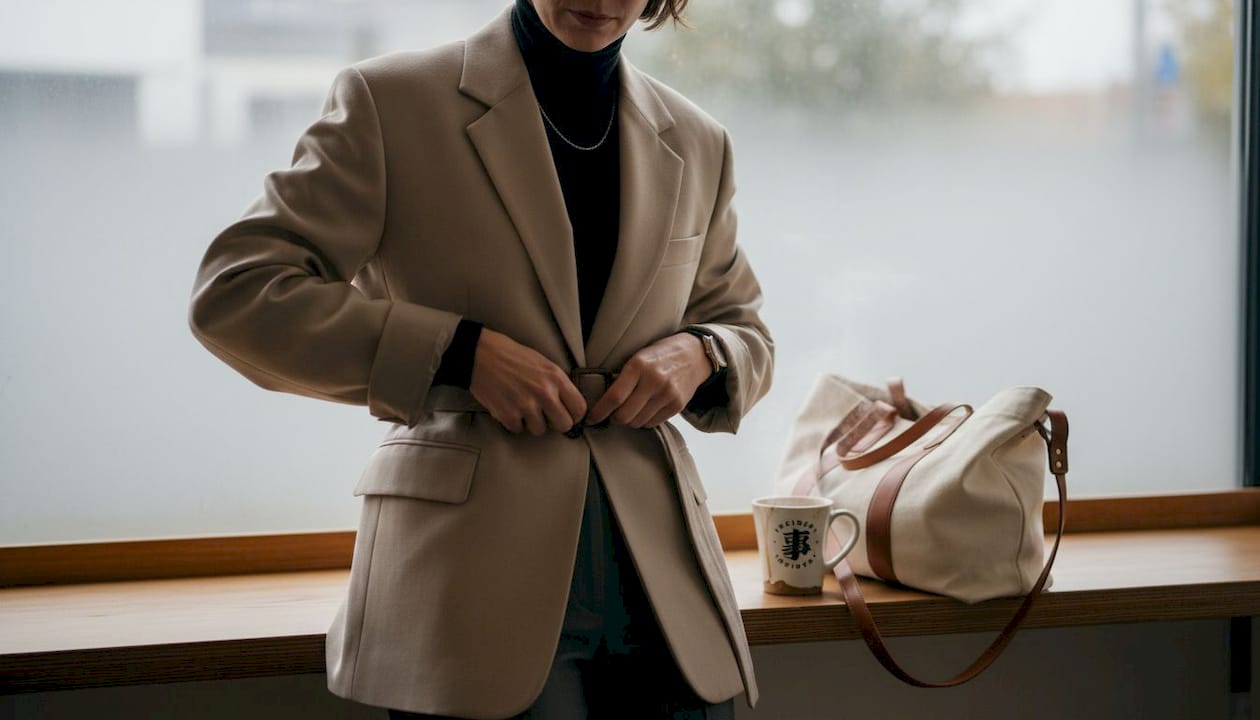
Look 1: Layered reconfigurable outerwear Start with a structured, oversized jacket that can be worn open, belted, or layered over a lighter shell. Pair with loose tailored trousers in a tonal shade. The silhouette should feel intentional, not accidental. Reconfigurable designs like four-sleeved coats allow mood-based identity shifts, making them ideal for lookbooks that need range.
Look 2: Oversized graphic tee with considered accessories A minimal oversized tee with a single graffiti-style graphic becomes iconic when paired with the right accessories. Think a sculptural ring, a clean crossbody bag, and low-profile trainers. The graphic does the talking; everything else supports it.
Look 3: Denim-MA-1 hybrid with cargo trousers The MA-1 bomber silhouette fused with denim panelling is one of the strongest hybrid pieces in contemporary streetwear. Pair with practical cargo trousers in olive or washed black. Functional pockets, clean seams, and a muted palette keep this look grounded. Explore more Japanese styling elements to refine the details.
Look 4: Monochrome with texture play All-black or all-grey looks gain depth through fabric contrast. Combine a brushed cotton crewneck with a ripstop shell and slim-cut trousers. Add a subtle tonal print on one layer to break the flatness without disrupting the harmony.
| Look | Key pieces | Best occasion |
|---|---|---|
| Layered outerwear | Reconfigurable jacket, loose trousers | Editorial, travel |
| Graphic tee and accessories | Oversized tee, crossbody, trainers | Urban casual |
| Denim-MA-1 hybrid | Hybrid bomber, cargo trousers | Weekend, festival |
| Monochrome texture | Brushed cotton top, ripstop shell | Creative settings |
Pro Tip: Commit to one standout piece per outfit. When everything competes for attention, nothing wins. Let one element lead and style the rest in its service.
Comparing streetwear influences: Japan, Europe, and beyond
To appreciate these outfit ideas, it is helpful to see how Japanese streetwear stacks up against other global influences.
Japanese streetwear is built on a foundation of functional fabric, subtle statements, and silhouettes that adapt to the wearer. The philosophy is one of considered restraint. Even when graphics appear, as in Mihara Yasuhiro’s Spring/Summer 2026 collection where ordinary materials meet chaotic graphics, the contrast is deliberate. Nothing is accidental.
European streetwear takes a different route. Bold graphics, classic tailoring references, and cultural mashups define the aesthetic. Think oversized collegiate silhouettes meeting Parisian workwear, or British subcultural references layered with luxury sportswear. The energy is louder, the palette broader.
Global streetwear, shaped by cities like New York, Seoul, and Lagos, brings street art graphics, unisex fits, and a democratic approach to dressing. It borrows freely from every tradition and prioritises self-expression above all else.
Here is how the three approaches compare:
| Element | Japanese | European | Global |
|---|---|---|---|
| Signature pieces | Reconfigurable outerwear, minimal tees | Graphic hoodies, tailored bombers | Oversized tees, utility vests |
| Colour palette | Neutrals, tonal layers | Bold primaries, black and white | Mixed, expressive |
| Materials | Technical weaves, organic cotton | Cotton blends, wool | Cotton, nylon, denim |
| Graphic approach | Subtle or deliberately chaotic | Bold and cultural | Street art, expressive |
| Silhouette | Fluid, adaptable | Structured, oversized | Relaxed, unisex |
The Japanese approach makes mood-based outfit shifts more achievable. Because the base is neutral and the construction is thoughtful, you can introduce one new element and completely change the feeling of a look. Understanding the materials behind these garments is essential; our Japanese fabrics guide covers the key textiles worth knowing.
Where European streetwear shouts, Japanese streetwear whispers. And sometimes, the whisper carries further.
Both approaches have genuine merit. But for a lookbook that holds its relevance across seasons, the minimalist Japanese framework gives you more to work with.
Situational picks: What to wear and when
With the influences in mind, here is how to assemble outfits for every part of your life.
Context matters enormously in a lookbook. An outfit that reads brilliantly at a festival can feel out of place in a creative studio, and vice versa. The strongest lookbooks show range without losing coherence. Here are four situational picks to anchor yours:
-
Festival look: Lead with graffiti graphics on a technical fabric tee. Layer a lightweight shell jacket over the top and finish with wide-leg cargo trousers. Practical materials and graffiti graphics are staples in emerging Japanese streetwear, and they translate perfectly to outdoor settings where comfort and visual impact both matter.
-
Urban daily: A boxy, premium tee in off-white or washed black, paired with minimalist tapered trousers and a structured crossbody bag. Clean trainers complete the look. This is the outfit you reach for without thinking, and it always delivers. For a deeper understanding of how functional design shapes everyday dressing, our functional streetwear guide is worth reading.
-
Creative office: Understated cuts earn their place here. A hybrid jacket in a premium fabric, worn over a minimal turtleneck with slim trousers and elevated footwear, communicates intention without effort. The details do the work quietly. Knowing what separates a well-made piece from a mediocre one matters in this context; explore quality garments in Japanese streetwear for guidance.
-
Night out: Monochrome from head to toe, with one distinct accessory to break the uniformity. A sculptural bag, an architectural shoe, or an unusual layering piece. Let the silhouette carry the look and the accessory give it personality.
Pro Tip: A neutral base with one bold piece works in every setting. It is the most reliable formula in any lookbook, and it never feels forced.
Our take: Why minimalist lookbooks truly stand out
After these practical examples and influences, here is a perspective you may not hear from mainstream trend reports.
Maximalism gets the attention. But minimalist lookbooks create the lasting impressions. When every piece in a look is considered, the viewer’s eye has somewhere to rest. There is a quiet confidence in restraint that maximalist styling rarely achieves.
What most people overlook is that editing is the hardest creative skill. Choosing what not to include requires more discipline than adding layers. A wardrobe built on adaptable staples encourages genuine creativity because it forces you to find new combinations rather than relying on novelty.
The most influential personal styles we have seen are not the loudest. They are the most consistent. Japanese-inspired minimalism gives you the framework to build that consistency without sacrificing individuality. Your streetwear brand identity grows strongest when it is rooted in clarity, not volume. True influence is earned through thoughtful curation, one considered piece at a time.
Discover your next streetwear piece
Ready to put this inspiration into practice? Here is how you can start experimenting with your own lookbook.
At INCIDENT, we design garments that are built for exactly this kind of intentional dressing. Every piece in our Japanese streetwear collection is crafted with clean lines, premium fabrics, and the kind of subtle detail that makes a lookbook feel cohesive rather than cluttered. If you are starting with the basics, our oversized PIMA cotton tees offer the ideal neutral foundation: ultra-soft, structured, and versatile enough to anchor any of the looks in this guide. Browse the collection, find your anchor piece, and start building something worth photographing.
Frequently asked questions
What makes Japanese streetwear unique?
Japanese streetwear stands apart through its use of innovative fabrics, minimal silhouettes, and a deliberate balance between subtle and bold graphic elements. As seen in Mihara Yasuhiro’s Spring/Summer 2026 collection, even chaotic graphics are applied with intention, making the contrast feel considered rather than random.
How do I balance statement and minimalist pieces?
Pair one show-stopping item with neutral basics and limit graphic elements to a single layer per outfit. Reconfigurable designs show how a single bold piece can shift the entire mood of a look without overwhelming it.
What are the best fabrics for a streetwear lookbook?
Technical materials, organic cottons, and denim blends offer the best combination of comfort, durability, and visual texture. These fabrics photograph well and maintain their structure across multiple wears and seasons.
How can I switch up my lookbook for different seasons?
Introduce lightweight technical layers in spring and summer, and build around heavy outerwear with textural variation such as brushed cotton or ripstop nylon in colder months. The key is maintaining your palette while shifting the weight and structure of your pieces.

Share:
Top types of unisex streetwear with Japanese minimalist flair
Build a timeless streetwear wardrobe: Japanese minimalist guide