

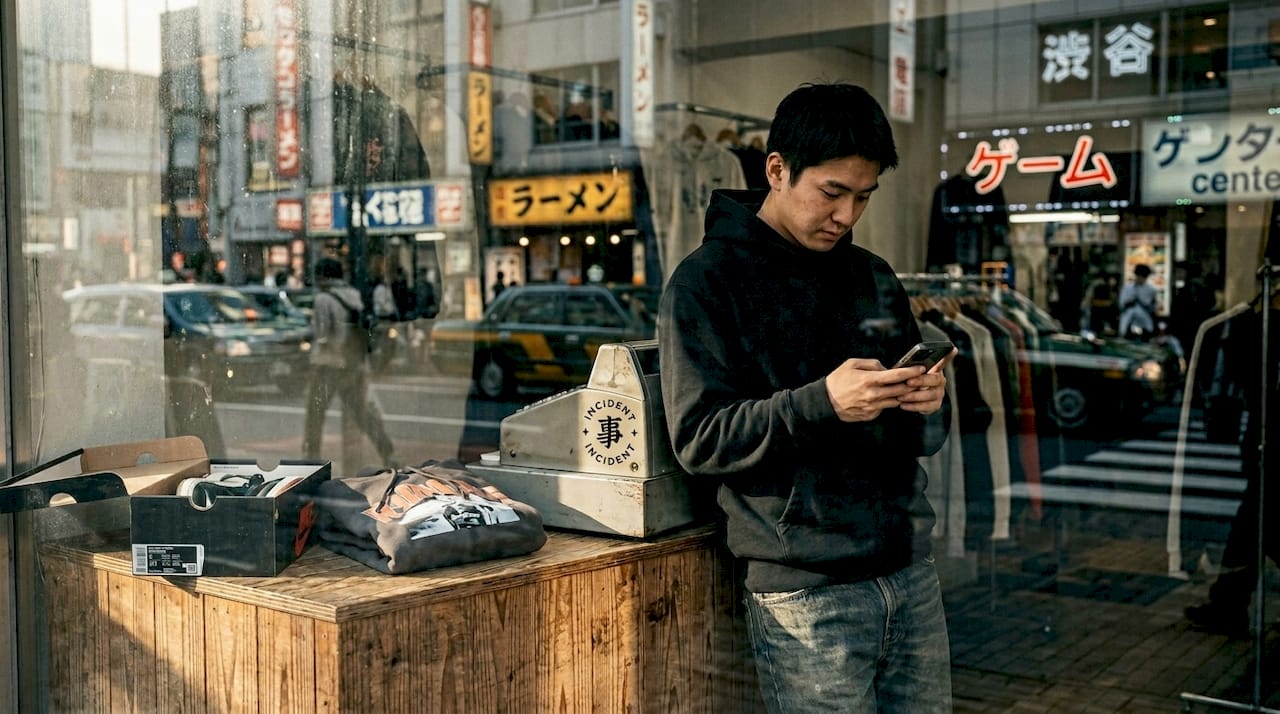
TL;DR:
- Japanese streetwear drops are carefully curated events emphasizing scarcity, storytelling, and community loyalty.
- Success depends on proactive preparation, community engagement, and understanding brand signals and timing.
- Building genuine relationships and staying informed through calendars and social channels improves chances of securing rare releases.
You refresh the page at exactly 11:00 AM. Gone. Sold out in under two minutes. If you’ve ever missed a coveted Japanese streetwear drop, you’ll know that particular sting of frustration. These limited releases are not accidents — they are carefully engineered moments of desire, built on scarcity, cultural storytelling, and community loyalty. Japanese labels have mastered this art in ways that leave global fans scrambling. This guide breaks down exactly how drops work, what makes Japanese releases so fiercely sought after, and the practical steps you can take to actually secure the pieces you want.
Table of Contents
- What is a streetwear drop?
- How does a drop actually work?
- What makes a Japanese streetwear drop unique?
- How to secure your next exclusive drop
- The truth brands don’t tell you about streetwear drops
- Ready to elevate your Japanese streetwear game?
- Frequently asked questions
Key Takeaways
| Point | Details |
|---|---|
| Drops create urgency | Streetwear drops use scarcity and hype cycles to make each release an event. |
| Japanese drops stand out | Japanese brands blend culture, exclusivity, and quality for global appeal. |
| Strategy improves success | Knowing the drop process and using tools boosts your chances of scoring exclusives. |
| Community is key | Engaging with fan groups and official channels unlocks insider info and early alerts. |
What is a streetwear drop?
A streetwear drop is a timed, limited-edition product release, typically announced with little advance notice and available only until stock runs out. Unlike traditional retail, where items sit on shelves for months, a drop is gone almost as soon as it arrives. The concept has its roots in streetwear origins and impact that trace back to New York skate culture and, crucially, to brands like Supreme, who turned scarcity into a business model.
Product drop culture is built on the principle that scarcity creates desire. When you know only 200 units exist globally, the item transforms from a garment into a cultural artefact. Japanese brands understood this instinctively, weaving it into a broader philosophy of monozukuri (the art of making things) and deliberate restraint.
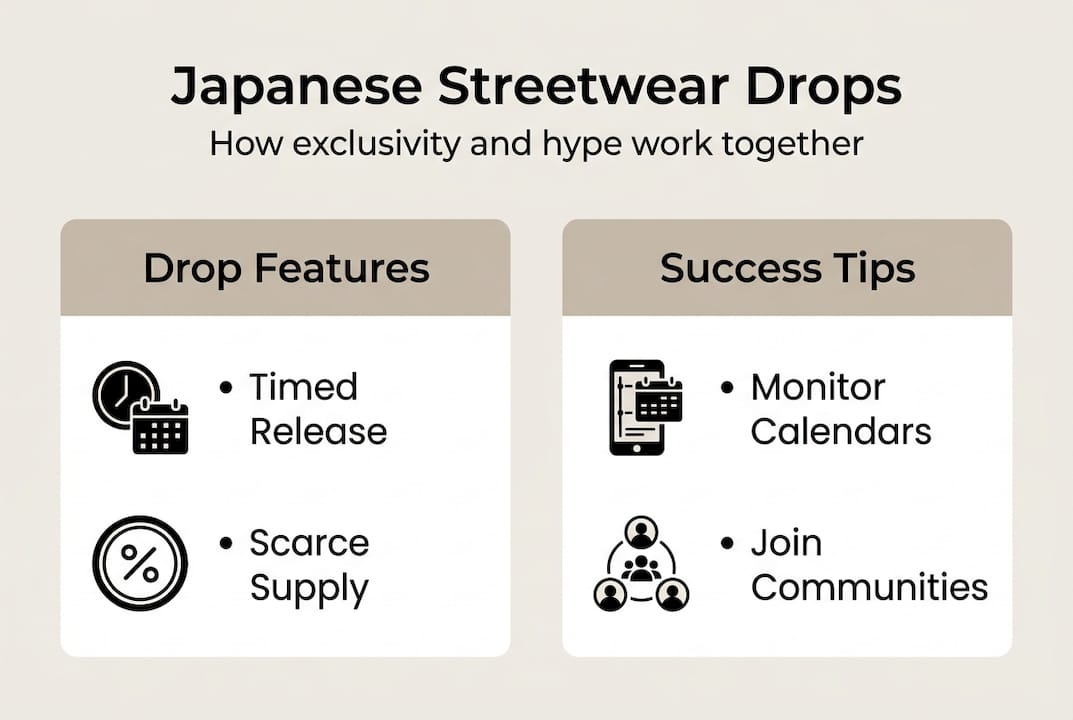
The Harajuku streetwear revolution gave rise to labels that treated each release as a statement rather than a transaction. Brands operating out of Tokyo’s Ura-Harajuku district pioneered the idea of the drop as ritual, something fans prepared for, queued for, and celebrated together.
Traditional retail vs. drop culture at a glance:
| Feature | Traditional retail | Drop culture |
|---|---|---|
| Availability | Weeks to months | Minutes to hours |
| Stock volume | High | Deliberately limited |
| Announcement | Seasonal catalogues | Teaser-led reveals |
| Community role | Passive consumer | Active participant |
| Resale value | Stable | Often significantly higher |
What separates Japanese drops from the wider streetwear market is a commitment to unique Japanese streetwear styles that feel genuinely considered. The aesthetic is not borrowed — it is rooted in heritage.
- Drops are treated as curated experiences, not clearance events
- Packaging, presentation, and storytelling are as important as the garment itself
- Community engagement begins long before the release date
- Authenticity is non-negotiable; fans can detect imitation immediately
“A drop is not just a sale. It is a moment in culture — and Japanese brands have always understood that the space between announcement and release is where loyalty is built.”
How does a drop actually work?
With a clear understanding of what a drop is, let’s break down how these events unfold in practice. The modern drop follows a recognisable rhythm, and once you understand it, you can position yourself far more effectively.
The core drop cycle moves through three distinct phases: teaser, reveal, and drop day. Inventory is typically set at 30 to 50% below actual demand, ensuring sell-out is almost guaranteed. This is not an accident — it is strategy.
The three-stage drop cycle:
- Teaser phase — Cryptic imagery, partial product shots, and mood content appear on social media. The goal is to spark conversation without confirming details.
- Reveal phase — Full product details, pricing, and drop date are announced. Community excitement peaks. Waitlists or raffles may open.
- Drop day — The release goes live at a stated time. Queuing systems, site traffic spikes, and rapid sell-through define the experience.
Drop timing data across major labels:
| Label type | Typical drop window | Average sell-out time |
|---|---|---|
| Global hype brands | Thursday/Friday AM | Under 5 minutes |
| Japanese niche labels | Weekend, limited notice | 10 to 30 minutes |
| Micro-drop specialists | Irregular, community-first | Hours to days |
The Supreme drop process set the global template, but Japanese labels have refined it. Where Supreme leans into volume and brand ubiquity, Japanese labels often favour smaller, more deliberate runs that feel personal.
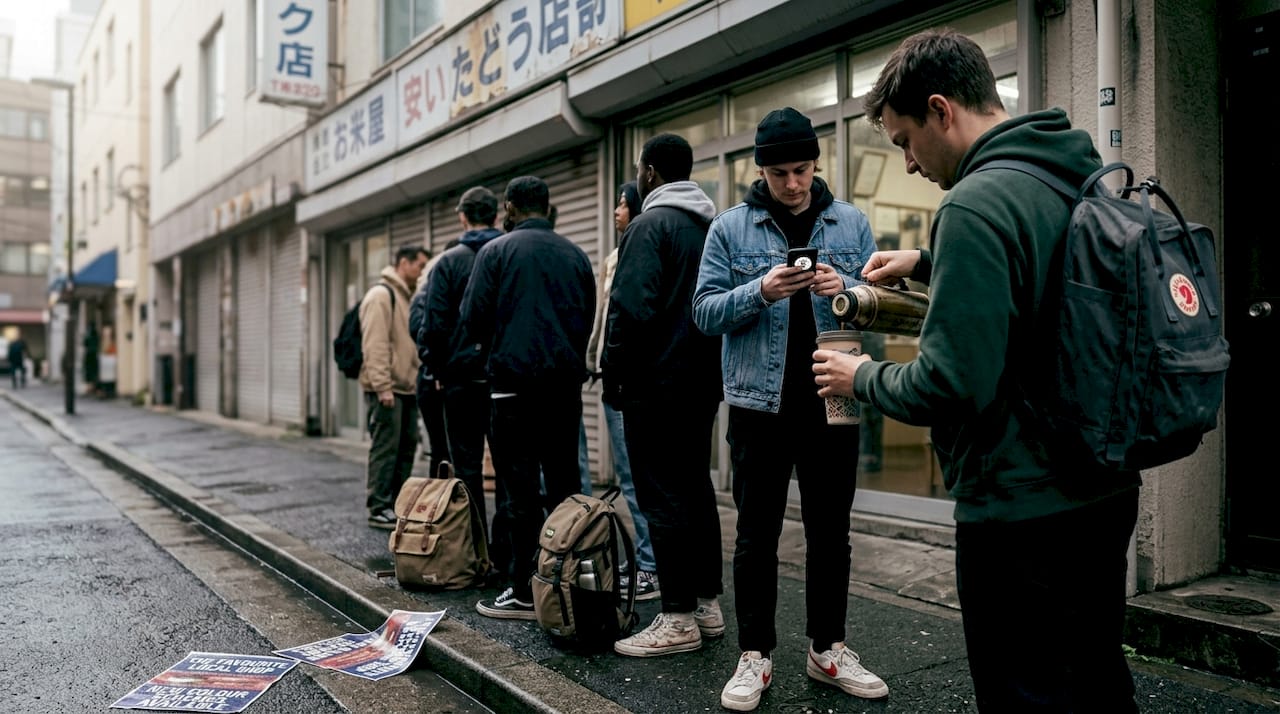
Understanding Japanese hype cycles is essential here. Japanese brands build anticipation slowly, often over weeks, using carefully paced content that rewards attentive followers. Keeping up with streetwear trends in 2026 helps you recognise when a brand is entering its teaser phase.
Familiarising yourself with key streetwear terms like raffle drop, in-store exclusive, and waitlist release will also sharpen your ability to act quickly when the moment arrives.
Pro Tip: Set a calendar reminder 15 minutes before any announced drop time. Use that window to log into accounts, prepare payment details, and open the product page. Preparation, not speed, is what wins drops.
What makes a Japanese streetwear drop unique?
Understanding the mechanics, it is time to see how Japanese brands elevate the streetwear drop into something genuinely distinct. The difference is not just aesthetic — it runs deeper into culture, community, and craft.
Japanese labels have built their drop strategies around omotenashi, a philosophy of wholehearted hospitality and attention to the recipient’s experience. Every detail, from the tissue paper inside the packaging to the font on the label, is considered. This care extends to how drops are communicated and who gets access first.
SNS-driven (social networking service) marketing is central to Japanese drop culture. Rather than relying on paid advertising, brands cultivate genuine communities on platforms like Instagram and X, rewarding loyal followers with early access and insider information. Japanese label yutori achieved $73M revenue in FY2026 through precisely this SNS-drop hybrid model, becoming one of the fastest IPOs in Japanese fashion history.
This approach shapes Japanese styling elements that feel earned rather than purchased. When you wear a piece from a Japanese drop, you carry the story of how you got it.
What sets Japanese drops apart:
- Pop-up events and IRL (in real life) micro-drops that reward physical presence
- Deliberately under-produced runs that preserve the sense of rarity
- Cultural storytelling woven into every product description and visual
- Community-first access, where engaged followers receive priority over casual browsers
- Packaging and presentation treated as part of the product itself
The emphasis on quality in Japanese streetwear also means that pieces from these drops hold their value, both financially and culturally. You are not buying hype. You are investing in craft.
Keep an eye on the fashion drops calendar to track upcoming Japanese releases globally. Knowing what is coming allows you to prepare, not react.
Pro Tip: Follow the brand’s Japanese-language social accounts if they have them. Announcements often appear there first, giving international fans a meaningful head start.
How to secure your next exclusive drop
Now that you understand what makes Japanese drops unique, here is how you can actually secure your favourite releases. Strategy matters far more than luck.
Your drop-day preparation checklist:
- Follow trusted drop calendars — Sites like global drop calendars aggregate upcoming releases across brands and regions.
- Join Discord servers and Reddit communities — These spaces surface insider information, restock alerts, and raffle links before they reach mainstream channels.
- Enable brand notifications — Turn on post notifications for every Japanese label you follow. Instagram and X both allow this.
- Use drop alert apps — Tools like SNKRS and brand-specific apps send push notifications the moment a drop goes live.
- Create accounts in advance — Pre-register on brand websites so your payment and shipping details are saved. Every second counts.
For fans wanting to buy Japanese streetwear online, understanding regional timing is also crucial. Many Japanese labels drop at Tokyo Standard Time, which means early mornings or late nights depending on your location.
Building your own alert system:
- Set browser bookmarks for drop pages you check regularly
- Use Google Alerts for brand names combined with words like “drop” or “release”
- Save brand contact details so you can reach customer service quickly if issues arise
- Screenshot confirmation pages immediately after purchase as proof of order
Community signals are often the most reliable early warning system. When multiple members of a Discord server start discussing a brand’s recent teaser content, a drop is likely imminent. Train yourself to read these signals rather than waiting for official announcements.
Fashion-forward fans aged 18 to 35 should follow Hypebeast and Vogue for calendars, join Discord and Reddit communities, and use drop alert apps to stay ahead of the competition. The fans who consistently secure rare pieces are not lucky. They are prepared.
The truth brands don’t tell you about streetwear drops
Most coverage of streetwear drops focuses on the thrill of the chase and the prestige of ownership. But from our perspective, working closely with Japanese aesthetics and the communities that surround them, the real story is different.
Success in drops is not random. It is the result of consistent engagement, genuine community membership, and understanding the playbook that brands use to reward their most loyal followers. The fans who miss out repeatedly are usually those who treat drops as isolated events rather than as part of an ongoing relationship with a brand.
Building brand identity insights into your understanding of a label helps you anticipate their moves. Brands signal their intentions long before an official announcement. The teaser is not just marketing. It is an invitation.
The uncomfortable truth is that most people approach drops reactively. They see the announcement, scramble, and lose. The fans who win approach drops proactively, treating each release as the culmination of weeks of quiet preparation and community investment. That shift in mindset changes everything.
Ready to elevate your Japanese streetwear game?
You now have the knowledge to approach Japanese streetwear drops with confidence and intention rather than frustration. The next step is finding pieces that genuinely reflect the craft and heritage you have come to appreciate.
At INCIDENT, we design premium Japanese-inspired garments that honour the same principles of restraint, quality, and considered detail that define the best Japanese drops. From our PIMA cotton collection to our broader range of minimalist streetwear, every piece is built to last and crafted to carry meaning. Explore our full collection and sign up for our alerts so you never miss a release. Your next favourite piece is waiting.
Frequently asked questions
What is a streetwear drop?
A streetwear drop is a limited-edition clothing release scheduled at a specific time to create urgency and exclusivity, typically selling out within minutes of going live.
Why are Japanese streetwear drops so popular?
Japanese drops blend unique aesthetics, cultural storytelling, and deliberate scarcity. Brands like yutori demonstrate how SNS-driven community building and cultural codes create intense global demand that far exceeds supply.
How can I get notified about upcoming drops?
Follow drop calendars and apps such as SNKRS, enable post notifications on brand social accounts, and join Discord or Reddit communities where early information circulates before official announcements.
What should I do if a drop sells out immediately?
Sign up for restock alerts directly on the brand’s website and stay active in community spaces, as second rounds, waitlist releases, or alternative colourways often follow successful sell-outs.


Share:
Streetwear silhouettes explained: 4 shapes to know
Top 8 Japanese Graphic Tee Styles 2026