

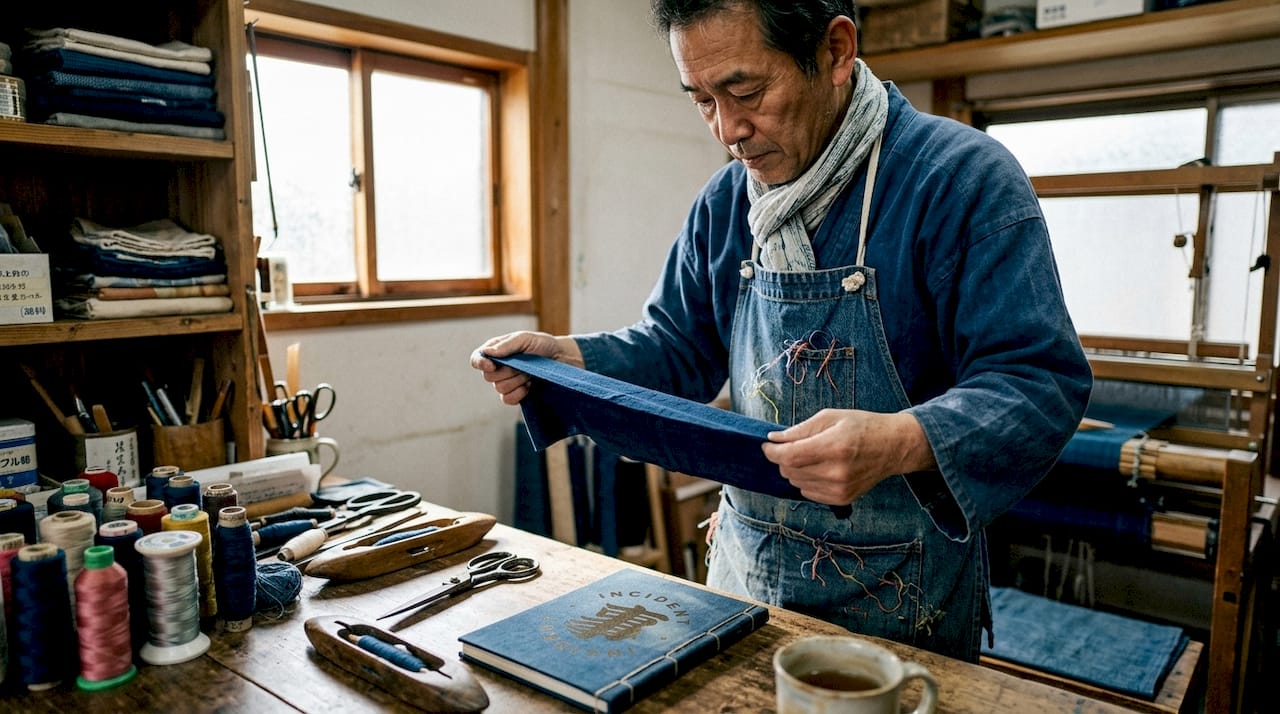
The world of Japanese fabrics has captivated fashion enthusiasts globally, yet many struggle to distinguish between the diverse textiles that define authentic minimalist streetwear. From the soft drape of premium cotton to the rich indigo depths of artisan denim, these fabrics carry centuries of tradition while meeting modern demands for durability and style. Understanding what makes Japanese textiles unique transforms how you approach streetwear, revealing why brands prioritize these materials for collections that balance heritage with contemporary urban aesthetics. This guide demystifies the key fabrics shaping Japanese-inspired fashion today.
Table of Contents
- Key takeaways
- The cultural and historical background of Japanese fabrics
- Common types of Japanese fabrics and their characteristics
- How Japanese fabrics influence minimalist streetwear design
- Practical tips for selecting and caring for Japanese fabric garments
- Discover premium Japanese streetwear at INCIDENT
- FAQ
Key Takeaways
| Point | Details |
|---|---|
| Heritage meets streetwear | The article shows how traditional Japanese textiles harmonize centuries of craft with modern urban aesthetics to create minimalist yet durable fabrics for contemporary streetwear. |
| Common fabric types | Cotton varieties, silk blends, and denim are described as core materials shaping Japanese streetwear. |
| Fabric qualities | Minimalism, durability, and texture variety guide material choices in Japanese fashion. |
| Origins matter | Understanding fabric origins helps explain why quality and thoughtful construction matter in Japanese streetwear aesthetics. |
The cultural and historical background of Japanese fabrics
Japanese textile production emerged from centuries of refined techniques that prioritized meticulous craftsmanship over mass production. Artisans developed specialized skills in silk weaving during the Edo period, creating fabrics that signified social status and regional identity. Indigo dyeing became a hallmark of Japanese textile culture, with natural fermentation processes producing the deep blue hues still prized in modern denim and casual wear.
The post-war era transformed Japanese fabric production as manufacturers adopted new technologies while maintaining traditional quality standards. Mills in regions like Okayama perfected denim weaving techniques that rivaled Western counterparts, establishing Japan as a global leader in premium casual fabrics. This fusion of innovation and tradition created textiles that appealed to both domestic and international markets seeking authenticity and durability.
Harajuku streetwear culture exemplifies how historical fabric traditions influence contemporary fashion. Young designers in Tokyo’s fashion districts reimagined traditional textiles for urban contexts, creating garments that honored craftsmanship while embracing modern silhouettes. This movement elevated everyday fabrics into fashion statements, demonstrating that material quality could define style as much as cut or color.
Key cultural influences shaping Japanese fabric traditions include:
- Wabi-sabi philosophy valuing imperfection and natural aging in textiles
- Regional specialization creating distinct fabric identities across Japan
- Apprenticeship systems preserving traditional weaving and dyeing knowledge
- Respect for natural materials driving sustainable production practices
- Integration of seasonal awareness into fabric weight and texture choices
Modern Japanese streetwear brands draw directly from these historical foundations, selecting fabrics that communicate quality through subtle details rather than obvious branding. The emphasis on textile integrity reflects a cultural belief that true luxury emerges from material excellence and thoughtful construction. This approach resonates with global consumers seeking alternatives to fast fashion’s disposable mentality.
Common types of Japanese fabrics and their characteristics
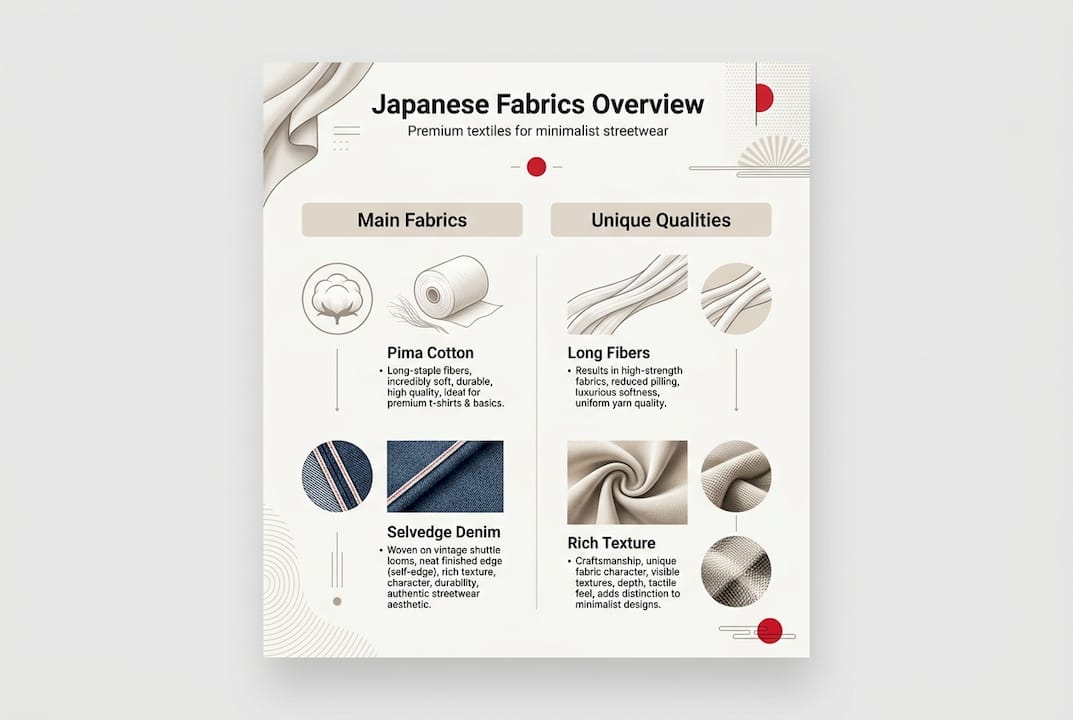
Pima cotton stands as a cornerstone of premium Japanese textiles, prized for its exceptionally long fibers that create smooth, durable fabrics. This cotton variety resists pilling and maintains shape through repeated washing, making it ideal for everyday streetwear pieces. Japanese mills treat Pima cotton with specialized finishing processes that enhance softness while preserving the fabric’s natural breathability and moisture-wicking properties.
Silk represents the traditional luxury end of Japanese fabric production, though modern streetwear applications focus on silk blends rather than pure varieties. Contemporary designers incorporate silk into casual pieces to add subtle sheen and drape without compromising practicality. The fabric’s natural temperature regulation makes it surprisingly versatile for layering in transitional seasons.
Japanese denim deserves special recognition for revolutionizing casual fabric standards globally. Okayama mills produce selvage denim using vintage shuttle looms that create tighter weaves and distinctive edge finishes. The slow production process and natural indigo dyeing result in fabrics that develop unique fading patterns over time, appealing to consumers who value garments that tell personal stories through wear.

| Fabric Type | Key Characteristics | Streetwear Applications | Care Level |
|---|---|---|---|
| Pima Cotton | Soft, durable, breathable | T-shirts, hoodies, basics | Low |
| Silk Blends | Elegant drape, temperature regulating | Layering pieces, accent details | Medium |
| Selvage Denim | Dense weave, unique aging | Jeans, jackets, structured pieces | Medium |
| Modal Blends | Eco-friendly, stretchy, smooth | Activewear-inspired streetwear | Low |
| Technical Cotton | Moisture-wicking, quick-dry | Performance casual wear | Low |
Blended fabrics represent the innovation frontier in Japanese textiles, combining natural fibers with synthetic or semi-synthetic materials to enhance performance. Lenzing Modal blends offer eco-friendly alternatives that maintain the luxurious hand feel of traditional fabrics while adding stretch and recovery. These blends address modern lifestyle demands without sacrificing the minimalist aesthetic central to Japanese design philosophy.
Texture variety within Japanese fabrics supports the minimalist streetwear approach by creating visual interest through subtle surface variations rather than bold patterns. Brushed cotton provides warmth and softness for cooler months, while crisp poplin weaves offer structure for tailored casual pieces. Jersey knits balance comfort with a polished appearance suitable for elevated everyday wear.
Pro Tip: Feel fabric samples in person when possible, as Japanese textiles often reveal their quality through touch rather than appearance alone. The weight, drape, and surface texture communicate craftsmanship levels that photographs cannot capture.
How Japanese fabrics influence minimalist streetwear design
Fabric selection drives the clean lines and understated elegance that define Japanese minimalist streetwear aesthetics. Designers choose textiles that hold shape without stiffness, allowing garments to drape naturally on the body while maintaining structured silhouettes. This balance requires fabrics with specific weight and recovery properties that support both movement and form, distinguishing luxury streetwear from casual basics.
The minimalist color palette prevalent in Japanese streetwear highlights fabric qualities that would disappear under busy prints or bright hues. Neutral tones showcase weave patterns, surface textures, and subtle color variations within the textile itself. A well-crafted black garment reveals its quality through how light plays across the fabric surface, while white pieces demonstrate transparency control and finish refinement.
Durability considerations shape fabric choices for streetwear designed to withstand daily urban life. Japanese textile producers engineer fabrics that resist fading, maintain elasticity, and recover from compression without losing their original character. This focus on longevity aligns with minimalist principles of investing in fewer, better pieces rather than constantly replacing worn items.
Key ways Japanese fabrics enhance streetwear functionality:
- Breathable weaves regulate temperature across varying activity levels
- Reinforced stress points prevent premature wear in high-use areas
- Colorfastness maintains aesthetic integrity through repeated washing
- Wrinkle resistance supports polished appearance without excessive maintenance
- Layering compatibility allows fabric combinations without bulk
The tactile experience of premium Japanese fabrics elevates everyday casual wear into something approaching luxury. Soft hand feel against skin, smooth drape when moving, and substantial weight without heaviness create sensory satisfaction that builds brand loyalty. Consumers recognize quality through direct physical interaction with garments, making fabric choice a primary differentiator in competitive streetwear markets.
Pro Tip: Build your wardrobe around complementary fabric weights that layer effectively together, creating outfit flexibility without sacrificing the streamlined silhouette central to minimalist style.
Fabric innovation continues pushing Japanese streetwear forward while respecting traditional quality standards. Mills experiment with sustainable production methods, performance enhancements, and novel fiber combinations that expand design possibilities. These developments ensure Japanese textiles remain relevant to evolving consumer expectations around environmental responsibility and technical functionality.
Practical tips for selecting and caring for Japanese fabric garments
Authenticating Japanese fabric garments starts with examining labels for origin information and fiber content details. Reputable brands provide transparent sourcing data, specifying mill locations and production methods. Look for specific fabric names like Okayama denim or Pima cotton rather than generic descriptors that could indicate lower quality substitutes.
Physical inspection reveals craftsmanship indicators that separate genuine Japanese textiles from imitations. Check seam construction for tight, even stitching that won’t unravel with wear. Examine fabric surfaces for consistent dyeing without streaks or patches. Feel the weight and drape, noting whether the garment maintains structure without stiffness or collapses limply without body.
Follow these steps to evaluate fabric quality before purchasing:
- Research the brand’s reputation and manufacturing transparency
- Compare fabric weight across similar garment types to identify outliers
- Test stretch and recovery by gently pulling fabric and observing return speed
- Inspect finishing details like hems and cuffs for precision and durability
- Consider price relative to claimed materials, as genuine premium fabrics command higher costs
Caring for Japanese fabric garments properly extends their lifespan significantly while preserving original appearance and feel. Hand washing in cool water with mild detergent protects delicate fibers from mechanical stress and harsh chemicals. For machine washing, use gentle cycles with garments turned inside out to minimize surface abrasion. Avoid overloading the machine, as crowding increases friction and wear.
Storage practices matter as much as washing for maintaining garment quality. Fold heavier pieces like denim and structured cotton to prevent hanger marks, while lighter fabrics can hang on padded hangers that distribute weight evenly. Keep garments in cool, dry spaces away from direct sunlight that fades colors over time. Cedar blocks or lavender sachets provide natural moth protection without chemical odors.
Essential care practices for premium Japanese fabrics:
- Air dry garments flat or hanging rather than using machine dryers that damage fibers
- Iron cotton pieces while slightly damp for easier wrinkle removal
- Spot clean stains immediately to prevent setting
- Rotate garments regularly to allow fabrics to rest between wears
- Professional cleaning for structured pieces or stubborn stains
“Proper maintenance preserves the investment you make in quality garments, allowing premium fabrics to develop character rather than simply deteriorate.”
Investing in versatile Japanese fabric pieces requires strategic wardrobe planning that prioritizes compatibility and longevity over trend chasing. Select neutral colors and classic silhouettes that transcend seasonal fashion cycles while showcasing fabric quality. Build around core pieces in premium textiles, adding accent items that complement rather than compete with your foundational garments.
Discover premium Japanese streetwear at INCIDENT
INCIDENT translates the fabric knowledge you’ve gained into wearable collections that honor Japanese textile traditions while meeting modern streetwear demands. Our clothing collection features carefully selected materials that balance aesthetic appeal with practical durability, ensuring each piece justifies its place in your wardrobe.
Explore our Pima cotton offerings to experience the soft durability that makes this fabric a streetwear staple. Each garment showcases the clean lines and subtle textures that define minimalist Japanese design, creating versatile pieces that elevate everyday style. Our Swiss-based design team collaborates with premium fabric suppliers to ensure authenticity and quality in every collection.
Discover how thoughtful fabric selection transforms casual wear into investment pieces by browsing our complete product range. From foundational basics to statement layers, INCIDENT provides the building blocks for a wardrobe that reflects your appreciation for craftsmanship and contemporary style.
FAQ
What are the differences between Japanese and other Asian fabrics?
Japanese fabrics emphasize meticulous craftsmanship and premium material selection over cost efficiency, distinguishing them from mass-produced Asian textiles. Traditional techniques like natural indigo dyeing and slow-loom weaving create unique characteristics that reflect cultural values around quality and longevity. While other Asian countries produce excellent fabrics, Japanese textiles specifically target consumers seeking heritage-informed modern design rather than purely functional or decorative materials.
How can I authenticate Japanese fabric garments?
Authentication requires examining origin labels, fabric composition tags, and construction quality indicators that reveal manufacturing standards. Genuine Japanese fabric garments feature consistent dyeing, tight seam work, and substantial hand feel that cheaper alternatives cannot replicate. Purchase from established retailers with transparent supply chains, and research specific fabric types like Okayama denim or Pima cotton to understand what authentic versions should feel and look like.
Are Japanese fabrics sustainable and eco-friendly?
Many Japanese textile producers increasingly adopt sustainable practices, incorporating eco-friendly fibers like Lenzing Modal and organic cotton into their production lines. Traditional methods often align with sustainability principles through reduced chemical use and emphasis on durability over disposability. However, sustainability varies by manufacturer, so consumers should research specific brands and certifications rather than assuming all Japanese fabrics meet environmental standards.
Why do Japanese fabrics cost more than standard textiles?
Premium pricing reflects specialized production methods, superior raw materials, and smaller manufacturing scales that prioritize quality over volume. Japanese mills invest in vintage equipment, skilled labor, and time-intensive processes that cannot compete on price with mass production but deliver superior longevity and aesthetic qualities. The cost represents value when calculated over garment lifespan rather than initial purchase price alone.
Can Japanese fabrics work for warm climates?
Japanese textile producers create fabrics specifically designed for warm weather, including lightweight cotton weaves and moisture-wicking blends that provide breathability and comfort. Traditional Japanese clothing adapted to humid summers through loose weaves and natural fibers that promote air circulation. Modern Japanese streetwear incorporates these principles into contemporary silhouettes, offering options suitable for various climate conditions without sacrificing style or quality.


Share:
Japanese symbolism in clothing: 7 iconic patterns explained
How to pair Japanese style with denim for streetwear