

TL;DR:
- True Japanese minimalist streetwear emphasizes quality fabrics, fit, and a restrained neutral palette.
- Building a small, curated wardrobe of high-quality essentials creates versatile, lasting looks.
- Focus on editing your wardrobe regularly and investing in fewer, well-chosen pieces.
Finding streetwear that genuinely balances premium quality, minimalist design, and Japanese-inspired urban aesthetics is harder than it looks. The market is flooded with pieces chasing hype cycles, logo saturation, and fast trends that fade within a season. For men in Europe who appreciate the quiet confidence of a well-constructed garment, knowing where to begin can feel like navigating fog. This guide cuts through the noise. We cover the criteria that define true minimalist Japanese streetwear essentials, the core pieces to own, the brands doing it right, and how to build looks that feel effortless yet considered. By the end, your wardrobe decisions will be sharper, more intentional, and built to last.
Table of Contents
- How to pick essentials: The minimalist Japanese streetwear criteria
- The classic items: Core men’s streetwear essentials
- Leading brands for premium Japanese minimalist streetwear
- Comparing essentials: Fabrics, functionality, and price
- Styling and building your streetwear wardrobe
- Why true style means editing, not accumulating
- Refine your look with curated Japanese streetwear
- Frequently asked questions
Key Takeaways
| Point | Details |
|---|---|
| Stick to core essentials | Build your wardrobe around premium tees, simple jackets, quality trousers, and neutral sneakers. |
| Favour quality and fit | Choose essentials crafted from top-tier materials and pay close attention to versatile, comfortable cuts. |
| Layer for impact | Use layering and balanced proportions to create sharp, minimalist looks without adding unnecessary bulk. |
| Shop curated brands | Brands like COS, OrSlow, and Acne Studios lead the market in refined Japanese-inspired streetwear. |
How to pick essentials: The minimalist Japanese streetwear criteria
Building a refined wardrobe starts with a clear filter. Not every garment earns the title of “essential,” and in Japanese-inspired minimalist dressing, that bar is set deliberately high. The philosophy here is simple: fewer pieces, greater impact.
The foundation is material quality. A garment that drapes well and holds its structure after dozens of washes is worth ten fast-fashion alternatives. Prioritise high-quality fabrics and construction over decorative details that distract from the form itself. Japanese cotton, heavyweight jersey, and brushed wool blends all reward close attention.
Fit and proportion are equally critical. Tokyo street style is built around considered silhouettes: a cropped or slightly boxy top paired with wide or tapered trousers creates a visual balance that feels modern without straining for effect. The Tokyo clean aesthetic asks you to balance proportions with short tops and long legs while avoiding bulk through layering grids that breathe.
Colour palette matters enormously. Stick to:
- Neutrals: off-white, stone, and sand
- Darks: charcoal, black, and navy
- Earthen mid-tones: olive, clay, and slate grey
These tones layer naturally and resist the wear of trend cycles. A palette this restrained also ensures that every piece you add works with everything you already own.
Finally, consider the role of premium Japanese fabrics in achieving a look that feels elevated without announcing itself. The craft is in the details: a precise seam, a slightly dropped shoulder, a subtle texture contrast.
Pro Tip: Resist the impulse to include more than one standout piece per outfit. A strong silhouette or a refined texture speaks loudest when it isn’t competing with three other statements.
The classic items: Core men’s streetwear essentials
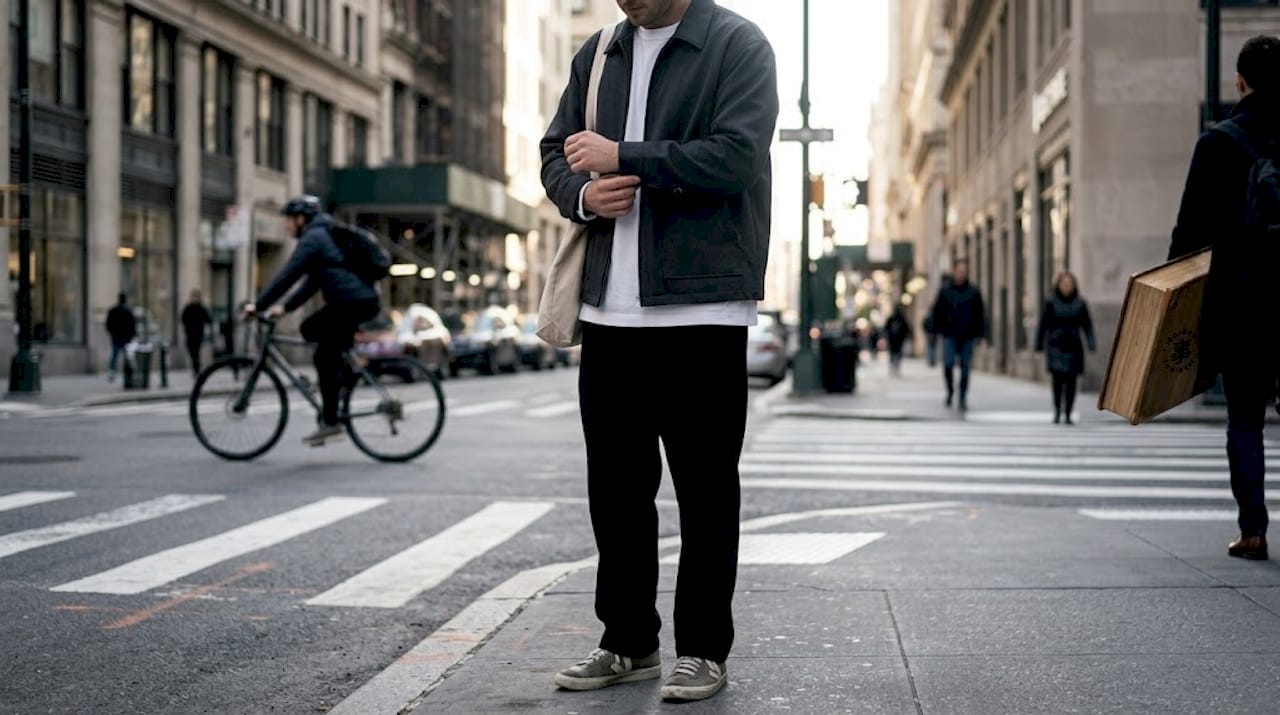
Once you have the principles in place, the actual pieces follow naturally. A well-built minimalist Japanese streetwear wardrobe, as GQ’s 2026 essentials guide confirms, is anchored by premium white crewneck tees, black trousers, dark-wash denim, grey chinos, navy joggers, boxy jackets, neutral hoodies, and muted sneakers.
Here are the six core pieces in order of priority:
- Premium white or off-white crewneck T-shirt — the foundation of every clean outfit. Choose heavyweight cotton for structure and longevity.
- Black relaxed trousers or dark-wash denim — versatile across seasons and occasions, the backbone of a tonal wardrobe.
- Tapered grey chinos or navy joggers — adds a relaxed, contemporary edge while staying refined and functional.
- Boxy overshirt or unstructured jacket — serves as a layering piece and light outerwear, ideal for European spring and autumn.
- Neutral hoodie in charcoal or stone — a quiet statement garment that works under and over other layers.
- Muted, minimal sneakers — no logo overload. Clean profiles in white, black, or earth tones anchor any of the above.
Each piece earns its place through function and seasonality. Explore how these items work together in a broader Japanese minimalist wardrobe guide to understand how to rotate them efficiently.
- T-shirts: layer under overshirts or wear alone in warmer months
- Trousers and chinos: transition from casual daywear to smart-casual effortlessly
- Jackets and hoodies: manage European temperature shifts without sacrificing silhouette
For those exploring unisex essentials within this aesthetic, many of these pieces translate beautifully across gender lines.
Pro Tip: Invest in neutral-hued outer layers first. They multiply the versatility of every piece underneath them and extend the life of your overall wardrobe.

Leading brands for premium Japanese minimalist streetwear
Knowing what to buy is only half the task. Knowing who makes it well is just as important. Several brands have built their reputations on the intersection of Japanese craftsmanship and contemporary urban design.
| Brand | Example piece | Price range | Core strength |
|---|---|---|---|
| COS | Unstructured blazers, wool trousers | €129 to €229 | Scandinavian-Japanese fusion, clean tailoring |
| OrSlow | Workwear jackets, wide trousers | $260 to $350 | Durable Japanese denim, understated workwear |
| a.PRESSE | Silk bombers, cashmere separates | £400 and above | Ultra-luxury Japanese fabrication |
| Acne Studios | Organic cotton bombers, long-sleeve tees | £150 to £850 | Minimalist Nordic with Japanese structural accents |
As GQ’s feature on OrSlow highlights, these labels share a commitment to durable fabrication and deliberate understatement. OrSlow in particular uses aged Japanese denim and traditional dyeing methods to produce pieces that improve with wear.
- COS suits those who want European tailoring with a Japanese sensibility at an accessible premium price point
- OrSlow appeals to collectors who value patina and craft over seasonal newness
- a.PRESSE is for those ready to invest in heirloom-level luxury Japanese garments
- Acne Studios bridges Nordic minimalism with structural Japanese proportions
Understanding what separates these brands involves looking closely at streetwear luxury features, specifically how fabric sourcing, cut precision, and construction method influence the final garment’s feel and longevity.
Comparing essentials: Fabrics, functionality, and price
With your shortlist of brands and core pieces established, comparing them side by side helps you spend wisely. The variables that matter most are fabric quality, proportions, wearability in everyday European conditions, and overall value.
| Essential | Best fabric choice | Ideal cut | Price range | Best suited for |
|---|---|---|---|---|
| T-shirt | Heavyweight Japanese cotton | Relaxed crewneck | €40 to €120 | Daily wear, layering base |
| Jacket | Cotton-wool blend or structured twill | Boxy, dropped shoulder | €180 to €350 | Layering, transitional seasons |
| Trousers | Japanese selvedge denim or wool | Tapered or wide leg | €120 to €260 | Versatile day-to-evening wear |
| Sneakers | Premium leather or suede | Clean, low-profile | €120 to €350 | Grounding tonal outfits |
As the OrSlow brand profile demonstrates, higher price points often reflect traditional Japanese manufacturing techniques rather than marketing premium alone. That distinction matters when deciding where to spend.
Consider these factors when choosing between options:
- Heavyweight cotton tees: excellent year-round, drape well, develop character with wear, though more expensive upfront
- Wool-blend jackets: superb for European autumn and winter, require careful maintenance but reward longevity
- Selvedge denim: durable and characterful, though stiffer initially and heavier on the wallet
- Minimal sneakers: highly wearable and season-neutral, though premium leather versions demand regular care
For a broader view of how these choices fit into modern Japanese streetwear styles, it helps to understand the full spectrum from utility-driven techwear to clean, tonal minimalism.
Styling and building your streetwear wardrobe
Owning the right pieces is one thing. Wearing them with intent is another. The strength of Japanese-inspired minimalist dressing lies in how you assemble, not just what you assemble.
Layering is the cornerstone of this approach. A fitted crewneck beneath a boxy overshirt, worn with tapered trousers and clean sneakers, achieves a Tokyo-influenced layering balance that reads as effortless rather than overdone. The key is proportion: keep your silhouette coherent by contrasting volume deliberately.
Here are the core do’s and don’ts:
- Do anchor your look with one tonal base and build upward from there
- Do use texture contrast (matte cotton against a brushed flannel overshirt) as a subtle focal point
- Do explore styling Japanese essentials for outfit frameworks that translate across seasons
- Don’t mix more than two distinct silhouette volumes in a single look
- Don’t over-accessorise. A single considered detail lands harder than three competing ones
- Don’t chase graphic-heavy pieces as a shortcut. As the current minimalist shift shows, Europe favours refined subtlety over saturated logos
“The most powerful thing a minimalist wardrobe does is remove the noise, so that every choice you make feels deliberate and strong.”
For occasions where you want just a hint of visual contrast, a minimalist graphic tee with restrained artwork can introduce character without disrupting the overall calm of the look.
Pro Tip: Treat your wardrobe as a capsule, especially when travelling. Limit yourself to seven pieces that all work together. The constraint forces creativity and reveals which items you truly value.
Why true style means editing, not accumulating
Here is an opinion that most streetwear content will not say plainly: the wardrobe that earns the most respect is rarely the largest one. It is the most edited.
We have watched the market push volume, seasonal drops, and perpetual newness. The result is wardrobes full of pieces that rarely speak to each other. The Tokyo streets that inspire so much of this aesthetic operate on a different principle entirely. The individuals who draw genuine admiration are not wearing ten interesting things. They are wearing three immaculate ones.
True minimalism, in our view, means walking away from the logo race. It means resisting the pull of limited editions that feel urgent but age quickly. It means returning to a timeless wardrobe philosophy where a single well-made jacket, worn repeatedly and with confidence, says more than a rotating archive of purchases ever could.
Edit your wardrobe regularly. Remove what you reach for least. Buy one piece of genuine quality instead of three pieces of moderate quality. That discipline, more than any trend knowledge, is what separates someone who dresses with taste from someone who merely dresses well.
Refine your look with curated Japanese streetwear
If this guide has sharpened your sense of what belongs in your wardrobe, the next step is finding pieces that meet that standard without the noise of overcrowded marketplaces.
At INCIDENT Clothing, we design and curate refined Japanese streetwear rooted in minimalist principles, premium fabrics, and clean, considered construction. Every piece is chosen to complement a focused wardrobe rather than complicate it. Whether you are building from scratch or refining what you already own, our collections offer a clear, elevated starting point. Browse our streetwear lookbook for styling ideas and discover how each garment earns its place in a wardrobe built to endure.
Frequently asked questions
What are the core pieces for a men’s minimalist streetwear wardrobe?
Focus on quality white tees, black trousers, neutral hoodies, boxy jackets, and muted sneakers. As GQ’s essentials guide confirms, these five categories form the foundation of a refined, versatile Japanese-inspired wardrobe.
How do I choose a brand for Japanese minimalist streetwear?
Prioritise brands known for quality fabrics, subtle design, and genuine craftsmanship. Labels such as COS, OrSlow, and Acne Studios each deliver minimalist Japanese-influenced pieces at varying price points, as detailed in GQ’s OrSlow feature.
Are bold graphics or plain designs better for Japanese-influenced streetwear?
Minimalist, plain designs with occasional subtle graphics are best suited to the current direction. The Japanese minimalist shift in Europe clearly favours refined understatement over saturated logos or heavy graphic programmes.
What is a useful pro tip for building a minimalist streetwear wardrobe?
Edit often and invest in a small number of premium essentials rather than chasing every trend. A focused wardrobe of truly worn pieces delivers far greater style impact than a crowded one.
Why is layering important in Japanese streetwear?
Layering builds structured, proportioned silhouettes that define the Tokyo clean aesthetic. Done correctly, it adds depth and visual interest without bulk, as the Tokyo layering approach consistently demonstrates.

Share:
How to transition seasonal streetwear with Japanese style
Luxury loungewear explained: Effortless style, Japanese edge