

TL;DR:
- Artisanal streetwear combines urban style with handmade techniques and small-batch production.
- It emphasizes durability, uniqueness, and cultural heritage, often inspired by Japanese traditions.
- These garments offer authenticity, ethical sourcing, and a deeper connection compared to mass-produced streetwear.
Streetwear has long carried a reputation for being loud, logo-heavy, and churned out at scale. Yet beneath the surface of hyped drops and fast-fashion imitations, a quieter and far more considered movement has been building. Artisanal streetwear sits at the intersection of urban culture and genuine craftsmanship, where garments are made with intention, patience, and skill. This guide walks you through what artisanal streetwear truly is, which techniques and brands define it, and how to tell the real thing from a well-marketed imitation. If you have ever felt that your wardrobe deserves more substance than the mainstream offers, you are in exactly the right place.
Table of Contents
- Understanding artisanal streetwear
- Key artisanal techniques and materials
- Artisanal streetwear brands and standout examples
- Artisanal vs. mass-produced streetwear: a direct comparison
- Perspective: why artisanal streetwear matters now
- Explore Japanese-inspired artisanal streetwear
- Frequently asked questions
Key Takeaways
| Point | Details |
|---|---|
| Handcrafted difference | Artisanal streetwear is crafted in small batches using premium techniques for uniqueness and durability. |
| Japanese influence | Wabi-sabi philosophy and traditional textile methods inspire artisanal streetwear’s distinctive look and feel. |
| Sustainability and ethics | Artisanal brands emphasise ethical labour, quality, and environmental responsibility over mass production. |
| Beyond hype | Today’s premium streetwear values story, philosophy, and ritual, not just logos or fast trends. |
Understanding artisanal streetwear
The term “artisanal streetwear” might sound like a contradiction at first. Streetwear, after all, grew from skate parks, hip-hop culture, and the desire to dress outside the establishment. Artisanal, on the other hand, evokes workshops, tradition, and slow creation. But these two worlds share more than you might expect.
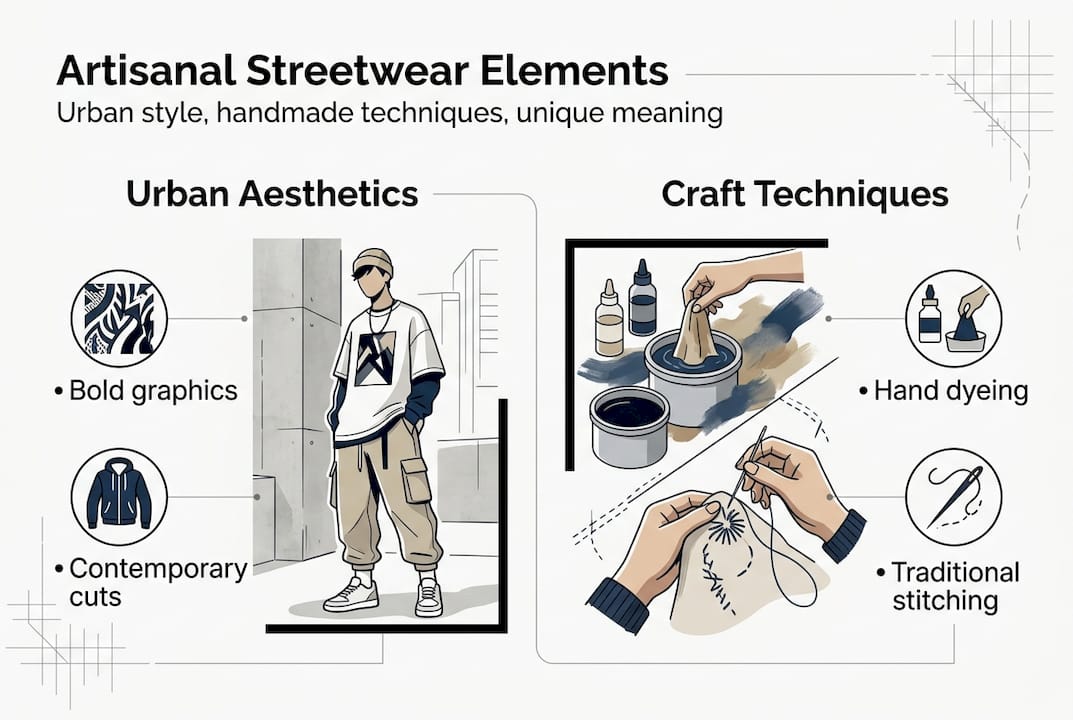
Artisanal streetwear fuses streetwear’s urban aesthetics with handmade techniques, small-batch production, premium materials, and unique detailing that mass production simply cannot replicate. The result is clothing that carries a story, a texture, and a presence that feels entirely different from anything you would find on a high-street rail.
At the heart of this movement is a philosophy borrowed heavily from Japanese culture, particularly the concept of wabi-sabi: finding beauty in imperfection, impermanence, and incompleteness. This is why so many artisanal streetwear pieces feature irregular dye patterns, slightly uneven stitching, or subtle asymmetry. These are not flaws. They are signatures. You can explore how Japanese minimalism in streetwear shapes this entire aesthetic sensibility.
Some of the core characteristics that define artisanal streetwear include:
- Small-batch production, typically between 50 and 300 units per run
- Handcrafted techniques such as hand-embroidery, rust-dyeing, and upcycling
- Premium, often heritage fabrics sourced from specialist mills
- A philosophy-first approach, where story and durability matter more than seasonal trends
- Cultural grounding, frequently rooted in Japanese textile traditions
“A garment made with intention carries that intention into the world. You wear it differently when you know what it took to create.”
Understanding the broader streetwear terminology around this space helps you navigate conversations and collections with genuine confidence. Artisanal streetwear is not about spending more for the sake of it. It is about choosing garments that reward attention and age with grace.
Key artisanal techniques and materials
The methods behind artisanal streetwear are where the real story lives. These are not shortcuts or aesthetic gimmicks. They represent handmade processes in fashion that demand skill, time, and deep material knowledge.
Tokyo-based label Proleta Re Art is one of the most striking examples. Their key methodologies include upcycling deadstock materials, experimental dyeing such as rust-dyeing and sun-bleaching, hand-finishing, embroidery, and traditional Japanese techniques like Nishijin-ori weaving and shuttle loom denim. Some of their pieces require up to 300 hours of labour to complete, which explains price points reaching £14,000 or more.
Here is a quick reference for the most prominent artisanal techniques you will encounter:
- Rust-dyeing and sun-bleaching — Natural processes that produce one-of-a-kind colour variations impossible to replicate at scale
- Nishijin-ori weaving — A centuries-old Kyoto silk-weaving tradition producing extraordinarily intricate textile patterns
- Upcycling and deadstock use — Transforming existing or surplus materials into new garments, reducing waste while adding history
- Hand-embroidery — Stitched detailing applied by skilled artisans, often taking many hours per piece
- Shuttle loom denim — Slower, narrower looms that produce selvedge denim with a tighter, more durable weave
| Technique | Origin | Time investment | Typical batch size |
|---|---|---|---|
| Nishijin-ori weaving | Kyoto, Japan | Very high | Under 100 units |
| Rust-dyeing | Global artisanal | Medium | Under 200 units |
| Shuttle loom denim | Japan/USA | High | 50 to 300 units |
| Hand-embroidery | Global | Very high | Under 150 units |
You can learn more about quality benchmarks in Japanese streetwear to understand how these techniques translate into measurable garment quality. For a deeper look at the raw materials themselves, our guide to Japanese fabrics and techniques is an excellent companion read.
Pro Tip: When examining a potential artisanal piece, look for subtle imperfections in the dye or stitching. These are not defects. They are the fingerprints of a human hand, and they are precisely what makes the garment irreplaceable.
Artisanal streetwear brands and standout examples
Knowing the philosophy and the techniques is one thing. Seeing them embodied in actual brands brings the picture into sharp focus. Several labels have become reference points for anyone serious about this space.
Brands exemplifying artisanal streetwear include Human Made, founded by NIGO, which channels Japanese craft into accessible everyday pieces like T-shirts and hoodies. Proleta Re Art takes a maximalist approach to craft, reworking denim into sculptural pieces. ichinichi brings a daily minimalist philosophy to print-on-demand Japanese-inspired garments. Made by Mena focuses on upcycled, sustainable production with a strong ethical backbone.
Here is a comparative overview of how these brands position themselves:
| Brand | Approach | Price range | Availability |
|---|---|---|---|
| Human Made | Japanese craft, accessible | £80 to £190 | Global online and select retail |
| Proleta Re Art | Reworked denim, maximal craft | Up to £14,000 | Tokyo, very limited |
| ichinichi | Minimalist, daily-wear | Accessible | Online, print-on-demand |
| Made by Mena | Upcycled, sustainable | Mid-range | Online |
What unites these brands is not price. It is intention. Each one has built its identity around a specific interpretation of what it means to make clothing with care. Human Made, for instance, treats the T-shirt as a canvas for Japanese heritage motifs, proving that artisanal values do not require an extreme price tag.
Some defining qualities shared across the best artisanal streetwear brands:
- Transparent communication about production methods and batch sizes
- Founders or creative directors with deep personal connection to the craft
- Seasonal collections that evolve slowly rather than chasing weekly trends
- A visible cultural or philosophical anchor that informs every design decision
For a broader view of the landscape, our guide to unique Japanese streetwear brands covers a wider range of labels worth exploring. You can also read about the various Japanese minimalist streetwear types to understand how each brand fits into the wider aesthetic spectrum.
Artisanal vs. mass-produced streetwear: a direct comparison
The differences between artisanal and mass-produced streetwear go well beyond price. They touch on ethics, environmental impact, emotional connection, and the simple question of how long a garment will last.
Artisanal streetwear prioritises durability of 50 or more years, ethical labour, and uniqueness, while mass-produced streetwear focuses on speed, affordability, and uniformity, resulting in shorter lifespans and considerably higher waste. That contrast is not just environmental. It is personal. A garment you expect to last a lifetime changes how you wear it, care for it, and think about it.
| Factor | Artisanal streetwear | Mass-produced streetwear |
|---|---|---|
| Production scale | 50 to 300 units | Thousands to millions |
| Labour | Skilled, often hand-finished | Automated or low-wage factory |
| Lifespan | Decades, often heirloom quality | Typically one to three seasons |
| Environmental impact | Low waste, often sustainable | High waste, fast turnover |
| Price | Mid to very high | Low to mid |
| Cultural depth | Rich, often rooted in tradition | Minimal or trend-driven |
The difference between handmade and mass production is also felt physically. Artisanal garments tend to sit differently on the body, drape with more character, and develop a patina over time that mass-produced pieces simply cannot replicate.
Key differences worth remembering:
- Individuality: No two artisanal pieces are identical. Mass production ensures they all are.
- Ethics: Artisanal production typically involves fair wages and transparent supply chains.
- Connection: You know where it came from, who made it, and why it was designed that way.
For those building a wardrobe with longevity in mind, our guide to sustainable streetwear differences and our timeless wardrobe guide offer practical frameworks for making better long-term choices.
Pro Tip: Turn any garment inside out before buying. Clean, consistent seam finishing and quality labelling are reliable indicators of genuine craftsmanship, regardless of what the outside looks like.
Perspective: why artisanal streetwear matters now
We have watched streetwear evolve for years, and something has shifted noticeably in 2026. The generation now shaping culture is tired of buying the same hoodie as ten thousand other people. They want clothes that mean something, that carry a story they can actually tell.
Luxury streetwear now emphasises philosophy over hype, with craft and story appealing far more than logos to those aged 18 to 35 who are seeking genuine meaning in what they wear. This is not nostalgia. It is a values shift.
Artisanal streetwear offers something that no algorithm can manufacture: authenticity. When you wear a piece that took 200 hours to create, using a technique refined over centuries, you are participating in something larger than fashion. You are wearing a point of view. That is rare, and it is increasingly valuable.
We believe the most interesting wardrobes in the next decade will not be defined by the biggest brands or the most limited drops. They will be defined by the depth of the story behind each piece. Explore how Japanese minimalism continues to anchor this shift toward intentional dressing.
Explore Japanese-inspired artisanal streetwear
If this guide has sparked a genuine curiosity about artisanal streetwear, the next step is to experience it first-hand. Reading about craftsmanship is one thing. Holding a garment that embodies it is something else entirely.

At INCIDENT, we design premium Japanese-inspired streetwear from Switzerland, focusing on clean lines, subtle detailing, and Japandi-influenced minimalism. Every piece in our collection is made with the same philosophy you have read about here: quality over quantity, story over noise. Our premium PIMA cotton T-shirts are a strong starting point, offering ultra-soft comfort and considered design that rewards close attention. We invite you to explore the collection and feel the difference that genuine craft makes.
Frequently asked questions
What makes streetwear ‘artisanal’?
Handmade techniques and small-batch production set artisanal streetwear apart, along with premium materials and unique detailing that give each piece a character mass production cannot achieve.
How do you spot genuine artisanal streetwear?
Look for unique detailing and premium materials such as irregular dye patterns, hand-stitched finishes, and transparent information about limited production runs and the specific methods used.
Why is Japanese artisanal streetwear so respected?
Traditional Japanese techniques and wabi-sabi philosophy have shaped a centuries-old culture of textile craftsmanship, giving Japanese artisanal streetwear a depth of heritage that is genuinely difficult to replicate elsewhere.
Is artisanal streetwear always expensive?
Not at all. While some ultra-crafted pieces command extraordinary prices, Human Made pieces start from around £80, proving that artisanal values and accessible pricing can comfortably coexist.


Share:
Streetwear origins, evolution, and global impact 2026
Streetwear silhouettes explained: 4 shapes to know