


Japanese-inspired prints have exploded across global streetwear, yet many people still reduce them to cherry blossoms and dragons without understanding their deeper cultural roots. These prints represent centuries of Japanese artistry, from traditional ukiyo-e woodblock paintings to symbolic motifs that carry profound meanings about life, nature, and spirituality. This guide will help you recognize authentic Japanese-inspired prints, understand their cultural significance, and style them confidently in your modern wardrobe. Whether you’re drawn to minimalist aesthetics or bold statement pieces, knowing the story behind these prints transforms how you wear them.
Table of Contents
- Key takeaways
- The cultural roots of Japanese-inspired prints
- Common motifs and their meanings in Japanese-inspired prints
- Japanese-inspired prints in modern streetwear fashion
- How to identify and style authentic Japanese-inspired prints
- Discover Japanese streetwear at INCIDENT
- FAQ
Key Takeaways
| Point | Details |
|---|---|
| Cultural roots | The prints originate from ukiyo e and traditional motifs that express beauty, nature, and spirituality across centuries. |
| Motif meanings | Symbols like waves, cherry blossoms, cranes, dragons, and seasonal flowers carry meanings related to life, protection, and impermanence. |
| Streetwear transition | Japanese designers reinterpreted these motifs for modern fashion while preserving symbolism and adapting scale and color for contemporary garments. |
| Authenticity cues | To spot authentic designs, look for intentional motif pairings and culturally informed symbolism rather than random decoration. |
| Styling guidance | Knowing the story behind prints helps you style them confidently, whether you prefer minimalist looks or bold statement pieces. |
The cultural roots of Japanese-inspired prints
Japanese-inspired prints draw their foundation from centuries of artistic tradition that shaped how Japan expressed beauty, nature, and spirituality through visual design. The most influential source remains ukiyo-e, the woodblock printing technique that flourished during the Edo period and captured scenes of everyday life, landscapes, and theatrical performances. Artists like Hokusai and Hiroshige created iconic wave and mountain prints that still influence fashion today. These prints often draw from ukiyo-e woodblock art and traditional motifs popularized over centuries.
Traditional Japanese textiles also contributed significantly to the print vocabulary we see in modern fashion. Kimono fabrics featured intricate patterns that conveyed social status, seasonal awareness, and personal taste through carefully chosen motifs. Cherry blossoms signaled spring’s arrival and life’s fleeting nature, while cranes symbolized longevity and good fortune. Dragons represented power and protection, often reserved for garments worn by nobility or warriors. Waves and clouds depicted the natural world’s constant movement and change.
The transition from traditional art to contemporary fashion happened gradually as Japanese designers began reinterpreting these classical motifs for modern audiences. The Japanese fashion revolution brought these prints into global consciousness, particularly through streetwear movements that emerged from Harajuku and other urban centers. Designers maintained respect for original symbolism while adapting scale, color palettes, and placement to suit contemporary garment construction.
Key traditional elements that appear in modern Japanese-inspired prints include:
- Seasonal flowers like sakura, chrysanthemums, and wisteria that mark time’s passage
- Mythological creatures including dragons, phoenixes, and koi fish carrying protective or transformative meanings
- Natural phenomena such as waves, mountains, and clouds representing life’s forces
- Geometric patterns from traditional family crests and textile weaving techniques
Understanding these roots helps you appreciate why certain prints appear together and what stories they tell. A garment featuring waves and cherry blossoms isn’t random decoration but rather a deliberate pairing that speaks to nature’s beauty and impermanence. This cultural literacy elevates how you select and wear Japanese-inspired prints in your wardrobe.
Common motifs and their meanings in Japanese-inspired prints
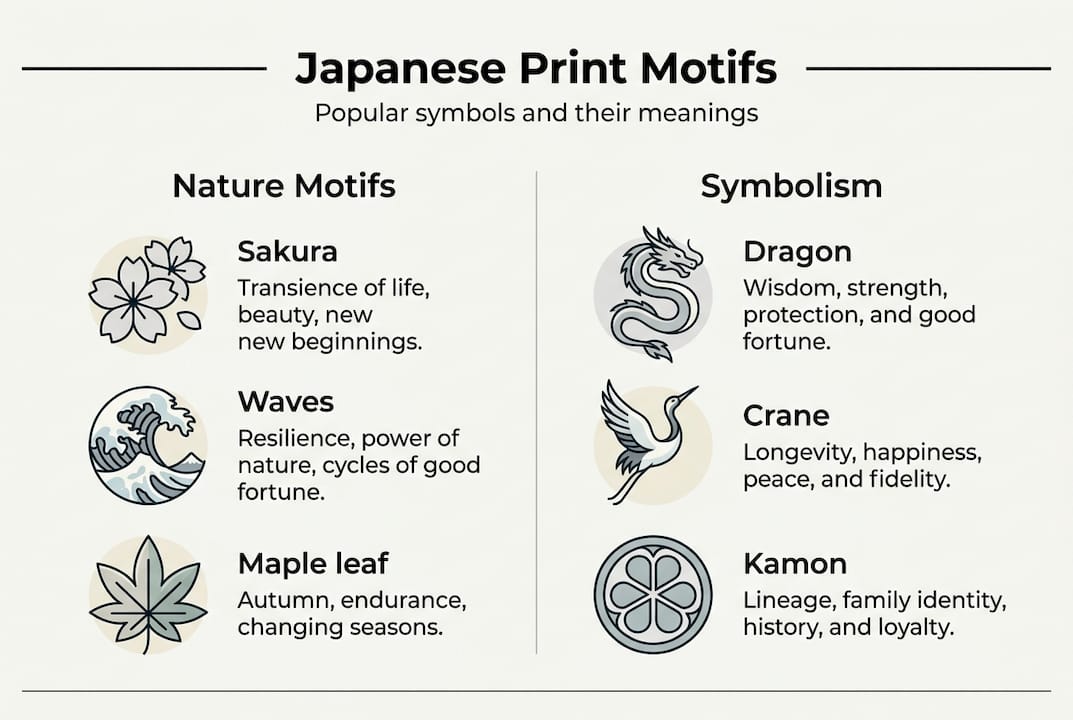
Each motif in Japanese-inspired prints carries specific cultural and spiritual significance that extends beyond pure aesthetics. The cherry blossom stands as perhaps the most recognized symbol, representing mono no aware, the bittersweet awareness of impermanence. Motifs like the cherry blossom represent transience, while the dragon symbolizes strength and protection. These flowers bloom spectacularly for only a brief period each spring, reminding viewers to appreciate fleeting moments of beauty.
Maple leaves, or momiji, connect deeply with autumn and the concept of graceful change. Japanese culture celebrates the fall foliage season with the same reverence given to spring cherry blossoms, viewing the brilliant red and orange leaves as nature’s final display before winter’s quiet. Wearing maple leaf prints often signals an appreciation for transformation and the cycles that govern life.
Animal and mythological motifs carry equally powerful meanings. Dragons represent imperial power, wisdom, and protection from evil forces. Unlike Western dragons, Japanese dragons typically embody benevolent qualities and control over water and weather. Cranes symbolize longevity and good fortune, with legends claiming they live for a thousand years. Koi fish represent perseverance and transformation, based on the story of koi swimming upstream to become dragons.

| Motif | Primary meaning | Secondary associations | Common colors |
|---|---|---|---|
| Cherry blossom | Impermanence, beauty | Spring renewal, hope | Pink, white |
| Dragon | Power, protection | Wisdom, water control | Gold, black, red |
| Crane | Longevity, fortune | Peace, loyalty | White, red accents |
| Waves | Life’s forces, change | Power, persistence | Blue, white foam |
| Maple leaves | Graceful change | Autumn, maturity | Red, orange, gold |
Natural elements like waves and clouds appear frequently in Japanese-inspired prints, often inspired by Hokusai’s famous Great Wave. These designs capture movement and energy while representing forces beyond human control. Clouds symbolize the ephemeral nature of existence and often pair with other motifs to create layered meanings.
Pro Tip: When selecting Japanese-inspired prints, consider what resonates with your personal values or current life phase. A print featuring koi might appeal during times of personal challenge, while cherry blossoms suit moments when you’re embracing change.
Geometric patterns from traditional family crests, called kamon, also influence modern prints. These simplified symbols distill complex ideas into clean, recognizable shapes that work beautifully in minimalist streetwear designs. The Japanese haori designs often incorporate these elements in subtle, sophisticated ways.
Understanding these meanings transforms how you perceive and wear Japanese-inspired prints. You’re not just wearing decorative patterns but carrying symbols that have resonated across generations of Japanese culture and continue to communicate values like resilience, beauty, and harmony with nature.
Japanese-inspired prints in modern streetwear fashion
The integration of traditional Japanese prints into contemporary streetwear represents one of fashion’s most successful cultural fusions. Japanese minimalist and traditional prints have contributed to the rise of luxury streetwear aesthetics worldwide. Designers recognized that these centuries-old motifs could coexist with modern silhouettes, creating garments that honor tradition while feeling entirely current.
Oversized tees became the perfect canvas for large-scale Japanese prints, allowing intricate wave patterns or dramatic dragon designs to make bold statements. The relaxed fit of contemporary streetwear accommodates these eye-catching prints without overwhelming the wearer, while the casual nature of streetwear makes traditionally formal motifs more accessible to younger audiences. Bomber jackets and coach jackets also showcase Japanese prints effectively, with back panels providing space for elaborate designs.
The role of Japanese aesthetics in luxury streetwear extends beyond prints to encompass entire design philosophies. Concepts like ma (negative space) and wabi-sabi (finding beauty in imperfection) influence how prints are placed and scaled on garments. Rather than covering every surface, many Japanese-inspired streetwear pieces use prints strategically, allowing fabric to breathe and creating visual balance.
Popular applications of Japanese prints in modern streetwear include:
- Oversized graphic tees featuring back prints of waves, dragons, or cherry blossoms
- Bomber jackets with embroidered or printed panels showcasing traditional motifs
- Hoodies combining minimalist fronts with detailed back graphics
- Accessories like bucket hats, tote bags, and socks incorporating smaller-scale prints
- Layering pieces such as kimonos and haoris adapted for streetwear contexts
Styling Japanese prints for modern looks requires balancing boldness with restraint. Here’s a practical approach:
- Start with one statement piece featuring a prominent Japanese print as your outfit’s focal point
- Pair it with neutral basics in black, white, or earth tones to let the print shine
- Add minimalist accessories that complement rather than compete with the print
- Consider the print’s color palette when selecting complementary pieces
- Layer strategically, using solid-colored outerwear to frame printed pieces
The streetwear hype Japanese style movement has popularized these styling approaches, making Japanese-inspired prints a staple in contemporary fashion. Understanding kimono-inspired clothing guide principles helps you appreciate how traditional garments translate into modern pieces.
Pro Tip: When wearing bold Japanese prints, keep your footwear simple. Clean white sneakers or minimalist black shoes prevent your outfit from feeling too busy while maintaining the streetwear aesthetic.
Seasonal styling also plays a role in how you wear Japanese-inspired prints. Spring naturally calls for cherry blossom motifs, while autumn suits maple leaf designs. The hanami streetwear styling tips provide specific guidance for incorporating seasonal prints into your rotation.
The beauty of Japanese-inspired prints in streetwear lies in their versatility. A well-designed piece works equally well for casual weekend wear, creative work environments, or evening social events. The key is understanding how to balance the print’s visual weight with the rest of your outfit and choosing pieces that reflect authentic cultural appreciation rather than superficial appropriation.
How to identify and style authentic Japanese-inspired prints
Recognizing authentic Japanese-inspired prints requires understanding what separates culturally informed designs from generic imitations. Authentic Japanese-inspired prints often reflect careful craftsmanship and respect for original symbolism. Genuine pieces demonstrate knowledge of traditional motifs, accurate representation of cultural symbols, and thoughtful adaptation rather than random mixing of Asian imagery.
Quality printing techniques serve as the first indicator of authenticity. Screen printing, embroidery, and high-quality digital prints that capture fine details suggest a brand invested in honoring the source material. Cheap heat transfers or low-resolution prints that blur traditional motifs often signal designs created without cultural understanding or respect.
Authentic markers to look for include:
- Accurate depiction of traditional motifs with proper proportions and details
- Thoughtful color palettes that reference historical Japanese textiles and art
- Appropriate pairing of symbols that traditionally appear together
- Quality fabric choices that complement the print style
- Brand transparency about cultural inspiration and design process
When building a wardrobe with Japanese-inspired prints, start by researching brands that demonstrate cultural awareness and collaborate with Japanese designers or artists. The unique Japanese streetwear styles guide helps you identify pieces that balance authenticity with contemporary appeal.
Styling authentic Japanese prints effectively requires several considerations:
- Understand the print’s cultural context before wearing it to ensure appropriate use
- Balance print intensity with your outfit’s other elements to avoid visual chaos
- Consider the occasion and whether bold traditional prints suit the setting
- Mix Japanese-inspired pieces with your existing wardrobe rather than creating costumes
- Pay attention to fit and silhouette to keep looks modern and wearable
- Coordinate colors thoughtfully, pulling accent shades from the print into other pieces
Common mistakes to avoid include treating Japanese prints as exotic costumes, mixing incompatible cultural symbols without understanding their meanings, or wearing sacred or ceremonial designs in casual contexts. A print featuring torii gates or specific religious imagery deserves more careful consideration than purely decorative motifs like waves or flowers.
Color coordination becomes crucial when styling Japanese-inspired prints. Many traditional prints feature rich color combinations that can overwhelm an outfit if not balanced properly. Pull one or two colors from the print to echo in your other pieces, keeping the rest of your outfit neutral. This creates visual cohesion without competing with the print’s impact.
The 2026 streetwear trends guide emphasizes that authentic Japanese-inspired fashion works best when integrated naturally into your personal style rather than adopted wholesale. Select prints that genuinely resonate with you and complement your existing aesthetic preferences.
Fabric quality matters significantly for authentic Japanese-inspired pieces. Premium materials like heavyweight cotton, quality polyester blends for prints, or traditional fabrics adapted for modern garments indicate brands that prioritize craftsmanship. Poor fabric choices can undermine even the most culturally accurate prints, making garments feel cheap and disrespectful to the tradition they reference.
Discover Japanese streetwear at INCIDENT
If you’re ready to explore authentic Japanese-inspired prints that honor tradition while embracing modern streetwear aesthetics, INCIDENT offers carefully curated pieces that bridge these worlds. Our Japanese streetwear collection features designs that incorporate traditional motifs with the minimalist, quality-focused approach that defines contemporary Japanese fashion.

Each piece in our Japanese-inspired clothing line reflects thoughtful design choices that respect cultural origins while creating wearable, versatile garments for today’s fashion landscape. From subtle prints that hint at traditional influences to bolder statements that celebrate Japanese artistry, you’ll find options that suit various style preferences and comfort levels with pattern wearing.
Our PIMA cotton oversized tees provide the perfect foundation for exploring Japanese-inspired prints, offering premium fabric quality and contemporary fits that let the designs shine. These pieces work seamlessly into existing wardrobes, allowing you to experiment with Japanese aesthetics without committing to a complete style overhaul.
FAQ
What is the difference between Japanese-inspired prints and generic Asian designs?
Japanese-inspired prints feature specific cultural symbols like sakura, ukiyo-e wave patterns, and creatures from Japanese mythology that carry distinct meanings within Japanese culture. Generic Asian designs often mix elements from multiple cultures without regard for their specific origins or significance, creating visually similar but culturally inaccurate combinations. Authentic Japanese prints reflect Japan’s unique artistic history, from Edo period woodblock techniques to traditional textile patterns, while generic designs typically prioritize visual appeal over cultural accuracy. Supporting brands that understand these distinctions helps preserve the integrity of Japanese artistic traditions.
How can I incorporate Japanese-inspired prints into my daily wardrobe?
Start with a single statement piece like an oversized tee or bomber jacket featuring Japanese prints, then pair it with neutral basics in black, white, or earth tones to let the print take center stage. Balance is key, so if you’re wearing a bold printed top, keep your bottoms simple and your accessories minimal. As you grow comfortable with prints, experiment with layering by adding solid-colored outerwear or incorporating smaller printed accessories like hats or bags. The streetwear styling tips guide offers specific combinations that work for various occasions and style preferences.
Are Japanese-inspired prints appropriate for cultural appreciation or appropriation?
Wearing Japanese-inspired prints respectfully means understanding their cultural significance and avoiding sacred or ceremonially specific designs in casual contexts. Appreciation involves learning about the motifs you’re wearing, supporting authentic creators and brands that collaborate with Japanese designers, and wearing prints in ways that honor rather than mock their origins. Appropriation occurs when people treat cultural symbols as costumes, mix them carelessly with incompatible elements, or profit from Japanese aesthetics without acknowledging or respecting their source. Educating yourself about the prints you choose and purchasing from culturally informed brands helps ensure your fashion choices support appreciation over appropriation.
Can I mix different Japanese print motifs in one outfit?
Mixing Japanese print motifs can work beautifully if done thoughtfully, but requires understanding which symbols traditionally appear together and maintaining visual balance. Pairing cherry blossoms with waves makes cultural sense as both reference natural phenomena, while combining dragons with geometric kamon patterns can create interesting contrast. However, wearing multiple large-scale competing prints typically overwhelms an outfit and dilutes each motif’s impact. If you want to incorporate multiple Japanese elements, consider using one bold print as your focal point and adding subtle references through smaller accessories or complementary solid colors that echo the print’s palette.



Share:
How to pair Japanese style with denim for streetwear
Master key streetwear terminology for Japanese fashion