

TL;DR:
- Proper care of luxury fabrics involves gentle hand washing with pH-neutral detergents and correct storage to prevent irreversible damage. Routine professional cleaning and mindful storage practices extend the lifespan of high-end garments, protecting their shape, color, and integrity. Using the right tools and knowledge helps maintain the beauty and durability of delicate textiles over time.
The premium fabric care process is a specialised set of cleaning and maintenance practices designed to protect delicate, high-end textiles from damage and prolong their lifespan. Whether you own a Japanese oversized hoodie crafted from Pima cotton, a couture silk blouse, or a merino wool knit, the way you clean and store each piece determines how long it retains its shape, colour, and integrity. 83% of luxury garment damage occurs in standard laundry environments, which means the single greatest threat to your wardrobe is routine carelessness, not age. This guide draws on couture atelier practices, fabric preservation techniques, and the philosophy behind premium fabric quality to give you a clear, confident path forward.
What tools and supplies are essential for the premium fabric care process?
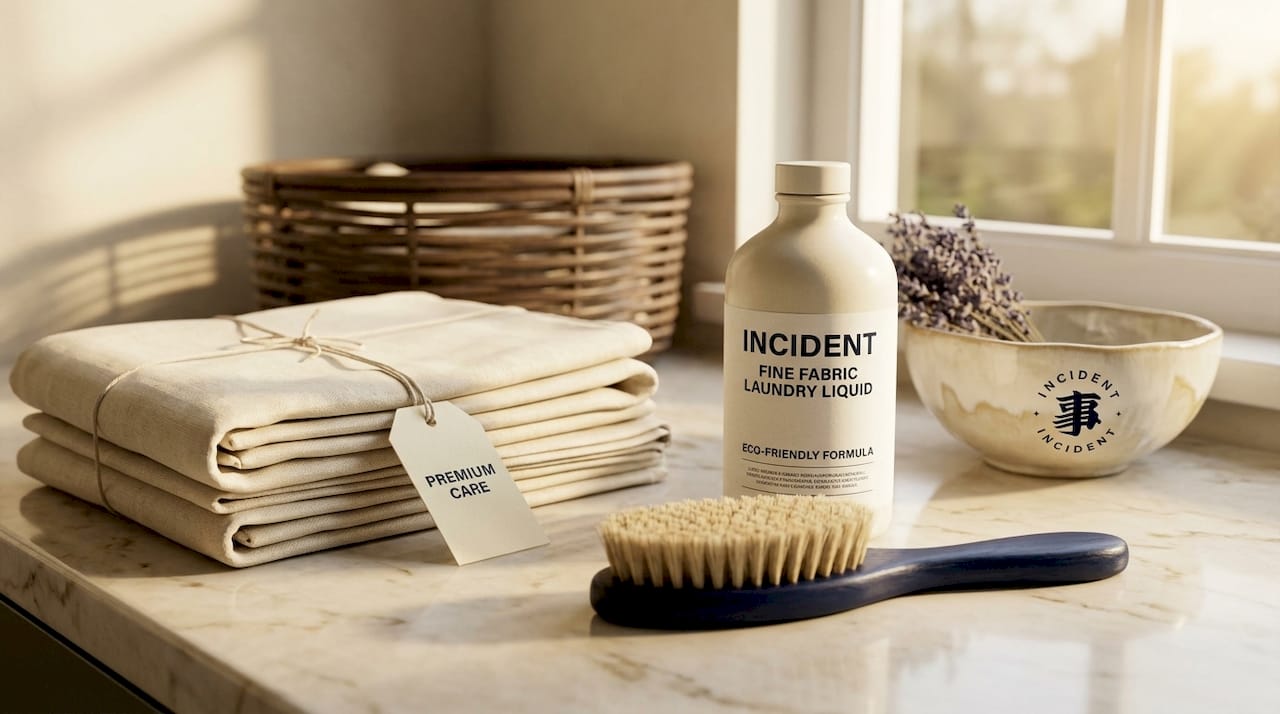
The right materials are the foundation of any effective high-end cloth care routine. Without them, even the most careful technique can cause irreversible fibre damage.
Detergents and solvents
Gentle, pH-neutral detergents are the standard for luxury textile maintenance. Products such as Woolite Delicates, The Laundress Delicate Wash, and Eucalan are formulated without optical brighteners or enzymes that strip natural fibres. For more demanding fabrics, professional ateliers rely on hydrocarbon and silicone-based solvents, which protect delicate fibres while achieving superior results compared to traditional perchloroethylene (PERC) dry cleaning. This matters because PERC, still used in many high-street dry cleaners, can weaken silk and cashmere over repeated cycles.
Brushes, cloths, and tools
A soft-bristle garment brush, such as those made by Kent or Redecker, removes surface lint and dust without abrading fibres. Microfibre cloths are ideal for blotting stains, as they absorb moisture without spreading it. A mesh laundry bag from brands like Guppyfriend or Brabantia protects delicate weaves during any machine cycle you cannot avoid.
Storage materials
Breathable cotton or muslin garment bags replace plastic covers as the storage standard for premium pieces. Acid-free tissue paper and pH-neutral boxes from suppliers such as Talas or Gaylord Archival are the professional choice for heavily embellished or structured garments. Cedar blocks or lavender sachets serve as natural pest deterrents without the chemical residue of mothballs.
Here is a quick reference for cleaning agent compatibility:
| Cleaning agent | Best for | Avoid on |
|---|---|---|
| pH-neutral detergent | Silk, wool, Pima cotton | Heavily structured tailoring |
| Hydrocarbon solvent | Cashmere, velvet, embroidered pieces | Rubber or latex trims |
| Silicone-based solvent | Beaded or sequined garments | Acetate linings |
| Cold water hand wash | Cotton, linen, jersey | Dry-clean-only structured pieces |
| Enzyme-free spot cleaner | Protein stains on natural fibres | Dyed or printed surfaces without colourfastness test |
Pro Tip: Before purchasing any new detergent, check the ingredient list for sodium lauryl sulphate and optical brighteners. Both are common in budget formulations and both degrade natural fibre lustre over time.
How to perform the premium fabric cleaning process safely and effectively
Cleaning premium garments is not simply a matter of adding less detergent. The method, temperature, and sequence each carry equal weight.
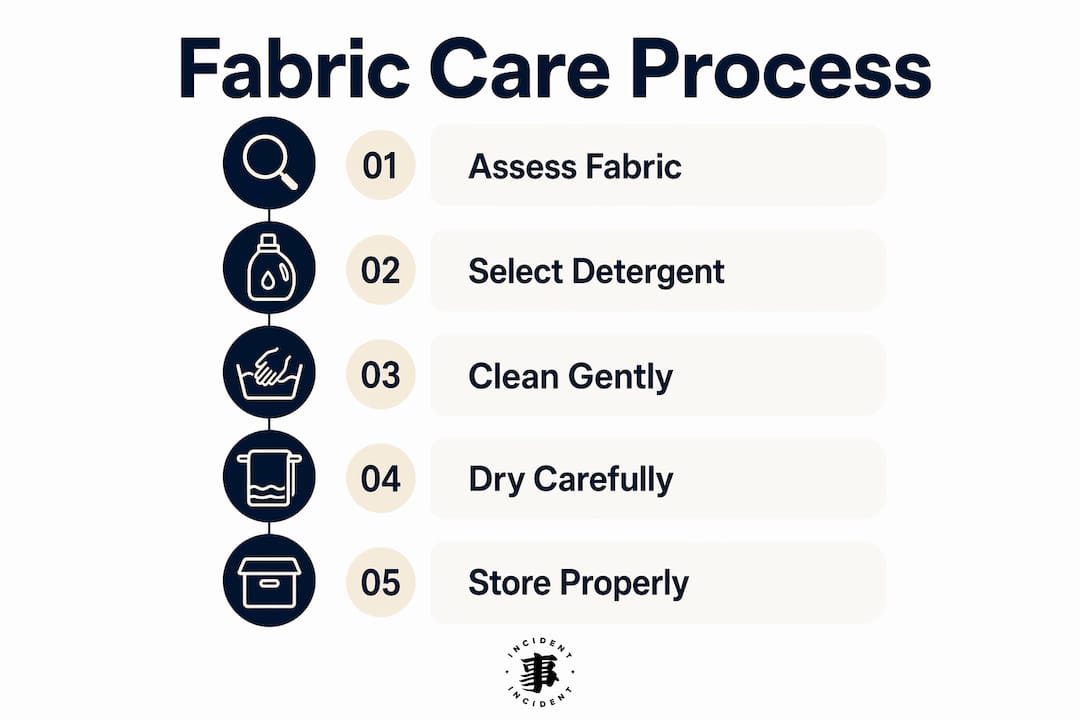
Assess the fabric before you begin
Testing colourfastness and interlining stability before cleaning prevents irreversible damage caused by bleeding or distortion. Dampen a hidden seam allowance with your chosen cleaning solution and press a white cloth against it for thirty seconds. If colour transfers, the garment requires professional handling, not a home wash.
Step-by-step cleaning process
- Read the care label carefully. Standard “dry clean only” labels require fabric assessment before cleaning to avoid structural damage caused by mechanical agitation or thermal shock. The label is a starting point, not an absolute rule, but deviating from it demands knowledge.
- Pre-treat visible stains. Blot, never rub, using a microfibre cloth dampened with cold water. Apply a small amount of pH-neutral spot cleaner to the cloth, not directly to the fabric, and work from the outer edge of the stain inward.
- Prepare a cold water basin. Fill a clean basin with water at or below 30°C. Add a capful of pH-neutral detergent and dissolve it fully before submerging the garment.
- Hand wash with minimal agitation. Gently squeeze the soapy water through the fabric for two to three minutes. Avoid wringing, twisting, or scrubbing. For Japanese streetwear pieces with graphic prints or kanji typography, keep the garment inside out throughout.
- Rinse thoroughly. Empty the basin, refill with clean cold water, and repeat the gentle squeeze process until no soap residue remains. Soap left in fibres attracts dirt and causes stiffness.
- Remove excess water without wringing. Lay the garment flat on a clean, dry towel and roll the towel around it. Press gently. Unroll and reshape the garment by hand.
- Dry flat or hang correctly. Lay knits and heavy cotton pieces flat on a drying rack away from direct sunlight and heat sources. Structured pieces can be hung on padded hangers to preserve their silhouette.
- Steam rather than iron where possible. Hand-form steaming rebuilds garment shape and texture post-cleaning, which is critical for maintaining the design silhouette of premium apparel. A handheld steamer from Rowenta or Philips works well for home use.
When to choose professional care
Professional designer garment care typically requires 3 to 5 days to accommodate pre-cleaning testing and manual finishing. That timeline reflects genuine craft, not delay. For heavily embellished pieces, structured tailoring, or garments with visible oxidation staining, a couture atelier such as Madame Paulette or a specialist dry cleaner is the correct choice. Professional ateliers also use cold tension vacuum tables to extract stains without spreading them deeper into the fabric, a technique impossible to replicate at home.
Pro Tip: If you are unsure whether a garment needs professional care, ask yourself one question: would you be comfortable if this piece were ruined? If the answer is no, book the specialist.
Maintenance and storage solutions to extend premium garment longevity
Cleaning is only half of the fabric preservation equation. How you store and maintain garments between wears determines whether they last two seasons or two decades.
The hidden threat of invisible contaminants
Invisible body oils, perfumes, and perspiration cause long-term degradation even when garments appear clean. This means professional cleaning should be routine, not reactive. Waiting until a stain is visible is already too late for the fibres underneath. For Japanese streetwear pieces worn close to the skin, such as Pima cotton tees or lightweight hoodies, a gentle wash after every two to three wears is the correct standard.
Storage best practices
Improper storage is one of the most common and most preventable causes of luxury textile damage. Follow these principles:
- Never store premium garments in plastic bags. Plastic traps moisture and causes mildew or yellowing. Use breathable cotton or muslin garment bags instead.
- Use padded or wooden hangers for structured pieces. Wire hangers distort shoulder seams over time. Velvet-coated hangers from brands like Zara Home or IKEA’s Bumerang range prevent slipping without damaging fabric.
- Fold knits rather than hanging them. Heavy knits stretch under their own weight when hung. Fold them along the natural seam lines and store flat on a shelf.
- Air garments before storing. Hang pieces in a well-ventilated space for at least an hour after wearing before returning them to a wardrobe or bag.
- Store heavily beaded or embellished pieces flat in acid-free, pH-neutral boxes lined with unbuffered tissue paper to prevent strain on fabric and embellishments.
- Use cedar blocks or lavender sachets to deter moths without chemical residue. Replace cedar every six months as its potency diminishes.
For practical guidance on how to fold and store streetwear pieces without compromising their shape, Incident’s guide on efficient streetwear folding covers minimalist techniques that work equally well for premium fabrics.
Pro Tip: If you live in a humid climate, place silica gel packets inside storage boxes and garment bags. Replace them every three months. Humidity above 60% accelerates mould growth and fibre breakdown faster than any cleaning mistake.
Common mistakes and how to troubleshoot premium fabric damage
Even experienced garment owners make errors that compound over time. Recognising them early is the difference between a recoverable situation and a permanent loss.
The most damaging habits
Using bleach or harsh detergents on natural fibres is the most common and most destructive mistake. Bleach oxidises protein fibres like silk and wool at a molecular level, causing irreversible yellowing and brittleness. Equally damaging is ignoring what appears to be a clean garment. Oxidation from sugar-based stains causes permanent yellowing or browning if left untreated, which means a spilled soft drink that dries invisibly can ruin a garment months later.
Applying home stain removers directly to fabric surfaces is another frequent error. Products like Vanish or Dr. Beckmann are formulated for standard cotton and polyester blends. On silk, cashmere, or printed streetwear fabrics, they can strip dye, dissolve sizing, or leave permanent rings.
Improper drying compounds every other mistake. Tumble drying on high heat shrinks natural fibres, sets stains permanently, and degrades elastic components. Direct sunlight bleaches colour from printed fabrics, including kanji and Japanese motif designs, within a single season of regular exposure.
Troubleshooting guide
| Problem | Likely cause | Solution |
|---|---|---|
| Yellowing on white or cream fabric | Oxidised sugar stains or improper storage | Professional atelier treatment; switch to breathable storage |
| Pilling on knitwear | Friction from washing or wearing | Use a fabric shaver; switch to hand wash in mesh bag |
| Colour bleeding after wash | Colourfastness not tested; water too warm | Cold water rinse immediately; professional re-dyeing if severe |
| Stiff or scratchy texture after washing | Soap residue remaining in fibres | Re-rinse in cold water; add a capful of white vinegar to final rinse |
| Stretched neckline or shoulders | Hung while wet or on wire hangers | Reshape wet and dry flat; use padded hangers going forward |
| Mildew spots | Stored damp or in plastic | Air thoroughly; spot treat with diluted white vinegar; professional cleaning |
Understanding how premium fabrics shape garment quality also helps you anticipate which issues are most likely for each fibre type, so you can prevent problems before they appear.
Key takeaways
The premium fabric care process protects luxury garments through fabric-specific cleaning, proactive maintenance, and correct storage, preventing the irreversible damage that standard laundry routines cause.
| Point | Details |
|---|---|
| Specialised cleaning prevents most damage | 83% of luxury garment damage occurs in standard laundry environments, making method selection critical. |
| Cold water and hand washing are the safest defaults | Use pH-neutral detergent, minimal agitation, and cold water for the majority of premium natural fibres. |
| Invisible contaminants degrade fabric over time | Body oils and perspiration cause long-term fibre breakdown even when garments appear visually clean. |
| Storage materials matter as much as cleaning | Breathable garment bags, padded hangers, and acid-free boxes prevent mildew, distortion, and oxidation. |
| Professional care is routine, not a last resort | Couture atelier services with 3 to 5 day turnarounds are the correct standard for embellished or structured pieces. |
What fabric care has taught us at Incident
There is a tendency in streetwear culture to treat garments as disposable. Buy, wear, replace. At Incident, we find that philosophy at odds with everything we believe about craftsmanship and the tradition behind the pieces we design.
Japanese textile culture has always understood that a garment’s life extends far beyond its first wear. The concept of mottainai, the Japanese expression of regret over waste, applies as much to a well-made cotton tee as it does to a ceremonial kimono. We have found, through years of working with Pima cotton and other premium fibres, that the garments people care for most carefully are also the ones they wear most confidently. There is a connection between the act of caring for something and the pride you feel wearing it.
The practical lesson we keep returning to is this: proactive care is always easier than remedial care. A gentle hand wash after three wears takes five minutes. Reversing oxidation staining, if it can be reversed at all, takes a specialist and several days. The investment in the right detergent, a mesh laundry bag, and a breathable garment bag costs less than a single professional cleaning session.
We also believe that combining artisan techniques with modern eco-friendly products is the most honest approach. You do not need to choose between caring for your clothes and caring for the environment. Emerging fabric technologies, including experimental self-cleaning coatings that reduce water consumption by 82% across 100 wash cycles, suggest the two goals are converging. Until those technologies are mainstream, the best fabric treatment methods remain the simplest: cold water, gentle handling, and consistent attention.
— Incident
Pima cotton care: built to last with Incident

At Incident, every piece in our Pima collection is designed with longevity in mind. Pima cotton is one of the most durable and luxuriously soft natural fibres available, and it responds exceptionally well to the care methods outlined in this guide. Cold water hand washing, pH-neutral detergents, and flat drying preserve the ultra-soft texture and clean silhouette that define each piece. Our Japanese-inspired minimalist tees are crafted to age with you, not against you, provided they receive the attention they deserve. Explore the Incident Pima collection and wear each piece with the confidence that comes from knowing exactly how to care for it.
FAQ
What is the premium fabric care process?
The premium fabric care process is a set of specialised cleaning and maintenance methods tailored to delicate, high-end textiles. It includes hand washing with pH-neutral detergents, professional dry cleaning for structured or embellished pieces, and correct storage using breathable materials.
Can I machine wash premium fabrics at home?
Machine washing is generally not recommended for luxury textiles. If unavoidable, use a mesh laundry bag, a cold delicate cycle, and a pH-neutral detergent, and always test colourfastness first.
How often should I clean premium garments?
Professional cleaning should be routine to remove invisible contaminants, not only when visible stains appear. For garments worn against the skin, a gentle wash every two to three wears is the appropriate standard.
Why do premium fabrics yellow over time?
Yellowing is most commonly caused by oxidation from untreated sugar-based stains, improper storage in plastic bags, or exposure to light and heat. Timely cleaning and breathable storage prevent the majority of yellowing cases.
When should I use a professional dry cleaner?
Use a professional atelier or specialist dry cleaner for heavily embellished pieces, structured tailoring, garments labelled “dry clean only,” or any item where home treatment carries a risk you are not willing to accept. Turnaround typically takes three to five days for proper pre-cleaning assessment and finishing.



Share:
Seasonal fashion update guide for minimalist streetwear
What is fashion-forward minimalism: a modern guide