


You see someone wearing a flowing jacket with wide sleeves and assume it’s traditional Japanese formal wear. But look closer and you’ll notice the clean cuts, modern fabrics, and streetwear styling that define kimono-inspired clothing. This contemporary fashion movement takes centuries-old Japanese garment elements and reimagines them for today’s urban wardrobes. Whether you’re exploring Japanese aesthetics for the first time or looking to refine your streetwear collection, understanding kimono-inspired clothing opens up a world of sophisticated, culturally rich style possibilities.
Table of Contents
- What Is Kimono-Inspired Clothing?
- The Evolution From Traditional Kimono To Modern Streetwear
- Key Features And Types Of Kimono-Inspired Clothing Today
- How To Incorporate Kimono-Inspired Clothing Into Your Streetwear Wardrobe
- Discover Kimono-Inspired Streetwear At INCIDENT
- Frequently Asked Questions About Kimono-Inspired Clothing
Key takeaways
| Point | Details |
|---|---|
| Cultural fusion | Kimono-inspired clothing blends traditional Japanese design elements with contemporary streetwear aesthetics for everyday wear. |
| Signature features | Wide sleeves, wrap-around construction, obi-inspired belts, and layering techniques define the kimono-inspired look. |
| Modern adaptation | Contemporary designers use accessible fabrics and wearable cuts while honoring traditional kimono principles. |
| Versatile styling | These pieces work as statement items in casual outfits, bridging heritage with current fashion trends. |
| Gender-neutral appeal | Kimono-inspired garments suit all genders through their loose silhouettes and minimalist design philosophy. |
What is kimono-inspired clothing?
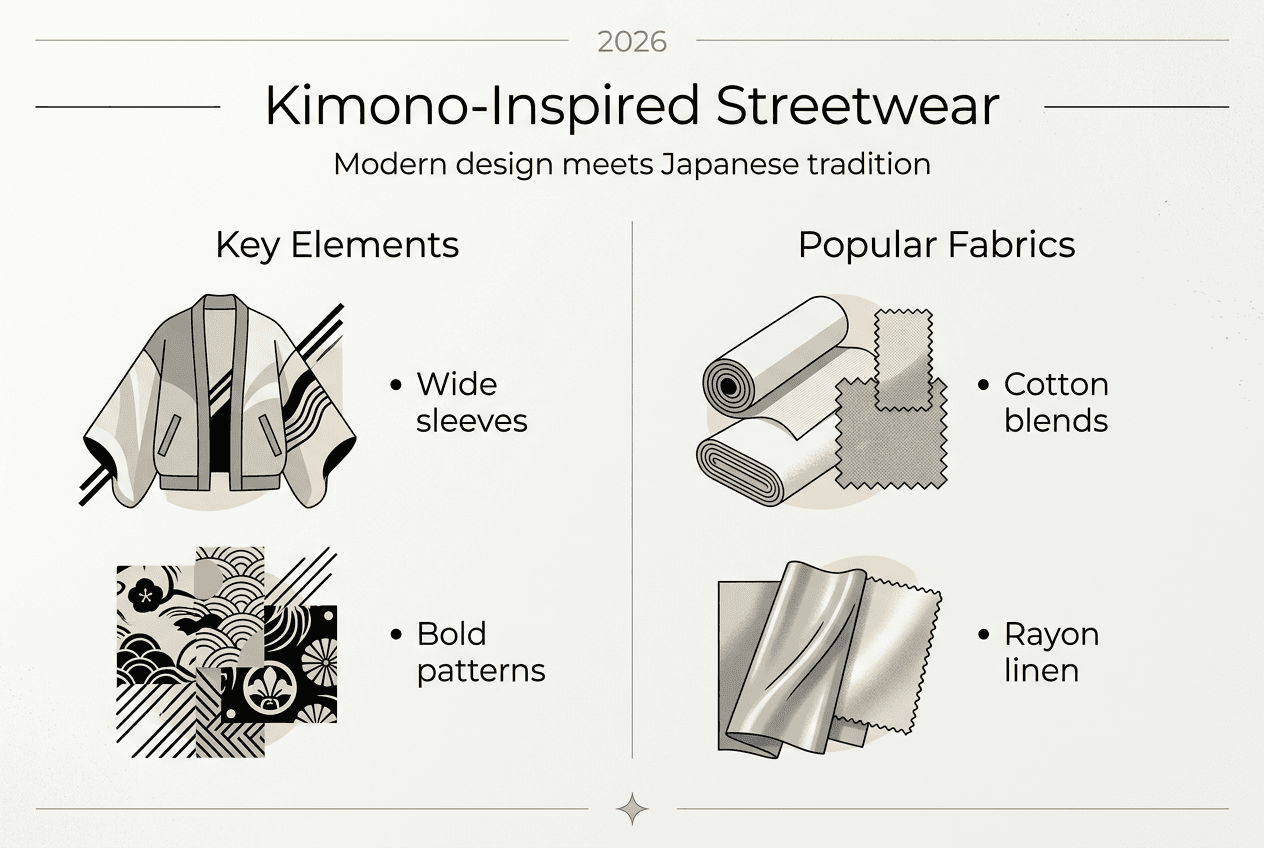
Kimono-inspired clothing takes the defining characteristics of traditional Japanese garments and reinterprets them for modern fashion contexts. The original kimono features long, wide sleeves, a straight-lined wrap design, and an obi belt that cinches the waist. These elements create a distinctive silhouette that has influenced designers worldwide.
Modern interpretations maintain these signature details while adapting materials and construction for streetwear appeal. You’ll find kimono’s signature features including wide sleeves, wrap style, and obi belts adapted by contemporary designers who understand both heritage and current trends. The result is clothing that feels fresh yet rooted in centuries of Japanese aesthetic tradition.
Key elements that define kimono-inspired pieces include:
- Wide, flowing sleeves that create dramatic movement
- Wrap-around construction that flatters various body types
- Obi-inspired belts or ties that add structure
- Layering capabilities that work with modern basics
- Minimalist color palettes or traditional prints adapted for streetwear
The beauty of kimono-inspired clothing lies in its versatility. A haori jacket worn over a simple tee and jeans instantly elevates your look without feeling costume-like. The loose silhouettes provide comfort while maintaining a polished appearance that works for casual outings or creative professional settings.
“Kimono-inspired fashion represents a dialogue between past and present, where traditional craftsmanship meets urban sensibility.”
This style category goes beyond simple appropriation. It represents thoughtful adaptation where designers study traditional garment construction, understand cultural significance, and then create pieces that honor those roots while serving contemporary needs. The Harajuku streetwear movement particularly exemplifies this respectful fusion approach.
When you wear kimono-inspired clothing, you’re participating in a global fashion conversation that values craftsmanship, cultural exchange, and innovative design. These garments offer an alternative to fast fashion’s disposable mentality, emphasizing quality construction and timeless aesthetic principles that transcend seasonal trends.
The evolution from traditional kimono to modern streetwear
Traditional kimono garments served as formal and ceremonial wear throughout Japanese history, with specific styles indicating social status, season, and occasion. The garments required careful wrapping techniques and multiple layers, making them impractical for daily modern life but rich in cultural meaning.
The transformation began during Japan’s post-war era when Western fashion influences mixed with traditional aesthetics. However, the real breakthrough came with urban style movements like Harajuku culture in Tokyo, where young designers started deconstructing kimono elements and rebuilding them into wearable streetwear. This wasn’t about abandoning tradition but rather finding new ways to express Japanese identity through contemporary fashion.
Japanese style’s rise in streetwear marked a pivotal moment where global audiences recognized the sophistication of this fusion approach. Designers realized they could maintain the kimono’s elegant proportions while using cotton blends, denim, and technical fabrics that suited active urban lifestyles.
The evolution followed several key stages:
- Initial adaptation phase where designers experimented with kimono silhouettes in Western garment construction
- Streetwear integration period when Japanese urban fashion gained international attention
- Minimalist refinement stage emphasizing clean lines and subtle traditional references
- Current global adoption where kimono-inspired pieces appear in collections worldwide
- Contemporary innovation phase blending digital design tools with traditional craftsmanship principles
This progression reflects broader shifts in how fashion communities value cultural heritage. Rather than viewing traditional garments as museum pieces, designers recognized their potential as living design languages that could evolve while maintaining core aesthetic principles. The Japanese minimalist approach to luxury streetwear particularly demonstrates this philosophy.
“Modern kimono-inspired fashion proves that honoring tradition doesn’t mean being bound by it.”
Today’s kimono-inspired clothing represents the culmination of decades of experimentation. You get garments that feel authentically connected to Japanese aesthetic traditions while being completely practical for contemporary life. The wide sleeves that once symbolized social status now provide visual interest and comfort. The wrap construction that required precise folding now uses simplified closures that maintain the elegant drape.

This evolution continues as designers explore new materials, sustainable production methods, and inclusive sizing that makes kimono-inspired fashion accessible to diverse global audiences. The style has moved from niche interest to mainstream acceptance, appearing in streetwear collections, high fashion runways, and everyday wardrobes worldwide.
Key features and types of kimono-inspired clothing today
Kimono-inspired clothing encompasses several distinct garment types, each offering unique styling possibilities. Haori jackets function as lightweight outer layers with open fronts and wide sleeves, perfect for transitional weather. Kimono coats provide more coverage with similar construction but heavier fabrics. Wrap dresses adapt the traditional closure system into feminine silhouettes, while kimono-sleeved tops incorporate the signature sleeve shape into contemporary shirt designs.
When shopping for kimono-inspired pieces, look for these defining characteristics:
- Wide sleeves that extend beyond the wrist or feature dramatic bell shapes
- Loose, flowing silhouettes that don’t cling to the body
- Obi-style belts or ties that define the waist while maintaining drape
- Traditional prints like cherry blossoms or geometric patterns adapted for modern tastes
- Quality construction with attention to seam finishing and fabric drape
Different kimono-inspired garments range from casual everyday pieces to statement items for special occasions. Understanding these variations helps you choose pieces that match your lifestyle and aesthetic preferences.
| Garment Type | Cut & Silhouette | Typical Fabrics | Best Occasions | | — | — | — | | Haori Jacket | Hip-length, open front, boxy fit | Cotton, linen, lightweight blends | Casual outings, layering piece | | Kimono Coat | Knee to ankle length, wrap closure | Wool blends, heavier cotton, technical fabrics | Cooler weather, statement outerwear | | Wrap Dress | Fitted waist, flowing skirt, adjustable | Silk blends, rayon, jersey knits | Semi-formal events, creative workplaces | | Kimono Sleeve Top | Standard shirt length, dramatic sleeves | Cotton, modal, sustainable fabrics | Daily wear, versatile basics |
The beauty of kimono-inspired clothing lies in how easily these pieces integrate into existing wardrobes. A simple haori jacket transforms a basic tee and jeans combination into something special. The key is balancing proportions so the kimono-inspired element remains the focal point without overwhelming your overall look.
Pro Tip: Start with one kimono-inspired piece in a neutral color like black, navy, or beige. This allows you to experiment with the silhouette while ensuring the garment works with multiple outfits in your current wardrobe.
Fabric choice significantly impacts how kimono-inspired clothing wears and drapes. Traditional silk creates luxurious movement but requires careful maintenance. Modern cotton blends offer durability and easy care while maintaining elegant drape. Technical fabrics add weather resistance for practical everyday wear. Consider your lifestyle needs when selecting pieces.
The streetwear styling approach to kimono-inspired clothing emphasizes mixing high and low elements. Pair an elevated kimono coat with distressed denim, or wear a simple haori over designer sneakers. This contrast creates visual interest while keeping the look grounded and wearable.
Color and pattern choices range from minimalist solid tones to bold traditional prints. Solid colors offer versatility and easier styling, working as neutral layers in various outfits. Traditional prints make stronger statements but require more thoughtful coordination with other wardrobe pieces. Consider starting with solids and gradually incorporating patterns as you develop confidence with the style.
How to incorporate kimono-inspired clothing into your streetwear wardrobe
Integrating kimono-inspired pieces into your everyday style requires thoughtful layering and proportion balance. The goal is creating cohesive outfits where traditional elements enhance rather than dominate your look. Start by treating your kimono-inspired garment as the outfit’s anchor piece, then build around it with complementary basics.
Follow this step-by-step approach for successful styling:
- Choose one kimono-inspired item as your statement piece for the outfit
- Select fitted or structured bottoms to balance the loose kimono silhouette
- Layer with solid-colored basics in neutral tones that don’t compete visually
- Add minimalist accessories that complement without cluttering the look
- Consider footwear that grounds the outfit, like clean sneakers or simple boots
- Adjust proportions using belts or ties to create your desired silhouette
Styling kimono-inspired clothing successfully involves understanding how different pieces interact. A flowing haori jacket pairs beautifully with tapered pants and a fitted tee, creating an hourglass effect that flatters most body types. The contrast between loose and fitted elements prevents the outfit from appearing shapeless.
Layering techniques borrowed from traditional Japanese fashion work surprisingly well in modern contexts. Try wearing a kimono-sleeved top under a structured vest, or layer a lightweight haori over a hoodie for unexpected texture mixing. These combinations honor the Japanese aesthetic principle of thoughtful layering while maintaining streetwear edge.
Accessorizing kimono-inspired outfits requires restraint. Since the garments themselves make strong visual statements, keep jewelry minimal and purposeful. Consider pieces with Japanese design influences like simple silver rings or delicate chain necklaces. Bags should complement rather than compete, with structured crossbody styles or minimalist backpacks working particularly well.
Pro Tip: Use obi-inspired belts to customize your kimono-inspired garment’s fit and silhouette. Cinching at different points creates varied looks from a single piece, maximizing versatility in your wardrobe.
Color coordination follows standard style principles but benefits from Japanese aesthetic sensibilities. Monochromatic schemes create sophisticated, cohesive looks that let the kimono-inspired garment’s construction shine. Alternatively, try pairing neutral kimono pieces with one bold color accent in your basics for controlled visual interest.
Seasonal adaptation keeps kimono-inspired clothing relevant year-round. Lightweight cotton or linen pieces work beautifully in warm weather, functioning as breezy outer layers over tank tops and shorts. Heavier wool-blend kimono coats provide stylish warmth in winter when layered over sweaters and paired with boots. The versatile construction adapts easily to temperature changes.
Building a unique Japanese streetwear style means developing your personal interpretation of these elements. Experiment with different combinations, pay attention to what feels authentic to your aesthetic, and gradually refine your approach. The beauty of kimono-inspired fashion lies in its flexibility, allowing individual expression within a cohesive design framework.
Consider occasion appropriateness when styling these pieces. Kimono-inspired clothing works beautifully for creative professional settings, casual social gatherings, and cultural events. The key is matching the formality level of your kimono-inspired piece with appropriate basics and accessories. A silk-blend wrap dress elevates easily for semi-formal occasions, while a casual cotton haori suits everyday errands perfectly.
Discover kimono-inspired streetwear at INCIDENT
Now that you understand how to style and appreciate kimono-inspired clothing, finding quality pieces becomes your next step. INCIDENT offers carefully curated collections that blend traditional Japanese aesthetics with contemporary streetwear functionality, perfect for building your kimono-inspired wardrobe.

Our Japanese-inspired streetwear collections feature garments designed with the same attention to proportion, fabric quality, and minimalist detail that define authentic kimono-inspired fashion. Each piece balances cultural heritage with modern wearability, creating clothing that honors tradition while serving contemporary lifestyle needs.
Explore our selection of premium basics that complement kimono-inspired layering perfectly. Our PIMA cotton oversized t-shirts provide the ideal foundation for building outfits around statement kimono pieces, offering superior fabric quality and clean silhouettes that let your layering shine. The minimalist design philosophy extends throughout our collections, making it easy to create cohesive looks that reflect Japanese aesthetic principles.
Visit INCIDENT to discover how premium Japanese-inspired streetwear can elevate your wardrobe with pieces designed for the fashion-conscious individual who values both heritage and innovation.
Frequently asked questions about kimono-inspired clothing
What materials are common in kimono-inspired clothing?
Modern kimono-inspired garments use cotton blends, linen, rayon, and technical fabrics that provide durability and easy care while maintaining elegant drape. Traditional silk appears in premium pieces but contemporary designers favor sustainable and practical materials that suit active lifestyles. Quality construction matters more than specific fabric type, with attention to seam finishing and drape being key indicators of well-made kimono-inspired clothing.
Can kimono-inspired garments be worn in casual settings?
Kimono-inspired clothing works beautifully for casual wear when styled thoughtfully with modern basics. Haori jackets over jeans and tees, kimono-sleeved tops with tailored pants, and wrap-style pieces paired with sneakers all create approachable everyday looks. The key is balancing the traditional elements with contemporary pieces to avoid costume-like appearances.
How do you care for kimono-inspired fabrics and designs?
Most modern kimono-inspired clothing made from cotton or synthetic blends can be machine washed on gentle cycles with cold water. Silk or delicate pieces require hand washing or professional cleaning. Always check garment care labels, air dry when possible to maintain fabric integrity, and store on hangers to preserve the garment’s drape and shape.
Where can I buy authentic kimono-inspired streetwear online?
Authentic kimono-inspired streetwear is available through specialized retailers focusing on Japanese fashion aesthetics and quality construction. Look for brands that demonstrate understanding of traditional design principles while offering modern wearability. Japanese streetwear retailers with curated collections ensure you get pieces that honor cultural heritage while meeting contemporary style standards.
Are kimono-inspired styles suitable for all genders?
Kimono-inspired clothing suits all genders through its emphasis on loose silhouettes, minimalist design, and versatile construction. Traditional kimono garments were historically gender-specific, but modern interpretations focus on universal aesthetic principles that anyone can wear. The key is choosing pieces that match your personal style preferences and body proportions rather than adhering to gendered fashion rules.
Recommended
- Master streetwear trends in 2026: Your complete guide – INCIDENT
- Master streetwear styling tips for hanami looks 2026 – INCIDENT
- What is classic streetwear? A 2026 style guide – INCIDENT
- Harajuku Streetwear: The Japanese Fashion Revolution | Incident Store - INCIDENT
- Dos and don’ts for suspenders: master stylish wear in 2026
- From DIY to Couture—Craft Your Signature Look – Shop Designer Fabrics by the Yard | Curtains & Drapery


Share:
Top 8 Aggielandlegends.com Alternatives 2026
How to photograph streetwear for social media in 2026