

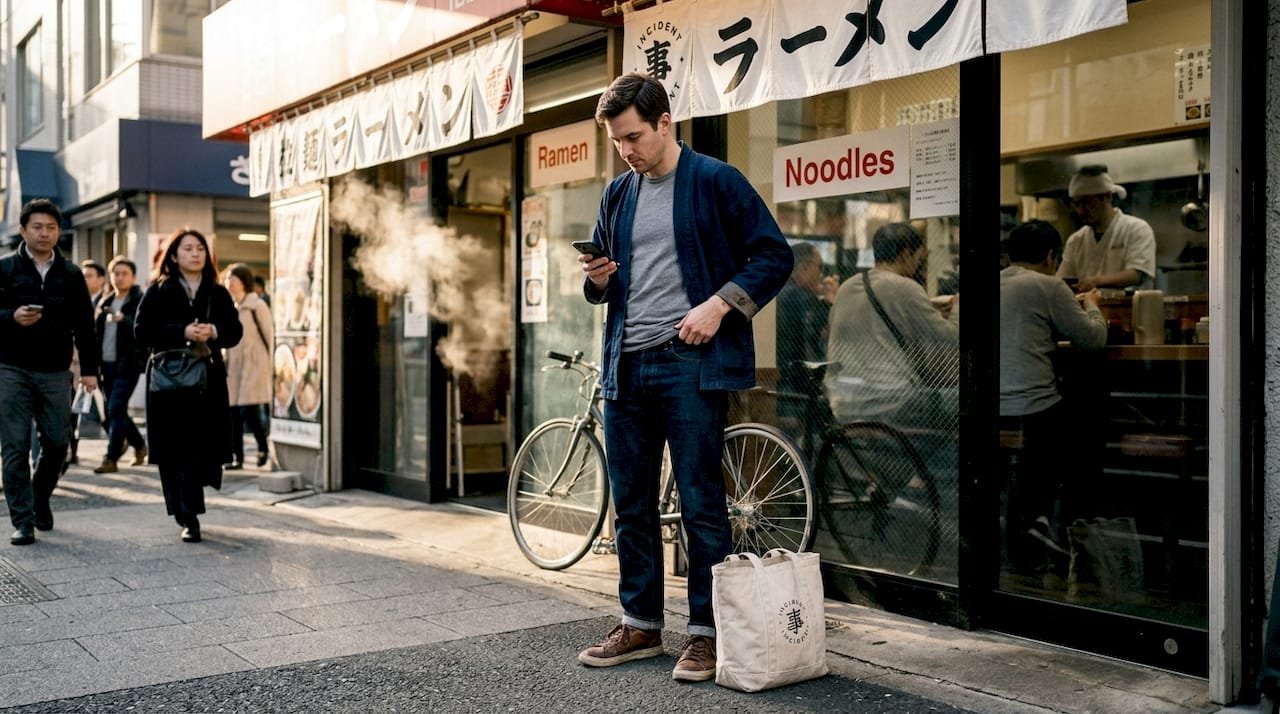
Blending Japanese fashion with denim creates a unique streetwear aesthetic that balances heritage and contemporary style. Many fashion enthusiasts struggle to combine these elements without overwhelming their outfits or losing proportion. This guide delivers expert formulas and practical tips for styling Japanese workwear pieces like noragi jackets, sashiko layers, and wide-leg pants with denim to create standout looks. You’ll learn how to balance silhouettes, control textures, and build cohesive outfits that reflect both Japanese craftsmanship and modern streetwear culture. Whether you’re new to Japanese style or looking to refine your approach, these strategies will help you create authentic, wearable combinations.
Table of Contents
- Key takeaways
- Preparation: understanding Japanese style and denim basics
- Execution: step-by-step guide to styling Japanese pieces with denim
- Verification: expert nuances and style mistakes to avoid when pairing Japanese style with denim
- Shop Japanese streetwear styles with authentic denim blends
- FAQ
Key Takeaways
| Point | Details |
|---|---|
| Balance proportions with cropped tops | Pair wide leg denim with cropped or fitted tops to maintain silhouette balance and prevent shapeless outfits. |
| Muted workwear colors | Choose muted earthy tones such as indigo, olive, charcoal, natural ecru, or black to harmonize with denim without competing patterns. |
| Control hems and footwear | Pay attention to hem lengths and footwear when wearing wide silhouettes to preserve streetwear authenticity. |
| Layer one statement piece | Start by layering a single statement Japanese piece over classic denim basics to avoid overwhelming the look. |
| Limit heavy textures | Limit the number of textures in an outfit by pairing smooth denim with one textured piece such as sashiko or noragi fabric. |
Preparation: understanding Japanese style and denim basics
Before combining Japanese fashion with denim, you need to understand the core components of each style. Japanese workwear includes distinctive pieces like noragi (traditional work jackets with kimono-style construction), sashiko jackets (featuring decorative reinforcement stitching), haori (lightweight outer layers), and nikka pants (cropped workwear trousers with gathered hems). These pieces carry heritage appeal while fitting seamlessly into modern streetwear wardrobes.
Denim plays a crucial role in Japanese fashion culture. Selvedge denim features tightly woven edges that prevent fraying, creating clean finishes and durability. Raw denim starts stiff and dark, developing unique fade patterns through wear. Workwear denim combines heavyweight construction with functional details like reinforced pockets and bar tacks. Understanding these denim types helps you choose pieces that complement Japanese aesthetics rather than clash with them.
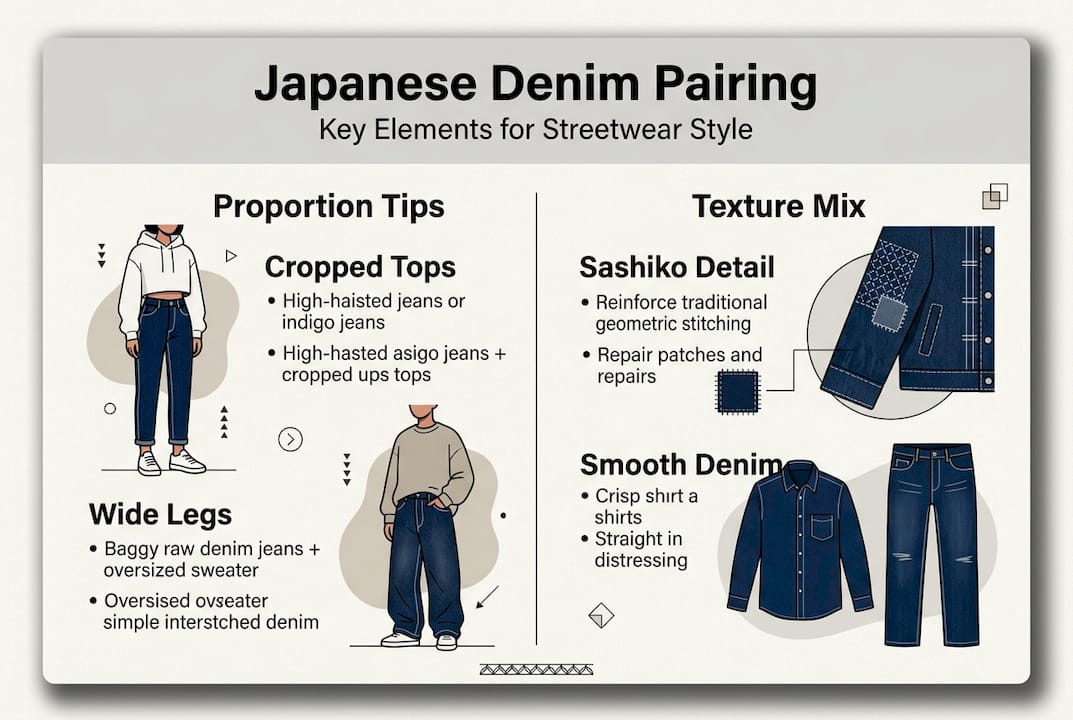
The foundation of successful Japanese denim styling lies in balancing proportions through structured tops and wide-leg pants. When you wear wide-leg denim or Japanese workwear pants, pair them with cropped or fitted tops to create visual balance. This prevents your outfit from appearing shapeless or overwhelming. Conversely, if you choose slim denim jeans, you can layer fuller Japanese pieces on top without losing definition.
Color selection significantly impacts how Japanese style and denim work together. Traditional Japanese workwear embraces muted, earthy tones: deep indigo blues, military olive greens, charcoal grays, natural ecru, and true black. These colors create sophisticated combinations when paired with denim washes. Avoid bright colors or busy patterns that compete for attention. Instead, let texture and silhouette create visual interest.
Texture contrast adds depth to your outfits without cluttering them. Smooth denim pairs beautifully with textured sashiko stitching or woven noragi fabric. The key is controlling how many textures you introduce per outfit. Too many competing textures create visual noise, while thoughtful combinations showcase each piece’s craftsmanship. Start with one textured Japanese piece against plain denim, then build complexity as you develop your eye for understanding streetwear hype Japanese style rise 2026.
Consider the weight and drape of your garments. Japanese workwear often features heavier fabrics that create structured silhouettes. When combining these with denim, ensure your base layer is lightweight enough to prevent bulk. A thin cotton tee works better under a noragi than a heavyweight hoodie. This layering strategy maintains comfort while preserving the clean lines essential to Japanese-inspired streetwear.
Execution: step-by-step guide to styling Japanese pieces with denim
Building a Japanese denim outfit starts with establishing a neutral foundation. Begin with a plain white, black, or gray tee paired with slim to straight cut denim jeans. This base provides a clean canvas that won’t compete with your statement Japanese piece. Avoid graphic tees or distressed denim initially, as these elements can clash with the minimalist aesthetic of Japanese workwear.

Next, introduce one signature Japanese heritage piece. A noragi jacket, sashiko overshirt, or Japanese haori serves as your focal point. Layer this piece over your tee and denim to create immediate visual interest without overwhelming your look. The key is choosing pieces with clean construction and subtle details rather than loud patterns or excessive embellishments.
For outfits featuring wide-leg denim or Japanese workwear pants, proportion control becomes critical. Use a cropped jacket or fitted top to define your waistline and create visual breaks in your silhouette. When wearing nikka pants or wide denim, tuck your tee in to emphasize where your torso ends and legs begin. This simple technique prevents your outfit from appearing boxy or shapeless.
The tuck method works particularly well with Japanese workwear because many pieces feature higher waistlines than Western clothing. A partial front tuck creates a casual, lived-in look while maintaining proportion. For a cleaner finish, do a full tuck and add a simple belt in black or brown leather. This approach complements the utilitarian roots of both Japanese workwear and denim culture.
Footwear selection completes your outfit and significantly impacts overall balance. Choose low-profile options like service boots, desert boots, or minimal sneakers in neutral colors. These shoes ground your look without adding visual weight at the bottom of your silhouette. White leather sneakers work particularly well with indigo denim and olive Japanese pieces, creating a fresh contrast that feels modern.
Pro Tip: Start your Japanese denim journey by mastering one outfit formula: plain tee, straight denim jeans, and a single noragi or sashiko jacket. Wear this combination multiple times, adjusting fit and proportions until it feels natural. Once you’ve perfected this base formula, you can confidently experiment with wider silhouettes, layered textures, and more complex color combinations. Building skill incrementally prevents costly mistakes and helps you develop an authentic personal style.
Layering order matters when combining multiple pieces. Your base tee should fit close to your body, your mid-layer (if any) should have some structure, and your outer Japanese piece should be the loosest layer. This progression creates depth while maintaining a streamlined appearance. Avoid layering multiple oversized pieces, as this creates bulk rather than intentional volume.
Verification: expert nuances and style mistakes to avoid when pairing Japanese style with denim
One of the most common mistakes is combining multiple heavy texture pieces in a single outfit. Wearing a sashiko jacket over heavily distressed denim with visible repairs creates competing focal points that confuse the eye. Instead, pair textured Japanese pieces with clean, simple denim. If your noragi features intricate stitching, choose solid color denim without fading or distressing. This approach lets each element shine without visual competition.
Hem length control is essential for maintaining clean silhouettes with wide-leg denim and Japanese workwear pants. Cuff or precisely hem wide denim to prevent fabric from pooling around your ankles. For nikka pants, the gathered hem should sit just below your calf, creating a deliberate break in your leg line. Excess fabric at the bottom destroys the intentional proportions that make Japanese workwear distinctive.
Footwear choices can make or break your Japanese denim outfit. Service boots and low-profile sneakers maintain the cohesion and balance essential to this style. Bulky athletic shoes with thick soles and bright colors disrupt the minimalist aesthetic. Similarly, formal dress shoes feel out of place with workwear-inspired pieces. Stick to footwear that bridges casual and refined: leather boots with clean lines, canvas sneakers in neutral tones, or suede desert boots.
Indigo dye bleeding presents a practical concern when styling Japanese denim. Raw and selvedge denim can transfer color onto lighter garments during the first several wears. Keep indigo pieces separate from white or cream Japanese workwear initially. Once your denim has been washed a few times and the excess dye has been released, you can confidently pair it with lighter tones. This precaution prevents frustrating stains on premium garments.
Waist height significantly impacts the authenticity of Japanese-inspired streetwear. Traditional Japanese workwear features higher rises than contemporary Western clothing. When selecting denim to pair with Japanese pieces, prefer mid to high-rise options over low-rise jeans. Higher waists create better proportion with cropped Japanese jackets and allow for the tucked tee styling that defines this aesthetic. Low-rise denim disrupts the silhouette and feels disconnected from the heritage elements you’re trying to incorporate.
Pro Tip: Create a visual checklist before leaving the house. Ask yourself: Do I have more than two statement textures? Is my hem length controlled? Does my footwear match the outfit’s formality level? Are my proportions balanced between top and bottom? This quick verification prevents common mistakes and ensures your outfit delivers the impact you intended. Over time, these checks become automatic, and you’ll instinctively recognize when something feels off.
Color coordination requires subtlety when mixing Japanese style with denim. While indigo and olive create natural pairings, avoid matching shades too closely. Slightly different indigo tones (one lighter, one darker) create depth, while identical indigos can appear flat. Similarly, when combining black Japanese pieces with black denim, introduce texture variation to prevent your outfit from looking one-dimensional. A black sashiko jacket over black denim works when the stitching provides visual interest.
| Style mistake | Why it fails | Better approach |
|---|---|---|
| Multiple heavy textures | Creates visual competition and clutter | One textured piece with clean denim |
| Uncontrolled hem length | Destroys intentional proportions | Precise hemming or strategic cuffing |
| Bulky athletic footwear | Disrupts minimalist aesthetic | Low-profile boots or neutral sneakers |
| Ignoring indigo bleeding | Stains light garments permanently | Separate indigo from light pieces initially |
| Low-rise denim with Japanese tops | Breaks silhouette and proportion | Mid to high-rise denim for authenticity |
Accessories should enhance rather than dominate your Japanese denim outfits. A simple watch, leather bracelet, or canvas tote bag complements the utilitarian aesthetic. Avoid flashy jewelry, branded accessories, or items that draw attention away from your carefully balanced outfit. The goal is creating a cohesive look where every element supports the overall aesthetic rather than competing for attention. When you need to curate unique Japanese streetwear styles 2026, remember that restraint often delivers more impact than excess.
Shop Japanese streetwear styles with authentic denim blends
Building an authentic Japanese streetwear wardrobe requires access to pieces that genuinely blend heritage craftsmanship with contemporary design. INCIDENT offers curated collections featuring Japanese-inspired garments crafted from premium materials and designed with the proportions and details that make this style distinctive. Our approach combines traditional Japanese aesthetics with modern streetwear sensibilities, creating pieces that work seamlessly with your existing denim collection.

Explore our clothing collections to discover noragi-inspired jackets, structured outerwear, and minimalist basics that form the foundation of Japanese denim styling. Each piece is designed with the balance and proportion principles outlined in this guide, ensuring you can create cohesive outfits without guesswork. Our pima cotton oversized t-shirts provide the perfect base layer for Japanese workwear pieces, offering premium fabric quality and the relaxed fit essential to modern streetwear.
Visit INCIDENT to experience how Swiss precision meets Japanese craftsmanship in every garment we create. Our collections are designed specifically for fashion-forward individuals who appreciate the intersection of heritage and contemporary style, making it easier than ever to build a wardrobe that reflects your unique aesthetic vision.
FAQ
How can I start pairing Japanese style with denim without feeling overwhelmed?
Begin with one signature Japanese piece like a haori jacket or noragi layered over a plain tee and classic straight-cut denim jeans. This simple combination keeps your look balanced while introducing Japanese aesthetics gradually. As you become comfortable with this base outfit, experiment with different Japanese pieces and denim washes to build complexity. The key is mastering one formula before adding variables, which prevents overwhelming yourself and helps you develop confidence in your styling choices. Learn more about how to wear Japanese clothes to expand your foundation knowledge.
What colors work best when mixing Japanese fashion with denim?
Stick to muted Japanese workwear colors such as indigo, olive, ecru, black, and charcoal for cohesive combinations. These tones naturally complement denim washes without creating visual competition. Pair two main colors with one accent tone for balanced outfits that feel intentional rather than random. For example, indigo denim with an olive noragi and white tee creates a classic combination, while black denim with a charcoal sashiko jacket and ecru tee offers a more subdued palette. Avoid bright colors or busy patterns that disrupt the minimalist aesthetic central to Harajuku streetwear fashion revolution.
Which footwear pairs best with Japanese style denim outfits?
Choose low-profile sneakers in white, black, or gray, or select service boots in brown or black leather for optimal balance. These options ground your outfit without adding visual weight or disrupting the clean lines essential to Japanese-inspired streetwear. Canvas sneakers like Converse or Vans work well for casual looks, while leather boots add refinement for slightly dressier occasions. Avoid bulky athletic shoes with thick soles and bright colors, as these disrupt the minimalist aesthetic and throw off your carefully balanced proportions. The right footwear completes your look and ties together all the elements you’ve carefully selected. Explore more ways to curate unique Japanese streetwear styles with proper footwear choices.



Share:
Japanese fabrics guide: premium minimalist streetwear
What are Japanese-inspired prints? A fashion guide