

TL;DR:
- Mastering volume balance, a deliberate 2-3 colour palette, and a single statement accessory elevate urban outfits effectively.
- Japanese streetwear principles of clean lines, texture contrast, and considered proportion create distinctive, culturally rooted looks without expensive pieces.
Enhancing urban outfits is the practice of combining intentional layering, statement accessories, and a disciplined colour palette to transform everyday city clothing into a cohesive, expressive look. The most effective approach draws on three pillars: how you layer, what you carry, and how you coordinate colour. Japanese streetwear brands like Incident have demonstrated that premium fabrics, clean silhouettes, and thoughtful detail work together to produce looks that feel both polished and genuinely personal. This guide delivers practical, specific techniques so you can build stylish urban outfit ideas that hold up from morning commute to evening plans, without sacrificing comfort or authenticity.
How to enhance urban outfits through layering
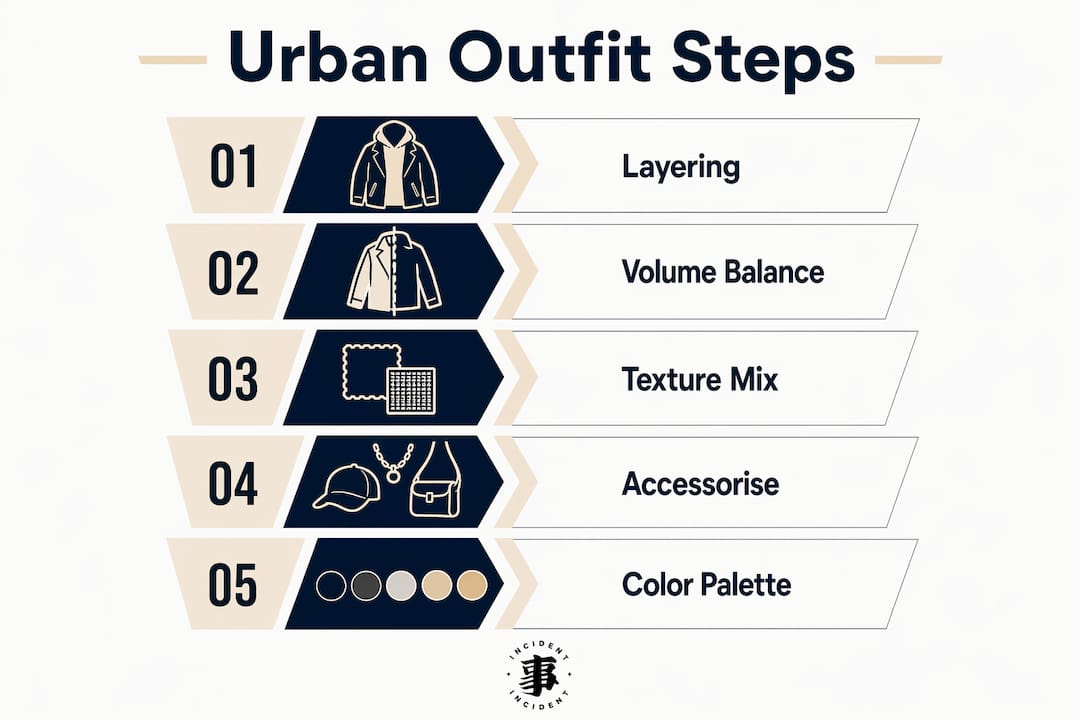
Layering is the single most powerful tool in urban dressing, and most people use it wrong. The goal is not warmth alone. It is visual depth, proportion, and the ability to adapt your look across a full day in the city.
Balance volume before you add anything else
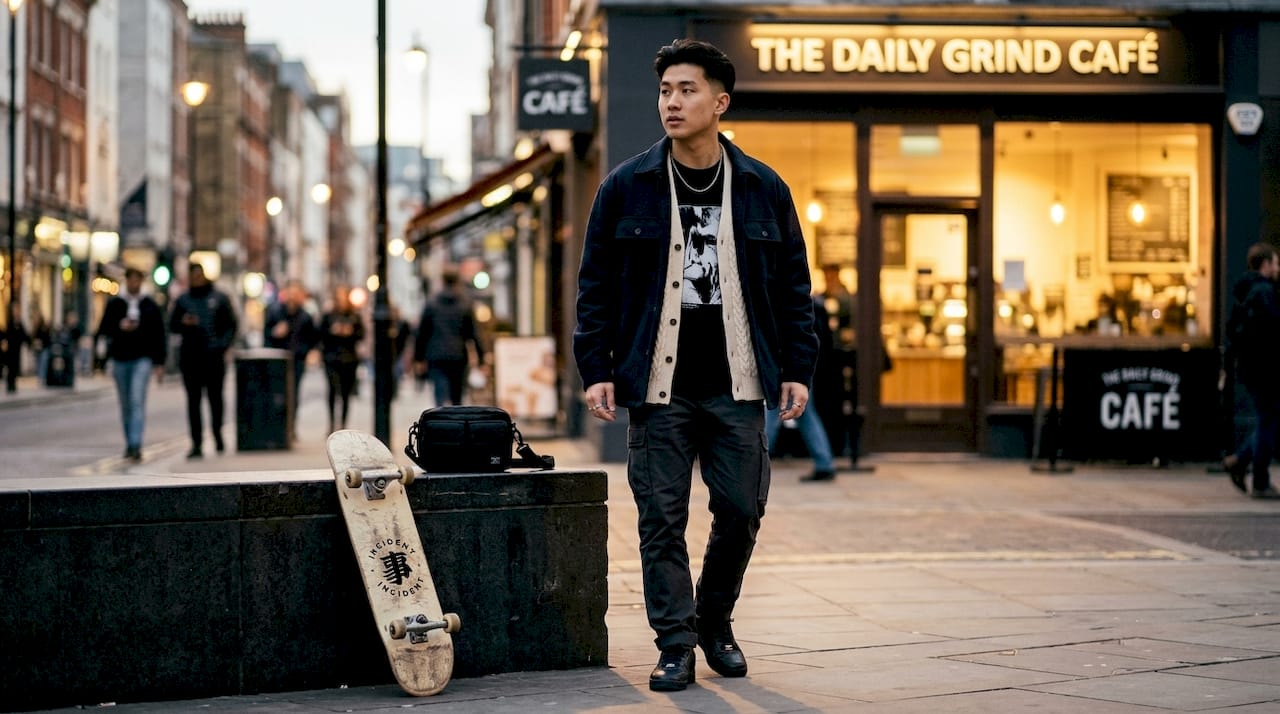
Volume balance is the rule that separates a considered outfit from a shapeless one: pair an oversized top with a fitted bottom, or a structured jacket with wide-leg trousers, never two oversized pieces at once. This 1:1 ratio keeps your silhouette readable and intentional. An oversized Japanese hoodie worn over slim-cut cargo trousers, for example, reads as deliberate. The same hoodie over wide-leg joggers reads as accidental. The distinction matters more than the individual pieces.
Mix textures to create depth
Mixing unexpected textures like leather with knitwear or denim with poplin creates depth and intentionality that a single-fabric outfit simply cannot achieve. A fitted ribbed knit worn under a waxed cotton overshirt, finished with denim trousers, gives three distinct surfaces that catch light differently and reward a second look. Texture contrast is the visual equivalent of contrast stitching: it signals craft without shouting.
Cotton poplin trousers are trending in 2026 as a structured yet breathable alternative to linen for urban styling. They hold a crease cleanly, layer without bulk, and sit at a formality level that works beneath both a cropped blazer and an oversized graphic tee. That versatility makes them one of the most practical investments in a layering wardrobe.
Here are the layering combinations that consistently produce the strongest results:
- Fitted base, structured mid, relaxed outer: A plain Japanese typography tee, a slim-fit knit cardigan, and a cropped technical jacket. Each layer is visible and intentional.
- Contrast weight: A lightweight poplin shirt worn open over a heavier cotton tee creates a casual but considered effect without adding real bulk.
- Tonal texture play: Charcoal knitwear over a slate grey poplin shirt. The colours are nearly identical; the textures do all the work.
- Seasonal transition layering: A cropped blazer over an oversized hoodie is a technique covered in depth in Incident’s guide on transitioning seasonal streetwear, and it works precisely because the proportions are managed from the start.
Pro Tip: Over 62% of women prefer lightweight layering pieces like fitted cardigans over heavy jackets for social occasions. The lesson for urban dressing is clear: reach for a structured mid-layer before you reach for a coat.
How to accessorise urban wear for maximum impact
Accessories define the register of an outfit. The same monochrome base can read as minimalist streetwear or as elevated urban fashion depending entirely on what you add to it. The key is choosing accessories with intention rather than habit.
Functional accessories that earn their place
Smart urban accessories increasingly include RFID-blocking wallets and modular crossbody bags that blend technology with style for city lifestyles. A modular bag with detachable pouches, for instance, solves the practical problem of carrying different loads across a day while contributing a structural, architectural quality to the silhouette. Functionality and aesthetics are not competing priorities in urban fashion. The best accessories serve both.
The high-low principle in accessorising
Combining high-end accessories with thrifted basics is one of the most effective ways to build an authentic urban identity. A single well-chosen piece, a quality leather crossbody, a chunky sterling chain, or a pair of architectural sunglasses, anchors the entire look and makes the simpler pieces around it read as deliberate choices rather than budget compromises. This is what stylists mean by “style intelligence”: knowing where to invest and where to hold back.
The accessories that carry the most weight in urban looks right now include:
- Bucket hats: Structured versions in canvas or technical fabrics add a graphic element without competing with patterned clothing.
- Chunky chain necklaces: Worn over a plain Japanese oversized tee, a single chain transforms a basic into a statement. Keep it to one chain to avoid visual noise.
- Oversized sunglasses: Shield or wraparound frames reference both Japanese street style and 1990s sportswear simultaneously, which is precisely why they work so well in 2026.
- Crossbody bags: Modular styles with clean lines complement minimalist streetwear without disrupting the silhouette.
Pro Tip: When mixing bold and minimalist accessories, apply the one-statement rule: choose one piece to carry visual weight and keep everything else quiet. A chunky chain with a plain tee and clean sneakers is a complete look. Adding a bucket hat and oversized sunglasses to the same outfit crosses into visual clutter.
Sustainable accessories are also gaining ground in urban fashion. Bags made from recycled nylon or deadstock canvas, and jewellery produced by independent makers, add a layer of personal narrative to an outfit that mass-produced pieces simply cannot replicate. Explore how urban fashion essentials from a minimalist Japanese perspective approach this balance between form and responsibility.
What colour palette works best for urban outfits?
Colour is where most urban outfits either come together or fall apart. The instinct to reach for all-black is understandable, but it is also limiting. Urban fashion need not rely heavily on black. Dark blues and earthy neutrals provide easier styling options when balanced correctly, and they photograph far better in natural city light.
The 2-3 colour rule
Stylists recommend limiting urban outfits to 2-3 colours per look to maintain sophistication and avoid visual clutter. This does not mean your outfit must be boring. It means the colours you choose should be deliberate, and each one should appear in at least two places in the look to create cohesion. If your jacket is olive, your bag or your laces should echo it. That repetition is what makes an outfit feel designed rather than assembled.
The table below shows how different colour strategies play out in practice:
| Colour approach | Base colours | Accent | Effect |
|---|---|---|---|
| Tonal monochrome | Charcoal, slate grey | None | Clean, architectural, high-fashion |
| Neutral with one pop | Ecru, off-white, sand | Rust or cobalt | Warm and expressive without chaos |
| Dark with earthy accent | Navy, black | Olive or camel | Grounded, versatile, city-ready |
| Japanese minimalist | White, black | Ink blue or stone | Refined, culturally resonant |
The neutral base approach is the most forgiving starting point. Build from a foundation of off-white, stone, or navy, then introduce one accent colour through a single accessory or outer layer. Your footwear is the natural place to introduce that accent, because it anchors the whole look from the ground up.
Tonal dressing, wearing different shades of the same colour family, is particularly strong in Japanese streetwear aesthetics. An outfit built from ivory, cream, and warm white reads as intentional and sophisticated in a way that a randomly assembled neutral outfit does not. The difference is in the deliberate selection of shades that share the same undertone.
How to build urban looks with a Japanese streetwear aesthetic
Japanese street style offers one of the most coherent frameworks for building urban outfits because it starts from a clear design philosophy: clean lines, considered proportion, and detail that rewards close attention. Integrating these principles into your everyday city dressing produces looks that feel genuinely distinctive without requiring constant trend-chasing.
Here is a practical sequence for building a Japanese-influenced urban outfit from the ground up:
- Start with your shoes. Building outfits from the sole up ensures cohesive colour and formality balance. Your footwear sets the register for everything above it. A pair of clean white low-top trainers signals casual minimalism. A chunky-soled boot signals structure and edge. Choose your shoes before you choose anything else.
- Select your base layer. A Japanese oversized tee with a kanji or typographic motif works as a graphic anchor. Keep the print large and the surrounding pieces quiet. Incident’s Japanese graphic tees are designed with exactly this principle in mind: the print carries the look so the rest of the outfit does not need to.
- Add a structured mid-layer. An oversized blazer in a neutral tone, or a cropped technical jacket, adds formality and volume contrast without competing with the base layer’s graphic. Avoid prints in the mid-layer when the base layer already carries one.
- Choose your bottom. Cotton poplin trousers or slim-cut cargo trousers both work well here. The choice depends on the shoe: tailored trousers with clean trainers, cargo trousers with boots.
- Finish with one accessory. A modular crossbody bag or a single chain. Not both. The restraint is the point.
Pro Tip: The “wrong shoe theory” is one of the most useful concepts in urban styling. Pairing unexpected footwear, such as kitten heels with cargo trousers or hiking boots with a tailored poplin suit, creates visual edge that perfectly matched shoes never achieve. Intentional contrast signals confidence and creativity.
For a deeper look at how oversized pieces work within this framework, Incident’s guide on styling oversized streetwear covers the proportional logic in detail. The list of modern urban styles for 2026 is also worth exploring if you want to understand which silhouettes are defining city dressing this year.
Key takeaways
The most effective way to enhance urban outfits is to master volume balance, apply the 2-3 colour rule, and let one accessory carry the visual weight of the entire look.
| Point | Details |
|---|---|
| Volume balance is non-negotiable | Pair one oversized piece with one fitted piece to keep the silhouette intentional and readable. |
| Texture contrast adds depth | Mixing leather, knitwear, denim, and poplin creates visual interest that colour alone cannot achieve. |
| Limit your palette to 2-3 colours | Repeat each colour in at least two places in the outfit to create cohesion rather than coincidence. |
| Start every outfit with your shoes | Footwear sets the formality and colour register; choosing it first prevents accessory and clothing conflicts. |
| One statement accessory is enough | A single bold piece, whether a chain, bag, or hat, anchors the look without creating visual noise. |
Why urban style is really about intention, not investment
At Incident, we have spent years studying what separates a genuinely strong urban look from one that simply has expensive pieces in it. The answer is almost never the price of the garments. It is the degree of intention behind each choice.
We have seen outfits built from thrifted basics and a single quality Japanese graphic tee that outperform looks assembled from head-to-toe designer pieces. The difference is always the same: the person wearing the simpler outfit made deliberate decisions about proportion, colour, and texture. The person wearing the expensive outfit did not.
Urban fashion is also more culturally fluid than most style guides acknowledge. The Japanese streetwear aesthetic that informs our work at Incident draws on a tradition of treating clothing as craft: every seam, every fabric choice, every proportion is considered. That philosophy does not require a large budget. It requires attention. When you start asking “why this piece, in this proportion, with this colour?” rather than “what is trending?”, your outfits change in a way that no amount of spending can replicate.
The other thing we have observed is that confidence in urban dressing comes from repetition, not from getting it right immediately. Experiment with textures you find uncomfortable. Try a colour combination that feels too bold. Wear the unexpected shoe. Most of the time, the risk produces something far more interesting than the safe choice would have. Urban style has always rewarded the person willing to commit to a look rather than hedge against it.
— Incident
Build your urban wardrobe with Incident’s Pima collection
If the layering and styling principles in this guide resonate with you, the natural next step is building your wardrobe around pieces that are genuinely designed to work together.
Incident’s Pima T-shirt collection is the foundation we recommend. Each piece is crafted from ultra-soft Pima cotton with Japanese-inspired minimalist design: clean lines, considered proportions, and subtle typographic details that function as graphic anchors without overwhelming a layered look. These are the base layers that make every technique in this guide easier to execute. Whether you are building a tonal monochrome outfit or layering textures for a more complex look, the Pima collection gives you a starting point of genuine quality. Explore the full range at incident.store and find the piece that anchors your next outfit.
FAQ
What is the easiest way to start layering urban outfits?
Start with a fitted base layer, add one structured mid-layer in a contrasting texture, and finish with a single outer piece that manages volume. The 1:1 volume rule, one oversized piece paired with one fitted piece, prevents the look from becoming shapeless.
How many colours should an urban outfit have?
Stylists recommend limiting urban outfits to 2-3 colours per look. Repeat each colour in at least two places in the outfit to create cohesion rather than a random combination.
What accessories work best for urban street style?
Modular crossbody bags, chunky chain necklaces, bucket hats, and oversized sunglasses are the strongest performers in urban accessorising. Apply the one-statement rule: choose one bold piece and keep everything else understated.
How does Japanese streetwear influence urban outfit building?
Japanese street style prioritises clean lines, considered proportion, and texture contrast over trend-driven choices. Integrating pieces like Japanese oversized tees with kanji or typographic prints, paired with structured mid-layers and statement footwear, produces looks that feel distinctive and culturally grounded.
Should I choose my shoes or my clothing first when building an urban outfit?
Choose your shoes first. Starting with footwear sets the colour palette and formality level for the entire outfit, preventing conflicts between accessories and clothing that are difficult to resolve once the look is assembled.
Share:
What is off-duty style? Your 2026 guide to mastering it
Seasonal fashion update guide for minimalist streetwear