

TL;DR:
- A seasonal fashion update guide emphasizes intentional capsule building with 10 to 12 versatile pieces that reflect current trends. It advocates for a phased, budget-conscious approach, prioritizing quality essentials and selective trend accents while avoiding overbuying. This disciplined method ensures a cohesive, stylish wardrobe that balances minimalism and streetwear influences effectively.
A seasonal fashion update guide is a structured method for refreshing your wardrobe each season using intentional, curated choices rather than impulse purchases. In 2026, the most effective approach combines minimalist capsule principles with contemporary streetwear aesthetics, drawing on key trend signals like jewel tones, sheer layering, and volume contrast. This guide covers every stage of the process: auditing what you own, building a cohesive capsule, integrating the latest fashion trends, and doing it all without overspending or overcrowding your wardrobe. Whether you are refreshing for summer or preparing fashion updates for fall, the methodology stays consistent.
What are the prerequisites for a seasonal wardrobe update?
Every effective seasonal update starts with a clear-eyed audit of what you already own. Pull everything out, sort by category, and identify the pieces you actually reach for. The items you have not worn in two seasons are not waiting for the right moment. They are occupying space that belongs to something better.
Once you have a clear picture of your wardrobe, set a realistic budget before you shop. A 12-piece capsule can be assembled for under £100 using thrift shops, end-of-season sales, and discount platforms. This figure is not a compromise. It is a constraint that forces better decisions and keeps you focused on versatile, high-quality pieces rather than trend-driven impulse buys.
Understanding the dominant 2026 colour palette and silhouette language before you shop is equally important. This season favours warm neutrals, deep jewel tones, and relaxed but structured silhouettes. Knowing this prevents you from buying pieces that will feel disconnected from the rest of your wardrobe within weeks.
Capsule size and composition
The optimal minimalist capsule contains 10 to 12 pieces, following an 80/20 palette rule: 80% anchor neutrals and depth tones, 20% colour accents added after the core is complete. This ratio creates cohesion without monotony. For streetwear-leaning wardrobes, the core typically includes two premium tees, one oversized hoodie, one pair of cargos, one pair of straight-leg denim, and a versatile outerwear piece.
| Category | Recommended pieces |
|---|---|
| Tops (tees, long-sleeves) | 3 to 4 |
| Bottoms (cargos, denim, trousers) | 2 to 3 |
| Outerwear (hoodie, jacket, overshirt) | 2 |
| Footwear | 1 to 2 |
| Accessories | 1 to 2 |
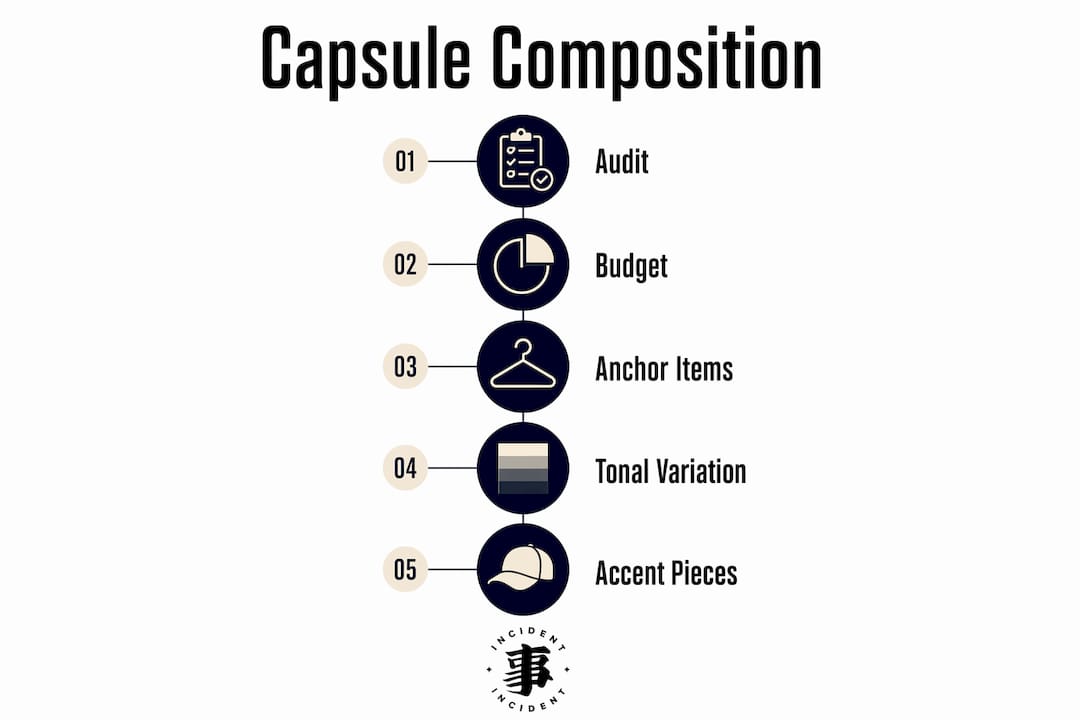
Pro Tip: Do not complete your capsule in a single shopping session. Identify your most-worn occasions first, then fill gaps deliberately. This prevents the common mistake of owning twelve pieces that only work for one context.
How to build a minimalist streetwear capsule for seasonal coherence
Building a capsule that works across multiple contexts requires a clear hierarchy of pieces. Start with anchor items: the garments that appear in the majority of your outfits. For a streetwear-influenced minimalist wardrobe, these are typically a heavyweight cotton tee in off-white or black, a well-fitted pair of straight-leg trousers or cargos, and a clean, unbranded hoodie. These three pieces alone generate a significant number of outfit combinations before you add anything else.
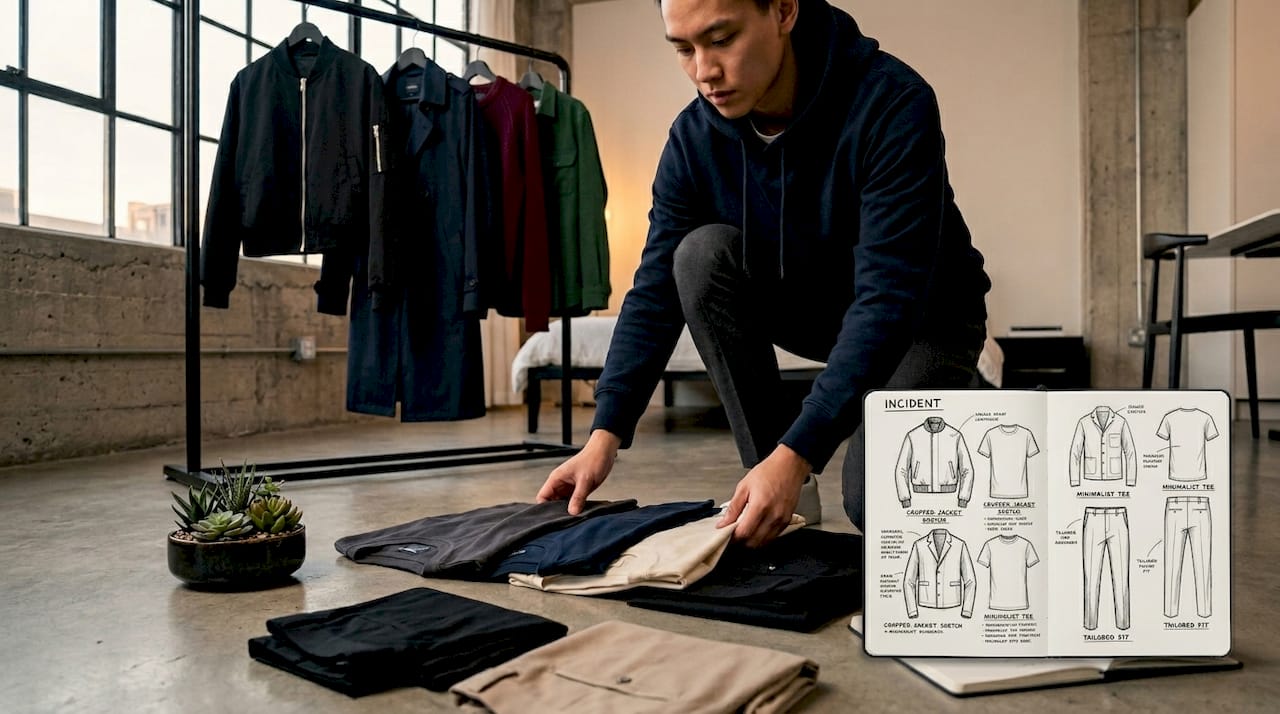
The next layer is tonal variation. Once your anchors are set, introduce one or two pieces in a deeper or lighter version of the same colour family. A charcoal grey overshirt worn over a black tee, for example, creates depth without introducing a competing colour. This approach is the foundation of Japandi capsule building, where restraint in colour is treated as a form of sophistication rather than limitation.
The final layer is accent pieces. These are the items that give your capsule its seasonal character: a single jewel-toned tee, a textured knit, or a statement outerwear piece. Accent pieces should be added last, after the core is established, so you can see clearly whether they genuinely integrate or simply add noise.
Applying the colour tier system
- Anchor neutrals (black, off-white, stone, charcoal): These form the base of every outfit and should represent the majority of your wardrobe.
- Depth tones (navy, slate, warm grey, dark olive): These create tonal layering and add visual interest without breaking cohesion.
- Accent colours (jewel tones, sun-bleached denim, Klein blue): These are used sparingly, one per outfit maximum, to signal seasonal awareness.
- Statement pieces (bold prints, graphic tees, cropped outerwear): These are reserved for occasions where the outfit calls for a focal point.
| Approach | Result |
|---|---|
| All accent colours, no anchors | Visually chaotic, hard to combine |
| All anchors, no accents | Cohesive but flat and seasonally static |
| 80% anchors, 20% accents | Versatile, seasonally relevant, easy to dress |
For summer specifically, texture and volume contrast replace layering as the primary styling tool. A lightweight linen tee paired with structured wide-leg trousers creates visual interest through fabric weight and silhouette contrast alone. This is what Kelly Williams describes as “midimalist” styling: the discipline of keeping items minimal while using material and proportion to do the work that layers would do in colder months.
Pro Tip: When selecting anchor items, choose pieces where the silhouette is consistent with your other garments. Swap only the fabric or finish between seasons, not the overall shape. This maintains outfit cohesion across your entire capsule.
What are the key 2026 fashion trends for streetwear and minimalism?
The summer 2026 trends from runway to street are defined by jewel-tone clarity, sun-faded denim, and warm-weather silhouettes including capri-length trousers and relaxed wide-leg cuts. These are not abstract runway concepts. They translate directly into practical wardrobe additions for anyone building a streetwear-adjacent capsule.
Spring and Summer 2026 also brings a strong emphasis on sheer layering and Klein blue, alongside bold cropped outerwear in streetwear-influenced cuts. The sheer trend is particularly relevant for minimalist dressers because it adds visual complexity without adding bulk. A sheer overshirt worn over a fitted tee achieves the layered aesthetic of autumn dressing in a summer-appropriate format.
“Minimalism in 2026 is driven by intent to reduce microtrends and consumption fatigue, favouring restraint inspired by 90s icons like Jil Sander and Calvin Klein.” — Emerald Lifestyle
This shift matters because it validates the capsule approach at a cultural level. The broader fashion conversation is moving away from fast-fashion churn and towards considered, deliberate dressing. For streetwear enthusiasts, this means the evolution of streetwear now includes balancing graphic-heavy pieces with minimal anchors, rather than treating every item as a statement.
Key 2026 trends to integrate into your seasonal update:
- Sun-bleached denim: One pair of faded, relaxed-fit jeans or cargos updates the entire wardrobe’s seasonal tone.
- Jewel tones: Deep sapphire, emerald, and burgundy work as accent pieces within a neutral capsule without overwhelming it.
- Cropped outerwear: A cropped bomber or coach jacket adds a contemporary silhouette to basic tee-and-trouser combinations.
- Sheer layering: A lightweight mesh or voile overshirt introduces texture and depth in warm weather.
- Statement prints: Used on one piece per outfit, graphic tees or printed trousers create a focal point without breaking capsule discipline.
The discipline here is selectivity. You do not need every trend. You need the two or three that align with your existing anchors and extend the versatility of what you already own.
How to update your wardrobe on a budget without compromising style
Budget-conscious seasonal updates are not about buying less quality. They are about buying more deliberately. A sustainable capsule under £100 is achievable when you prioritise natural fibres, neutral colours, and timeless silhouettes over trend-specific pieces that expire within a season.
The most effective budget strategy follows this sequence:
- Audit and subtract first: Before spending anything, remove what you no longer wear. This clarifies exactly what you need and prevents duplicate purchases.
- Identify the two or three genuine gaps: A capsule rarely needs a complete overhaul. Most seasonal updates require one new outerwear piece, one or two new tees, and a single accent item.
- Thrift for trend pieces: Sun-bleached denim, oversized hoodies, and vintage outerwear are consistently available in charity shops and platforms like Vinted or Depop. These are the items where pre-owned quality exceeds new fast-fashion quality.
- Invest in anchor items: Tees, trousers, and base-layer pieces should be purchased new from brands that use premium fabrics. These are the pieces you wear most and they need to last.
- Use the cost-per-wear calculation: A £40 heavyweight cotton tee worn 80 times costs £0.50 per wear. A £10 fast-fashion tee worn 8 times costs £1.25 per wear. Quality is the budget strategy.
| Item | Thrift/discount (£) | Premium new (£) | Recommended source |
|---|---|---|---|
| Straight-leg denim | 8 to 15 | 60 to 90 | Thrift |
| Premium cotton tee | 5 to 12 | 30 to 60 | New, quality brand |
| Cargo trousers | 10 to 20 | 50 to 80 | Thrift |
| Overshirt / light jacket | 12 to 25 | 70 to 120 | Thrift |
| Accent piece (jewel tone) | 5 to 15 | 25 to 50 | Either |
Pro Tip: When thrifting for streetwear pieces, search by fabric first and style second. A heavyweight cotton or linen garment in a neutral colour is worth buying regardless of its original branding. The silhouette can be styled; the fabric cannot be changed.
What mistakes should you avoid when updating your seasonal wardrobe?
The most common error in seasonal wardrobe updates is buying too many trend pieces before establishing a solid anchor base. Without anchors, trend pieces have nothing to connect to and the wardrobe becomes a collection of individual statements rather than a cohesive system.
A second frequent mistake is completing the capsule too quickly. Phased capsule development prevents the accumulation of unworn pieces by requiring you to observe your actual wearing patterns before filling every category. Buy your anchors, wear them for two to three weeks, and then identify what is genuinely missing before purchasing anything else.
Decision fatigue is a real consequence of an oversized wardrobe. When every morning requires choosing between 40 items, the cognitive load reduces the pleasure of dressing. A well-edited capsule of 12 to 15 pieces, where every item works with at least three others, eliminates this friction entirely.
Key mistakes to avoid:
- Overbuying outerwear: One statement jacket per season is sufficient. Two or more compete for the same outfit slots.
- Ignoring footwear: A single versatile trainer or clean low-profile shoe can update an entire outfit’s seasonal register without requiring new clothing.
- Neglecting accessories: A single quality accessory, whether a cap, a bag, or a watch, refreshes familiar combinations and extends the perceived variety of a small capsule.
- Chasing microtrends: Trends with a lifespan of less than one season (viral social media aesthetics, for example) are not worth capsule space. Invest in trends with a two to three season runway.
The volume contrast principle is also frequently overlooked. Mixing oversized and fitted silhouettes strategically, such as pairing wide-leg cargos with a fitted tee, creates visual balance and prevents outfits from reading as shapeless. Accessories serve as micro-focus points within these proportional contrasts, drawing the eye to a specific part of the outfit.
Key takeaways
A seasonal fashion update guide works best when it is built on a disciplined capsule foundation, informed by current trends, and executed with a clear budget and phased acquisition strategy.
| Point | Details |
|---|---|
| Capsule size discipline | Aim for 10 to 12 pieces following an 80/20 neutral-to-accent palette ratio. |
| Phased acquisition | Build gradually after observing wear patterns to avoid unused seasonal pieces. |
| 2026 trend integration | Prioritise jewel tones, sun-bleached denim, and sheer layering as accent additions. |
| Budget strategy | Thrift trend pieces; invest in premium fabrics for anchor items worn most frequently. |
| Volume contrast | Pair oversized and fitted silhouettes deliberately to maintain visual balance in outfits. |
Why minimalism and streetwear are not opposing forces
At Incident, we have spent years working at the intersection of Japanese minimalism and contemporary streetwear, and the tension people assume exists between these two aesthetics is largely a misunderstanding. Minimalism is not about owning less for its own sake. It is about owning with intention. Streetwear, at its best, has always been the same: a deliberate statement made through considered choices rather than volume.
What we find most compelling about 2026’s direction is that the broader fashion conversation is finally catching up to what Japanese street style has practised for decades. The restraint of Jil Sander, the precision of Issey Miyake, the quiet authority of a single well-constructed garment. These are not niche references anymore. They are the vocabulary of the current moment.
The practical implication for your wardrobe is this: you do not need to choose between a minimalist aesthetic and a streetwear identity. A heavyweight graphic tee in a considered colourway, worn with structured cargos and clean footwear, is both. The key is in the quality of each piece and the discipline of the overall edit. One statement graphic in an otherwise restrained outfit carries far more weight than five competing pieces fighting for attention.
Our honest observation, after working with this philosophy across multiple collections, is that the people who dress best are not the ones who own the most or follow trends most closely. They are the ones who know exactly what they are trying to say and choose only the pieces that say it. That clarity is what a seasonal update guide, done properly, is designed to help you find.
— Incident
Build your seasonal capsule with Incident’s Pima collection
The anchor piece in any minimalist streetwear capsule deserves to be exceptional. Incident’s Pima T-shirt collection is built around exactly that principle: premium Pima cotton, clean silhouettes, and a refined weight that holds its structure season after season. These are not seasonal trend pieces. They are the foundation garments that every other item in your capsule connects to. Crafted with the precision and restraint that defines Incident’s Japandi-influenced design philosophy, each tee integrates naturally into both minimalist and streetwear-forward wardrobes. Explore the full collection at incident.store and find the anchor your capsule has been waiting for.
FAQ
What is a seasonal fashion update guide?
A seasonal fashion update guide is a structured approach to refreshing your wardrobe each season through intentional capsule building, trend awareness, and selective purchasing rather than wholesale replacement.
How many pieces should a minimalist capsule contain?
A minimalist capsule optimally contains 10 to 12 pieces, with 80% in anchor neutrals and 20% in seasonal accent colours, allowing maximum outfit combinations from a compact wardrobe.
Which 2026 trends work best in a streetwear capsule?
Sun-bleached denim, jewel tones, sheer layering, and cropped outerwear are the 2026 trends most compatible with minimalist streetwear capsules, as each functions as a single accent piece within a neutral foundation.
How do I update my wardrobe seasonally on a tight budget?
Thrift trend-driven pieces like denim and outerwear, and invest in new premium-fabric anchor items like quality tees and trousers. A 12-piece capsule can be assembled for under £100 using this split approach.
How do I avoid capsule burnout across seasons?
Build your capsule gradually after identifying your most-worn occasions rather than completing it all at once. This prevents unused pieces and keeps your seasonal wardrobe genuinely wearable.

Share:
How to enhance urban outfits: a 2026 style guide
Premium fabric care process: a complete guide