

TL;DR:
- Japandi combines Japanese wabi-sabi imperfection with Scandinavian hygge warmth into a timeless, intentional style.
- It emphasizes natural materials, muted palettes, craftsmanship, and functional beauty in both interiors and fashion.
- Japandi promotes quality, character, and mindfulness, encouraging a thoughtful, enduring wardrobe and space.
Minimalism often gets a bad reputation. Many assume it means bare walls, cold floors, and a deliberate absence of personality. But that assumption misses something important. Japandi, the quietly powerful design and style philosophy born from Japanese and Scandinavian traditions, proves that restraint and warmth are not opposites. In fact, they belong together. For young Europeans drawn to Japanese culture and thoughtful fashion, Japandi offers something rare: an aesthetic that feels both timeless and deeply personal. This guide covers the origins, core principles, and real influence of Japandi on fashion, especially minimalist streetwear that carries genuine character.
Table of Contents
- Japandi defined: The essence of Japanese-Scandinavian style
- Key elements and pillars of Japandi design
- Japandi goes global: Timeless appeal and cultural context
- Japandi in fashion: Minimalist streetwear with quiet luxury
- Japandi is more than a trend: What most guides don’t tell you
- Bring Japandi inspiration to your wardrobe
- Frequently asked questions
Key Takeaways
| Point | Details |
|---|---|
| Warm minimalism | Japandi style is about blending comfort and simplicity for a cosy minimalist look. |
| Timeless quality | Prioritise expertly crafted pieces over fast trends for style that lasts. |
| Natural elegance | Use muted colours, natural fibres, and uncluttered design to achieve calm sophistication. |
| Quiet luxury in fashion | Build stylish wardrobes with premium materials and laid-back fits inspired by Japandi aesthetics. |
Japandi defined: The essence of Japanese-Scandinavian style
Japandi is exactly what it sounds like. As Vogue explains, it is a portmanteau of ‘Japanese’ and ‘Scandi’, blending minimalism with warmth and functionality into one cohesive design language. It is not a rigid rulebook. It is a sensibility, a way of seeing and arranging the world around you with intention and care.
At its philosophical core, Japandi draws from two deeply rooted ideas. The first is wabi-sabi, the Japanese appreciation for imperfection, impermanence, and the quiet beauty found in worn textures and natural forms. The second is hygge (pronounced hoo-gah), the Scandinavian notion of cosiness, togetherness, and the comfort of simple pleasures. Together, these ideas create something neither tradition could produce alone: a style that is stripped back yet genuinely inviting.
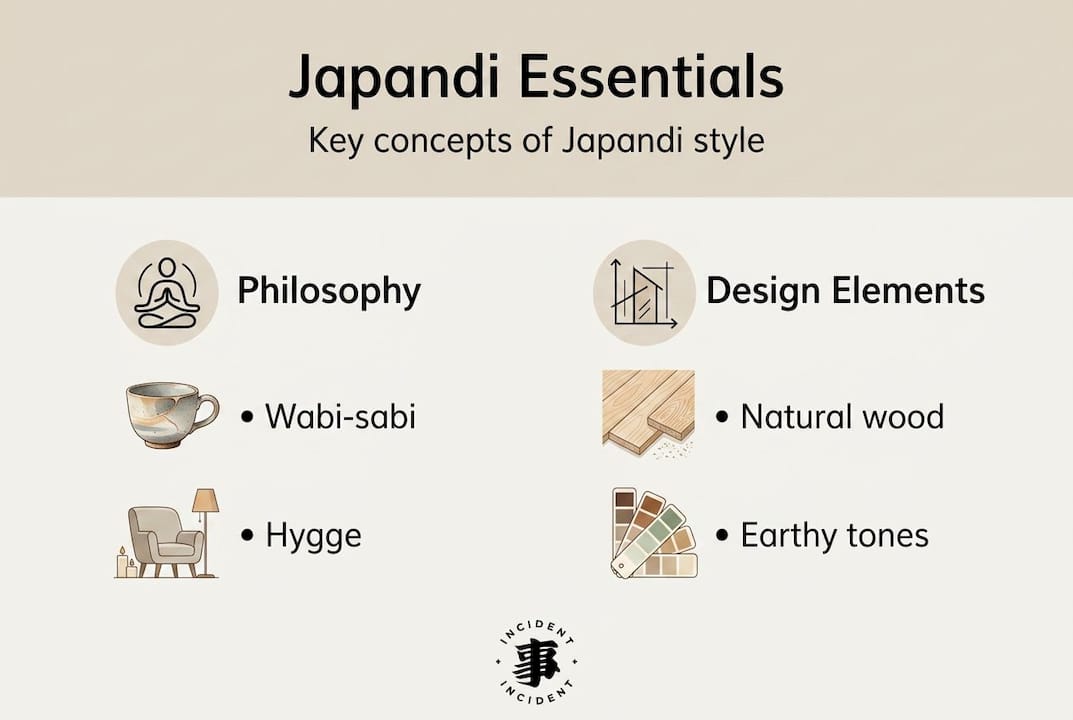
The roots of this exchange run surprisingly deep. Japandi’s origins trace back) to 19th-century cultural exchanges between Danish designers and Japanese craftspeople, with the term itself emerging around 2016 to 2017). That long shared history gives the style genuine substance, which explains why it feels earned rather than invented.
Since 2020, interest in Japandi has grown sharply across Europe and beyond. But this is no ordinary trend. Its foundations in ancient philosophy and centuries of cross-cultural appreciation make it far more enduring. You can explore the basics further in this Japandi design guide.
| Feature | Japanese influence | Scandinavian influence |
|---|---|---|
| Core philosophy | Wabi-sabi, imperfection | Hygge, cosiness |
| Materials | Bamboo, lacquer, stone | Pine, wool, linen |
| Colour palette | Earthy, neutral, ochre | Cool whites, soft greys |
| Emotional tone | Contemplative, serene | Warm, communal |
“Japandi combines the meditative calm of Japanese design with the lived-in warmth of Scandinavian interiors, creating spaces and styles that feel both purposeful and human.”
What makes Japandi distinct from pure minimalism is that it never sacrifices feeling for form. A Japandi space or outfit should always feel like something. This is a philosophy built for people who want beauty that also breathes.
For a deeper look at how this connects to urban fashion minimalism, the link between Japandi thinking and contemporary streetwear becomes clear.
Key elements and pillars of Japandi design
Understanding Japandi philosophically is one thing. Seeing it in practice is another. The aesthetic rests on five clear pillars that guide every decision, from interior layouts to clothing choices.
The five pillars of Japandi:
- Intentional simplicity: Every element earns its place. Nothing is accidental, and nothing is excessive.
- Natural materials: Wood, stone, linen, and wool are preferred. Tactile and honest, these materials age gracefully.
- Muted palettes: Beiges, warm greys, soft browns, and dusty greens dominate. The Japandi palette is calm, not cold.
- Visible craftsmanship: The skill behind an object should be apparent, whether it is a hand-stitched seam or a hand-turned wooden bowl.
- Functional beauty: Form always follows purpose. If something is beautiful but useless, it does not belong.
The distinction between Japandi and pure Scandinavian design lies in texture and depth. Scandi interiors lean cooler, brighter, and sometimes more hygge-focused at the expense of visual richness. Pure minimalism tends to strip away even warmth in pursuit of clean lines. Japandi sits between these approaches, bringing deliberate texture and craftsmanship into a restrained, uncluttered framework.
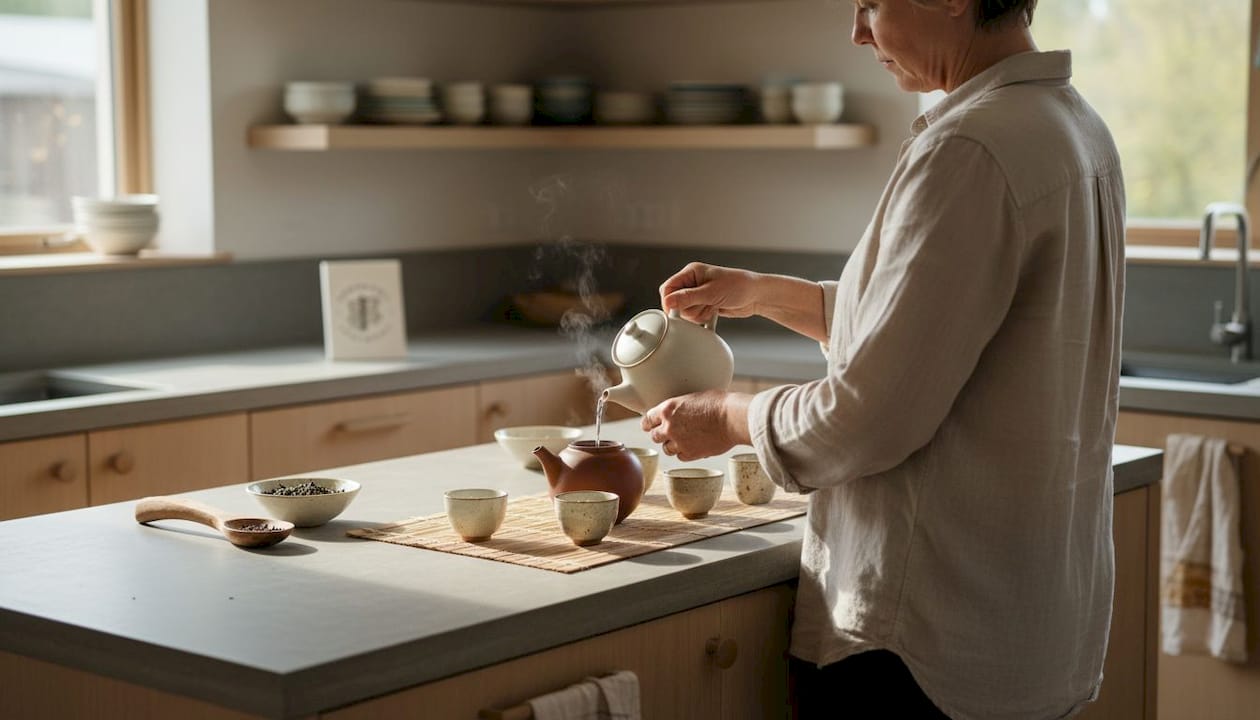
This also sets Japandi apart from maximalism entirely. Where maximalism fills space with personality, Japandi trusts that fewer, better-chosen elements speak louder.
| Style | Texture | Warmth | Clutter tolerance | Material preference |
|---|---|---|---|---|
| Japandi | Medium | High | Very low | Natural, tactile |
| Scandinavian | Low | Medium | Low | Light wood, white |
| Minimalism | Very low | Low | Zero | Any |
| Maximalism | Very high | High | High | Mixed |
Pro Tip: Layer natural textiles, such as a linen throw over a wool cushion, to build warmth without visual clutter. Natural light does the rest.
You can see how these principles translate powerfully into clothing in our guide to versatile streetwear minimalism. The principles are the same whether you are dressing a room or dressing yourself. Read the full Japandi interior guide for a thorough breakdown of spatial application.
Japandi goes global: Timeless appeal and cultural context
Japandi did not appear overnight. Its journey to global recognition began with post-1860s artistic exchange between Denmark and Japan, as Danish creatives discovered Japanese craft traditions and brought ideas back to Northern Europe. That cross-pollination shaped furniture, ceramics, and eventually a broader design sensibility that would take over a century to fully crystallise.
Today, the numbers reflect a genuine shift in cultural appetite. Online interest in Japandi has surged 340% globally since 2020, a figure that points not to a passing craze but to a sustained hunger for its particular kind of calm.
Why does this resonate so strongly with Europeans aged 18 to 35? Several reasons stand out:
- Sustainability: Japandi prioritises quality over quantity, which aligns naturally with younger generations rejecting disposable consumption.
- Authenticity: The style is grounded in real cultural heritage, not manufactured aesthetics built for social media.
- Mental calm: In an overstimulated world, Japandi spaces and wardrobes offer genuine visual rest.
- Flexibility: Japandi works across budgets, climates, and living situations without losing its essential character.
As one cultural perspective notes, Japandi is not strictly Japanese or Scandinavian but a Western hybrid with enduring value, shaped by centuries of mutual admiration rather than appropriation. That nuance matters. It means Japandi belongs to no single culture, which is precisely why it travels so well.
“The universal appeal of Japandi lies in its refusal to choose between beauty and comfort. It insists, quietly and confidently, on having both.”
For anyone exploring Japanese minimalism street fashion, the Japandi lens adds important philosophical depth to what might otherwise feel like surface-level style choices.
Japandi in fashion: Minimalist streetwear with quiet luxury
Japandi’s influence has moved decisively beyond interiors. The same principles that govern a calm, carefully arranged living space now shape some of the most compelling minimalist fashion around. And for streetwear enthusiasts who value substance as much as style, this shift feels entirely natural.
Translating Japandi into fashion means focusing on silhouette, material, and restraint. Japandi streetwear centres on relaxed silhouettes, natural fibres, muted tones, and a sense of quiet luxury that does not announce itself loudly. The garments speak through texture and proportion rather than logos or volume.
How to build a Japandi-inspired wardrobe:
- Choose relaxed, structured fits that honour the body without restricting it
- Reach for earth tones and muted neutrals: warm sand, charcoal, stone, and moss
- Invest in natural fibres: organic cotton, linen, and wool that improve with wear
- Layer thoughtfully, adding depth without adding excess
- Prioritise visible craftsmanship: clean seams, considered details, and premium finishes
- Avoid synthetic fast fashion that loses shape, colour, and character quickly
Brands like Lemaire and The Row have built international reputations on exactly these principles. Their collections demonstrate that restraint is not limitation. It is a form of precision. Explore how Japanese fabrics contribute to this tactile quality, and see how these ideas come together visually in our Japanese minimalist lookbook.
The quiet luxury angle matters here. Japandi fashion is an anti-fast-fashion stance built on the idea that quality Japanese streetwear should age well, feel exceptional, and carry meaning beyond the season. For more inspiration, this piece on Japandi fashion emergence traces how these ideas are reshaping contemporary style globally.
Pro Tip: Start with three or four neutral, premium basics and build outward. A well-chosen linen shirt or heavyweight cotton tee will carry more versatility than ten trend pieces combined.
Japandi is more than a trend: What most guides don’t tell you
Most articles on Japandi treat it as an aesthetic choice. We think it is something closer to a commitment. The real power of Japandi lies in what it asks of you: not to own less for the sake of it, but to choose better, with more care and intention.
Wabi-sabi teaches that imperfection is not a flaw to be corrected but a quality to be honoured. Your favourite worn jacket, the linen shirt that has softened with each wash, these are Japandi. Hygge reminds you that comfort is not indulgent. It is essential. Japandi balances restraint with comfort, sidestepping the trap of sterile minimalism and fleeting trends that leave wardrobes feeling hollow.
This matters particularly for young Europeans navigating a fashion landscape dominated by speed and noise. Japandi offers a quieter, more confident path. It is not about projecting a look. It is about building a timeless streetwear wardrobe that genuinely reflects who you are, one thoughtful piece at a time.
Pro Tip: Prioritise craftsmanship and character. Your clothes should age gracefully alongside you, developing personality rather than losing it.
Bring Japandi inspiration to your wardrobe
Understanding Japandi changes the way you shop. Once you see the value in restraint, natural materials, and enduring craftsmanship, it becomes difficult to settle for less.

At INCIDENT, every collection is built on these very principles. Our garments reflect a Japandi-influenced design philosophy: muted palettes, natural fibres, relaxed silhouettes, and details that reward close attention. From our signature pieces to our carefully curated capsules, each item is designed to last, both in quality and in style. Explore premium Japandi streetwear at our online store, or discover our Pima T-shirt collection for an entry point into ultra-soft, considered basics that carry genuine character.
Frequently asked questions
What is the main difference between Japandi and Scandinavian style?
Japandi blends Japanese wabi-sabi warmth and visible imperfection with Scandinavian simplicity and functionality, resulting in a cosier, more texturally rich aesthetic than pure Scandinavian design alone.
How can I bring Japandi style into my wardrobe?
Opt for premium natural fibres, muted earthy tones, and relaxed fits. Building a small, intentional capsule wardrobe grounded in natural fibres and muted tones is the most effective starting point.
Is Japandi just a passing trend?
No. Japandi is anchored in timeless philosophical roots spanning centuries, which gives it far greater staying power than most seasonal aesthetics or interior movements.
What are the staples of Japandi interiors?
Japandi interiors feature natural materials and neutral palettes, clean lines, purposeful layouts, and craftsmanship that is visible and valued rather than hidden away.
Recommended
- Luxury loungewear explained: Effortless style, Japanese edge – INCIDENT
- Versatile streetwear: minimalism meets Japanese urban style – INCIDENT
- Streetwear lookbook: Japanese minimalism for your style – INCIDENT
- Men’s streetwear essentials: refined Japanese-inspired style – INCIDENT
- Why embrace minimalist style: Meaningful fashion for mindful lives – Memento Vivere Co
- 7 Minimalist Home Decorating Ideas for Timeless Elegance – San Rocco Italia



Share:
Fashion innovation: Japanese streetwear to quiet luxury
The real impact of Japanese calligraphy in streetwear