

TL;DR:
- Streetwear silhouettes express cultural identity and personal style through garment shapes like oversized and boxy fits.
- Japanese streetwear emphasizes deliberate design, functional details, and architectural construction over trend-driven volume.
- In 2026, global trends lean toward streamlined shapes, but Japanese-inspired silhouettes remain focused on craft and purpose.
Streetwear is far more than a uniform of baggy hoodies and oversized tees. The shapes that define it — the silhouettes — carry cultural weight, signal personal identity, and determine how a garment moves with your body. Many people assume that streetwear simply means ‘loose and large,’ but that reading misses the deeper craft behind each cut. Japanese streetwear, in particular, has long understood that the outline of a garment is a design decision as deliberate as the fabric chosen or the stitching applied. This guide breaks down the core streetwear silhouettes, explores the Japanese minimalist approach, and gives you the practical knowledge to make more intentional style choices.
Table of Contents
- What defines a streetwear silhouette?
- Core streetwear silhouettes explained
- Japanese streetwear silhouettes: Minimalism and function
- Evolving trends: Silhouettes in 2026 and beyond
- Our perspective: Why silhouette is more than a trend
- Explore Japanese streetwear silhouettes with INCIDENT
- Frequently asked questions
Key Takeaways
| Point | Details |
|---|---|
| Silhouette is foundation | Understanding silhouette is essential to mastering streetwear style. |
| Japanese approach is unique | Japanese streetwear values minimalist and functional shapes, distinct from global trends. |
| 2026 trend shift | Global streetwear moves toward fitted shapes while Japan retains architectural silhouettes. |
| Layering and movement matter | Functional silhouettes excel for layering and city comfort, especially in Japanese fashion. |
What defines a streetwear silhouette?
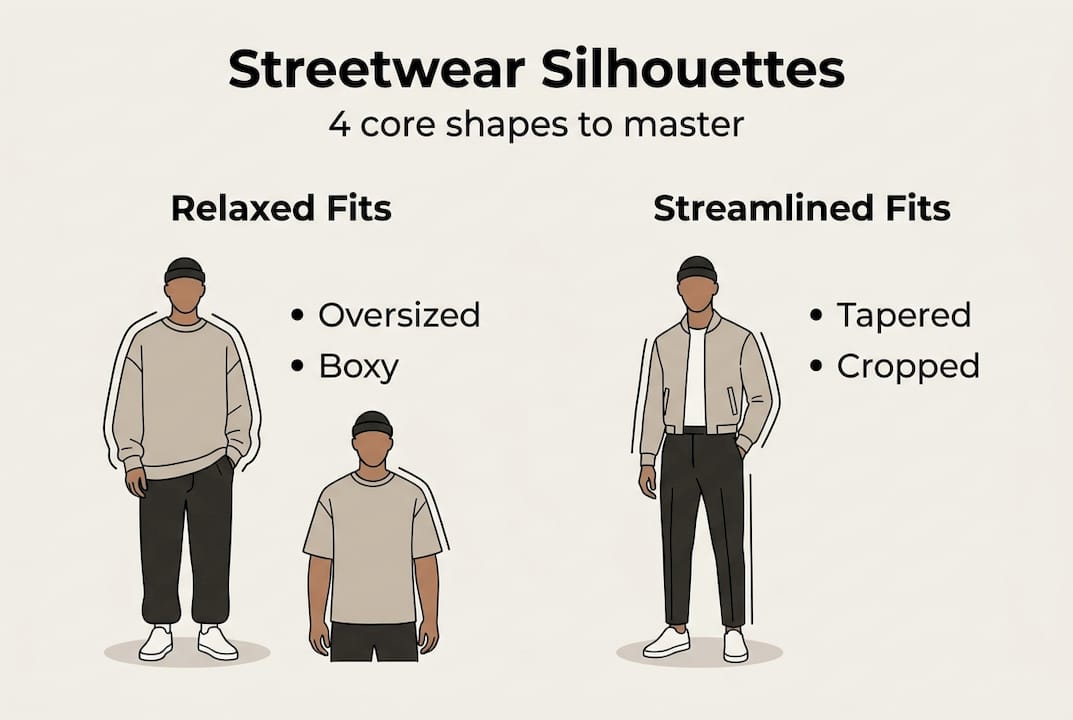
The word ‘silhouette’ in fashion refers to the overall outline or shape that clothing creates on the body. It is the first thing your eye registers when you look at an outfit, before colour, print, or detail. In streetwear, silhouettes refer to the overall outline of garments, emphasising relaxed, voluminous proportions over fitted forms, with core types including oversized, boxy, relaxed, and standard.
Understanding silhouette is what separates someone who wears streetwear from someone who truly understands it. The shape of a garment communicates ideas about rebellion, ease, and cultural belonging. A dropped-shoulder tee signals something entirely different from a slim-cut shirt, even if both are plain white cotton.
Here is a quick overview of the four core streetwear silhouettes:
| Silhouette | Key characteristics | Cultural signal |
|---|---|---|
| Oversized | Dropped shoulders, wide sleeves, extra volume | Freedom, anti-establishment |
| Boxy | Square shape, cropped length, straight lines | Minimalism, precision |
| Relaxed | Roomy but not exaggerated, follows natural body | Comfort, understated cool |
| Standard | Slight taper, closer to the body | Versatility, clean lines |
When you understand the streetwear evolution that produced these shapes, each silhouette starts to feel like a statement rather than just a fit preference.
- Oversized silhouettes emerged from skateboarding and hip-hop culture, where freedom of movement was essential.
- Boxy cuts draw from workwear traditions and Japanese minimalism, prioritising structure over drape.
- Relaxed fits sit between oversized and standard, offering comfort without sacrificing proportion.
- Standard silhouettes remain a foundation, adaptable across subcultures and styling contexts.
Pro Tip: When experimenting with silhouettes, think about layering first. A boxy tee worn under an open overshirt creates proportion and depth that a fitted tee simply cannot replicate.
Silhouette also affects how you layer, how you move, and how your outfit reads from a distance. It is the architecture of your look.
Core streetwear silhouettes explained
Now that we have defined what silhouettes are, it is time to examine the key players across streetwear and how to recognise each one in practice.
According to detailed analysis of core silhouette types, oversized features dropped shoulders, wide sleeves, and extra chest width with controlled length; boxy combines wide chest and shoulders with a cropped length for a square shape; relaxed is roomy but not exaggerated; and standard follows the body with a slight taper.
These distinctions matter enormously when you are shopping. A garment labelled ‘loose fit’ could be relaxed or oversized, and the difference changes the entire outfit.
“The silhouette is the grammar of an outfit. Get it right, and everything else falls into place.”
Here is how to identify each silhouette when browsing or shopping:
- Oversized: Check the shoulder seam. If it falls well past your natural shoulder, you are looking at an oversized cut. Sleeves will be wide, and the body will have significant extra fabric.
- Boxy: Look for a short body length and a square overall shape. The hem should sit at or above the hip, and the chest and shoulder width will be similar in measurement.
- Relaxed: The shoulder seam sits slightly past the natural shoulder but not dramatically so. The body has room to breathe without feeling like you are wearing someone else’s clothes.
- Standard: The shoulder seam aligns closely with your natural shoulder. There is a gentle taper through the body, creating a clean, adaptable shape.
For those drawn to Japanese minimalism styles, the boxy and relaxed silhouettes are the most relevant starting points. They offer structure without restriction, and they layer beautifully with wide-leg trousers or tapered joggers.

| Silhouette | Shoulder seam | Body length | Best for layering |
|---|---|---|---|
| Oversized | Well past shoulder | Long | Open overshirts, coaches |
| Boxy | Past shoulder | Cropped | Trousers, wide-leg fits |
| Relaxed | Slightly past shoulder | Mid-length | Jackets, hoodies |
| Standard | At shoulder | Standard | Almost anything |
If you want to explore how these silhouettes come together in real outfits, the Japanese streetwear minimalism lookbook offers strong visual reference points.
Japanese streetwear silhouettes: Minimalism and function
While global streetwear embraces diverse shapes, Japanese streetwear is distinct for its purposeful design. The approach is less about trend and more about engineering.
Japanese streetwear silhouettes prioritise architectural construction: planned volume, anchor points, and room for layering and movement, with deep influences from workwear and military traditions. This is not volume for volume’s sake. Every extra centimetre of fabric serves a function, whether that is allowing a fuller range of motion, enabling layering across seasons, or creating a sense of calm visual weight.
The practical DNA of Japanese streetwear is rooted in Ura-Harajuku culture, where engineered fits and considered construction were valued over hype. Japanese principles emphasise function through ventilation, layering, and city movement, enabling minimalist aesthetics that feel effortless rather than studied.
What makes Japanese silhouettes distinct:
- Planned volume: Fabric is distributed deliberately, not simply scaled up from a standard pattern.
- Anchor points: Drawcords, ribbed cuffs, and structured collars control volume and define the silhouette.
- Layering allowance: Garments are cut with enough room to wear over or under other pieces without distortion.
- Functional details: Hidden vents, interior pockets, and adjustable hems serve real urban needs.
- Tapered wide-leg trousers: Wide at the thigh, narrowing at the ankle, creating a grounded, architectural lower half.
Pro Tip: When shopping for Japanese-inspired streetwear, look for drawcords at the hem or waist, subtle side vents, and wide tapered trousers. These details signal genuine functional design rather than aesthetic imitation.
For those wanting to build outfits around these principles, Japanese streetwear styling tips offer practical guidance. And if you want to understand why quality in Japanese streetwear commands the attention it does, the answer lies in this very approach to silhouette and construction.
Evolving trends: Silhouettes in 2026 and beyond
Understanding the philosophy of streetwear silhouettes is only half the story. The shapes themselves are shifting, and knowing where they are heading helps you make smarter choices now.
Globally, 2026 style trends show a clear movement away from peak oversized and baggy fits toward more streamlined, body-skimming shapes. GQ’s style experts note that the era of maximum volume is giving way to cleaner proportions and more refined silhouettes in mainstream streetwear.
Japanese streetwear, however, tells a different story. Functional oversized and architectural boxy shapes remain central to the aesthetic, not because Japan is behind the curve, but because these silhouettes were never purely trend-driven to begin with. They were always rooted in craft and purpose.
“Japanese streetwear was never chasing the oversized moment. It was building something more permanent.”
What this means for your wardrobe in 2026:
- If you follow global trends, consider introducing one or two streamlined or relaxed pieces alongside your oversized staples.
- If you are drawn to Japanese aesthetics, stay the course. Boxy and relaxed silhouettes with functional details remain as relevant as ever.
- Avoid buying oversized pieces purely because they were dominant recently. Ask whether the silhouette serves your lifestyle and layering habits.
- Look for 2026 streetwear trends that blend Japanese minimalism with contemporary global influences.
- Understand that Japanese hype in 2026 is not about volume for its own sake, but about the enduring appeal of considered design.
The most practical advice: build your silhouette vocabulary first, then use trend information as a reference point rather than a directive. Knowing what a boxy cut does for your proportions is more valuable than knowing what was on the runway last season.
Our perspective: Why silhouette is more than a trend
At INCIDENT, we have thought carefully about why silhouette matters so much to us, and to the people who wear our garments. The honest answer is that silhouette shapes everything: how you move through a city, how comfortable you feel across a long day, and how clearly you express who you are without saying a word.
Chasing hype often pulls people away from this understanding. When the conversation centres on logos, drops, and resale value, the cultural roots and genuine craftsmanship behind a silhouette get lost. Japanese streetwear has always resisted that pull, and we think that resistance is worth honouring.
Our advice is simple: build your look around form and function first. Choose silhouettes that serve your body and your life, not just the moment. A timeless wardrobe guide built on well-chosen silhouettes will outlast any trend cycle. Japanese streetwear teaches us that an engineered fit, designed with flexibility and intention, is always more powerful than a shape chosen purely for its moment in the spotlight.
Explore Japanese streetwear silhouettes with INCIDENT
If this guide has sparked your curiosity about Japanese-inspired silhouettes, we would love to show you what we have been building at INCIDENT.
Our collections are designed around the very principles explored here: planned volume, clean lines, functional details, and fabrics that honour the tradition of Japanese craftsmanship. Whether you are drawn to the structured precision of a boxy cut or the quiet ease of a relaxed fit, you will find pieces that speak to both. Shop Japanese streetwear to explore our full range, or discover our oversized PIMA cotton T-shirts for a starting point that combines premium fabric with a silhouette designed to last well beyond any single season.
Frequently asked questions
What is the meaning of a ‘streetwear silhouette’?
A streetwear silhouette is the overall shape of garments as seen on the body, setting the visual tone and cultural identity of an outfit before any detail is noticed.
How do Japanese streetwear silhouettes differ from global styles?
Japanese silhouettes prioritise architectural construction and function, while global streetwear tends to follow trend cycles, shifting between oversized and fitted shapes season by season.
Is oversized still the main streetwear silhouette in 2026?
Global streetwear is shifting toward more fitted and streamlined shapes in 2026, though Japanese streetwear continues to favour functional relaxed and boxy silhouettes rooted in craft rather than hype.
What streetwear silhouette should I choose for a minimalist style?
Boxy and relaxed silhouettes with clean lines are the strongest foundation for minimalist streetwear, offering structure and ease without unnecessary detail or volume.


Share:
Artisanal streetwear: unique craft, style & meaning
Streetwear drops: how to score exclusive Japanese releases