


TL;DR:
- Craftsmanship in clothing involves skilled human attention, cultural knowledge, and deliberate design choices that ensure durability and authenticity. It elevates garments beyond mass production by emphasizing traditional techniques, regional identities, and repairability, particularly evident in Japanese streetwear. Recognizing genuine craftsmanship requires examining construction details, fabric provenance, and transparency to build a meaningful, lasting wardrobe.
Most people assess a garment by its label or its price. Very few pause to consider the hands, decisions, and cultural knowledge embedded in its construction. The role of craftsmanship in clothing runs far deeper than seam quality or fabric weight. It carries heritage, human intention, and a quiet resistance to disposability. This article explores what craftsmanship genuinely means in fashion today, how it shapes cultural identity, why it stands apart from mass production, and how Japanese streetwear has made artistry in apparel design one of its most compelling characteristics.
Table of Contents
- Key takeaways
- The role of craftsmanship in clothing today
- Craftsmanship as cultural heritage in fashion
- Craftsmanship vs mass production
- Japanese streetwear and craftsmanship in luxury fashion
- How to recognise and choose crafted clothing
- Craftsmanship changed how I see everything I wear
- Discover craftsmanship at Incident
- FAQ
Key takeaways
| Point | Details |
|---|---|
| Craftsmanship is more than technique | It encompasses cultural knowledge, storytelling, and human intention woven into every garment. |
| Heritage and identity are inseparable | Traditional craft techniques communicate cultural values and preserve identity across generations. |
| Craft outperforms mass production long-term | Crafted garments offer greater durability, repairability, and emotional value than fast fashion alternatives. |
| Japanese streetwear leads the conversation | The intersection of traditional artistry and urban aesthetics gives Japanese streetwear a distinct, lasting authority. |
| Knowing what to look for changes everything | Recognising signs of genuine craftsmanship empowers you to build a wardrobe with meaning and longevity. |
The role of craftsmanship in clothing today
Craftsmanship, at its most honest definition, is the quality of attention a maker brings to a garment. It is the accumulation of skill, time, and deliberate decision-making that separates a piece with a story from one that simply covers a body.
What is textile craftsmanship, precisely? It is not always entirely handmade in the romantic, everything-stitched-by-hand sense. Most consumers misunderstand “handmade” as meaning 100% hand-sewn, when in practice it often refers to human oversight, small-batch flexibility, and the ability to adapt patterns to fabrics rather than forcing materials into rigid industrial systems. That distinction matters. It means a crafted garment has a maker who thought about it at every stage.
The values of skilled tailoring, for instance, go well beyond neat stitching. A trained tailor reads the fall of a fabric, adjusts for the way it breathes, and makes real-time choices that no automated cutting machine can replicate. This human judgement is precisely what handmade fashion revisits when it speaks of labour, cultural knowledge, and identity beyond surface aesthetics.
Craftsmanship in modern fashion manifests across a spectrum:
- Physical precision: Hand-stitched seams, selvedge edges, French seams, and reinforced construction points that hold their shape through years of wear.
- Material intelligence: The selection of fabrics for their tactile qualities, longevity, and cultural resonance rather than purely for cost efficiency.
- Cultural encoding: Motifs, weaving patterns, or dyeing techniques that carry the knowledge of specific craft traditions, passed from maker to maker across decades.
- Small-batch production: Limited runs that allow quality control at every step, with artisans who can adjust mid-production rather than running thousands of identical units.
- Repairability by design: Garments constructed with eventual repair in mind, using techniques and materials that a skilled hand can restore rather than discard.
The impact of craftsmanship on style is felt even when it is not consciously recognised. Garments with genuine artistry drape differently, age with character, and retain their presence in a wardrobe long after trend-driven pieces have faded. They carry what you might call a heritage you can feel, something the wearer senses without always being able to articulate.
Traditional craftsmanship requires years to develop in artisans, creating an inherent scale limitation that is, paradoxically, its greatest guarantee of quality. Unlike machine duplication, craft scales by growing human skill, slowly and with intention.
Craftsmanship as cultural heritage in fashion
Every craft tradition is a form of cultural memory. The hands that embroider, weave, dye, or cut a garment carry knowledge that predates industrial fashion by centuries. When a brand draws on those traditions with sincerity, it is not simply choosing an aesthetic. It is participating in something with living roots.
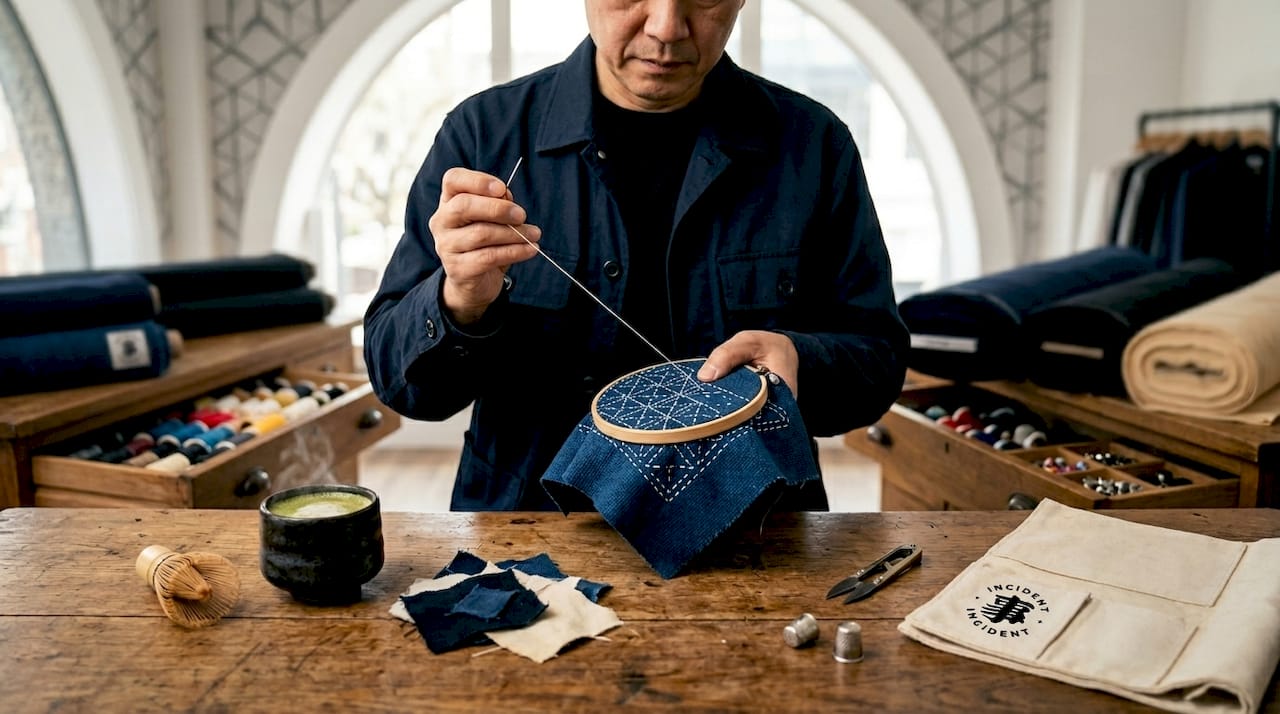
This is particularly visible in Japanese streetwear, where artisanal skills and traditional craftsmanship intersect with contemporary urban expression in ways that feel neither nostalgic nor contrived. Japanese fashion has long held that garment-making is a discipline, not merely a commercial act. Techniques like sashiko stitching, indigo dyeing, and washi textile integration carry centuries of meaning into modern silhouettes.
The importance of craftsmanship in fashion, when viewed through a cultural lens, becomes even clearer:
- Identity preservation: Craft techniques represent specific communities, regions, and periods of history. Wearing them is a form of cultural continuity.
- Traceability as value: Knowing where a garment’s techniques originate and who practised them adds a dimension of meaning that provenance-conscious consumers actively seek.
- Reinterpretation, not imitation: The most compelling examples of heritage in fashion use traditional craft as a departure point for contemporary design, rather than a costume.
- Craft as resistance: In an era of AI-generated design and algorithmic fashion, visible human labour is increasingly sought as proof of authenticity. Consumers want to feel the human behind the object.
Japanese streetwear brands that commit to these principles create something the market cannot easily replicate. A kanji motif placed with typographic consideration, a garment cut to honour the natural grain of the fabric, a seam allowance generous enough to allow alteration: each of these is a design decision rooted in tradition and respect.
Pro Tip: When evaluating any garment’s cultural heritage claims, look for specific technique names or regional references in the product description. Vague terms like “inspired by” carry far less weight than “sashiko-stitched” or “indigo over-dyed using traditional tsutsugaki methods.”
Tradition in garment making is not sentimentality. It is knowledge with a long proof of concept, refined over generations because it worked. The most forward-thinking designers understand that drawing from craft traditions is not a step backward. It is a commitment to excellence that trends cannot manufacture.
Craftsmanship vs mass production
The contrast between craft and mass production is not simply about price or exclusivity. It is a fundamentally different relationship between maker, material, and wearer.
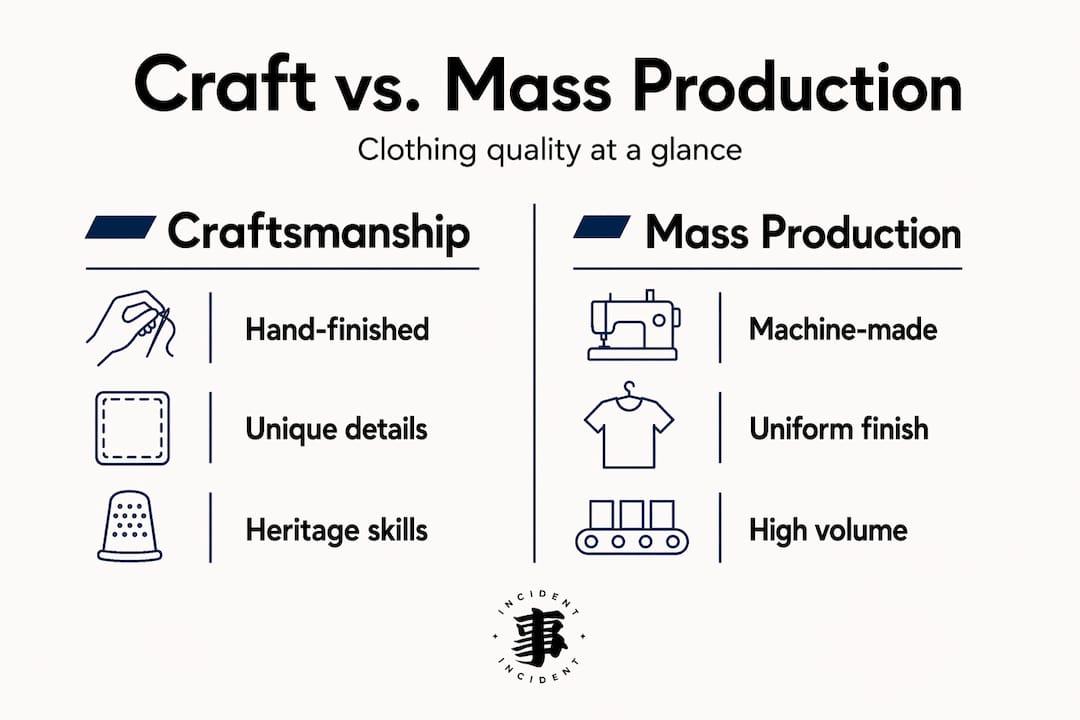
| Dimension | Crafted clothing | Mass production |
|---|---|---|
| Construction quality | Hand-finished seams, reinforced stress points, individually checked | Machine-uniform, optimised for speed, minimal finishing |
| Material selection | Chosen for tactile quality, durability, and cultural fit | Chosen primarily for cost efficiency and scalability |
| Environmental impact | Low waste, small batch, repairability by design | High waste, overproduction, limited repairability |
| Emotional connection | Visible human labour, traceable origin, story-driven | Anonymous, interchangeable, trend-driven obsolescence |
| Longevity | Built to last years, designed for repair | Built for seasons, discarded when worn or unfashionable |
| Price model | Premium pricing, higher margin, customer lifetime value | Volume-dependent, thin margins, repeat purchase model |
Craft-based businesses favour higher margins and longer lead times over volume sales, and they cultivate a different kind of customer relationship as a result. When you invest in a crafted garment, you are not simply purchasing a product. You are entering an ongoing relationship with an object that rewards care.
The sustainability argument for craftsmanship is increasingly difficult to ignore. Craft-based fashion functions economically like fine jewellery or luxury watches. Aftercare, repair, and eventual resale extend a garment’s life and keep the customer engaged long after the initial purchase. This stands in direct opposition to fast fashion’s disposable logic, where a garment’s value expires the moment the next season arrives.
Craftsmanship also demands transparency. When a brand commits to artisanal production, it must account for where the garment was made, who made it, and how long it took. Luxury brands increasingly adopt traceability and local manufacturing not as a marketing exercise but as a structural commitment to sustainable production. That transparency, in turn, builds genuine trust rather than borrowed credibility.
Pro Tip: Before purchasing, ask the brand where their garments are produced and whether the makers are named or credited. Brands with real craft credentials are rarely evasive about this. Those who deflect usually have something to hide.
The emotional dimension of crafted clothing is often underestimated. A garment you know was made by a person with specific skills, in a specific place, using techniques passed down through generations, carries a weight that no algorithmic trend can replicate. You wear the decision, not just the design.
Japanese streetwear and craftsmanship in luxury fashion
Japanese streetwear occupies a unique position in fashion. It is urban without being careless, minimal without being cold, and deeply referential without being nostalgic. This balance is achieved, in large part, through an unwavering commitment to craftsmanship as a design principle.
The influence of skilled tailoring in streetwear is particularly pronounced in Japanese urban fashion, where the cut of a garment, the weight of its fabric, and the precision of its construction are treated with the same seriousness as the graphic or motif it carries. An oversized silhouette is not simply large. It is proportioned deliberately, with seam placement that balances the visual mass and fabric weight that supports the structure without stiffening it.
The hallmarks of craftsmanship in Japanese streetwear include:
- Fabric integrity: Premium textiles such as heavyweight cotton, enzyme-washed fleece, and long-staple Pima cotton selected for their handle, durability, and behaviour over time.
- Considered proportion: Silhouettes designed to work with the human body rather than default to trend, with specific attention to sleeve length, shoulder drop, and body width relative to the wearer.
- Typographic and motif precision: Kanji, Japanese script, and cultural symbols placed with graphic discipline, where size, weight, and positioning are as deliberate as the choice of symbol itself.
- Finish quality: Flat-lock seams, ribbed hem detailing, and garment-dyed finishes that integrate colour and construction rather than treating them as separate concerns.
- Cultural coherence: Collections that reference specific Japanese aesthetic philosophies, such as wabi-sabi or Japandi, without using them as surface decoration.
In the broader luxury world, the same principle applies at scale. Prada’s three-year artisanal training programme connects heritage techniques with contemporary market needs through long-term artisan development and rigorous quality control in small teams. At Cartier, artisan training can span five to ten years to preserve rare métiers, balancing industrial precision with the kind of emotional intelligence that machines cannot learn. These programmes signal that craftsmanship is not a selling point appended to a product description. It is the product’s foundation.
The defining quality of high-quality garments in Japanese streetwear lies precisely in this intersection: cultural rigour and urban practicality, held together by craft. It is a model that rewards the wearer who pays attention.
How to recognise and choose crafted clothing
Building a wardrobe around craftsmanship does not require a limitless budget. It requires knowledge and a shift in the questions you ask before purchasing.
- Examine the seams. Turn the garment inside out. French seams, flat-lock stitching, and generous seam allowances all indicate a maker who thought about durability. Raw, overlocked edges with minimal allowance suggest speed over longevity.
- Check the fabric weight and handle. A quality garment has substance in your hands. Lightweight fabrics can be exceptional, but they should feel considered, not thin. Rub the fabric gently between your fingers and assess how it recovers.
- Look for named materials. Vague terms like “premium cotton” mean very little. Specific references to Pima cotton, Supima, GOTS-certified organic fibres, or selvedge denim indicate a brand that knows and is proud of what they use.
- Ask about production scale. Small-batch production is a meaningful indicator of craftsmanship. If a brand produces in the tens of thousands with no mention of quality control stages, the craft narrative is likely more marketing than reality.
- Research the brand’s transparency. Brands committed to craftsmanship are typically open about their supply chain, their makers, and their production methods. Explore their editorial content, look for mindful fashion principles in their published values, and assess whether their story holds together.
- Consider repairability. Ask yourself whether a skilled hand could restore this garment if it wore at a seam or faded unevenly. Garments designed for longevity usually have this quality built in through construction choices.
- Trust your instincts about craft communities. Online spaces dedicated to slow fashion, Japanese streetwear, and heritage garment culture are some of the richest sources of guidance on what craftsmanship actually looks like in practice.
Clothing quality and craftsmanship are not abstract ideals. They are tangible, learnable, and visible once you know what to look for. The shift from consuming trend-driven fashion to selecting crafted pieces is, ultimately, a shift in how you relate to the things you wear.
Craftsmanship changed how I see everything I wear
What I have come to understand, after years of working within Japanese-inspired streetwear, is that craftsmanship is not a feature. It is a philosophy that changes how a brand thinks about everything, from the thread it chooses to the way it speaks about its pieces.
When I first began studying what sets a truly well-made garment apart from a trend piece, I expected the answer to be technical. I thought it would come down to stitch count or fabric specification. What I found was something quieter and more human. The difference was in how much the maker cared whether you would still be wearing the piece in five years.
Most fashion operates on an implicit assumption that you will replace the garment within two seasons. Craftsmanship operates on the opposite assumption. It is built for permanence, or at least for longevity. And that difference reshapes every decision along the way, including the fabric, the construction, the fit, and the cultural references drawn upon.
My honest view is that heritage craftsmanship is no longer a niche concern for luxury collectors or archive obsessives. It is becoming the most credible response to an industry that has eroded trust through overproduction and disposability. The brands that understand this are not simply making better clothes. They are articulating a different set of values through the act of making.
At Incident, this is not a brand positioning exercise. It is the reason the collection exists. Every fabric choice, every silhouette decision, every cultural reference drawn from Japanese tradition carries the intention that the wearer should feel something real. Not just wear something current.
The uncomfortable truth about craftsmanship is that it asks something of the wearer too. It asks you to pay attention, to care for the piece, and to resist the reflex to replace rather than repair. That is a small discipline, but it matters. It is how a garment becomes something you remember rather than something you forget.
— Incident
Discover craftsmanship at Incident

At Incident, every garment in our collection reflects what genuine craftsmanship looks like when Japanese aesthetic philosophy meets contemporary streetwear culture. Our fabrics are selected with the same deliberateness you have been reading about: long-staple Pima cotton with a handle that improves over time, silhouettes proportioned with cultural and structural intention, and details that reward the wearer who looks closely.
If you are ready to experience premium craftsmanship in fabric, our Pima Collection is where we recommend you begin. Each piece is a tribute to the values of slow, considered making, brought into an urban aesthetic that wears as well in Tokyo as it does in Zurich.
Explore the full range of Japanese-inspired streetwear at Incident and find pieces built to stay with you.
FAQ
What does craftsmanship in clothing actually mean?
Craftsmanship in clothing refers to the skill, cultural knowledge, and human attention invested in a garment’s construction, from fabric selection to finishing. It encompasses both physical techniques and the intentional decisions that separate a durable, meaningful piece from a mass-produced alternative.
How does craftsmanship differ from mass production in fashion?
Crafted garments are produced in small batches with human oversight at every stage, prioritising durability, repairability, and material quality. Mass production optimises for speed and volume, typically at the expense of construction quality and longevity.
Why is craftsmanship significant in Japanese streetwear?
Japanese streetwear draws on centuries of textile tradition, using techniques such as sashiko stitching, indigo dyeing, and precision tailoring to create garments that carry cultural depth alongside urban aesthetics. This commitment to craft gives Japanese streetwear a longevity and authenticity that trend-led fashion rarely achieves.
Is handmade clothing always better than machine-made?
Not necessarily. Handmade clothing significance lies in the human oversight and adaptive decision-making it enables, not in rejecting machinery entirely. The best crafted garments use both hand and machine techniques, with skilled artisans guiding quality at every stage.
How can I identify genuine craftsmanship when shopping?
Examine seam construction, ask for specific fabric provenance, and research whether the brand publishes transparent production information. Premium fabric choices and named artisan techniques are strong indicators that a brand’s craft credentials are genuine rather than decorative.


Share:
Why choose premium fabrics for your wardrobe
How to build a Japandi capsule wardrobe