


TL;DR:
- A Japandi capsule wardrobe blends neutral, natural fabrics with relaxed, structured silhouettes to create a calming, versatile style. Building on a carefully curated 30 to 40 pieces encourages intentional dressing while embracing imperfection and timeless design. This approach reduces decision fatigue and reflects a thoughtful balance of Japanese minimalism and Scandinavian functionality.
You open your wardrobe and feel nothing but overwhelm. Dozens of pieces hang there, yet somehow you have nothing to wear. Learning how to build a capsule wardrobe Japandi style is one of the most effective ways to dissolve that daily frustration. Japandi, the elegant fusion of Japanese minimalism and Scandinavian functionality, offers a philosophy that is as calming to practise as it is beautiful to look at. This guide walks you through every stage, from understanding the aesthetic fundamentals to assembling a wardrobe that genuinely works for your life.
Table of Contents
- Key takeaways
- How to build a capsule wardrobe Japandi style: the fundamentals
- Assessing what you already own
- Building your Japandi capsule step by step
- Common mistakes to avoid
- How to style your Japandi capsule
- My perspective on Japandi and the capsule approach
- Building your capsule with Incident
- FAQ
Key takeaways
| Point | Details |
|---|---|
| Japandi palette is neutral | Build around beige, cream, grey, and muted earth tones to create a cohesive, calm wardrobe. |
| Aim for 30 to 40 pieces | A well-chosen capsule of this size can produce well over 100 distinct outfits. |
| Fabric quality is non-negotiable | Choose natural materials like linen, organic cotton, and wool for longevity and comfort. |
| Silhouette balances loose and defined | Opt for relaxed, flowing shapes with subtle waist definition rather than rigid or shapeless fits. |
| Wabi-sabi mindset matters | Japandi celebrates imperfection, so embrace natural folds, wear, and evolving personal style. |
How to build a capsule wardrobe Japandi style: the fundamentals
Before you buy a single piece, you need to understand what Japandi actually is. The word blends “Japan” and “Scandi,” and it describes an aesthetic that shares the best qualities of both cultures. Japanese wabi-sabi teaches us to find beauty in imperfection and impermanence. Scandinavian hygge encourages warmth, comfort, and thoughtful simplicity. Together, they produce a visual language that is restrained without being cold, and effortless without being sloppy.
Colour palette
The Japandi colour palette is built strictly on neutrals. Think white, cream, warm beige, muted brown, soft grey, and the occasional deep charcoal or dusty navy. There are no saturated hues here. No electric blue, no fire-engine red. The point is to create an ensemble of tones that speak quietly to each other, allowing you to mix and match without visual friction.
One practical trick: hold two pieces side by side before purchasing. If they clash even slightly, one of them does not belong in your capsule.
Fabrics that define Japandi dressing
Natural, breathable fabrics are the backbone of the aesthetic. Linen, organic cotton, fine wool, and lyocell all carry the textural warmth that Japandi demands. These materials drape well, age beautifully, and feel grounded rather than synthetic. They also speak to the ethical awareness that sits beneath the Japandi philosophy.
Linen, in particular, is worth prioritising. It is more breathable than cotton, hypoallergenic, and becomes softer with every wash. An imperfect linen crease is not a flaw in Japandi. It is the point.
Silhouette and philosophy
Japandi silhouettes balance structure and fluidity. Clothing moves with the body rather than constraining it. Wide-leg trousers, relaxed shirts, and oversized knitwear all sit within this language. The key is avoiding two extremes: nothing too fitted and nothing shapeless. A wide belt or a wrap detail can create just enough definition to keep an outfit intentional rather than accidental.
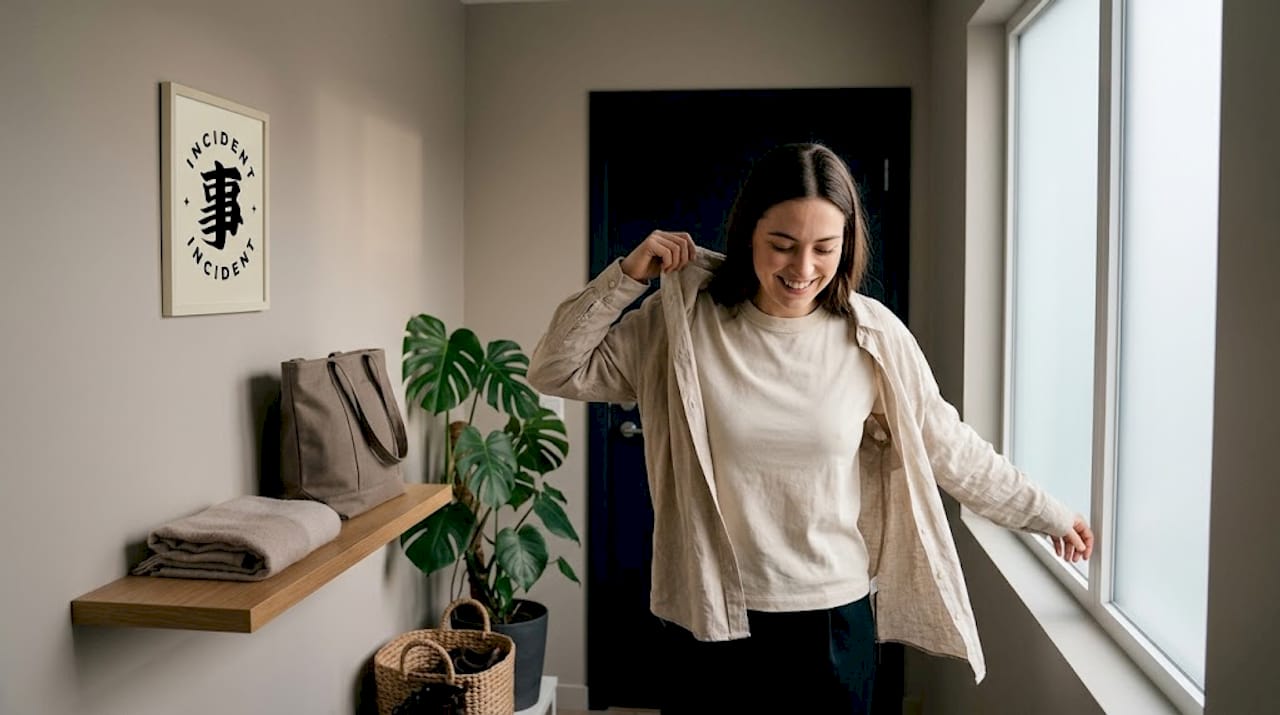
Japandi is also explicitly distinct from strict minimalism. Minimalism erases. Japandi celebrates. Natural wood grain, an uneven linen fold, a subtle asymmetric hem — these are features, not flaws. Carry that mindset into your wardrobe choices.
Pro Tip: If a garment makes you feel like you are wearing something, rather than simply being dressed, it probably does not belong in a Japandi wardrobe. The best pieces feel like a second skin.
Assessing what you already own
Before purchasing anything new, you need an honest audit of your current wardrobe. This stage is where many people stumble, either discarding too aggressively or holding on to pieces that do not serve them.
Here is a simple process to follow:
- Remove everything from your wardrobe and place it on your bed.
- Sort each item into three groups: worn regularly and loved, worn occasionally, and rarely or never worn.
- From the “rarely worn” pile, ask whether the reason is poor fit, wrong colour, or simply that it does not match anything else you own.
- Items that fall into the third group and cannot answer “yes” to at least two of those three corrective questions should be set aside for donation or resale.
- From what remains, identify the gaps in your neutral, natural-fabric collection.
Most people wear roughly 20% of their clothes 80% of the time. The capsule approach simply makes that 20% intentional and excellent rather than accidental.
The core pieces you actually need
Once you have a clearer picture of what survives your audit, you can begin identifying what a Japandi capsule truly requires. A functional capsule typically includes the following:
- Linen or organic cotton shirts in cream, white, or warm beige
- Wide-leg trousers in muted grey or warm camel
- A relaxed blazer or structured overshirt in a neutral earth tone
- Fine-knit jumpers or cardigans in oatmeal, off-white, or dusty slate
- A simple midi dress or relaxed shirt dress in a natural fabric
- One or two pairs of well-cut denim or twill trousers in muted tones
- Classic outerwear: a wool coat or a minimal puffer in charcoal or beige
- Versatile footwear: simple white trainers, suede loafers, or leather sandals
This list is your starting point, not your ceiling. Adjust it to fit your actual lifestyle. If you work in an office, lean into tailored trousers and structured shirts. If you are more street and casual, prioritise the knitwear and relaxed outerwear.
| Capsule piece | Best Japandi fabrics | Colour suggestions |
|---|---|---|
| Linen shirt | Linen, organic cotton | White, cream, warm beige |
| Wide-leg trousers | Linen, lyocell, twill | Grey, camel, warm brown |
| Knitwear | Fine wool, organic cotton | Oatmeal, dusty slate, off-white |
| Outerwear | Wool, recycled nylon | Charcoal, muted olive, beige |
| Footwear | Leather, suede, canvas | Cream, tan, white, black |
Pro Tip: Before filling any gaps with new purchases, search second-hand and vintage platforms first. Many Japandi-adjacent pieces from quality brands are available at a fraction of their original price and often carry a natural patina that actually suits the aesthetic beautifully.
Building your Japandi capsule step by step
With your audit complete and your essential list in hand, you are ready to build. This is where patience becomes as important as taste.
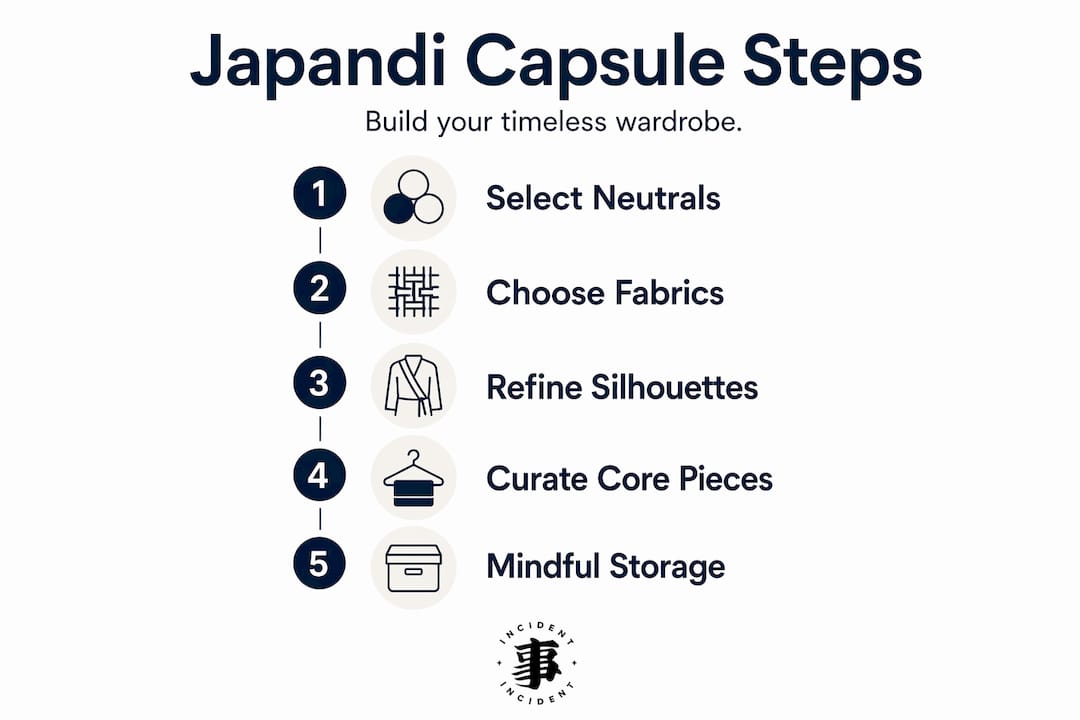
- Set your wardrobe size target. Aim for 30 to 40 core pieces, excluding underwear, socks, and gym wear. A 35-piece capsule can generate well over 100 distinct outfits, so you are not limiting yourself. You are concentrating your options.
- Prioritise pieces that work across seasons. A fine-knit merino jumper works in October and in a cool June evening. A linen shirt layers under knitwear in autumn and stands alone in summer. Versatility across seasons is a primary filter for every purchase.
- Incorporate streetwear thoughtfully. Japandi does not exclude streetwear; it refines it. An oversized graphic tee in a muted colourway, layered under an open linen shirt and worn with wide-leg trousers, is entirely coherent within the aesthetic. The key is keeping the silhouette intentional and the palette controlled. For guidance on styling minimalist streetwear, this philosophy is well worth exploring.
- Buy gradually, not all at once. Resist the urge to replace everything immediately. Spend one month simply wearing what you have kept from your audit. You will discover what is truly missing through lived experience rather than impulse.
- Learn to care for your pieces properly. Natural fabrics require gentle handling. Wash linen in cool water, store knitwear folded rather than hung, and air garments between wears. A well-maintained linen shirt lasts a decade. A poorly cared-for one lasts a season.
| Garment type | Care method | Storage recommendation |
|---|---|---|
| Linen shirts and trousers | Cool wash, air dry | Hang on wooden hangers |
| Fine knitwear | Hand wash or delicate cycle | Fold flat in drawer |
| Wool coats | Spot clean, professional clean annually | Hang with cedar blocks |
| Cotton tees | Cool wash, reshape while damp | Fold or hang |
| Suede footwear | Brush after wear, protect with spray | Store in fabric bags |
Pro Tip: Japandi wardrobe storage philosophy recommends concealed, low-profile solutions. Simple wooden hangers, matching storage boxes, and open shelving with folded pieces all sustain the calm visual environment that makes the wardrobe feel like part of the aesthetic, not separate from it.
Common mistakes to avoid
Even with the best intentions, there are patterns that consistently trip people up when building a Japandi capsule. Knowing them in advance saves considerable time and money.
- Buying too much at once. The capsule process works best as a slow edit. Purchasing 20 new pieces in a weekend almost always results in impulse decisions that break the palette or duplicate existing items.
- Neglecting fit for the sake of aesthetics. A beautiful linen shirt that is three sizes too large is not Japandi. It is just oversized. The proportions need to feel considered, with enough volume to drape well but enough structure to communicate intention.
- Forcing the palette too rigidly. The Japandi colour philosophy is neutral and muted, but it is not monochrome. A dusty terracotta scarf or a muted sage cardigan can absolutely belong, provided it reads as earthy and quiet rather than bright or saturated.
- Ignoring your actual lifestyle. A capsule that does not fit real life is just a costume collection. If you run, include running kit. If you attend evening events regularly, include one or two elevated pieces that can hold that context.
- Treating it as a finished project. Your Japandi capsule should evolve as you do. Edit annually. Add pieces that genuinely excite you. Let go of those that no longer fit your life or your body.
“A curated wardrobe is not a uniform. It is a reflection of who you are, worn thoughtfully and worn often.” This distinction is what separates a Japandi capsule from simply owning fewer clothes.
How to style your Japandi capsule
Knowing what to own is one thing. Knowing how to wear it is where the aesthetic comes alive. These techniques will help you create polished Japandi style outfits from your capsule on any given day.
- Layer with intention. A fitted long-sleeve tee beneath an open linen overshirt beneath a wool coat creates depth without clutter. Each layer should be visible as a deliberate choice, not an afterthought.
- Mix textures within the same palette. A smooth cotton tee against a brushed linen trouser against a ribbed knit cardigan creates visual interest that colour alone cannot. Texture is your quiet pattern in a Japandi wardrobe.
- Keep accessories minimal and meaningful. A single ceramic bead necklace. A simple leather-strap watch. A woven tote bag in natural jute. Accessories in Japandi speak softly but carry real presence.
- Choose footwear that grounds the outfit. Simple cream or white trainers work with almost every capsule combination. For elevated occasions, unstructured suede loafers in tan or camel carry the aesthetic with grace.
- Embrace natural movement and imperfection. Let your linen wrinkle. Wear your knitwear slightly relaxed at the cuff. Japandi beauty lives in the honest, unforced state of things. For more ideas on expressing your own voice within this framework, exploring minimalist Japanese streetwear can be a rewarding starting point.
Pro Tip: When in doubt about an outfit, remove one element. Japandi almost always improves with subtraction rather than addition.
My perspective on Japandi and the capsule approach
I have watched a lot of trends come and go. What strikes me about Japandi is that it has never felt like a trend at all. It feels more like a return to something honest.
When I think about how Japandi reduces cognitive exhaustion by limiting visual noise and promoting a restrained palette, I recognise something I have felt instinctively for years. The mornings when I have dressed well have rarely been the mornings with the most choice. They have been the mornings when the choice was simple.
What I have learned from working within a Japanese-inspired aesthetic is that the discipline of the capsule approach does not feel restrictive once you are inside it. It feels like relief. You stop buying things you do not need. You stop keeping things that do not serve you. What remains is a wardrobe that actually reflects who you are, worn with genuine intention rather than habit or compromise.
The connection between Japandi and streetwear is one I find genuinely exciting. At Incident, we have always believed that Japanese craftsmanship and modern urban culture are not opposites. A perfectly constructed oversized tee in a muted colourway is a Japandi object. A minimal graphic hoodie in warm grey is a Japandi object. The philosophy does not live only in interiors or high fashion. It lives wherever quality and restraint meet with purpose.
My honest advice: do not wait until you have the “perfect” capsule to start wearing it. Start with what you have, edit slowly, and trust that the aesthetic will develop as you develop. Imperfection, after all, is the whole point.
— Incident
Building your capsule with Incident
If the Japandi philosophy speaks to you, the pieces you reach for to anchor that capsule matter more than almost any other decision you will make.

At Incident, we design with exactly this in mind. Our garments draw on Japanese craftsmanship traditions, with premium natural fabrics, clean silhouettes, and a muted palette that sits naturally within the Japandi aesthetic. Nothing here is loud. Everything is considered.
Our Pima cotton collection is a strong foundation for any Japandi capsule. Pima cotton is softer, stronger, and more breathable than standard cotton, making it the natural choice for the kind of everyday tee that anchors dozens of outfit combinations. Wear it alone, layer it beneath an open linen shirt, or tuck it into wide-leg trousers. It performs beautifully in every context.
Beyond the tees, our oversized Japanese hoodies and minimal streetwear pieces are built for the kind of relaxed, intentional dressing that Japandi demands. Explore the full collection at Incident and find the pieces that feel like they were already part of your wardrobe. Because in the Japandi spirit, the best addition is the one that feels like it was never missing at all.
FAQ
What is Japandi style in fashion?
Japandi style blends Japanese minimalism and Scandinavian functionality into an aesthetic defined by neutral colours, natural fabrics, and relaxed yet intentional silhouettes. It celebrates imperfection through the wabi-sabi philosophy rather than pursuing rigid perfection.
How many pieces should a Japandi capsule wardrobe have?
Most Japandi capsule wardrobes sit between 30 and 40 core pieces, excluding basics like underwear and sportswear. This range is enough to generate well over 100 distinct outfit combinations.
What colours work best for a Japandi wardrobe?
Stick to warm neutrals: cream, beige, warm white, muted grey, soft brown, and deep charcoal. Muted earthy tones like dusty terracotta or sage can also work, provided they remain quiet and restrained rather than vibrant.
Can streetwear fit into a Japandi capsule wardrobe?
Yes, provided the pieces respect the palette and silhouette principles. Oversized tees, minimal graphic hoodies, and relaxed outerwear in muted tones all integrate naturally. The key is keeping the overall look considered and calm rather than logo-heavy or brightly coloured.
What fabrics are best for Japandi fashion?
Linen, organic cotton, fine wool, and lyocell are the core Japandi fabrics. They are natural, breathable, and durable, and they develop a pleasing character with wear and time, which suits the wabi-sabi spirit of the aesthetic perfectly.



Share:
The role of craftsmanship in clothing and style
Street style dos and don'ts for 2026