

TL;DR:
- Choosing premium fabrics involves more than softness; it encompasses fibre quality, construction, durability, and ethical sourcing. Natural fibers like Pima cotton and Merino wool offer long-lasting, environmentally friendly options, while innovative finishes extend garment life and performance. Authentic premium fabrics are verified through certifications such as GOTS and OEKO-TEX, ensuring longevity, sustainability, and superior craftsmanship in Japanese streetwear.
Most people assume that choosing premium fabrics simply means paying more for something softer. That assumption costs wardrobes dearly. The real reasons why choose premium fabrics go far deeper than touch alone: fibre construction, fabric density, ethical sourcing, and long-term durability all shape whether a garment earns its place in your collection or quietly falls apart after a season. For fashion-conscious shoppers drawn to Japanese streetwear aesthetics, understanding these qualities is not optional. It is the foundation of every meaningful wardrobe decision you will make.
Table of Contents
- Key takeaways
- Why choose premium fabrics: what quality really means
- Sustainability and ethical production
- How to identify premium fabrics when shopping
- Premium fabric types used in Japanese streetwear
- Innovations shaping premium fabric performance
- What choosing premium fabrics taught me
- Incident: premium Japanese streetwear built on quality
- FAQ
Key takeaways
| Point | Details |
|---|---|
| Premium goes beyond softness | True quality lies in fibre length, fabric density, and construction, not surface feel alone. |
| Durability reduces cost per wear | Natural fibre items retain value far longer than synthetic alternatives, lowering long-term spending. |
| Certifications matter | GOTS and OEKO-TEX labels confirm ethical sourcing and chemical safety in premium textiles. |
| Practical tests reveal quality | Fabric recovery, weave inspection, and GSM weight are reliable indicators of genuine premium garments. |
| Innovations extend garment life | Moisture-wicking and antimicrobial finishes are redefining what premium performance means in modern streetwear. |
Why choose premium fabrics: what quality really means
The phrase “premium fabric” gets used loosely, and premium label misuse is one of the most common traps modern shoppers fall into. A garment can feel extraordinarily soft on the shop floor and still pill aggressively after three washes. Genuine premium fabric is defined by a combination of fibre origin, construction method, weight, and finish. None of these factors works in isolation.
Fibre type and length
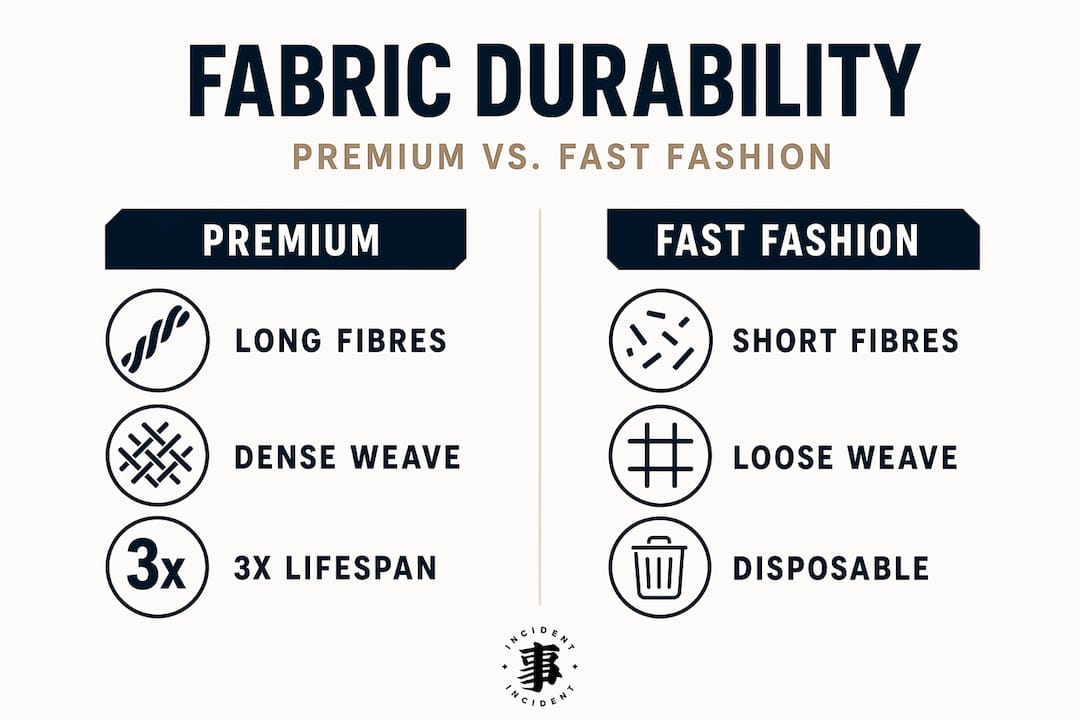
Natural fibres like long-staple Pima cotton, Merino wool, and Lenzing Modal form the backbone of truly premium textiles. The length of the individual fibres matters enormously. Longer fibres produce smoother yarns with fewer protruding ends, which is precisely what prevents pilling. Shorter fibres create a rougher surface that breaks down faster under friction and washing.
Synthetic fibres such as polyester and nylon have their place, particularly in performance outerwear, but natural fibres absorb moisture creating a cooling sensation perceived as fresh and clean, while synthetics can feel warm and slightly uncomfortable against the skin over extended wear.
Fabric weight and construction
Fabric weight, measured in GSM (grams per square metre), is one of the most honest indicators of quality. Premium fabrics typically weigh 210 to 250 GSM compared to cheaper equivalents in the 140 to 160 GSM range. This weight translates into structure, drape, and a tactile richness that lower-weight fabrics simply cannot replicate.
Fabric weave type dramatically affects breathability, temperature regulation, feel, and durability, often more than thread count alone. A dense twill weave in moderate-weight cotton will outperform a loose plain weave at double the thread count. Speaking of thread count: thread counts above 600 to 800 often inflate numbers with multi-ply yarns and do not guarantee quality or breathability. Do not let that number alone guide you.
Fabric memory and recovery
Premium fabrics have what textile specialists call “memory.” This means the fabric returns to its original shape after being stretched, scrunched, or sat in for hours. A quality oversized hoodie should recover its silhouette after a full day of wear. Lesser fabrics bag out at the elbows and shoulders and never quite return. This recovery quality is directly linked to fibre length, yarn twist, and the overall construction of the weave or knit.
Seams and stitching are equally telling. Reinforced seams, flat-lock stitching on stress points, and clean internal finishing are hallmarks of garments built to last. Loose, uneven stitching under the arms or across the shoulders is a reliable sign that the garment has not been constructed with longevity in mind.
Pro Tip: When assessing a garment in store, pull lightly at the seams near the underarm. A premium garment will show minimal give and return cleanly. Loose or puckered seams suggest shortcuts were taken in construction.
Sustainability and ethical production
Choosing premium fabrics is not only a personal investment. It is a position on how clothing should be made. The fashion industry is one of the most resource-intensive sectors on earth, and the benefits of premium fabrics extend directly into environmental and social impact.
The role of certifications
Two certifications stand above the rest when assessing ethical and sustainable textiles:
- GOTS (Global Organic Textile Standard): GOTS verifies supply chain integrity and organic content, covering everything from farm practices to the final product. It is the most thorough organic textile standard available.
- OEKO-TEX Standard 100: Tests for more than 1,000 harmful substances, confirming the fabric is safe against your skin and free from toxic dyes and finishing chemicals.
These certifications are not marketing language. They represent independently verified commitments to safer production practices for workers, communities, and the wearer.
Durability as an environmental act
The advantages of high-quality textiles become clearest when you consider lifespan. A garment made from premium fabric that lasts five to seven years with proper care replaces three or four fast-fashion pieces that degrade quickly. Natural fibre items retain 45% of their value after five years compared to just 15% for synthetic alternatives. Fewer replacements mean less production, less water consumption, and less textile waste entering landfill.
This aligns deeply with the Japanese concept of monozukuri, the art of making things with care and intention. When Incident selects fabrics for its collections, sustainability is not a checkbox. It is baked into the design philosophy from the start. You can explore this thinking further through the lens of mindful fashion and sustainability, which guides how premium streetwear connects to a broader purpose.
Natural fibres versus synthetics
- Natural fibres (cotton, wool, linen, Modal) are biodegradable, breathable, and generally lower in environmental toxicity when sourced responsibly.
- Synthetic fibres shed microplastics with every wash, contributing to ocean pollution and entering the food chain.
- Blended fabrics can offer performance benefits but are harder to recycle and may compromise the biodegradability of natural fibre content.
The choice is rarely absolute, but understanding these trade-offs helps you prioritise more consciously.
How to identify premium fabrics when shopping
Knowing the theory is one thing. Standing in a shop or scrolling a product page and making an informed call in real time is another. Here are practical steps to identify genuine premium garments, particularly for streetwear staples like tees and hoodies.
-
Check the GSM and fibre content on the label. A quality heavyweight tee should list 200 GSM or above. Any garment listing “100% polyester” for a casual daily-wear piece deserves scrutiny unless it is specifically designed for performance.
-
Conduct the scrunch test. Scrunch the fabric tightly in your fist for five seconds, then release. A premium fabric should recover quickly from creases and stretching. If deep creases remain, the fabric has poor memory and will look worn quickly.
-
Examine the weave under good light. Hold the garment up to natural light. The weave should appear even, consistent, and tight. Gaps, loose threads, or irregular weave patterns are signs of lower quality construction.
-
Assess the weight in your hands. Premium fabrics feel substantive without being stiff. A quality cotton tee in 220 GSM has a satisfying weight that cheaper alternatives at 160 GSM lack entirely.
-
Inspect the seams and hems. Turn the garment inside out. Look for reinforced double stitching, clean overlocked edges, and no loose thread ends. On hoodies specifically, check the ribbing at the cuffs and hem for even tension and thickness.
-
Look for relevant certifications. GOTS, OEKO-TEX, or Bluesign labels on the hang tag or care label are meaningful signals. Their absence does not automatically indicate low quality, but their presence confirms independent verification.
-
Be cautious of deceptive softness. Many soft-feeling knits lack density and pilling resistance, leading to quick degradation. If a fabric feels almost unnaturally plush and light simultaneously, it may have been treated with softening agents that wash out quickly, revealing an inferior base fabric underneath.
Pro Tip: For online shopping, check whether the brand publishes the GSM weight and fibre source. Brands confident in their fabric quality will share this information openly. Vague listings like “soft cotton blend” without specific details are a warning sign worth heeding.
Premium fabric types used in Japanese streetwear
Understanding which fabrics perform best for the garments you actually wear makes choosing high-end fabrics considerably more practical. Here is how the key materials compare for streetwear use.
| Fabric | Feel and weight | Durability | Sustainability | Best for |
|---|---|---|---|---|
| Pima cotton | Ultra-soft, 200+ GSM | Excellent, resists pilling | High (GOTS certifiable) | Oversized tees, lightweight layers |
| Lenzing Modal | Silky, fluid drape | Very good | High (beech wood sourced) | Lounge pieces, layering tees |
| Merino wool | Warm, breathable | Excellent | High (biodegradable) | Lightweight hoodies, transitional jackets |
| Linen | Textured, structured | Good | Very high (low water use) | Summer outerwear, relaxed shirts |
| Cotton-Modal blend | Balanced softness and structure | Very good | Moderate to high | Everyday hoodies, long-sleeves |
| Cotton-polyester blend | Firm, shape-retaining | Good | Lower (synthetic content) | Technical layers, outerwear shells |
Pima cotton and Lenzing Modal in depth
Pima cotton is widely considered the benchmark for premium cotton fabric in Japanese streetwear and minimalist fashion. Its extra-long staple fibres produce a yarn that is noticeably stronger, smoother, and more resistant to pilling than standard cotton. It also holds colour with greater fidelity over repeated washing, which matters when your aesthetic depends on consistent, clean tones.
Lenzing Modal deserves equal attention. Derived from sustainably harvested beech wood, it offers a silky drape that feels distinct from cotton. Modal breathes exceptionally well and retains softness through many washes without chemical treatment. The two materials work particularly well as blends, where Pima cotton contributes structure and Modal adds fluidity. You can read more about how these materials perform together in the Pima cotton and Modal guide from Incident.
- Pima cotton suits oversized tees where clean drape, colour depth, and long-term softness are priorities.
- Lenzing Modal works beautifully in layering pieces where a lighter, more fluid silhouette is desired.
- Merino wool remains the choice for transitional pieces that need to perform across temperature ranges.
- Linen brings a textural honesty to summer streetwear that aligns perfectly with Japanese wabi-sabi aesthetics.
Innovations shaping premium fabric performance
The advantages of premium fabrics are evolving beyond what natural fibres alone can deliver. Textile engineering is introducing features that extend garment lifespan and reduce the environmental cost of ownership. The premium apparel market is growing at 7.5% CAGR through 2035, driven largely by these performance enhancements.
Key innovations currently shaping what premium means:
- Nanotechnology finishes: Microscopic surface treatments create stain and water resistance without adding weight or changing the natural feel of the fabric. These finishes reduce the frequency of washing, extending fibre integrity over time.
- Antimicrobial treatments: Naturally derived antimicrobial agents (silver ions or plant-based compounds) reduce odour-causing bacteria, allowing garments to be worn more times between washes. Less washing means less mechanical stress on fibres and lower water consumption.
- Moisture-wicking natural fibre blends: Advanced spinning techniques now allow natural fibres to be engineered for moisture management that previously required synthetics. Merino wool has led this area for years, but cotton and Modal blends are catching up.
- Colourfast dyeing processes: Low-impact reactive dyes and digital printing methods maintain colour integrity through many more washes than conventional dye processes, reducing both fabric degradation and chemical runoff.
These developments mean that engineered features such as moisture control and antimicrobial finishes increasingly define modern premium fabrics, combining style with functional performance that purely natural treatments cannot always match. For Japanese streetwear, where clean silhouettes and understated detail are central, these innovations serve the aesthetic by ensuring garments hold their form and colour through years of wear.
Pro Tip: When a brand highlights a functional finish such as stain resistance or moisture management, ask whether the treatment is durable or wash-off. Durable finishes are bonded at fibre level and last the life of the garment. Wash-off treatments typically degrade after ten to fifteen washes.
What choosing premium fabrics taught me
When I first started building Incident’s collections, I made the same mistakes many shoppers make. I reached for fabrics that felt extraordinary in hand but did not hold that quality through wear and washing. I misread surface softness as the full story, and paid for it when pieces lost their structure or faded within months.
What changed my approach entirely was understanding that true premium fabric is a promise kept over time, built on consistent performance and resilience rather than first impressions. I began requesting fabric specifications: GSM weight, staple length, yarn twist, certifications. What seemed like technical detail turned out to be the clearest language quality speaks.
I have also learnt that caring for premium fabric correctly is as important as choosing it. Cold washing, turning garments inside out, avoiding the tumble dryer for natural fibres, and storing pieces folded rather than hung on a hook. These habits are simple, but they are the difference between a garment that lasts three years and one that lasts a decade.
The lesson I return to most often: invest in fewer pieces made from genuinely superior materials, and your wardrobe becomes lighter, more considered, and more personal. That is the spirit behind every decision we make at Incident. Quality you can feel, heritage you can trust, and craftsmanship that earns your loyalty over time.
— Incident
Incident: premium Japanese streetwear built on quality
At Incident, every garment begins with a fabric decision. We select materials that meet the standards described throughout this article: verified fibre origins, appropriate GSM weights for the garment’s purpose, and construction that holds its shape and colour through years of honest wear. Our Japanese streetwear collections are built on the belief that a wardrobe rooted in quality demands fewer replacements, less waste, and a deeper connection to each piece you own.
Our Pima cotton range is a direct expression of these values. Extra-long staple fibres, superior colour retention, and a weight that feels considered rather than arbitrary. If you are ready to experience what premium fabric choices actually feel like in an everyday garment, the Pima collection is where that conversation begins. Explore pieces designed with Japanese precision, Swiss attention to detail, and a fabric standard that we are genuinely proud to stand behind.
FAQ
What makes a fabric truly premium?
Premium fabrics are distinguished by long-staple fibres, skilled construction, appropriate GSM weight, and ethical production rather than brand name or surface softness alone. Weave quality, fibre recovery, and seam construction are equally important indicators.
Why invest in luxury fabrics over fast fashion?
Premium fabrics retain significantly more of their value and structural integrity over time. Natural fibre garments retain 45% of their value after five years compared to 15% for synthetics, making the cost per wear far lower than it initially appears.
How do I know if a fabric is genuinely premium when shopping online?
Look for brands that publish specific GSM weights, fibre origins, and relevant certifications such as GOTS or OEKO-TEX. Vague descriptions without these details often signal that the brand would prefer you not look too closely.
Are natural fibres always better than synthetic blends?
Not always. Natural fibres offer superior breathability, comfort against skin, and biodegradability, but some performance-focused garments benefit from engineered blends. The key is understanding why a synthetic element has been included, and whether it serves a genuine functional purpose.
What fabrics work best for Japanese streetwear aesthetics?
Pima cotton and Lenzing Modal are particularly well suited, offering the clean drape, colour depth, and lasting softness that minimalist Japanese streetwear demands. Merino wool and linen serve well in layering and transitional pieces where structure and breathability both matter.


Share:
Top 4 alwaysontour.com Alternatives 2026
The role of craftsmanship in clothing and style