

TL;DR:
- Minimalist Japanese streetwear emphasizes subtle details, proportion, and traditional philosophy over loud branding.
- Building a wardrobe with quality essentials and one statement piece creates authentic and versatile personal style.
- Success in this style relies on intentionality, balance, and avoiding trend-chasing or over-accessorizing.
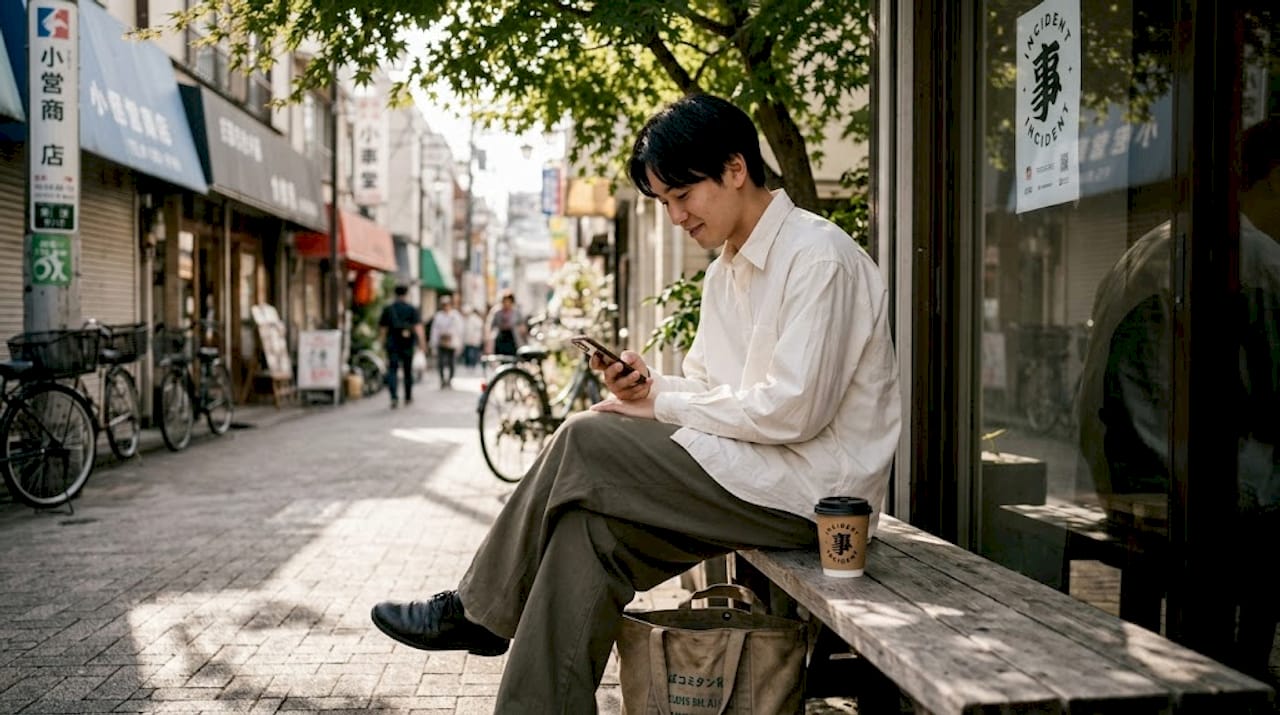
Standing out while staying understated feels like a contradiction. But for those drawn to minimalist Japanese streetwear, this tension is precisely where personal style is born. Unlike maximalist approaches that shout for attention, Japanese-inspired streetwear whispers with intention, letting considered cuts, refined fabrics, and subtle detail carry the weight of self-expression. If you have ever felt torn between wanting to look distinctive and keeping things clean and cohesive, this guide is built for you. We will walk through the concepts, the wardrobe essentials, the styling process, and the pitfalls to avoid, so you can build a look that feels authentically yours.
Table of Contents
- Understanding individuality in minimalist Japanese streetwear
- Gathering your essentials: Curating a wardrobe for unique expression
- Building your style: Step-by-step to a signature look
- Troubleshooting and avoiding common mistakes
- Our perspective: True individuality comes through intention, not excess
- Ready to express your individuality? Explore curated Japanese minimalism
- Frequently asked questions
Key Takeaways
| Point | Details |
|---|---|
| Balance subtlety and uniqueness | Japanese streetwear combines minimalist fashion principles with individual flair to help you stand out thoughtfully. |
| Curate with intention | Build a wardrobe of versatile essentials that allow you to experiment and showcase your personal taste. |
| Prioritise quality over trends | Lasting individuality comes from timeless styles, not fast-changing trends. |
| Learn from mistakes | Avoid common pitfalls by focusing on harmony and only using one or two standout details per look. |
Understanding individuality in minimalist Japanese streetwear
Individuality in fashion is not about wearing the loudest piece in the room. It is about making choices that reflect who you are, choices that feel considered rather than accidental. In the context of Japanese streetwear, this distinction becomes even more meaningful. Where Western fashion often leans on branding and volume for impact, Japanese streetwear finds power in proportion, texture, and restraint.
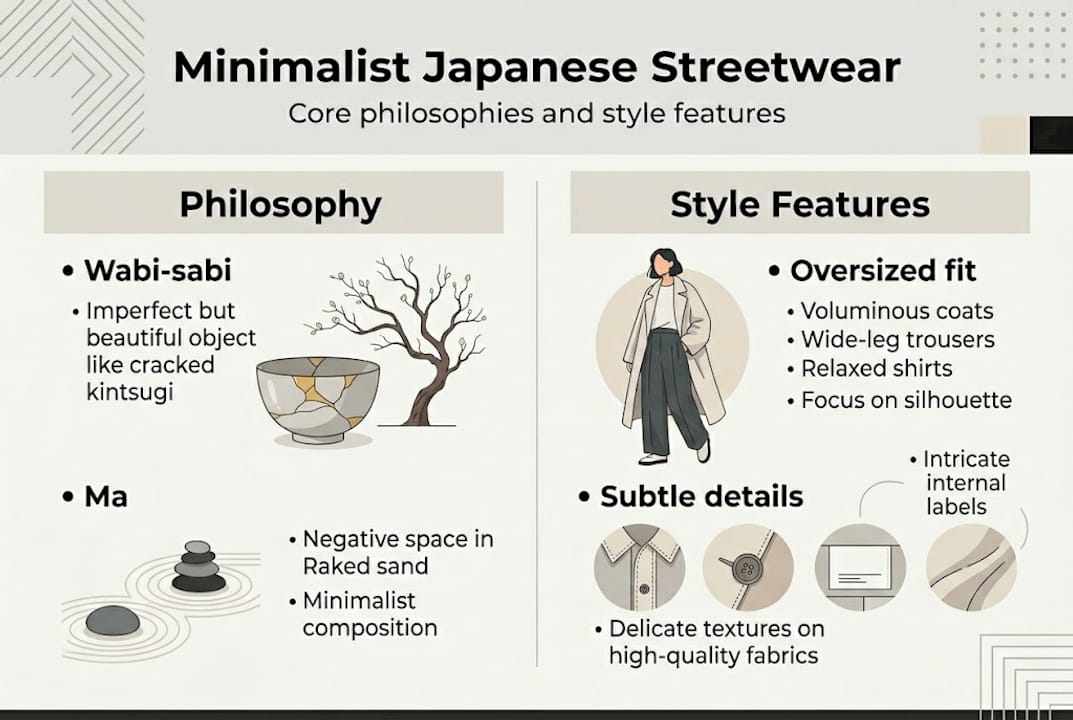
At its core, this aesthetic draws on two guiding philosophies: wabi-sabi and ma. Wabi-sabi is the Japanese appreciation of imperfection and transience, finding beauty in the worn, the asymmetric, and the understated. Ma refers to the concept of negative space, the idea that what is absent is just as important as what is present. Together, these principles shape a design language where a single seam detail or an unexpected drape carries more meaning than a logo ever could.
What makes this style so compelling for fashion-forward individuals is its capacity for hybridity. Japanese minimalism in street fashion has long absorbed influences from subcultures including techwear, workwear, and avant-garde tailoring. The result is a rich spectrum of looks that sit somewhere between tradition and innovation.
As one cultural analysis notes, Japanese streetwear balances minimalism with bold subcultures, and hybrids like techwear or workwear add an edge that pure minimalism alone cannot achieve. This is the sweet spot where individuality lives.
Key characteristics of this fusion style include:
- Clean silhouettes with structural precision
- Asymmetric cuts that reference traditional Japanese garments
- Tonal layering using neutral and earthy palettes
- Functional detailing borrowed from workwear and techwear
- Premium fabrics that reward close inspection
Meanwhile, principles like wabi-sabi and ma emphasise timeless quality over trends, which is why pieces built on these ideas tend to outlast seasonal cycles.
“The most powerful outfit is the one that looks effortless but was built with complete intention.”
This is the philosophy that separates authentic personal style from mere trend-following, and it is the foundation on which every other step in this guide rests.
Gathering your essentials: Curating a wardrobe for unique expression
Building a minimalist Japanese streetwear wardrobe is not about filling a wardrobe rail. It is about selecting fewer, better pieces that can work together in multiple combinations without losing their individual character.
Start with the foundational items. Wide-leg trousers in black, off-white, or olive bring both structure and volume. Oversized shirts in premium cotton or linen offer layering flexibility. Kimono-inspired jackets, with their drop-shoulder construction and relaxed drape, add a distinctly Japanese aesthetic without feeling costume-like. These are not trend pieces. They are building blocks.
Oversized silhouettes, wide-leg trousers, and asymmetry create unique proportions that balance volume with restraint, making them ideal anchors for an expressive yet cohesive wardrobe.

Here is a comparison to help you choose between classic essentials and statement essentials:
| Piece type | Classic essential | Statement essential |
|---|---|---|
| Trousers | Straight-leg black chinos | Wide-leg pleated linen trousers |
| Top | White oversized crew tee | Asymmetric panelled shirt |
| Outerwear | Neutral bomber jacket | Kimono-inspired wrap coat |
| Footwear | Minimalist white trainers | Tabi-inspired split-toe boots |
| Accessories | Simple canvas tote | Architectural resin brooch |
A balanced wardrobe includes both columns. Classic essentials ground your look, while statement essentials elevate it without overwhelming.
For those exploring Japanese-inspired streetwear essentials, the principle is quality over quantity. One beautifully constructed oversized shirt will serve you better than five mediocre ones.
You can also expand your visual vocabulary by studying kimono-inspired looks and understanding how traditional garment construction translates into contemporary silhouettes.
Key wardrobe essentials to prioritise:
- Wide-leg trousers in neutral tones
- Oversized shirts with subtle construction details
- Kimono or haori-inspired outerwear
- Minimal, architectural footwear
- One or two carefully chosen accessories
Pro Tip: Explore vintage markets and independent local designers before heading to mainstream retailers. These sources often yield genuinely unique pieces with construction details and fabric qualities that mass-market brands simply cannot replicate.
Building your style: Step-by-step to a signature look
Once your essentials are in place, styling becomes a practice of editing rather than adding. The goal is not to wear everything at once. It is to let each outfit tell a clear, unhurried story.
Follow these steps to build a signature look that stays true to minimalist principles while feeling unmistakably personal.
-
Choose a neutral base. Begin every outfit with a monochrome or tonal foundation. Black on black, off-white layered with cream, or a single earthy tone throughout the outfit creates a calm visual ground. This restraint is intentional. It gives your statement piece room to breathe.
-
Add character through proportion or asymmetry. Introduce volume or an unexpected shape at one point in the outfit. A wide-leg trouser paired with a fitted top, or an oversized jacket worn over a streamlined dress, creates visual interest without noise. Oversized silhouettes and asymmetric cuts are key tools here, providing proportion play that feels dynamic rather than chaotic.
-
Introduce textural contrast or a considered accessory. Texture does the work that colour often does in maximalist outfits. A matte linen shirt against a slightly sheen technical trouser, or a ribbed knit beneath a smooth cotton overshirt, creates depth. If you choose an accessory, let it be one. A sculptural bag, a single ring, or a subtle brooch is enough.
-
Review the balance. Step back and assess. Is there one point of interest drawing the eye, or are there several competing for attention? The ideal minimalist outfit has a clear focal point and everything else supports it quietly. Explore Japanese streetwear styling tips to sharpen your instincts for this balance.
For visual inspiration, a well-curated minimalist streetwear lookbook can help you see how these principles translate into real outfit combinations.
Pro Tip: Limit yourself to one standout piece per outfit. If your trousers are the statement, keep the rest simple. If your jacket is doing the talking, let everything else listen.
Troubleshooting and avoiding common mistakes
Even experienced dressers make missteps when navigating minimalist Japanese streetwear. The good news is that most common mistakes follow predictable patterns, which means they are entirely avoidable once you know what to look for.
Common mistakes and how to correct them:
- Over-accessorising. Adding multiple standout accessories, a statement bag alongside bold earrings and a sculptural belt, fractures the calm that minimalism depends on. Choose one. Let it be enough.
- Ignoring volume balance. Wearing head-to-toe oversized pieces can read as shapeless rather than considered. Pair volume on the bottom with structure on top, or vice versa.
- Chasing trends rather than building timelessness. The Harajuku streetwear revolution gave rise to countless subcultures, but the most enduring looks were always those grounded in personal conviction rather than seasonal hype.
- Losing cohesion when blending subcultures. Techwear, workwear, and traditional Japanese aesthetics can absolutely coexist in one outfit. But they need a common thread, whether that is a shared palette, a recurring fabric, or a consistent silhouette language.
Understanding Japanese streetwear terminology is genuinely useful here. When you understand what a particular aesthetic is actually trying to say, you can borrow from it without losing your own voice.
“Minimalism in streetwear is not about wearing less. It is about choosing more carefully.”
As cultural commentary on bold subcultures within minimalism confirms, the most compelling looks emerge when subtlety and edge are in honest conversation with each other. The mistake is not in being bold. It is in being undirected.
Trend-chasing is perhaps the most insidious pitfall of all. A piece that feels urgent in January can feel dated by June. Build your wardrobe around conviction, not cycles.
Our perspective: True individuality comes through intention, not excess
We believe that in modern streetwear, more is rarely better. The conversations we see happening in fashion right now, the return to craft, the appreciation of quieter design, point to something important: individuality has never been about volume.
The brands and wearers who leave a lasting impression are not those with the most pieces or the highest price tags. They are the ones who wear each garment as though it was chosen with purpose. That is the spirit wabi-sabi and ma have always championed, and it is why timeless quality over fleeting trends remains the most honest guide for sustained personal style.
At INCIDENT, we design with this conviction at the centre of everything. A single well-placed seam, a quietly unexpected drape, a fabric that rewards touch. These are the details that make a garment feel like yours rather than simply something you own. For those looking to refine this approach further, we have gathered some of our own streetwear styling lessons that reflect this mindset in practice.
Your style does not need to be loud to be heard.
Ready to express your individuality? Explore curated Japanese minimalism
You now have the framework: the philosophy, the wardrobe essentials, the styling process, and the pitfalls to avoid. The next step is finding pieces that honour all of it.
At INCIDENT, we curate every garment with intention, selecting premium fabrics and refining silhouettes that sit naturally at the intersection of Japanese heritage and contemporary streetwear. Whether you are building from scratch or adding a considered statement piece to an existing wardrobe, our Japanese streetwear collection is designed to support exactly the kind of personal style this guide has outlined. Explore our full range of minimalist clothing essentials and find the pieces that speak quietly but say everything.
Frequently asked questions
What makes Japanese minimalist streetwear unique?
Japanese minimalist streetwear balances simplicity with unexpected structural details and draws on traditional design philosophies for individual expression. Unlike generic minimalism, it uses oversized silhouettes and asymmetry to create proportions that feel dynamic rather than flat.
How can I add individuality without breaking minimalist rules?
Choose one statement piece with a distinctive cut or construction detail and keep everything else in the outfit clean and cohesive. Bold subculture influences like techwear can add edge without compromising the overall restraint of the look.
Can minimalist streetwear work for all body types?
Yes. Oversized fits and variable proportions can complement a wide range of body types when volume is balanced with structure. Pairing a relaxed silhouette on one half of the body with something more fitted on the other creates harmony without sacrificing comfort.
What are some classic mistakes to avoid?
Avoid over-accessorising and ensure your statement piece has quiet support from simple basics rather than competing elements. As wabi-sabi and ma principles remind us, timeless choices always outperform trend-led ones over the long term.
Recommended
- Streetwear lookbook: Japanese minimalism for your style – INCIDENT
- Build a timeless streetwear wardrobe: Japanese minimalist guide – INCIDENT
- Men’s streetwear essentials: refined Japanese-inspired style – INCIDENT
- How to use streetwear elements: Japanese styling made simple – INCIDENT
- Keep It Simple Sneaker Tee – Effortless Style, Everyday Vibes – 3 Wizard Clothing


Share:
Versatile streetwear: minimalism meets Japanese urban style
Women's streetwear: 5 Japanese-inspired examples for 2026