


TL;DR:
- Fashion-forward minimalism combines precise silhouettes, quality fabrics, and intentional restraint rooted in Japanese aesthetics. It emphasizes creative proportion, fabric texture, and deliberate statement pieces over decoration, creating modern, expressive looks. This approach advocates for thoughtful wardrobe choices that prioritize craftsmanship and functional design, fostering a sustainable and confident style.
Fashion-forward minimalism is defined as a deliberate design philosophy that combines precise silhouettes, quality fabrics, and intentional restraint to create looks that feel modern, expressive, and quietly powerful. It is not the same as wearing plain clothes or defaulting to beige. Rooted in Japanese aesthetic principles and shaped by contemporary streetwear culture, this approach treats every garment as a considered choice rather than a filler. If you have ever looked at a monochrome outfit and wondered why it felt so alive, you were likely witnessing fashion-forward minimalism done well.
What is fashion-forward minimalism, really?
Fashion-forward minimalism is a contemporary style practice that uses reduction as a creative tool, not a limitation. Harper’s Bazaar describes it precisely: minimalism is intentional creativity through reduction, not merely wearing neutrals. That distinction matters enormously. It means the goal is never to disappear into your clothes but to let each piece speak with authority.
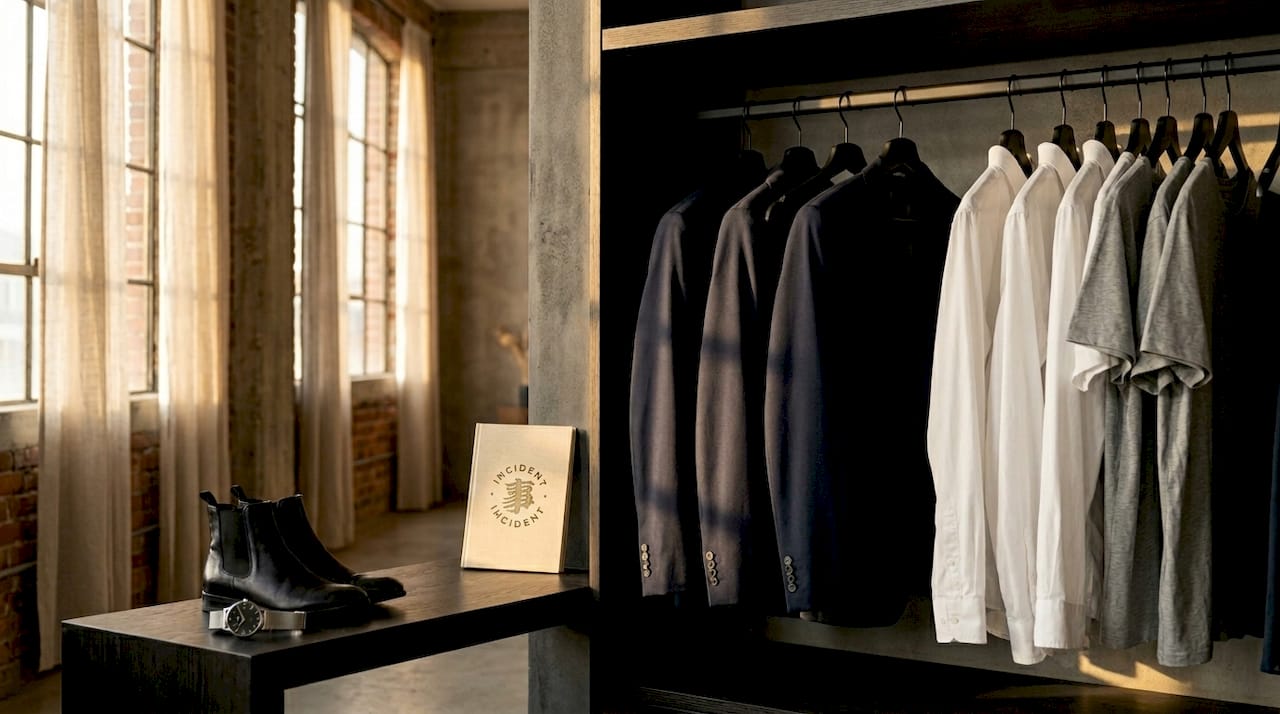
The standard industry term for this practice is minimalist fashion, but fashion-forward minimalism goes a step further. It layers in design precision, proportion play, and cultural influence, particularly from Japanese aesthetics, to produce something more considered than a capsule wardrobe or a monochrome outfit. Designers like Yohji Yamamoto and Issey Miyake built entire careers on this principle: that restraint, applied with craft, creates more impact than decoration ever could.
Japanese-inspired minimalism brings specific qualities to this philosophy. Clean lines, restrained colour palettes, textured fabrics, and silhouettes that move with the body rather than against it are all hallmarks. The result is clothing that feels calm and architectural at the same time. For fashion enthusiasts in their 20s and 30s, this aesthetic offers a way to dress with genuine intention rather than simply following trend cycles.
What separates fashion-forward minimalism from generic minimalism is the presence of creative tension. A structured oversized jacket worn over a slim, cropped tee creates visual interest through proportion alone. No print, no logo, no embellishment needed. The outfit communicates through shape, weight, and the relationship between pieces.
The philosophy and principles behind minimalist fashion
Minimalism in fashion is a philosophy before it is an aesthetic. Vogue frames it as a practice that demands confidence, because when decoration is removed, discernment must do all the work. This is why fashion-forward minimalism can feel radical. You are asking the cut of a sleeve or the weight of a fabric to carry the entire visual argument.
The core principles that define this philosophy include:
- Intentional reduction. Every item in an outfit earns its place. Nothing is included out of habit or convenience.
- Silhouette as statement. Shape and proportion replace pattern and print as the primary design language.
- Fabric quality as expression. The drape, weight, and seam placement of a garment create subtle complexity without visual noise.
- Confident restraint. Wearing less requires more self-assurance, not less. The wearer’s presence fills the space that decoration would otherwise occupy.
- Selective maximalist accents. Minimalist basics coexist with maximalist accents when chosen deliberately. A single sculptural accessory or a bold structural coat can anchor an otherwise spare look without breaking its coherence.
The last point is one that many people miss. Fashion-forward minimalism does not prohibit statement pieces. It simply demands that they are chosen with purpose rather than impulse. One strong element per outfit is a rule worth keeping.
Pro Tip: Before getting dressed, remove one item from your planned outfit. If the look improves or stays equally strong, the removed piece was unnecessary. This single habit trains your eye for intentional reduction faster than any style guide.
The philosophical dimension also connects to sustainability. Buying fewer, better pieces and wearing them in multiple configurations is both an aesthetic and an ethical position. Incident’s mindful fashion approach reflects this directly, treating quality and longevity as design values rather than marketing claims.
How does fashion-forward minimalism differ from other styles?
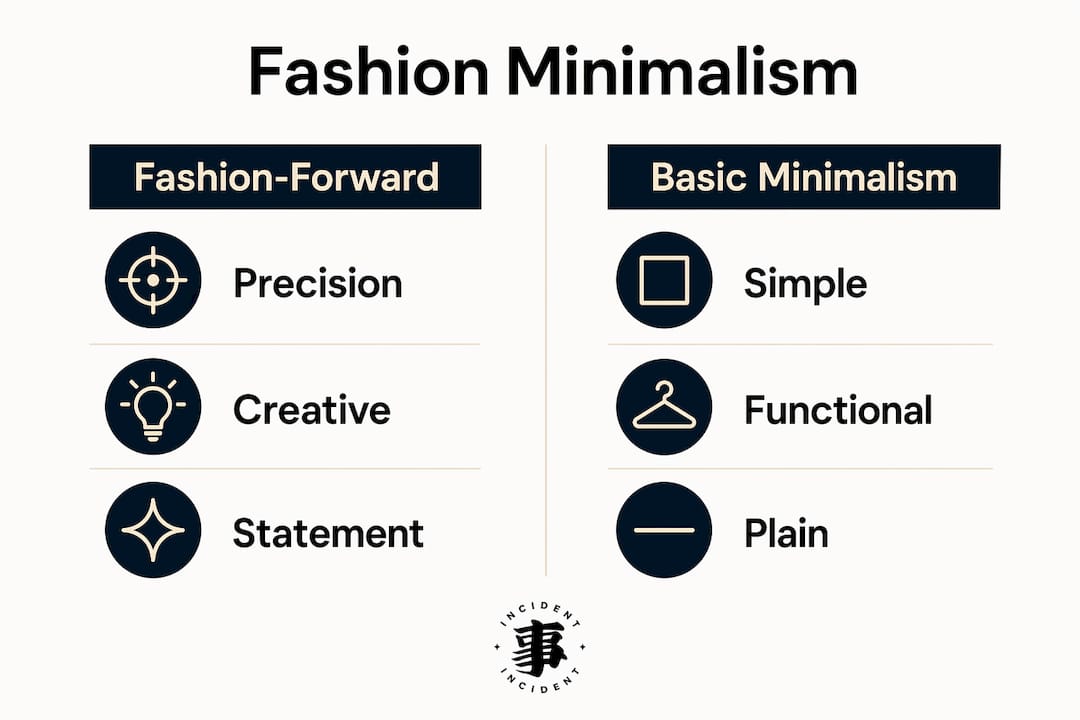
The confusion between fashion-forward minimalism, basic minimalism, capsule wardrobes, and maximalism is common and worth resolving clearly. Klodsy draws a precise line: a capsule wardrobe is a quantity strategy, whereas minimalist style is a visual language focused on the aesthetics and interaction of pieces. You can own 30 garments and dress with genuine minimalist intention. You can also own 10 garments and dress with no coherent visual language at all.
The table below maps the key differences across four approaches:
| Style approach | Core focus | Relationship to decoration | Typical silhouette |
|---|---|---|---|
| Fashion-forward minimalism | Design precision, proportion, fabric quality | Absent or highly selective | Structured, architectural, often oversized |
| Basic minimalism | Neutral colours, simple cuts | Absent | Slim, unremarkable |
| Capsule wardrobe | Quantity reduction, versatility | Variable | Variable |
| Maximalism | Layering, pattern, volume, colour | Central and abundant | Dramatic, layered, expressive |
Basic minimalism is the version most people default to: grey T-shirts, straight-leg trousers, white trainers. It is inoffensive and functional, but it carries no design intention. Fashion-forward minimalism uses the same restrained palette and absence of decoration, but applies it to pieces with considered construction, interesting fabric behaviour, and deliberate proportions.
Maximalism sits at the opposite end of the spectrum, using abundance as its primary tool. The contrast between minimalism vs maximalism in fashion is not simply about quantity. It is about whether visual complexity comes from accumulation or from precision. Both can be fashion-forward. The difference is the method.
Pro Tip: When building a fashion-forward minimalist wardrobe, prioritise pieces with structural interest over pieces with surface interest. A garment with an unusual seam line or a fabric with visible texture will remain visually engaging across many wears. A printed piece often exhausts its interest quickly.
The Japanese minimalism lookbook at Incident demonstrates this distinction clearly. The pieces are spare in decoration but rich in construction, which is precisely the balance that defines this approach.
What makes Japanese-inspired minimalism distinct?
Japanese minimalism in fashion is a quiet architectural approach that values fabric performance and silhouette over decoration. JapaneseWorkwear.com identifies its defining qualities as composed simplicity: clean lines, restrained colour, and fabric behaviour rather than plainness. This is a crucial distinction. Japanese minimalism is not about removing interest. It is about relocating interest from the surface to the structure.
Several characteristics set Japanese-inspired minimalism apart from its Western counterpart:
- Relaxed and boxy fits. Controlled volume is a deliberate design choice, not a sizing accident. Oversized proportions create balance and visual calm rather than shapelessness.
- Layering as a system. Outfits are designed to work together, with compatible silhouettes and colour values that allow layering without bulk or visual conflict.
- Fabric as the primary texture. Heavyweight cotton, brushed fleece, washed linen, and structured twill all carry visual weight through material rather than print.
- Restrained colour palettes. Black, off-white, charcoal, stone, and muted earth tones dominate. Colour is used sparingly and with intention, often as a single accent within an otherwise monochrome look.
- Functional comfort. Japanese minimalism treats comfort and elegance as compatible, not competing. A garment should move well and look considered at the same time.
The table below illustrates typical palette and fabric choices within Japanese-inspired minimalism:
| Element | Japanese minimalism | Western minimalism |
|---|---|---|
| Colour palette | Black, off-white, charcoal, muted earth | Beige, white, grey, navy |
| Fit | Relaxed, boxy, controlled volume | Slim, tailored, body-conscious |
| Fabric focus | Texture, weight, drape behaviour | Clean finish, smooth surface |
| Layering approach | Coordinated system, compatible silhouettes | Often single-layer or minimal layering |
The Japanese pattern guides at Incident explore these principles in depth, showing how design decisions at the garment level translate into cohesive, expressive outfits. The Japandi influence, a blend of Japanese and Scandinavian design values, adds an additional layer of restraint and warmth that makes this aesthetic particularly suited to urban life.
How to style fashion-forward minimalism in practice
Adopting a fashion-forward minimalist wardrobe requires a shift in how you think about getting dressed. The goal is not to own fewer things. The goal is to make every combination feel considered. Here is a practical framework for building and wearing this aesthetic with confidence.
-
Establish a core palette. Choose three to four colours that work together naturally. Black, off-white, and one muted mid-tone such as stone or slate is a reliable foundation. Every piece you own should sit within or complement this palette, which makes coordinating shape and colour effortless.
-
Use proportion contrast as your primary design tool. Pair a cropped, fitted piece with a wide-leg or elongated bottom. Wear a structured, oversized jacket over a slim base layer. Proportion play over decoration keeps a look modern without requiring new purchases or trend-chasing.
-
Invest in fabric quality above all else. A heavyweight cotton tee in a considered cut will outlast and outperform a cheap version in every way. The fabric’s drape and weight carry the visual interest that prints and logos would otherwise provide. Incident’s Pima cotton collection is built on exactly this principle, using ultra-soft, premium-grade Pima cotton for pieces that earn their place through material quality alone.
-
Layer with intention. Treat each outfit as a coordinated system rather than a collection of individual pieces. A relaxed overshirt, a structured tee, and wide-leg trousers should share a colour logic and a silhouette logic. When they do, the result feels effortless rather than assembled.
-
Add one selective statement element. A single sculptural accessory, an architectural bag, or a coat with strong structural lines can anchor a spare outfit without overwhelming it. The key is one. Fashion-forward minimalism allows personality; it simply asks that personality be edited.
Pro Tip: When shopping for minimalist wardrobe pieces, apply a 30-wear test before purchasing. Ask yourself honestly whether you will wear the item at least 30 times in the next year. If the answer is uncertain, the piece is not right for your wardrobe regardless of how well it is made.
The men’s streetwear essentials guide at Incident offers a practical starting point for building this kind of wardrobe, with pieces selected specifically for their layering compatibility and proportion versatility.
Key takeaways
Fashion-forward minimalism is defined by design precision, fabric quality, and intentional proportion play rooted in Japanese aesthetics, not by the absence of personality or the presence of neutral colours.
| Point | Details |
|---|---|
| Core definition | Fashion-forward minimalism uses reduction as a creative tool, not a limitation. |
| Japanese influence | Relaxed fits, controlled volume, and fabric texture replace decoration as the primary design language. |
| Minimalism vs capsule wardrobe | A capsule wardrobe is a quantity strategy; minimalist style is a visual language focused on how pieces interact. |
| Proportion over decoration | Pairing cropped and elongated silhouettes creates modernity without prints, logos, or embellishment. |
| Fabric quality is non-negotiable | Drape, weight, and seam placement carry visual interest in the absence of surface decoration. |
Why fashion-forward minimalism is worth the discipline
At Incident, we have spent considerable time thinking about what separates genuine minimalist fashion from its diluted, commercial imitation. The honest answer is that most people who claim to dress minimally are actually just dressing plainly. Plain is not the same as considered. Plain is the absence of effort. Considered is the presence of craft.
The trap that Harper’s Bazaar calls “cosplaying” minimalism is real and easy to fall into. You buy a collection of neutral basics, wear them without much thought, and call it minimalism. The wardrobe looks tidy. The outfits feel forgettable. That is not what this philosophy offers at its best.
What we have found, both in designing our own collections and in observing how people engage with Japanese-inspired streetwear, is that the most compelling minimalist dressers treat their wardrobe as a creative practice. They notice how a fabric behaves in different light. They understand that a slightly longer hem or a wider shoulder changes the entire energy of an outfit. They are not afraid of wearing the same silhouette repeatedly because they know that silhouette is doing real work.
The Japanese influence is not decorative here. It is structural. The Japandi philosophy that shapes Incident’s collections asks that every design decision serve both function and beauty simultaneously. That is a harder standard to meet than simply removing decoration, and it produces results that feel genuinely different from Western minimalism’s tendency toward the clinical.
Our advice to anyone beginning this journey: do not start by editing your wardrobe. Start by wearing one outfit with complete intention. Notice every choice you made. Then ask what you would remove if you had to. That single exercise teaches more about fashion-forward minimalism than any amount of reading.
— Incident
Explore Incident’s Japanese minimalist collections
Incident designs premium Japanese-inspired streetwear from Switzerland, built on the principles this article describes: clean lines, considered silhouettes, and fabrics that carry their own visual authority. Every piece in our collections is crafted to function as part of a coordinated minimalist wardrobe, with the Japandi-influenced design philosophy woven into each construction decision.
The Pima cotton collection is the ideal starting point for building a fashion-forward minimalist wardrobe. Each tee is made from ultra-soft, premium Pima cotton with a considered cut that works across multiple proportions and layering combinations. Explore the full range of Japanese-inspired streetwear at incident.store and find pieces that earn their place through craft rather than decoration.
FAQ
What is the difference between minimalist fashion and fashion-forward minimalism?
Minimalist fashion is a broad aesthetic category defined by restraint and simplicity. Fashion-forward minimalism is a more precise practice that adds design intention, proportion play, and fabric quality to that restraint, producing looks that feel modern and expressive rather than merely plain.
Is fashion-forward minimalism the same as a capsule wardrobe?
No. A capsule wardrobe is a quantity strategy focused on owning fewer pieces. Fashion-forward minimalism is a visual language concerned with how pieces interact through silhouette, colour, and fabric. You can have a capsule wardrobe without dressing minimally, and vice versa.
How does Japanese minimalism differ from Western minimalism in fashion?
Japanese minimalism prioritises relaxed fits, controlled volume, and fabric behaviour, whereas Western minimalism tends toward slim, tailored silhouettes and smooth surfaces. Japanese-inspired minimalism treats layering as a coordinated system and uses fabric texture as the primary source of visual interest.
Can fashion-forward minimalism include statement pieces?
Yes. Selective statement elements, such as a sculptural accessory or a structurally bold coat, coexist with minimalist foundations when chosen deliberately. The rule is one strong element per outfit, selected with purpose rather than impulse.
What fabrics work best for a fashion-forward minimalist wardrobe?
Fabrics with strong drape, visible texture, or notable weight perform best. Heavyweight cotton, washed linen, brushed fleece, and structured twill all carry visual interest through material quality alone, which is the foundation of fashion-forward minimalist dressing.
Recommended
- Mindful fashion explained: minimalism, sustainability and streetwear – INCIDENT
- Street fashion types: Japanese minimalism & modern styles – INCIDENT
- Japanese pattern guides: Minimalist streetwear styles explained – INCIDENT
- Urban fashion essentials: Minimalist Japanese streetwear for city life – INCIDENT

Share:
Premium fabric care process: a complete guide
Japanese streetwear shops in Europe: your 2026 guide