

TL;DR:
- Urban style originated from street culture in the 1990s, emphasizing self-expression, community, and rebellion. Today, it has evolved into minimalist, versatile wardrobes rooted in history, with a focus on proportion, quality, and cultural authenticity. Building a refined urban wardrobe involves selecting adaptable pieces, balancing color and proportion, and appreciating its cultural roots.
Urban style did not emerge from a design studio. It grew from pavements, skate parks, and record shops, shaped by the people who wore it before any brand claimed it. This urban style evolution guide traces that honest origin through to the refined, minimalist aesthetics defining modern wardrobes in 2026. You will learn where streetwear came from, which cultural forces shaped it, and how to build and wear a city-ready wardrobe that respects the tradition while expressing who you are today.
Table of Contents
- Key takeaways
- The evolution of urban style: roots, rebellion, and reinvention
- Building your urban wardrobe capsule
- How to style urban outfits for real city life
- Urban style as living culture
- My perspective on urban style evolution
- Discover Incident’s Japanese streetwear collections
- FAQ
Key takeaways
| Point | Details |
|---|---|
| Streetwear has deep cultural roots | Urban style grew from 1990s hip-hop and skater subcultures before entering mainstream and high fashion. |
| Minimalism now leads urban dressing | Modern urban clothing prioritises neutral palettes, proportion, and texture over loud logos. |
| A capsule wardrobe anchors personal style | Six to eight versatile pieces covering oversized tees, structured layers, and quality footwear cover most city looks. |
| Styling is about balance, not volume | Pairing oversized silhouettes with fitted or structured counterparts creates polish without effort. |
| Urban style reflects living culture | From Tokyo to London, urban fashion continues to evolve through social media, sustainability, and technology. |
The evolution of urban style: roots, rebellion, and reinvention
Where it all began
Streetwear emerged as a grassroots movement in 1990s New York, born from hip-hop culture’s refusal to conform to the fashion establishment. Young people on the streets of the Bronx and Harlem were not following runways. They were creating their own visual language, one built on oversized silhouettes, bold graphics, and garments that signalled belonging. Skateboarding culture on the West Coast contributed a parallel thread, with brands like Stüssy building dedicated followings among youth who valued function as much as aesthetic.
What made early streetwear distinct was its oppositional energy. Wearing a particular brand or style was a statement of allegiance, a coded message about where you came from and who you stood with. Dapper Dan, the Harlem-based designer, became a pivotal figure by remixing luxury brand insignia into entirely new garments for hip-hop artists, years before high fashion acknowledged the cultural exchange happening on urban streets.
The shift from subculture to mainstream did not happen overnight. Supreme, founded in New York in 1994, refined the model of scarcity-driven drops that turned streetwear into an event. By the early 2000s, what had been considered an underground aesthetic was appearing in music videos, sports arenas, and eventually on international runways.
High fashion takes notice
The most significant turning point came with designers like Virgil Abloh, whose work at Off-White and later Louis Vuitton fused streetwear with high fashion in a way that fundamentally shifted global fashion conversation. This was not streetwear being absorbed and diluted. It was streetwear asserting cultural authority at fashion’s highest level. The irony is that the very authenticity high fashion wanted to borrow was rooted in rejecting those institutions entirely.
Following that paradigm shift, urban style began its gradual move towards minimalism. The loud logo became less interesting when every luxury brand was producing one. What replaced it was more considered: proportion, fabric quality, clean silhouettes, and restrained colour stories. This is the territory modern urban fashion now occupies, and it is where today’s most compelling personal style lives.
- Skateboarding and surfing introduced relaxed, functional silhouettes to urban dressing.
- Hip-hop culture established the visual language of oversized proportions and bold graphic expression.
- Luxury collaborations validated streetwear’s cultural weight and accelerated its aesthetic evolution.
- Japanese streetwear, particularly from Tokyo’s Harajuku district, added a minimalist and craft-focused dimension that now shapes urban fashion globally.
Pro Tip: When studying the evolution of street style, pay attention to the subcultures that preceded each trend. The garment rarely leads. The community wearing it does.
Building your urban wardrobe capsule
Understanding the history is one thing. Knowing which pieces to invest in is another. Modern urban clothing does not require a large wardrobe. It requires a precise one.
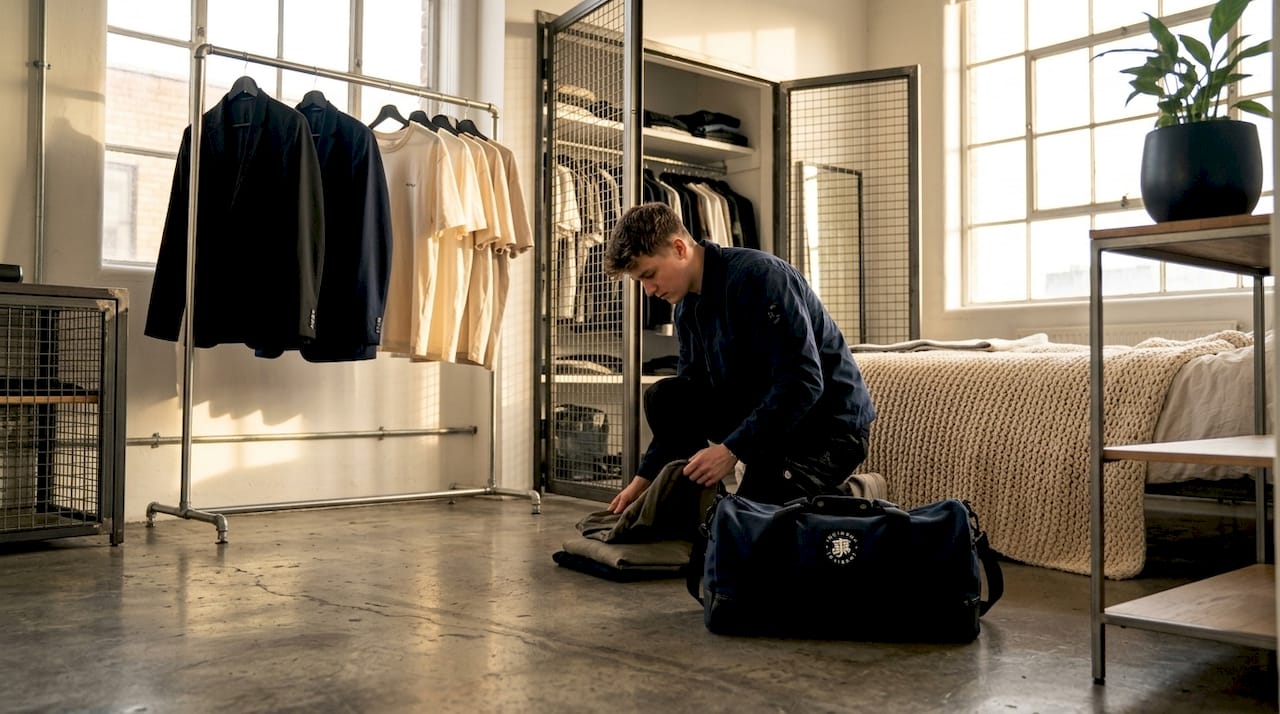
The foundation of a well-considered urban wear guide rests on eight categories of garment, each chosen for adaptability and longevity. A 2026 urban style guide recommends building around boxy tees, structured jackets, quality hoodies, straight-fit trousers, and appropriate footwear as the non-negotiable starting points.
| Wardrobe piece | Role | Styling note |
|---|---|---|
| Oversized tee | Foundation layer | Choose in black, white, or mid-grey for maximum versatility |
| Structured overshirt | Transitional layer | Adds polish over a basic tee without formality |
| Quality hoodie | Mid-layer anchor | Heavyweight fabric reads more premium than thin jersey |
| Straight-fit trousers or jeans | Lower proportion control | Balances volume when paired with oversized tops |
| Cargo trousers | Utility and texture | Tapered cut keeps the silhouette from becoming shapeless |
| Minimalist or chunky sneakers | Statement foundation | Choose one direction and commit to it per outfit |
| Outerwear piece | Seasonal protection | Bomber, coach jacket, or technical shell each serve the aesthetic |
| Crossbody bag | Functional accessory | Keeps hands free while completing the urban silhouette |
Colour and proportion: the two rules that matter most
Urban dressing built on minimalist principles uses a controlled palette, typically two to three colours per outfit, with one neutral anchoring the look. Charcoal, off-white, stone, and washed black form the most versatile base. A third colour, whether it appears in footwear, headwear, or an outer layer, works best as an accent rather than a competing statement.
Proportion is equally critical. The silhouette logic of urban minimalism follows a simple balance: when the top is oversized, the bottom should be tapered or structured, and vice versa. This is not about following rules for their own sake. It is about creating a visual harmony that reads as intentional rather than accidental.
Pro Tip: Invest in one premium-feeling texture per outfit, whether that is a brushed fleece hoodie, a waxed overshirt, or ribbed knitwear. Texture carries visual interest more quietly than print or logo, which suits the minimalist urban aesthetic perfectly.
How to style urban outfits for real city life
Knowing what to own is different from knowing how to put it together. The best urban style basics are worth nothing if the resulting outfit feels flat or confused. Here is a practical framework for getting the most from your wardrobe.
The layering sandwich method
This approach, recommended in contemporary urban styling guidance, works by building depth through three layers: a fitted base, a looser mid-layer, and a structured or protective outer. The contrast in fit between each layer creates visual dimension without relying on bold colour or graphics. A fitted black long-sleeve under an oversized graphic tee, worn open with a coach jacket over the top, is a clean example of the method in practice.
A step-by-step approach to styling an urban outfit
- Start with your bottom half. Choose your trousers or jeans first and let the silhouette of that piece guide everything above it.
- Select a base tone. Pick the dominant neutral that will carry the outfit, whether black, grey, or stone, and build upward from there.
- Introduce your top layer with a proportional counterpoint. If your trousers are relaxed, keep your top more fitted. If you are wearing straight-fit jeans, an oversized hoodie or boxy tee creates the right balance.
- Add one statement piece. This might be chunky sneakers, a structured outer layer, or a cap. One is enough. Two competing statement pieces pull the look apart.
- Finish with a single functional accessory. A crossbody bag or minimal shoulder bag completes the silhouette without adding visual noise.
- Check your palette. If you can count more than three distinct colours, remove one. The edit is the work.
“Minimalist urban style uses a small palette, proportion balance, and statement items rather than loud logos for a refined street look.” Source: Urban style for women: city-chic guide
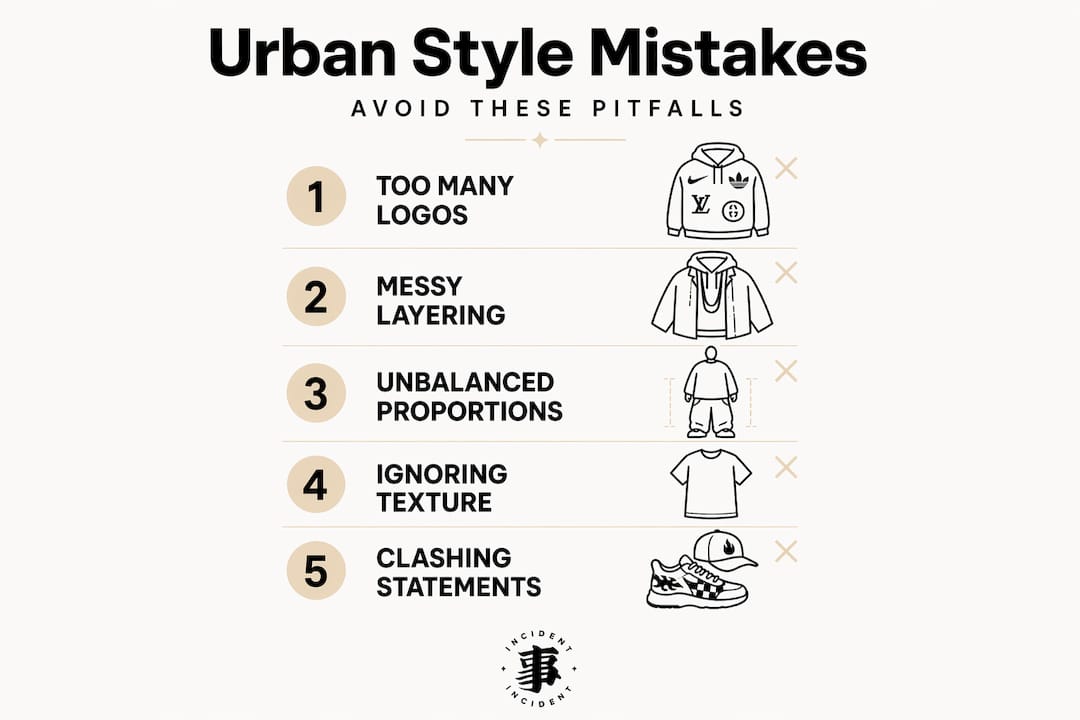
Common mistakes worth knowing
The most frequent error in urban dressing is competing statements: a bold graphic tee worn with a heavily branded outer layer and eye-catching sneakers all at once. Each piece is fine individually. Together, they cancel each other out. The second most common mistake is ignoring fit entirely in the name of “going oversized.” Oversized should be deliberate and proportioned, not simply the wrong size. There is a genuine difference between the two, and you can see it immediately in the silhouette.
Transitioning a look from daytime to evening city wear rarely requires a full outfit change. Swap one piece: replace a casual hoodie with a structured overshirt, or change trainers for a cleaner leather sneaker. The foundation stays the same. The register shifts.
Urban style as living culture
Urban fashion does not exist in a vacuum. It is a direct expression of how people live, and the cities they live in. The evolution of street style across New York, Tokyo, London, and Seoul demonstrates how each city contributes a distinct inflection to a shared visual language.
Tokyo brought precision, craft, and a respect for proportion that continues to shape minimalist streetwear. London contributed irreverence and a talent for subverting formal codes. Seoul has become one of the most significant forces in 2026 urban fashion, with its particular blending of technical fabrics, clean tailoring, and streetwear ease reaching genuinely global influence through social media.
- Social media has compressed the time between subculture origin and mainstream adoption dramatically.
- Influencer culture shapes how urban aesthetics travel across cities and demographics.
- Sustainability movements like Slow Streetwear are shifting consumer values toward longevity and vintage upcycling.
- Smart fabrics and tech-wear elements, including weather-resistant coatings and climate-adaptive textiles, now appear alongside traditional urban silhouettes.
- Hybrid lifestyle needs, where the same garment must perform across work, commuting, and leisure, continue to drive urban fashion’s emphasis on versatile, well-made pieces.
The future direction of urban style sits at the intersection of craft and function. High fashion collaborations will continue. Technology will be integrated further into fabric construction. But the emotional core of urban style, self-expression rooted in community and cultural identity, is not going anywhere. That foundation is what makes urban wear genuinely durable as a mode of dressing rather than a passing trend.
My perspective on urban style evolution
I have watched streetwear travel from something genuinely oppositional to something every luxury house now claims to understand. That journey is fascinating, but it also creates a particular challenge for anyone trying to dress with real intention today.
What I find most valuable in the current moment is that the noise has settled. The era of logomania and hypebeast culture performed its role and moved on. What remains is something more interesting: a broad appreciation for quality fabric, considered proportion, and the idea that how you put clothes together says something real about how you see the world. That is not a new idea. It was always at the heart of urban dressing. The minimalist turn has simply made it legible again.
My honest take is that the best urban wardrobes I see are built slowly. They prioritise pieces that wear well, layer thoughtfully, and hold their character across seasons rather than needing replacement every few months. The tension between following trends and building something timeless is real, but it is not actually a conflict. You can keep pace with how urban aesthetics evolve while remaining anchored by pieces and principles that do not expire.
The cultural roots matter here. Understanding where streetwear came from, the communities it expressed, the designers who gave it form, helps you make better choices. Not because wearing the right brand is the point, but because knowing the lineage of what you wear adds meaning to the act of dressing. That is something no trend cycle can take from you.
— Incident
Discover Incident’s Japanese streetwear collections
For those who want their urban wardrobe to reflect both craft and cultural depth, Incident brings a distinct perspective to the conversation.

At Incident, every piece is designed around the intersection of Japanese minimalist aesthetics and contemporary streetwear attitude. Think carefully proportioned oversized hoodies, graphic tees carrying Japanese typographic detail, and outerwear built to layer well and last. The Japandi-influenced design philosophy means you are not choosing between clean lines and genuine character. You get both. Whether you are building a capsule wardrobe from scratch or refining what you already own, Incident’s collections offer pieces with the cultural authenticity and quality that modern urban dressing deserves.
FAQ
What is urban style?
Urban style is a mode of dressing rooted in city culture, combining influences from streetwear, skate and hip-hop subcultures, and minimalist contemporary fashion. It prioritises comfort, self-expression, and considered proportions over formal dress codes.
How did streetwear become part of mainstream fashion?
Streetwear moved from subculture to mainstream through cultural figures, music, and designers like Virgil Abloh who brought urban aesthetics into luxury fashion houses, legitimising the aesthetic on a global stage.
What are the urban style basics for a starter wardrobe?
The foundation includes oversized tees, a quality hoodie, straight-fit trousers, a structured overshirt or jacket, and minimalist sneakers. Working within a two to three colour palette per outfit ties these pieces together effectively.
How do you style an urban outfit without it looking messy?
Balance proportion by pairing oversized tops with tapered bottoms, limit statement pieces to one per outfit, and keep your colour palette to two or three tones. The restraint is what makes the look read as considered rather than casual by default.
Is Japanese streetwear part of the urban style tradition?
Absolutely. Japanese street style, particularly from Tokyo, contributed a craft-focused and minimalist perspective to urban fashion that now shapes how modern urban clothing is designed and worn worldwide. Brands working within that tradition offer some of the most refined takes on urban dressing available today.
Share:
The role of fashion in youth culture today
List of modern urban styles for city dressing in 2026