

TL;DR:
- Getting fit right is the most important street style rule, as it solves 90% of style issues.
- Limit your outfit to three colors with a neutral base and one accent for cohesive visual impact.
- Most traditional fashion rules are now optional; confidence and intentionality determine modern street style success.
Getting street style right is genuinely harder than it looks. You can own the most hyped pieces of the season and still walk out looking like you tried too hard or not enough. The street style dos and don’ts that actually matter in 2026 go beyond following trends. They are about fit, proportion, colour discipline, and the confidence to wear your clothes with intention. Whether you are drawn to Japanese-inspired minimalism or wider urban aesthetics, this guide cuts through the noise and tells you exactly what works and what undermines an otherwise great outfit.
Table of Contents
- Key takeaways
- 1. Prioritise fit: the number one street style do
- 2. Apply the Rule of One for oversized styling
- 3. Master colour coordination: 3 colours, one direction
- 4. Limit branding: less logo, more intention
- 5. Break the outdated rules with confidence
- 6. Dos and don’ts at a glance: the reference table
- My honest take on street style dos and don’ts
- Build your street style foundation with Incident
- FAQ
Key takeaways
| Point | Details |
|---|---|
| Fit comes before everything | A well-fitted piece from any brand will always outperform an ill-fitting designer item. |
| Colour discipline matters | Limit your palette to three colours per outfit, using a 3:1 neutral-to-bold ratio. |
| One branded piece is enough | Visible logos on multiple items at once create noise, not style. |
| Rules are adaptable frameworks | Modern street style rewards confident, intentional rule-breaking over rigid conformity. |
| Simplicity is the 2026 signature | The strongest looks this year are built on quality basics, not volume or excess. |
1. Prioritise fit: the number one street style do
Here is the truth that most style guides bury: 90% of style problems are solved simply by getting your fit right. Not by buying more expensive clothes. Not by chasing the newest drops. Fit.
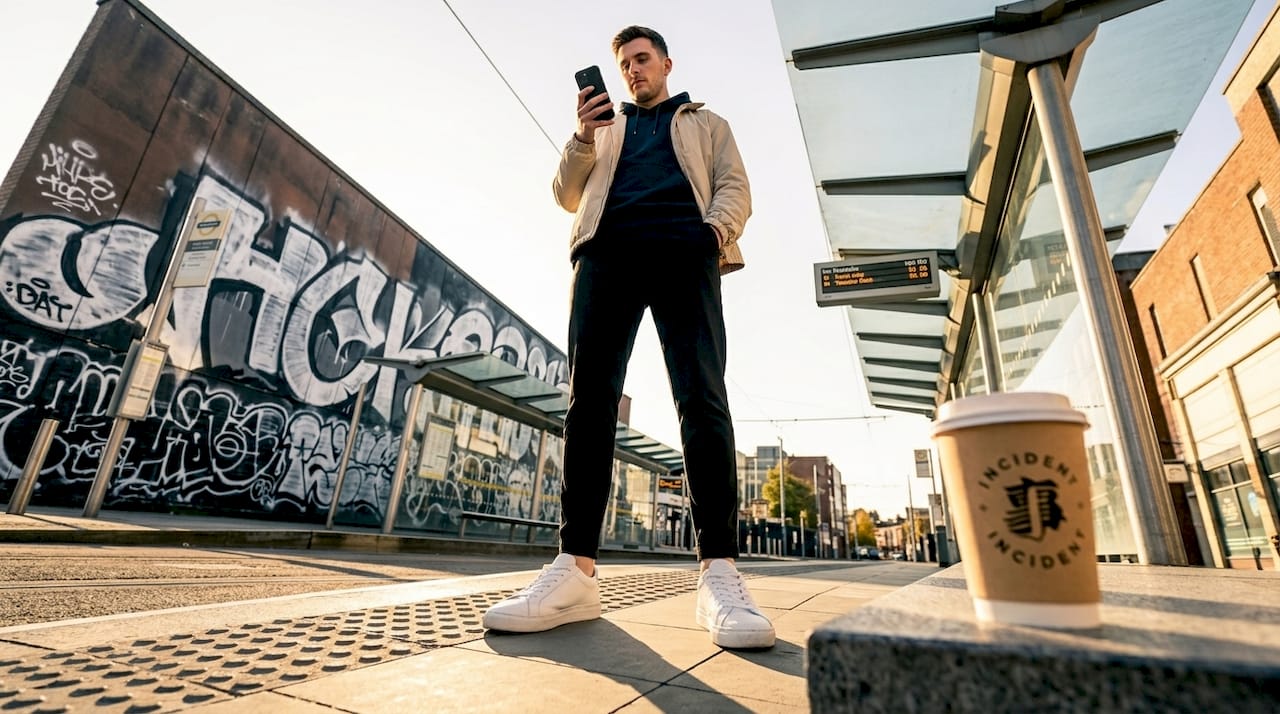
What does “fitted” actually mean in streetwear? It does not mean skin-tight. A properly fitted garment skims your body naturally, without pulling across the chest or bunching at the waist. The most reliable checkpoint is the shoulder seam alignment. It should sit exactly at the edge of your shoulder, not drooping down your arm or riding up toward your neck. Get that right and everything else looks sharper immediately.
The don’ts here are equally clear. Buying a piece a size too large because it is “streetwear” does not make it intentional. Shapeless is not the same as relaxed. And buying a size too small to look sharp creates the opposite problem: restriction, visible pulling, and a stiffness that reads as uncomfortable rather than polished.
- Do check the shoulder seam before anything else when trying on a new piece
- Do consider having a tailor take in or hem pieces. Even an inexpensive alteration transforms a good garment into a great one
- Don’t assume a larger size automatically reads as oversized streetwear. There is a clear difference between intentional volume and clothes that simply do not fit
- Don’t wear fitted items that restrict your movement. Comfort and sharp silhouette are not opposites
Pro Tip: If tailoring feels out of reach, start with just one alteration: hemming your trousers to the correct length. It is the single fastest way to make any casual outfit look deliberate and composed.
2. Apply the Rule of One for oversized styling
The Rule of One is the principle that makes oversized streetwear look intentional rather than accidental. It is straightforward: if your top is oversized, your bottom should be fitted. If your trousers are wide-leg or relaxed, your top should sit closer to the body. One oversized item at a time.
The reason this works is visual balance. When both your top and bottom are oversized, your silhouette disappears entirely. You lose shape, proportion, and presence. The look stops reading as streetwear and starts reading as someone who grabbed whatever was on the floor.
Learning how to style oversized streetwear for urban environments is genuinely one of the most useful skills in your styling toolkit. An oversized Japanese hoodie paired with slim-cut trousers and clean white sneakers is a complete, considered outfit. The same hoodie over wide-leg cargo trousers with a loose tee underneath is a mess of volume that flatters nobody.
The don’t here is simple but important. Avoid building an entire outfit around the idea that “more volume equals more streetwear credibility.” Volume is a tool. Use it in one place per look and let the rest of the outfit anchor it.
3. Master colour coordination: 3 colours, one direction
Colour is where a lot of confident dressers lose the plot. The instinct to combine bold pieces you love individually does not always translate into a cohesive outfit. The rule that saves you every time is this: limit your palette to three colours per outfit, and use a 3:1 ratio of neutrals to non-neutrals.
In practice, this means building your outfit around neutrals first. Black, white, grey, navy, cream, and olive serve as anchors. They carry the structure of the look. Your one non-neutral, whether that is a rich burgundy, a washed terracotta, or a graphic detail, becomes the accent. It earns attention precisely because everything around it is calm.
The don’t to avoid is stacking bold colours without a neutral buffer. Two competing bright tones worn together fight for attention and neither wins. Similarly, mixing clashing patterns without a unifying base colour is a common mistake in otherwise strong wardrobes.
- Do use a neutral base (black, white, grey, navy) as the foundation of every outfit
- Do allow one accent colour or pattern per look to create genuine visual interest
- Don’t wear more than three distinct colours at once unless you have specific knowledge of colour theory and are working with analogous or tonal palettes
- Don’t mix two high-saturation, contrasting colours without a neutral piece to separate them
Pro Tip: Japanese streetwear palettes offer a masterclass in this principle. Collections built around black, off-white, and charcoal with subtle Kanji typography accents demonstrate how restraint creates stronger visual impact than variety.
4. Limit branding: less logo, more intention
This is one of the most consistently misunderstood don’ts of urban fashion. Streetwear was built on brands and logos. But wearing visible branding on more than one piece per outfit tips you from stylish into saturated.
One branded item anchors the outfit and signals your aesthetic allegiance. Two visible logos create competition. Three or more removes all visual hierarchy and makes the outfit feel assembled from separate impulses rather than a single considered vision. The best street style looks you admire on others almost always feature one statement piece, with the rest of the outfit supporting it quietly.
A useful framework here is the 7-Point Rule, which scores outfits by their visual impact. A basic tee scores around one point, a structured bag scores two, a bold graphic hoodie scores three. The goal is an outfit that totals around seven points. Go significantly over and the look becomes overwhelming. Stay well under and it reads as unfinished.
Here is how to apply this practically:
- Identify the single strongest piece in your outfit. That is your focal point.
- Build every other item around it as support, not competition.
- Accessories should add points gradually. One clean watch, one chain, one bag.
- If you want to add a fourth accessory, remove one first.
- Review the outfit in a full-length mirror and ask: where does my eye go first? If the answer is unclear, the look has too many competing elements.
Pro Tip: Minimalist Japanese streetwear handles branding through subtle detail rather than large logos. A small embroidered motif or tonal graphic carries the identity of a brand without dominating the visual field. This is the approach worth studying.
5. Break the outdated rules with confidence
Many of the “rules” you were taught about dressing are now treated by modern stylists as optional frameworks, not mandatory laws. The point is not to ignore every convention but to understand which ones are worth keeping and which ones were always arbitrary.
No white after Labour Day. Shoes and bags must match. You cannot mix black and navy. Brown and black never belong together. These are the kinds of rules that made sense in a more formal, conformity-oriented era of fashion. In 2026 streetwear, they are irrelevant.
What matters instead is intentionality. Breaking a rule looks stylish when it is clearly deliberate. Wearing white in winter works when the rest of the outfit is built with care and the white piece is high quality. Mixing black and navy works when the tones are clearly different and the silhouette is sharp. The difference between a rule-break that looks intentional and one that looks like a mistake is confidence and execution.
- Do wear white year-round if the fabric weight and outfit composition make sense
- Do mix black and navy, brown and black, or unexpected textures when you understand why it works
- Do prioritise comfort and personal expression over convention, especially in casual streetwear contexts
- Don’t break a rule simply because someone told you rules do not matter. Break it because you understand the rule and have a reason to step outside it
- Don’t mistake sloppiness for rule-breaking. Sloppiness is accidental. Rule-breaking is a choice.
The cool-meets-comfort aesthetic that dominates 2026 street style is built on exactly this confidence. The strongest looks are doing the least in the best way. High-quality basics, structured outerwear, clean footwear. That is the blueprint.
6. Dos and don’ts at a glance: the reference table
Use this as a quick reference across all the principles covered above. Return to it when you are putting a look together and want a fast check.
| Area | Do | Don’t |
|---|---|---|
| Fit | Check shoulder seam alignment; tailor where needed | Wear pieces that pull, bunch, or restrict movement |
| Proportion | Pair oversized items with fitted counterparts | Wear head-to-toe volume without a silhouette anchor |
| Colour | Build around neutrals with one accent | Stack more than three colours or clash bold tones |
| Branding | Feature one branded item per outfit | Layer multiple visible logos across the same look |
| Accessories | Score outfit using the 7-Point Rule | Over-accessorise until no single piece has focus |
| Rules | Break conventions deliberately and with understanding | Mistake careless dressing for intentional rule-breaking |
| Mindset | Prioritise confidence, fit, and personal expression | Chase trends without considering how they work on your body |
My honest take on street style dos and don’ts
I have spent years observing how people dress in urban environments and studying what separates the looks that stop you in the street from the ones that just feel like an attempt. And I will tell you something that does not get said enough: most people are overcomplicating it.
The dos and don’ts of street style that I keep coming back to are not the complicated ones. They are the foundational ones. Fit. Colour clarity. Letting one piece lead. Dressing well is a form of self-respect, not performance, and the people who genuinely look good seem to understand that.
What I find particularly compelling about Japanese streetwear aesthetics is how they make restraint feel like confidence. A well-cut black tee with a subtle Kanji graphic, worn with clean trousers and quality footwear, says more than an outfit assembled from five different trend cycles. The Japanese minimalist approach to street fashion is not about having less. It is about choosing more carefully.
My honest advice is this: stop thinking about rules as restrictions. Think about them as tools for self-expression. The Rule of One, the 3-colour limit, the single-branded-piece principle. These are not cages. They are frameworks that free you from decision fatigue and let your actual style come through clearly.
— Incident
Build your street style foundation with Incident

Understanding the principles is one thing. Having the right pieces to practise them is another. At Incident, we build garments that make the dos of street style natural and the don’ts easy to avoid. Our collections are shaped by Japanese craftsmanship and Japandi design philosophy, which means clean lines, premium fabrics, and details that carry meaning without shouting for attention.
The Incident Pima T-shirt Collection is where most looks begin. Ultra-soft Pima cotton, a precise silhouette, and subtle graphic work that functions as the anchor piece in any outfit. These are the kinds of garments that make colour coordination and proportion effortless, because the foundation is already correct.
If you are ready to build a streetwear wardrobe grounded in craft and intention, explore Incident’s full collection and see how Japanese-inspired design translates directly into everyday urban style. Quality that you can feel from the first wear, pieces that earn their place in any outfit you build.
FAQ
What is the most important street style rule to follow?
Fit is the single most important principle. 90% of common style problems are resolved by wearing clothes that sit correctly on your body, regardless of the brand or price point.
How many colours should a street style outfit have?
Stick to a maximum of three colours per outfit. Experts recommend a 3:1 ratio of neutrals to non-neutrals to keep looks cohesive and visually balanced.
Can you wear oversized clothing head to toe?
Avoid it. The Rule of One states that pairing one oversized piece with a fitted counterpart maintains silhouette clarity. Head-to-toe volume erases shape and looks unintentional.
Are traditional fashion rules still relevant in 2026?
Most traditional rules are now treated as optional. Modern stylists favour personal expression and confidence over rigid conventions. The key is breaking rules deliberately rather than carelessly.
How do you avoid over-accessorising in streetwear?
Use the 7-Point Rule to score your outfit’s visual impact. Aim for around seven points in total, with each accessory earning its place rather than being added out of habit.

Share:
How to build a Japandi capsule wardrobe
The role of fashion in youth culture today