


Capturing streetwear photography that truly stands out on social media requires more than just pointing your camera at an outfit. You need to understand how angles, lighting, and motion work together to showcase fashion details while projecting authentic energy. This guide delivers expert-backed techniques to help you shoot, pose, and edit streetwear images that elevate your personal style and boost engagement across Instagram, TikTok, and beyond. Whether you’re documenting your own fits or building a photography portfolio, these strategies will transform your approach to urban fashion imagery.
Table of Contents
- Gathering Your Gear And Scouting Locations
- Mastering Streetwear Poses And Angles
- Editing Streetwear Photos For Authenticity And Engagement
- Building Your Social Media Streetwear Presence With Photography
- Discover Authentic Japanese Streetwear Styles
- Frequently Asked Questions
Key takeaways
| Point | Details |
|---|---|
| Low angles elongate silhouettes | Shooting from below highlights sneakers and creates dynamic proportions that emphasize streetwear details |
| Burst mode captures authentic motion | Continuous shooting freezes natural walking movements and adds energy without looking staged |
| Prime lenses deliver sharp isolation | 35-50mm focal lengths with f/2.8-f/5.6 apertures separate subjects from urban backgrounds |
| Diffused lighting prevents harsh shadows | Overcast skies or shaded areas provide even illumination that flatters clothing textures |
| Minimal editing preserves authenticity | Subtle contrast adjustments and grain textures maintain the raw streetwear aesthetic |
Gathering your gear and scouting locations
Your lens choice fundamentally shapes how streetwear appears in frame. Prime lenses between 35-50mm deliver the sharpest results for fashion photography, offering versatile framing without distortion. A 35mm focal length captures environmental context, perfect for showing how an outfit interacts with urban architecture. The 50mm option tightens focus on garment details and facial expressions. Both work exceptionally well for the clean, isolated aesthetic that defines contemporary streetwear imagery.
Aperture settings between f/2.8 and f/5.6 create that coveted subject isolation while keeping enough depth to showcase outfit layers. Wider apertures like f/2.8 blur backgrounds dramatically, making your subject pop against busy city streets. Narrower settings around f/5.6 retain more environmental detail, useful when location context matters for your narrative. This range also performs well in lower light conditions common to urban environments, letting you shoot without flash that flattens clothing textures.
Lighting transforms ordinary streetwear shots into professional-grade content. Shade and overcast conditions provide even diffusion that prevents harsh shadows from obscuring garment details. Direct sunlight creates unflattering contrast that washes out colors and hides the subtle textures that make streetwear interesting. Golden hour offers warm tones that can enhance certain looks, but test this timing against your brand’s mood. Some Japanese-inspired aesthetics favor cooler, neutral light that emphasizes minimalist design philosophy.
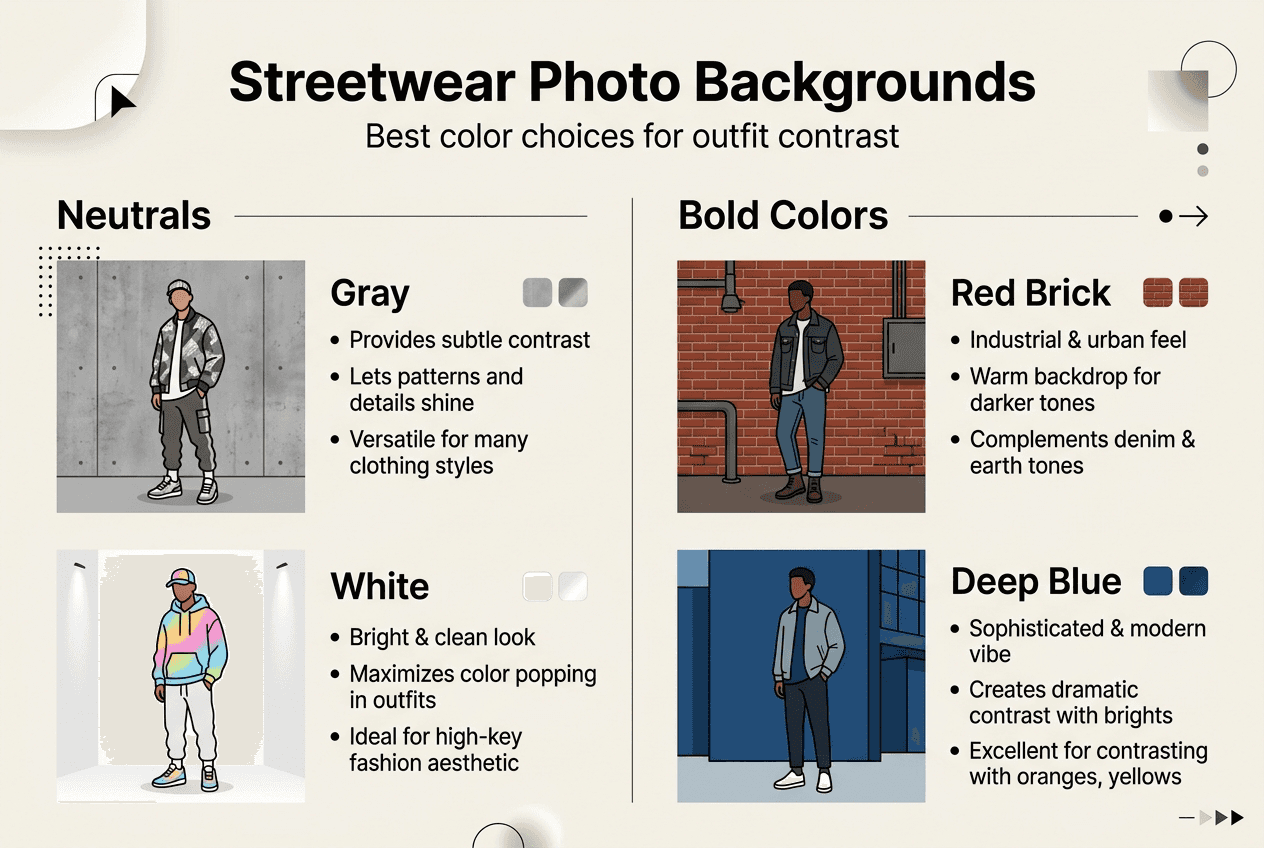
Location scouting should reflect the cultural DNA of streetwear itself. Urban environments with clean concrete, metal textures, and geometric architecture complement the structured silhouettes common in classic streetwear style. Look for walls with interesting textures but minimal visual clutter. Graffiti can work if it doesn’t compete with your outfit for attention. Japanese streetwear particularly benefits from locations with modern minimalism: subway stations, contemporary buildings, or industrial areas with clean lines.
Consider how background colors interact with your clothing palette. Neutral backgrounds in gray, white, or black let bold streetwear pieces command attention. If your outfit uses muted tones, you can introduce environmental color through murals or architectural elements. The key is maintaining visual hierarchy where the fashion remains the primary focus.
Pro Tip: Scout locations at the same time of day you plan to shoot. Lighting changes dramatically throughout the day, and what looks perfect at noon might cast unwanted shadows during your actual session. Take test shots on your phone to preview how light hits your chosen spots.
Essential gear checklist
- Camera body with manual controls and burst mode capability
- 35mm or 50mm prime lens for sharp subject isolation
- Reflector for filling shadows in harsh lighting conditions
- Spare batteries and memory cards for extended shooting sessions
- Comfortable shoes for walking between multiple location spots
Mastering streetwear poses and angles
Low camera angles revolutionize how streetwear photographs by elongating the subject’s legs and emphasizing footwear. Position your camera at knee height or lower, angling slightly upward to create dynamic proportions that mirror editorial fashion photography. This perspective naturally highlights sneakers, a cornerstone of streetwear culture, while making the overall silhouette appear more commanding. The technique works especially well for full-body shots where you want to showcase how pants break over shoes or how layered tops create vertical lines.
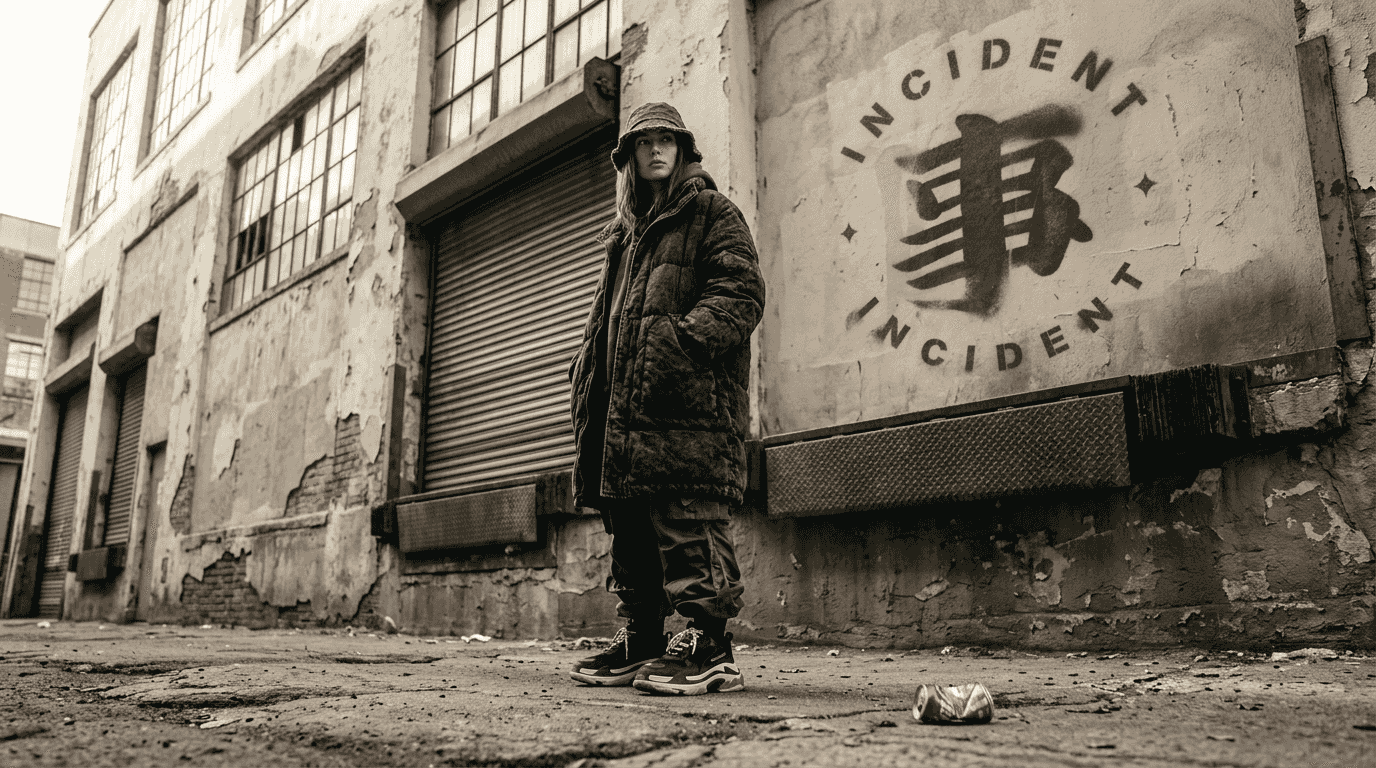
Motion injects life into streetwear photography that static poses simply cannot match. Burst mode captures walking shots with authentic energy, freezing mid-stride moments that feel spontaneous rather than staged. Set your shutter speed to at least 1/250s to eliminate motion blur while your subject walks naturally toward or past the camera. Encourage exaggerated steps and relaxed arm movements. The resulting images convey confidence and personality, two qualities that resonate deeply with streetwear audiences seeking genuine style inspiration.
Hand placement dramatically affects the overall vibe of streetwear photos. Pockets create a casual, approachable energy perfect for everyday style documentation. Hands adjusting a collar or hood add purposeful action that draws attention to garment details. Crossed arms project confidence but can read as defensive if body language feels too closed off. Experiment with natural gestures like running fingers through hair or holding a bag strap. These small movements prevent the stiffness that plagues amateur fashion photography.
The three-shot rule provides comprehensive outfit documentation that social media audiences crave. Start with a full-body frame that establishes the complete look from head to toe. Follow with a half-body shot from waist up, emphasizing how tops layer and accessories complement the outfit. Finish with detail closeups of shoes, jewelry, or fabric textures that showcase quality and craftsmanship. This sequence tells a complete style story while giving you versatile content for different platform formats.
Pro Tip: Direct your subject to look away from the camera for 80% of shots. Eye contact creates connection but can feel intense in streetwear photography. Side profiles and over-the-shoulder glances feel more editorial and let viewers focus on the clothing rather than facial expressions.
Dynamic posing sequence
- Begin with subject standing naturally, weight on one leg for relaxed posture
- Have them walk toward camera while you shoot in burst mode
- Capture a mid-stride freeze with one foot forward, arms in natural swing
- Direct a pause with hands in pockets, shoulders slightly turned from camera
- Finish with detail shots of footwear, accessories, and fabric textures
These poses work universally across different unique Japanese streetwear styles, from minimalist Japandi aesthetics to bold Harajuku influences. The key is maintaining authentic energy that reflects the wearer’s genuine personality rather than forcing unnatural positions. When subjects feel comfortable, that confidence translates directly into compelling imagery that performs well across social platforms. Practice these fundamentals until they become second nature, then adapt based on individual style and environmental context.
Editing streetwear photos for authenticity and engagement
Post-processing streetwear photography demands restraint. The three-shot editing approach ensures you present each look comprehensively: full body establishes the outfit, half body highlights styling details, and closeups showcase quality and texture. This method gives your audience multiple perspectives while maintaining visual consistency across your feed. Edit all three shots with identical color grading and contrast adjustments so they feel cohesive when posted as a carousel or grid sequence.
Contrast and saturation adjustments should enhance rather than transform your images. Boost contrast by 10-15% to make clothing details pop against urban backgrounds. Increase saturation subtly, around 5-10%, to restore vibrancy that cameras sometimes flatten. Push these sliders too far and your photos lose the authentic streetwear aesthetic that audiences value. The goal is making colors true to life, not creating an oversaturated fantasy that misrepresents how the outfit actually looks.
Grain texture adds a film-inspired quality that elevates digital streetwear photography. Apply subtle grain in your editing app to introduce organic texture that softens the clinical sharpness of modern cameras. This technique particularly complements Japanese streetwear aesthetics, which often draw inspiration from vintage photography and analog media. Keep grain intensity low, just enough to be perceptible when viewing at full size. Too much grain obscures the garment details you worked hard to capture.
Editing apps offer different strengths for streetwear photography workflows. VSCO provides film-inspired presets that nail the authentic, slightly faded aesthetic popular in streetwear content. Lightroom delivers more precise control over individual color channels, perfect for fine-tuning specific garment hues. Both apps handle RAW files well, preserving maximum image quality. VSCO’s mobile interface makes quick edits on the go, while Lightroom’s desktop version excels for batch processing multiple shots from a single session.
Pro Tip: Create a custom preset that matches your brand’s visual identity, then apply it consistently across all streetwear photos. This consistency builds recognition and makes your content instantly identifiable in crowded social feeds.
Editing comparison: VSCO vs Lightroom
| Feature | VSCO | Lightroom |
|---|---|---|
| Film presets | Extensive analog-inspired filters | Limited built-in, more via marketplace |
| Color precision | Basic HSL adjustments | Advanced color grading tools |
| Mobile workflow | Optimized touch interface | Full desktop features on mobile |
| Batch editing | Limited multi-image processing | Robust batch sync capabilities |
| Price | Free with premium subscription | Subscription includes cloud storage |
Avoid heavy retouching that strips away the raw energy streetwear photography demands. Skin smoothing and blemish removal can make subjects look artificial, contradicting the authentic vibe that defines street culture. Minor cleanup is acceptable, but preserve natural skin texture and environmental imperfections. These elements contribute to the documentary quality that makes streetwear content feel genuine rather than overly produced. Your editing should enhance what you captured, not create an entirely different reality.
The minimal approach to editing aligns perfectly with contemporary streetwear values. Clean, understated adjustments let the clothing and styling speak for themselves. This philosophy mirrors the design principles behind luxe streetwear, where quality materials and thoughtful construction take precedence over flashy embellishments. Your editing workflow should follow the same logic, using technical skill to support rather than overshadow the subject matter.
Building your social media streetwear presence with photography
Streetwearphotography drives measurably higher engagement than standard social content. Instagram accounts focused on photography content average 1.99% engagement, significantly outperforming general lifestyle posts. This advantage stems from the visual storytelling that quality images provide, giving audiences concrete style inspiration they can adapt to their own wardrobes. When you consistently deliver well-composed streetwear photography, you position yourself as a credible voice in fashion conversations rather than just another person posting outfit photos.
Carousels maximize the value of each shooting session by presenting multiple angles of a single look. Instagram’s algorithm favors carousel posts, showing them to more users because viewers often swipe through multiple images, signaling strong interest. Structure your carousels using the three-shot rule: lead with a striking full-body image, follow with styling details, and close with a contextual shot that shows the outfit in its environment. This sequence keeps viewers engaged while providing comprehensive outfit documentation.
Reels and short-form video content amplify your streetwear photography’s reach exponentially. Transform static images into dynamic transitions showing outfit changes or styling variations. Simple effects like quick cuts between poses or slow zoom-ins on details perform well without requiring advanced video editing skills. Reels receive preferential distribution in Instagram’s algorithm, often reaching 10-20 times more accounts than standard photo posts. Even photographers primarily focused on stills should incorporate occasional video content to maintain visibility.
Consistent posting schedules build audience expectations and feed recognition. Aim for 3-4 high-quality streetwear posts per week rather than daily content that sacrifices quality for quantity. This frequency keeps you visible in followers’ feeds without overwhelming them. Batch your shooting sessions to capture multiple outfits in one day, then space out posting throughout the week. This approach maintains consistent output while making efficient use of your time and creative energy.
Content calendar structure for streetwear photographers:
- Monday: Full outfit carousel showcasing weekend style
- Wednesday: Detail shots highlighting specific garment or accessory
- Friday: Reel showing styling process or outfit transition
- Sunday: Behind-the-scenes content from shooting sessions
Hashtag strategy connects your streetwear photography with relevant audiences actively searching for style inspiration. Mix broad tags like #streetwear and #streetstyle with niche descriptors like #japanesestreetwear or #minimalstreetwear. Include location-based tags to reach local fashion communities. Limit yourself to 10-15 highly relevant hashtags rather than maxing out Instagram’s 30-tag limit with generic terms. Quality targeting beats quantity every time.
Engagement tactics transform passive viewers into active community members. Respond thoughtfully to comments on your posts, asking questions that encourage continued conversation. Feature follower content in your stories when they tag you in their own streetwear photos. This reciprocity builds loyalty and encourages more people to engage with your content. The streetwear community values authentic interaction over one-way broadcasting, so invest time in genuine relationship building.
Your photography style becomes your signature as you develop a recognizable aesthetic. Whether you favor moody urban landscapes or bright minimalist backgrounds, consistency helps audiences identify your work instantly. This visual branding matters enormously for building a following around streetwear culture and hype. People follow photographers whose style resonates with their own aesthetic preferences, so lean into what makes your perspective unique rather than imitating trending accounts.
Discover authentic Japanese streetwear styles
Elevating your streetwear photography starts with wearing pieces that photograph beautifully. INCIDENT specializes in Japanese-inspired streetwear designed with clean lines and premium fabrics that capture light exceptionally well. Our minimalist aesthetic complements the photography techniques covered in this guide, creating cohesive visual narratives that resonate across social platforms.
Our clothing collection features versatile pieces that work equally well as hero garments or layering elements. From structured outerwear to refined basics, each item is crafted to photograph with the authentic texture and drape that separates amateur content from professional imagery. The PIMA cotton T-shirts particularly excel in close-up detail shots, showcasing fabric quality that translates beautifully through the lens. Building your wardrobe with thoughtfully designed pieces gives you stronger raw material for creating compelling streetwear content.
Frequently asked questions
What camera settings work best for streetwear photography?
Use a 35-50mm prime lens with your aperture set between f/2.8 and f/5.6 for sharp subject isolation against urban backgrounds. Set shutter speed to at least 1/250s when capturing motion or walking shots to prevent blur. ISO should stay as low as lighting allows, typically 100-400 in daylight, increasing to 800-1600 in shade or overcast conditions. These settings balance technical quality with the dynamic energy streetwear photography demands.
How can I capture authentic streetwear style without looking staged?
When photographing others, approach with sincere compliments about their style and explain your creative vision quickly. Keep the interaction brief and capture natural poses within the first few minutes before self-consciousness sets in. For self-portraits, use a tripod with timer or remote trigger, then move naturally rather than holding rigid poses. Authentic energy comes from comfort, so prioritize genuine moments over perfectly composed stiffness.
What lighting conditions are best for streetwear photos?
Shade and overcast skies provide even diffusion that prevents harsh shadows from obscuring garment details and facial features. These conditions offer consistent lighting that flatters skin tones while accurately representing clothing colors. Golden hour delivers warm tones that can enhance certain aesthetics, but test this timing against your brand’s visual identity. Avoid direct midday sun, which creates unflattering contrast and washes out the subtle textures that make streetwear interesting.
How do I edit streetwear photos for Instagram?
Start by applying the three-shot editing rule to ensure visual consistency across full body, half body, and detail images. Boost contrast by 10-15% and increase saturation subtly by 5-10% to enhance colors without oversaturating. Add minimal grain texture for a film-inspired aesthetic that softens digital sharpness. Avoid heavy retouching that strips away authentic texture. Create a custom preset matching your visual brand and apply it consistently so your content becomes instantly recognizable in crowded feeds.
Recommended
- Master streetwear trends in 2026: Your complete guide – INCIDENT
- Understanding streetwear hype: Japanese style’s rise in 2026 – INCIDENT
- What is classic streetwear? A 2026 style guide – INCIDENT
- Curate unique Japanese streetwear styles in 2026 – INCIDENT
- Sneaker trends explained: style, comfort and tech in 2026 – YDA UK
Share:
Kimono-inspired clothing: modern streetwear guide 2026
What is fashion-forward? Elevate your style in 2026