

TL;DR:
- Ukiyo-e streetwear translates Edo-period woodblock print motifs into modern garments, blending cultural symbolism with bold graphics. Its popularity in 2026 stems from its authenticity, storytelling, and seamless integration into contemporary unisex fashion. Proper styling emphasizes restraint, purpose, and understanding of the motifs’ historical meanings, enhancing authenticity and impact.
Ukiyo-e traditional art streetwear is defined as contemporary apparel that adapts the bold linework, symbolic motifs, and narrative depth of Japanese Edo-period woodblock prints into modern streetwear silhouettes. The term “Ukiyo-e” translates literally as “pictures of the floating world,” a genre that flourished between the 17th and 19th centuries and documented urban life, kabuki theatre, sumo, and the natural world with extraordinary graphic precision. What makes this genre so compelling for streetwear is its inherent visual power: high-contrast compositions, expressive line rhythm, and motifs that carry centuries of cultural meaning. Brands like Wamonoya Kaya and platforms like UkiyoeStock have brought this tradition into 2026 with collections that feel both ancient and urgently current.
1. How Ukiyo-e line art translates into streetwear graphic design
Ukiyo-e line art converts with remarkable effectiveness into bold, white-line graphics for black T-shirts, preserving the expressive detail that defines the original woodblock medium. The secret lies in preparation: pre-cleaned, high-resolution line art removes the noise of aged prints and gives designers a crisp foundation to work from. This matters enormously on fabric, where low-resolution artwork bleeds and loses the fine linework that gives Ukiyo-e its character.
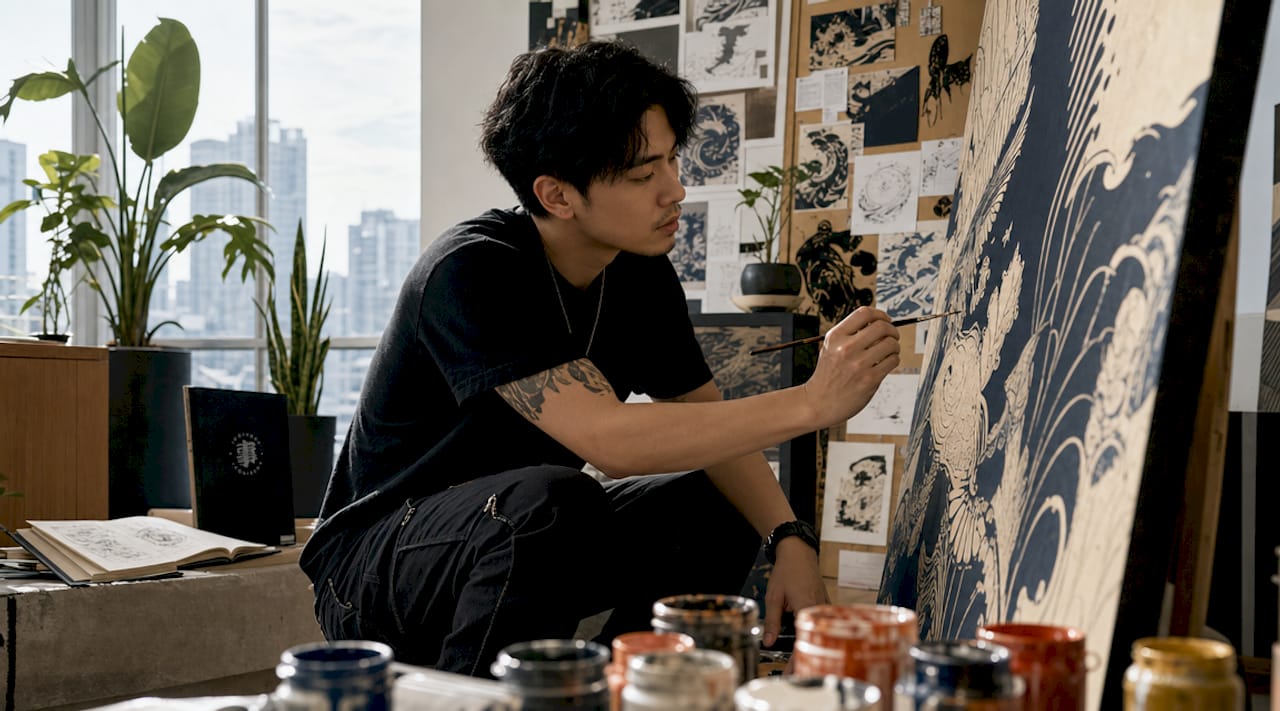
The most successful Ukiyo-e art apparel treats linework rhythm the way a typographer treats letterforms. Simplifying line density enhances graphic impact, particularly for oversized back prints where the viewer reads the image from a distance of several metres. A sumo wrestler rendered with too many competing lines becomes visual noise on a moving body. Reduce the density, and the composition breathes.
Popular motifs that translate particularly well to back prints include:
- Sumo wrestlers in dynamic poses, where the weight and tension of the figures read powerfully at scale
- Lions wrestling (shishi), which carry connotations of strength and protection
- Fans with floral patterns, offering a more refined, layered aesthetic suited to lighter colourways
- Wave compositions in the style of Katsushika Hokusai, whose The Great Wave off Kanagawa remains one of the most recognisable images in art history
- Kabuki actor portraits, where exaggerated facial expressions translate into striking graphic statements
Wearability is the final design constraint. A graphic that works as a framed print does not automatically work on a moving human body. The silhouette of the garment, the placement of seams, and the way fabric drapes all affect how the image reads in motion.
Pro Tip: Print a scaled version of your Ukiyo-e graphic on paper and pin it to a T-shirt. Step back three metres and assess whether the key lines still read clearly. If the composition collapses at distance, simplify before committing to production.
2. Top Ukiyo-e inspired streetwear brands and collaborations in 2026
The most compelling Ukiyo-e fashion collections of 2026 share one quality: they treat the source material as a living tradition rather than a costume reference. These are not novelty prints. They are considered translations of a visual language that has been communicating identity and status for over three centuries.
The Wamonoya Kaya × Suzuki Hyottoko collaboration, launched in February 2026, is the most discussed Ukiyo-e streetwear release of the year. The 12-piece collection projects Ukiyo-e’s satirical spirit onto aloha shirts, reversible jackets, and everyday separates. Suzuki Hyottoko’s illustrative work carries the playful irreverence of Edo-period popular culture, where artists used humour and exaggeration to comment on social life. That spirit translates directly into streetwear, a genre that has always used graphic language to make cultural statements.
Key brands and collections worth knowing:
- Wamonoya Kaya × Suzuki Hyottoko (2026): Twelve unisex pieces blending traditional motifs with modern silhouettes. Reversible jackets are the standout item, offering two distinct visual identities in one garment.
- A BATHING APE (BAPE): The Tokyo-founded brand has released Ukiyo-e capsule collections that layer woodblock-inspired graphics over their signature oversized cuts. BAPE’s approach is unapologetically bold, pairing Ukiyo-e imagery with their streetwear heritage.
- UNIQLO’s UT programme: UNIQLO has collaborated with Japanese museums and artists to produce Ukiyo-e print T-shirts at accessible price points. Their Hokusai and Hiroshige collections introduced the aesthetic to a genuinely global audience.
- UkiyoeStock: A design resource and apparel platform that provides pre-cleaned, high-resolution Ukiyo-e line art for designers and produces its own streetwear pieces. Their work is particularly valued by independent designers building Japanese graphic tees with authentic source material.
What unites these brands is a commitment to unisex, wearable design that emphasises cultural continuity rather than costume. The best pieces feel like something you would wear on a Tuesday, not only at a themed event.
3. Symbolism and storytelling in Ukiyo-e motifs
Ukiyo-e motifs are a form of storytelling and social signalling, not mere decoration. Understanding what a motif means transforms the way you wear it and the way others read it. This is the dimension that separates Ukiyo-e art apparel from generic floral or abstract streetwear prints.
Kimono patterns conveyed social status and identity in the Edo period, functioning as visible signals in a highly stratified society. Peaches symbolised immortality. Pine communicated longevity and resilience. Courtesan prints served as advertisements for the entertainment houses they depicted, making them some of the most commercially sophisticated images of their era. These meanings did not disappear when the prints moved from paper to fabric. They travelled with the motif.
Ukiyo-e motifs vs generic streetwear prints
| Motif type | Cultural depth | Storytelling potential | Wearability |
|---|---|---|---|
| Ukiyo-e woodblock motifs | High: centuries of symbolic meaning | Strong narrative identity | Excellent with considered styling |
| Generic floral prints | Low: decorative only | Minimal | High but interchangeable |
| Abstract geometric prints | None: purely visual | None | High but anonymous |
| Contemporary graphic art | Variable | Depends on artist intent | High |
The table above makes the case plainly. Generic floral prints are pleasant. Ukiyo-e motifs carry weight. When you wear a pine branch rendered in the style of Utagawa Hiroshige, you are wearing a symbol of endurance that has meant the same thing for four hundred years. That is a different kind of garment.
Authenticity in Ukiyo-e streetwear arises from selecting motifs with specific narrative roles: heroic, seasonal, or status-bearing. A coherent visual language emerges when the motifs on a garment relate to each other and to the wearer’s own sense of identity. Random assemblage of Ukiyo-e imagery produces shallow results, regardless of print quality.
Pro Tip: Before purchasing a piece, research the central motif. A five-minute search on the Worcester Art Museum’s kimono pattern resources or the MIT Press catalogue on Ukiyo-e fashion will tell you whether the image you are drawn to carries a meaning that resonates with you personally.
4. The historical role of Ukiyo-e in Edo-period fashion culture
Ukiyo-e prints played a critical role in Edo-period fashion, documenting clothing, accessories, and hairstyles as visible social signals in a society where sumptuary laws restricted what different classes could wear. The prints functioned as a kind of fashion media, allowing urban audiences to consume style vicariously and aspire to looks they might not be permitted to wear themselves. Over 170 Ukiyo-e works are catalogued in the MIT Press study Fashion and the Floating World, which traces this relationship between print culture and dress across the Edo period.
This history matters for streetwear enthusiasts because it reveals that Ukiyo-e was never purely fine art. It was popular culture. It was the Instagram of its era: widely circulated, commercially motivated, and deeply engaged with how people presented themselves in public. Modern streetwear plays an identical social role, communicating identity through print-to-wearable design. The two traditions are not merely aesthetically compatible. They are structurally the same thing, separated by three centuries.
Understanding this parallel gives Ukiyo-e streetwear a conceptual depth that most fashion trends lack. You are not simply wearing a pretty print. You are participating in a continuous conversation about how clothing communicates who you are. That conversation started in Edo-period Japan and continues on the streets of Tokyo, Zurich, and London today.
5. Styling Ukiyo-e traditional art streetwear in urban fashion
The most common mistake with Ukiyo-e art apparel is over-styling. A large back print is a complete statement. It does not need to compete with a busy jacket, a loud accessory, or a heavily branded cap. The garment is the focal point. Everything else should support it.
Practical styling principles for wearing Ukiyo-e motifs in fashion:
- Lead with the back print. Wear an oversized Ukiyo-e graphic tee with clean, straight-leg trousers in black or charcoal. Let the print carry the outfit. Minimalist streetwear basics from brands like Incident, which follow a Japandi-influenced design philosophy, pair naturally with bold Ukiyo-e graphics.
- Use reversible pieces strategically. The Wamonoya Kaya × Suzuki Hyottoko collection’s reversible jackets offer two distinct looks in one garment. Wear the Ukiyo-e side for evenings and cultural settings; reverse to the clean side for daytime or professional environments.
- Respect unisex sizing. Ukiyo-e streetwear collections frequently use unisex sizing, which mirrors the original prints’ broad circulation across gender lines in Edo-period culture. Oversized fits suit the graphic scale and align with contemporary streetwear proportions.
- Choose accessories with restraint. A single accessory that references Japanese craft traditions, such as a woven textile bag or a simple wooden bead bracelet, complements Ukiyo-e apparel without competing with it. Avoid accessories that carry their own loud graphic language.
- Honour the cultural context. Wearing Ukiyo-e motifs with knowledge of their meaning is the most respectful and stylistically coherent approach. Explore kimono-inspired clothing guides to understand how traditional Japanese garment culture informs contemporary styling decisions.
The unisex, wearable design philosophy of leading Ukiyo-e streetwear collections mirrors the original prints’ urban entertainment circulation, where visibility and style communication in street movement were the primary goals. Wear these pieces in motion, in public, and with intention.
6. What is Ukiyo-e streetwear and why it matters in 2026
What is Ukiyo-e streetwear, precisely? It is the deliberate translation of Edo-period woodblock print aesthetics into contemporary garment design, preserving the motif’s symbolic meaning while adapting its visual form to modern silhouettes and production methods. The distinction from general “Japanese-inspired” fashion is specificity. Ukiyo-e streetwear draws from a defined artistic tradition with documented iconography, not a generalised notion of Japanese aesthetics.
The appeal to young consumers in 2026 is straightforward. Streetwear has always rewarded depth of reference. A graphic that carries centuries of meaning communicates more than a logo or an abstract pattern. Ukiyo-e motifs offer exactly that depth, combined with a visual boldness that reads powerfully on oversized garments. The satirical spirit of Edo-period art also resonates with streetwear culture’s tradition of irreverence and social commentary.
For those new to the genre, the entry point is simpler than it appears. Start with a single motif you find visually compelling. Research its meaning. Find a piece from a brand that has treated the source material with care. Wear it with clean basics. The cultural connection will deepen naturally from there. Resources like the Incident guide to Japanese-inspired prints offer a clear foundation for understanding how these traditions translate into contemporary fashion.
Key takeaways
Ukiyo-e traditional art streetwear works because it combines centuries of symbolic motif meaning with the graphic boldness that defines modern streetwear, creating garments that communicate identity at every level.
| Point | Details |
|---|---|
| Design starts with line quality | Pre-cleaned, high-resolution Ukiyo-e art is the foundation for bold, wearable streetwear graphics. |
| Motifs carry specific meaning | Peaches, pine, and courtesan imagery each carry distinct cultural narratives that deepen the wearer’s style identity. |
| Leading brands set the standard | Wamonoya Kaya × Suzuki Hyottoko, BAPE, and UNIQLO demonstrate how Ukiyo-e translates into credible, wearable collections. |
| Styling requires restraint | Let the Ukiyo-e graphic lead; pair with minimalist basics and a single considered accessory. |
| Cultural knowledge enhances authenticity | Understanding a motif’s historical role transforms how you wear it and how others read it. |
Incident’s perspective on Ukiyo-e streetwear’s staying power
We have watched many “Japanese-inspired” trends arrive and fade within a single season. Ukiyo-e streetwear is different, and we say that with genuine conviction rather than commercial interest.
The reason is structural. Ukiyo-e was never a niche art form. It was Edo-period popular culture: commercially produced, widely distributed, and deeply engaged with how urban people presented themselves. That origin makes it a natural fit for streetwear, which operates on exactly the same principles. When you understand that Hokusai and Hiroshige were essentially producing graphic content for a mass audience, the connection to modern streetwear stops feeling like a clever aesthetic choice and starts feeling inevitable.
What concerns us, honestly, is the volume of pieces appearing in 2026 that use Ukiyo-e imagery without any apparent understanding of what the motifs mean. A wave print is not automatically a tribute to Hokusai. A cherry blossom on a hoodie is not automatically a statement about the Japanese concept of mono no aware, the bittersweet awareness of impermanence. These meanings require intention from the designer and curiosity from the wearer.
The collections we admire most, including the Wamonoya Kaya × Suzuki Hyottoko work and the more considered pieces from brands working with UkiyoeStock’s curated archive, treat the source material as a living tradition. They preserve the satire, the symbolism, and the social commentary that made Ukiyo-e extraordinary in the first place. That is the standard we hold ourselves to at Incident, and it is the standard we encourage you to apply when building your own collection.
Explore the Harajuku streetwear tradition to understand the broader Japanese fashion context that gives Ukiyo-e streetwear its cultural home.
— Incident
Discover Ukiyo-e inspired streetwear at Incident
At Incident, we design premium Japanese-inspired streetwear from our base in Switzerland, with a focus on clean lines, meaningful motifs, and fabrics that honour the craft behind every garment.
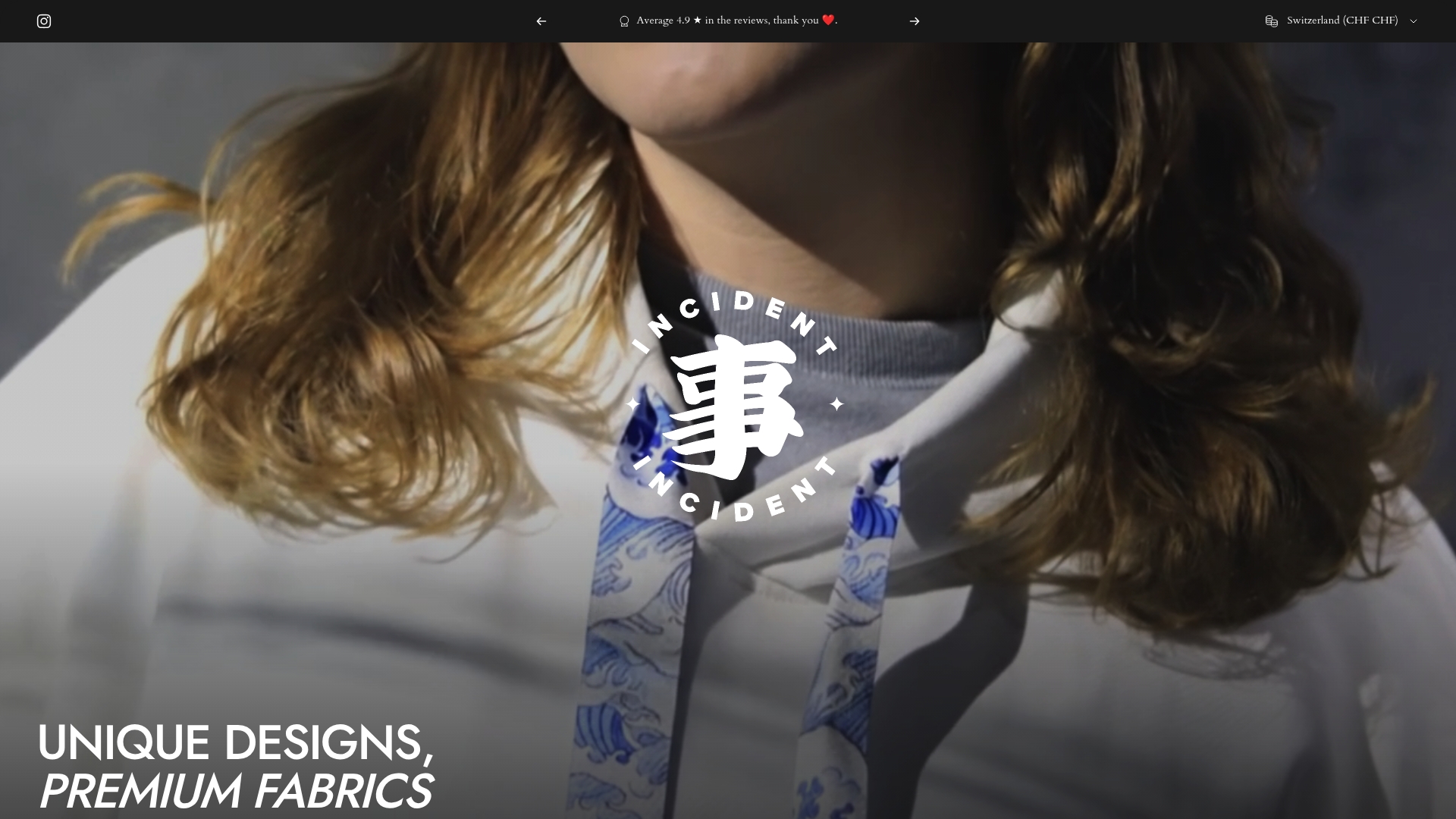
Our Pima T-shirt collection brings Ukiyo-e aesthetics to life on ultra-soft Pima cotton, combining traditional Japanese motifs with the minimalist silhouettes that define contemporary streetwear. Each piece is designed to wear with intention, carrying heritage you can feel in the weight of the fabric and the precision of the print. If you are building a wardrobe around Japanese aesthetic fashion, this is where to start. Browse the full collection at incident.store and find the piece that speaks to your style.
FAQ
What is Ukiyo-e streetwear?
Ukiyo-e streetwear is contemporary apparel that adapts the motifs, linework, and symbolism of Japanese Edo-period woodblock prints into modern streetwear garments. It differs from general Japanese-inspired fashion by drawing from a specific, documented artistic tradition with centuries of cultural meaning.
Which motifs work best for Ukiyo-e streetwear graphics?
Sumo wrestlers, shishi lions, wave compositions, kabuki actor portraits, and fan patterns with floral details all translate powerfully to oversized back prints. Bold, high-contrast motifs with clear linework read best on fabric, particularly in white on black colourways.
How do I style a Ukiyo-e graphic tee?
Pair an oversized Ukiyo-e graphic tee with clean, minimalist basics in black or charcoal. Let the print lead the outfit and avoid competing graphics or loud accessories. Straight-leg trousers and simple footwear complete the look without drawing attention away from the motif.
What do Ukiyo-e motifs symbolise?
Motifs carry specific meanings rooted in Edo-period culture: peaches represent immortality, pine represents longevity, and wave compositions evoke the power and impermanence of nature. Understanding these meanings adds a layer of intention to how you wear and select pieces.
Where can I find authentic Ukiyo-e inspired streetwear in Europe?
Incident offers premium Ukiyo-e inspired streetwear online and ships globally from Switzerland. UNIQLO’s UT programme and specialist Japanese streetwear platforms also stock collections with genuine Ukiyo-e references, making the aesthetic accessible across Europe and beyond.
Share:
Where to buy authentic techwear: your 2026 guide
Top 4 Streetwear Sneakers Alternatives 2026