

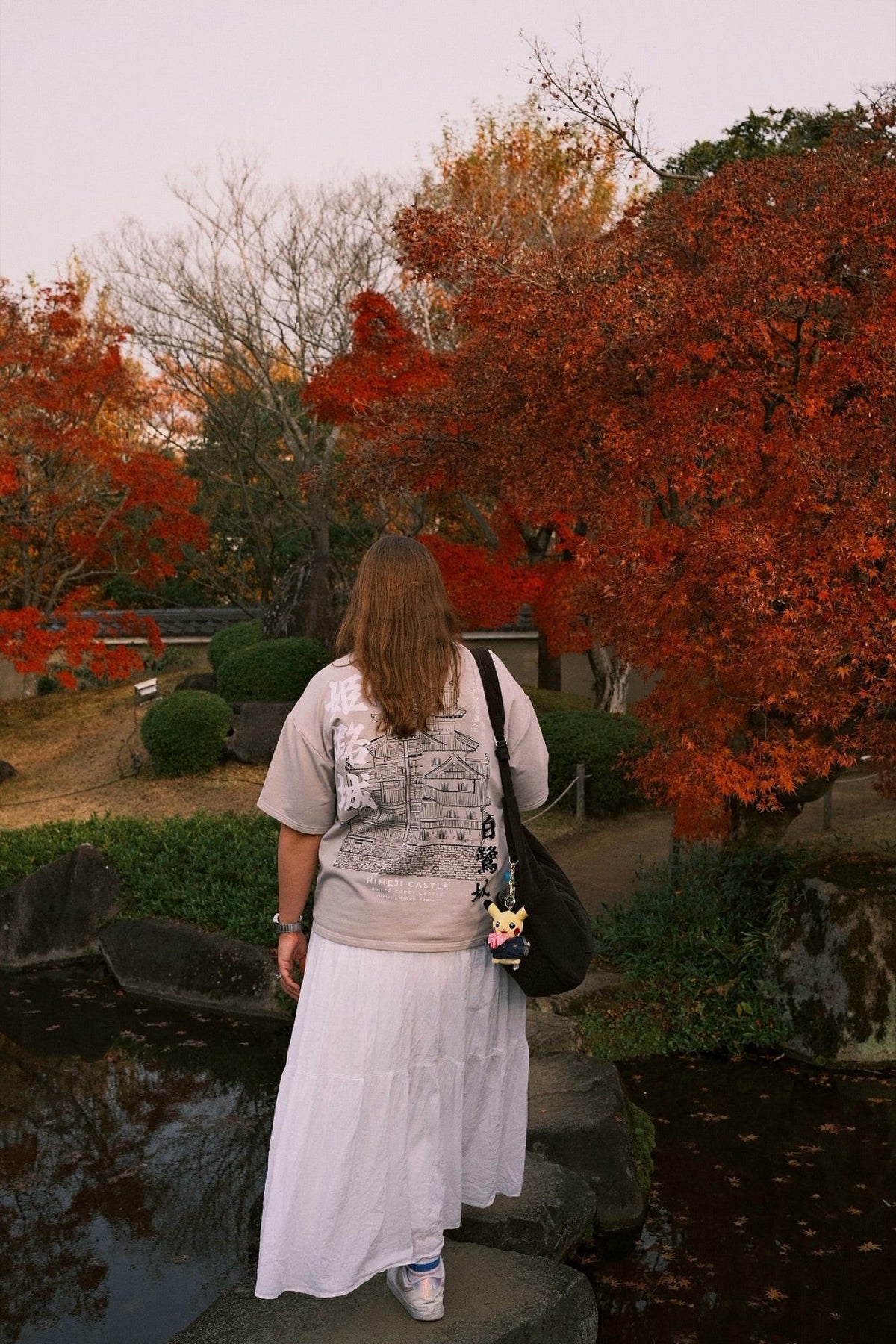
Every autumn, Japan's maples and ginkgo trees change colour. The Japanese call it kōyō (紅葉). It starts in Hokkaido in October and moves slowly south and down the mountains, reaching Tokyo, Kyoto and Osaka from late November into December. For a few weeks people take the train out of the city just to walk under the trees. There's a word for that too: momiji-gari, "maple hunting".
We've been going to Japan for years, and kōyō is our favourite time to be there. These are the fourteen places where we've watched it happen. Every one of them is on a shared Google Maps list, so you can save them all in one go.

When to go in 2026
It's a late year. The Japan Meteorological Corporation expects Tokyo's ginkgo to peak around 26 November and its maples around 29 November. In Kyoto the ginkgo should peak around 27 November and the maples around 11 December. Other forecasters put some spots a little earlier, and every forecast moves as the weeks go by. Check again the week before you travel. (nippon.com)
In most cities the ginkgo turns gold a few days before the maples reach their deepest red.
Tokyo
Shinjuku Gyoen National Garden


A large garden ten minutes' walk from Shinjuku Station, and one of the last places in Tokyo to turn. The Japanese garden has maples around the ponds, the French garden has long avenues of plane trees, and there's a huge ginkgo near the greenhouse. We like the view of the red maples with the Docomo tower rising behind them.
- Usual peak: late November to mid-December. Weathernews expects this year's peak from about 5 December.
- Also on: the chrysanthemum exhibition, 1 to 15 November.
- Good to know: there's an entry fee, and the garden is normally closed on Mondays.
The Imperial Palace


Right in the middle of Tokyo, a few minutes from Otemachi Station. The East Gardens are free to enter and have maples and ginkgo around the Ninomaru garden, best from late November to mid-December. In most years the palace also opens Inui-dōri, a road inside the grounds lined with maples, for about a week in late autumn. Last year it ran from 29 November to 7 December. The 2026 dates haven't been announced yet.
- Usual peak: late November to mid-December.
- Good to know: the East Gardens close on Mondays and Fridays.
Suwa Shrine, Nishi-Nippori


A neighbourhood shrine on a ridge above the railway tracks, a few minutes' walk from Nishi-Nippori Station and right next to Yanaka. You won't find it in kōyō guides, but in late autumn its ginkgo trees turn the whole shrine yellow. Pair it with a slow walk through Yanaka's old streets.
- Usual peak: follows central Tokyo's ginkgo, around the end of November.
- Good to know: free to visit.
Shibamata


An old-fashioned corner of east Tokyo, about 50 minutes from Tokyo Station on the Keisei line. Walk the shopping street up to Taishakuten temple, then visit Yamamoto-tei, a 1920s house with a Japanese garden that is at its best in autumn.
- Usual peak: follows central Tokyo, late November to early December.
- Good to know: Yamamoto-tei closes on the third Tuesday of every month.
Kawagoe


"Little Edo" is an easy day trip from Tokyo, with its black-plastered merchant houses and a wooden bell tower. For kōyō, head to Kita-in temple: the maples in its Momijiyama garden turn from mid-November, and the five hundred stone rakan statues sit among the fallen leaves.
- Usual peak: late November to early December.
- Also on: the chrysanthemum festival at Kita-in, 1 to 23 November.
- Good to know: the temple grounds are free; the inside of the temple has an entry fee.
Atami
Atami Plum Garden (Atami Baien)


The name says plum, but in autumn this garden by the sea has around 380 maples, waterfalls and little red bridges. It's one of the last places in Japan to turn, which makes it a good plan if you arrive in December and think you've missed it. Atami is under an hour from Tokyo by shinkansen, and the garden is ten minutes' walk from Kinomiya Station.
- Usual peak: late November to mid-December. Weathernews expects this year's peak from about 2 December.
- Also on: the maple festival, 14 November to 6 December, with the garden lit up every evening.
- Good to know: the first plum blossoms sometimes open while the maples are still red.
Kyoto
Kinkaku-ji

The Golden Pavilion is busy in any season. Go anyway. Most of the maples are along the path from the gate and on the small hill behind the pavilion, so keep walking after the classic view across the pond and look back.
- Usual peak: late November to early December.
- Good to know: entry fee, open 9:00 to 17:00. Go at opening time.
Kurama-dera


A mountain temple north of Kyoto, half an hour on the little Eizan train from Demachiyanagi. The ride is part of the trip: between Ichihara and Ninose the train runs through a "maple tunnel", lit up in the evenings from 7 November to 6 December. From the station, the path climbs through maples and cedars to the main hall, or there's a short cable car.
- Usual peak: mid to late November.
- Good to know: entry fee. Wear proper shoes.
Kifune Shrine


On the other side of the mountain from Kurama-dera, linked by a forest trail. Kifune's stone steps are lined with red lanterns, with maples above them. Walk up from Kurama, come down to Kifune and take the train back from Kibuneguchi.
- Usual peak: mid to late November.
- Also on: the shrine is lit up from 7 to 24 November, sunset to 20:30.
- Good to know: free to enter.
Nara
Nara Park


Maples, ginkgo and the famous deer, five minutes' walk from Kintetsu Nara Station. Look for the Ukimidō pavilion on its pond, the ginkgo and maples around Tōdai-ji, and the Isuien garden. Nara turns a little earlier than Kyoto, so it's a good stop on the way.
- Usual peak: mid-November to early December. Weathernews expects this year's peak from about 11 November.
- Good to know: the park is free; the temples and Isuien garden have entry fees.
Osaka
Osaka Castle and Osaka Castle Park


The castle sits in a big park right in the city. On the east side there's an avenue of ginkgo about a kilometre long, and the trees along the outer moat go gold in late November. In front of the main keep stands a ginkgo said to be around 300 years old.
- Usual peak: mid-November to early December. Weathernews expects this year's peak from about 20 November.
- Good to know: the park is free; the castle keep and Nishinomaru Garden have entry fees.
Himeji
Himeji Castle


Japan's White Heron Castle, the same one printed on the back of our Shiro Monozukuri T-shirt. The castle grounds have more cherry trees than maples, so for autumn colour, see it from Kōko-en next door. It's an easy day trip from Osaka by shinkansen, then fifteen minutes' walk up the main street from Himeji Station.
- Usual peak: mid to late November.
- Good to know: entry fee for the castle.
Kōko-en Garden


Nine walled gardens at the foot of Himeji Castle. Red maples over thatched roofs and ponds, with the castle above the trees. It's quieter than the Kyoto gardens and easy to combine with the castle.
- Usual peak: mid to late November. Weathernews expects this year's peak from about 24 November.
- Also on: the garden is lit up in the evenings, from 17 November to 6 December this year.
- Good to know: entry fee; free for under-18s.
All fourteen places on one map
We've saved every place in this post to a shared Google Maps list, Autumn in Japan: Our Favourite Spots. Save it once and every place will be on your phone in Japan.
See you there
We're going back at the end of November and will share the leaves as we find them in our Stories on @store.incident. If there's a place we shouldn't miss, tell us.
Adri & Mimi



Share:
Cost-per-Wear: Why The Cheapest Clothes Could Cost You More